Quantcast

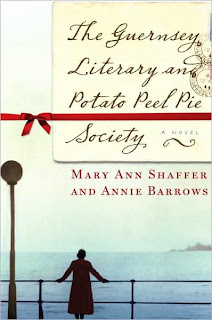
The Guernsey Literary and Potato Peel Pie Society by Mary Ann Shaffer and Annie Barrows

Mary Ann Shaffer and Annie Barrows’ The Guernsey Literary and Potato Peel Pie Society is a novel in letters between writer Juliet Ashton, her friends Sidney and Sophia, and her new friends from the Guernsey Channel Islands.

Ashton is in the midst of a book tour for a collection of her WWII articles under the pseudonym Izzy Bickerstaff. However, she is floundering on the topic for her next book, which is opportune for Ashton who begins to write articles for the Times about the practical, moral, and philosophical value of reading when she receives an unexpected letter of request from Dawsey Adams of Guernsey.

She begins getting letters from the remaining residents of Guernsey and their exploits as part of a literary society during the German occupation. These initial letters help with her series of articles and spur her muse into action.

“Perhaps there is some secret sort of homing instinct in books that brings them to their perfect readers.” (Page 10)

Like the above quote, this novel is one of those books that will hone in on the perfect reader. The Guernsey Literary and Potato Peel Pie Society is chock full of bookish quotes and must have been written with the love of books in mind. Beyond the WWII details, the rationing, the tip-toeing around German officers, and the loss of good friends shipped off to concentration camps, this is a novel about a writer who blooms in the countryside among new friends and new scenery.

“And then, being bright enough not to trust the publisher’s blurb, they will ask the book clerk the three questions: (1) What is it about? (2) Have you read it? (3) Was it any good?” (Page 16)

“The Library roof was some distance away from Juliet’s post, but she was so aghast by the destruction of her precious books that she sprinted toward the flames–as if single-handedly deliver the Library from its fate!” (Page 43)

“Reading good books ruins you for enjoying bad books.” (Page 53)

Readers will easily keep track of the numerous characters in this novel because each letter has an introduction line of who the letter is from and to whom it is addressed. Barrows and Shaffer have crafted quirky individuals with lively personalities from Dawsey and his quiet persuasive qualities to Isola and her outgoing nature. The Guernsey Literary and Potato Peel Pie Society is about how books can change lives and how people can impact one another’s lives.

This is one of the best books I’ve read in 2009.

Also Reviewed By:

Age 30+. . . A Lifetime of Books
Diary of an Eccentric
Jackets & Covers
It’s All About Books
Book Addiction
It’s All About Me (Time)
Katrina Reads
Peachy Books
The Book Nest

About the Authors:

Annie Barrows is the author of the children’s series Ivy and Bean, as well as The Magic Half. She lives in northern California.

Visit Annie’s website HERE.

Her aunt, Mary Ann Shaffer, who passed away in February 2008, worked as an editor, librarian, and in bookshops. The Guernsey Literary and Potato Peel Pie Society was her first novel.

For an excerpt from the book, go HERE.

For the rest of the TLC Book Tour schedule, go HERE.

To enter the Giveaway for 5 copies of the book for U.S. and Canadian residents:

1. Leave a comment on this post about your own book club or why you want to read this book.

2. Blog, Tweet, or spread the word and leave me a link or comment about it.

Silly me, I forgot the deadline, so here it is: August 12, 2009, at 11:59 PM
This is my 5th book for the War Through the Generations: WWII Reading Challenge.
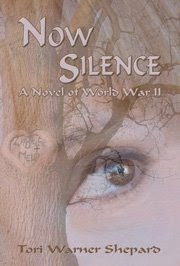

Now Silence by Tori Warner Shepard

Tori Warner Shepard’s Now Silence: A Novel of World War II takes place in the midst of WWII around the time Pearl Harbor is bombed, many U.S. military personnel are held in POW camps, and Japanese Americans are corralled in internment camps across the western United States, particularly in New Mexico.

“In the airless box of a room of the Kirtland BOQ in yet another officer’s guest quarters, Phyllis found herself disgusted with both Roddy and Albuquerque. She wasn’t even hungry for breakfast. Her goal was to win Anissa over by introducing herself as a worthy ally. She counted on its being quick and easy, considering that Anissa and her vulnerable cult appeared to be able to swallow almost anything. It should take no time at all.” (Page 130)

Readers are first introduced to a self-centered, superficial Phyllis soon after the death of her fiance, Russell. Russell’s soon-to-be ex-wife, Anissa, lives out west and had refused to sign the divorce papers, and Phyllis has hated her for many years and obsessed about this woman and the role she played in Russell’s life.

“Her lust was contagious. Not overly surprised by this, he sank into her kisses, eating and being eaten by her, weakened and unable to pull out.” (Page 191)

After a great deal of build up regarding these characters’ animosity toward one another, the confrontation nearly midway in the book is not as explosive as readers may expect. Phyllis is a complicated character, just like Anissa, and readers may find it difficult to wrap their arms around these characters’ actions, though Anissa is a bit easier to get a handle on than Phyllis, who makes her way across America from Florida to New Mexico by riding a bicycle to make herself seem worthy of awe, only to break down and “sleep” her way across the nation.

“Over the next few days the wind drifted in random streams across the bay as Nagasaki burned. The fires pushed by the coils of moving updrafts swallowed the breathable air. By the fourth day, cinders fell like snow and no more fighter planes cluttered the sky. They simply stopped coming.

A hollow silence.” (Page 211)

The pacing of this novel is slow and awkward in places, but the best sections of this novel are in the POW camps of Japan. Readers will be introduced to Melo and Senio, who rely on each other for survival, with the help of Doc Matson. The brutality and uncertainty of their lives is mirrored in the lives of Anissa’s neighbor Nicasia and her soon-to-be daughter-in-law LaBelle, who wait endlessly for word of their loved ones.

“Several thousand emaciated men continued to form a line outside and Melo looked up to see if they had moved forward even an inch. Hart to tell, by this time the men all looked alike–skin burnt, shaved heads, scrawny, bony, skinny, emaciated, lice-riddled stooped bodies with torn rags for clothes.” (Page 33)

In just a little over 300 pages, Shepard weaves in a number of storylines and illustrates the environment present at home and abroad. Readers should be cautioned that there are some graphic scenes and sexual content in Now Silence.

Overall, readers will enjoy what they learn about the Pacific front and the characters are well-developed, even if Phyllis is a bit tough to take most of the time. While readers may find there is too much detail about Phyllis’s earlier exploits and some of the sections about the WWII events are told rather than shown, Now Silence sheds light on the Pacific Front of World War II from Americans on both sides of the ocean.

This is my 4th book for the War Through the Generations: WWII Reading Challenge.

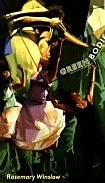
Green Bodies by Rosemary Winslow

Rosemary Winslow’s Green Bodies is divided into three parts, with the first section of poems steeped in deep grief and struggle for understanding following the death of a brother. From “To a Fish” (Page 14-15), “I see a knife/once put to me,/bone opened white to daylight,/red floor on concrete.” Many of these poems have an inner rhythm and musical quality, though the music is dark and somber.

The second section’s narrator begins with poems of cutting oneself off from the outer world and possibly the grief felt in the first section. From “The Gothic Truth” (Page 40), “not making a sound, she watches the grindstone/wobbling hung turning him spitting not stopping/” Throughout the second section, the poems examine the paralysis felt by the narrator by that oppressive grief. From “Carnal” (Page 37), “crumpled and blooded she curled/under a stairwell in hay”

In the final section of this volume, the narrator is rising from the darkness and turmoil of grief to find a way to move on, evolve, and become a stronger self. Readers will enjoy the complexity of these poems, their deep secrets, and highly emotional language.

5 a.m. (Page 54-55)

I rise from a wreckage of sleep
again the long blind scarf of grief

and yesterday and yesterday’s
gunmetal page

the porch lights hiss
at the shroud-hung sky

I go down the stairs to the garden
to be where the roses are leaning

heavy and sweet on the long fence
I lift my face from burial

into burial in the softness of flowers
that is like the skin under the necks of animals

tears shine
in the small white crosses

in their fire centers
the start clematis has made

and entered on
the dead espaliered pear

suddenly I am
jarred

wheep and again
wheep wheep I hear

hidden birds
coming alive

one by one
in the trees

thick pollen of light
undraping the roof lines

composing the sky

This is my 3rd book for the poetry review challenge.

Becoming the Villainess by Jeannine Hall Gailey

Jeannine Hall Gailey‘s Becoming the Villainess is a unique volume of poetry housing poems steeped in Greek mythology, comic book characters, and more.

Gailey’s images are crisp and immediate with recurring uses of pomegranates, wolves, and other items. Alice in Wonderland, Wonder Woman, Persephone, and many more make appearances in Becoming the Villainess, which is separated into five parts. At the end of the book, Gailey includes brief descriptions of the myths inspiring the poems enclosed within its pages.

From “Female Comic Book Superheroes” (Page 5)

Impossible chests burst out of tight leather jackets,
from which they extract the hidden scroll, antidote, or dagger,
tousled hair covering one eye.

They return to their day jobs as forensic pathologists,
wearing their hair up and donning dainty glasses.
Of all the goddesses, these pneumatic heroines most

resemble Artemis, with her miniskirts and crossbow,
or Freya, with her giant gray cats.
Each has seen this apocalypse before.

Each section in Becoming the Villainess examines the evolution of female characters from innocent girls to darker, vengeful women, but these characters are deeper than stereotypical comic book characters, mothers, and goddesses. While some of these poems have a lighter, tongue-in-cheek quality to them, some of them drive home the deep dark horrors found in many legends, myths, and real-life events. One particularly jarring poem in the collection is “Remembering Philomel,” in which a professor is asking for grittier details of the narrator’s sexual assault.

Becoming the Villainess by Jeannine Hall Gailey is a wonderfully insightful collection that looks beneath the surface of myths and sexy comic book characters to find their motivation, their desires, and spunk. If this is your kind of poetry, you should pick it up. I count this among the best of contemporary poetry that I’ve read this year. If you missed my interview with Jeannine Hall Gailey, go check it out.

About the Poet:

Jeannine Hall Gailey was born at Yale New Haven Hospital in Connecticut, and grew up in Knoxville, Tennessee. She has a B.S. in Biology and an M.A. in English from the University of Cincinnati, as well as an M.F.A. in Creative Writing from Pacific University.

Her first book of poetry, Becoming the Villainess, was published by Steel Toe Books in 2006. Poems from the book were featured on NPR’s The Writer’s Almanac and on Verse Daily; two were included in 2007’s The Year’s Best Fantasy and Horror. She recently taught with the Young Artist Project at Centrum. In 2007 she received a Washington State Artist Trust GAP Grant and a Dorothy Sargent Rosenberg Poetry Prize. She volunteers as an editorial consultant for Crab Creek Review, writes book reviews, and teaches at National University’s MFA Program.

Her inspirations often come from mythological sources, such as Ovid’s Metamorphoses or The Tales of Genji, folk and fairy tale collections, and of course, comic books.

This is my second book for the poetry review challenge.

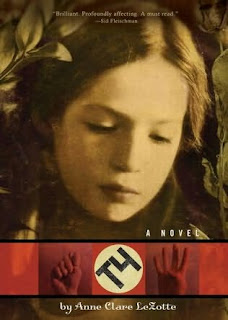
T4 by Ann Clare LeZotte

What I Saw (From T4, Page 8)

My visual
Sense
Was so
Strong.

If
A breeze
Shook
The leaves
On
A tree
I

Would

Shriek
With
Delight.

If
People
Ran fast
Past me
It looked
Like
A tidal
Wave.

Even
The motion
Of
A hand
Waving
Goodbye
Startled
Me.

Ann Clare LeZotte’s debut novel, T4, uses free verse to provide a powerful look into the impact of the Nazi regime on German nationals, particularly those deemed unfit to live. T4 (Tiergartenstrasse 4) or Action T4 was a Nazi euthanasia program between 1939 and 1941 to “eliminate” the disabled or mentally ill.

“I couldn’t communicate./I was trapped in my silence,/As if under a veil.//This made me feel upset/And angry sometimes./I put my face in my pillow/And sobbed and sighed.//” (I didn’t learn to speak, Page 7)

Paula Becker is a young girl living in Germany while the Nazi party is at war with the world and persecuting its own people. But she is not just a young German girl, she’s also a deaf girl. T4 is a free verse novel that utilizes simple language and images to accurately portray the young narrator’s voice. Paula is forced to leave her home and grow up on the run as the Nazi regime seeks out disabled and mentally ill patients for the T4 program. Only one or two poems in the novel seem out of order, but this coincides with the flitting mind of a young girl who is struggling to understand her world and find her place in it.

LeZotte’s narrative poems create a cohesive novel for young readers interested in learning more about WWII and the Holocaust. Readers will enjoy the simple imagery and easy-to-read poems, which allow Paula’s confusion, curiosity, and evolution to shine through. Some of the most poignant prose poems in this novel are “Poor Kurt,” “I Put on Stephanie’s Lipstick,” “But the Killings Didn’t Stop,” and “Postscript.” T4 is a novel for young readers and adults, which will easily generate discussion and pique children’s interest in learning more about WWII and the Holocaust.

Also Reviewed By:
Diary of an Eccentric
Maw Books

Giveaway Reminder:

2-Year Blogiversary Quote Challenge here, here, here, and here.

Bloody Good by Georgia Evans

Bloody Good by Georgia Evans is the second of my five books for the War Through the Generations: WWII Reading Challenge.

“This was not, he was convinced, some foppish, effete English vampire. This was one of his Aryan brothers. The brain rhythm was strong and reassuringly familiar. He’d sensed the same in his homeland in the Hartz Mountains. Only one other vampire hailed from that part of Germany. Could it truly be Gerhardt Eiche, or as he no doubt posed himself: Gabriel Oak?” (Page 18)

Georgia Evans’ portrayal of Germany’s invasion of surrounding European nations by the Nazi party as the backdrop for her novel set in the English countryside, Bloody Good, has a wide cast of characters, including vampires, witches, pixies, and dragons.

Alice Doyle is the village doctor and a pixie who has denied her heritage and her powers to rely upon science and medicine. Peter Watson is a conscientious objector to the war who underwent several years of veterinary training before the war began. Alice’s grandmother embraces her pixie heritage and is keenly aware of the “others” living in the town.

In an effort to gain an advantage in the war effort, the Nazi’s enlist vampires to blow up secret munitions plants across the English countryside. Evans does a great job of establishing a surreal world in which Nazi’s and vampires work together for the same cause, at least until the vampires deem themselves able to take over. Dr. Doyle, her grandmother, and friends work together to uncover the secret Nazi mission and stop the vampires from succeeding in destroying the munitions plant.

“The talk on rabbit-keeping was boring enough to let Peter’s mind wander onto more enthralling topics, notably Alice, Dr. Doyle, and the woman he was head over heels in love with. She beat out furry rodents, and even edible furry rodents, any day of the week.” (Page 182)

Readers will enjoy the vampire tales, the pixie legends, and other surreal elements of this story, but the real treat is watching Dr. Doyle come into her own powers and accepting her heritage. However, some readers may be put off by the graphic sex scenes in this novel, though there are not too many of them. Some of the depictions in the book were a bit odd, particularly when Peter Watson compares Dr. Doyle to furry rodents. Overall, Bloody Good is a light read for the beach or camping in the woods.

This is the first in a series of novels by Georgia Evans, and readers who enjoy this one, should check out the next installment, Bloody Awful. I know I’m looking forward to the next one.

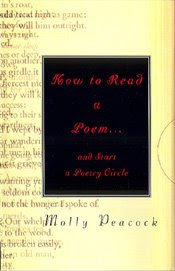
How to Read a Poem. . . and Start a Poetry Circle by Molly Peacock

“I found grown -up poetry to be as spongy as a forest floor–your foot sinks into the pine needles, the air smells mushroomy and dank, and filtered light swirls around you till you’re deep in another state.” (Page 8)

Molly Peacock’s How to Read a Poem . . . and Start a Poetry Circle provides a great deal of information in just 200 pages–from how to interpret poems to how to create a poetry circle and join the ranks of those dipping their feet into the poetic pool.

“Yet as strangely contemporary as this art has become, it involves a timeless childhood pleasure: rereading.” (Page 13)

Peacock clearly knows her stuff from writing verse to examining its structure and images. She postulates that any poem can be examined in three simple steps. Examine the poem line-by-line, which she notes is considered the skeleton of the poem. Examine the sentence, which readers could consider the muscles of the poem. Finally, readers should examine the image or nervous system of the poem. However, Peacock does not suggest that readers pick apart each element of a poem and discuss it ad nauseam.

“This shimmering verge between what is private and what is shared is the basis of a poetry circle. A poetry circle (which is very different from a writing workshop, where people bring in their own poems to be critiqued by one another or by a teacher) occurs when the mutual reading of poetry is at hand. For me, the circle has its beginnings in the side-by-side reading of a poem by two people.” (Page 16)

A number of chapters examine a number of poems, their images, their rhythms, and their internal music. Beyond the application of these techniques on actual poems, Peacock illustrates the beauty of poetry circles, how to start poetry circles, and provides readers with resources to begin their own poetry circles and how to select poetry for discussion in these circles.

“You never know what’s going to catch your finger–or your eye. You needn’t ever be comprehensive about a book of poetry.” (Page 191)

These groups are not like book clubs where copious notes should be taken and entire books should be read. The purpose of a poetry circle is to generate a mutual respect and joy for each line of verse.

After reading this book, I’m going to try an experiment. I want to create a virtual poetry circle. I’ll post a new poem each week for people to read and comment about what they enjoyed about a line, a stanza, or the entire poem. Comments can range from what is good about a poem to what readers don’t like about a poem. Share your thoughts, opinions, and vision of the poet’s work. I’ll probably post these each Friday or Saturday, so keep an eye out.

This is my 1st book for the poetry review challenge.

Everything Austen Reading Challenge

Remember when I said I was only signing up for the Sookie Stackhouse Reading Challenge because it was about Vampires? Well, I’ve gone and done it. I’m signing up for the Everything Austen Challenge. Why all this torture?

Here’s why:

1. It’s Jane Austen
2. It’s movies and books
3. It’s Jane Austen Sequels
4. It’s Jane Austen-inspired books
5. It’s only 6 in any of these categories over the next 6 months (July 1, 2009 – January 1, 2010)

Isn’t that enough reasons? Ok, here’s another, there will be PRIZES, thanks to Stephanie’s Written Word.

I’m going to commit to the challenge, and opt for movies and books, but I’ll leave you in suspense as to which ones until I review them.

So, what are you waiting for?

Don’t forget my current giveaways:

2-year Blogiversary, here and here.

Sookie Stackhouse Reading Challenge!

I know, I know, I said I only had time for one reading challenge this year–The War Through The Generations: WWII Challenge–BUT Beth Fish Reads is now hosting the Sookie Stackhouse Reading Challenge.

What is a Sookie Stackhouse Challenge? Have you been living in a cave? I know I was last year, but I kept hearing great things about the HBO series TRUE BLOOD, and started watching this season, which just started. Well, this series is based upon—BOOKS—by Charlaine Harris about VAMPIRES. And this time, they’re Southern! But don’t forget the shapeshifters and the mind readers.

The challenge runs from July 1, 2009, through June 30, 2010. You have to read the series from any starting point and post reviews of the books (I presume). I’ll be starting from book 1 in the series, Dead Until Dark.

There already are prizes up for grabs and of course there will be Twitter conversations, use hashtag #SookieSRC. And of course, you have to sign up on Beth Fish Reads with Mr. Linky.

Why did I decide to join? Well, for two simple reasons. I needed a new vampire television show addiction, and once those start, I always read the books the shows are based upon. Simple, right? Ok, maybe I am a bit odd, but it makes these posts more interesting. Don’t you think?

Don’t forget my current giveaways:

2-year Blogiversary, here and here.

WWII Reading Challenge & More

I wanted to alert everyone to my progress on the WWII Reading Challenge. I’ve read 1 book out of 5–Reading by Lightning, check out my review.

Thank goodness this is a year long challenge.

Other than that, Anna and I have posted a new item for you all to discuss about the recently deported John Demjanjuk. Check it out here. I hope we can get some great discussion going.

Over the next couple of days the War Through the Generations blog will have several new discussion topics. I hope you will check them out.

Don’t forget my giveaways:

1 copy of Rubber Side Down Edited by Jose Gouveia, here; Deadline is May 15 at 11:59 PM EST

2 copies of The Last Queen by C.W. Gortner, here; Deadline is May 22 at 11:59 PM EST

Poem #30, PAD Challenge 2009

I cannot believe it. I wrote one poem for each of April’s 30 days. I am beaming with pride…that’s not too terrible I hope. Anyway, let’s get to it, shall we?

Today’s Prompt is to write a farewell poem:

Endings

Off in the distance
You’re small.
Almost an ant on my picnic blanket,
the one with the pink butterflies.
We used to take it to that park
on the corner of Western Ave. and Main.
I know it wasn’t much of a park,
but the grass was soft,
so green.

You’re standing on asphalt,
the blanket disintegrated in the dryer
lint balls scraped away into the basket.
It reminds me of our final days
when the voices pitched high
fists and fingers flew at the air between us.
We made Swiss cheese of oxygen.

There is no sunset on the horizon,
more like high noon
in the O.K. Corral, guns blazing.
Only we never dropped
to our knees in that kitchen
Or here as the cab drives away.

What did you write today?

For more information about the challenge, go here.

Did you participate in this challenge or other activities for National Poetry Month? Please share links, experiences, events, new poets, old favorites, what you liked about the poems I produced this month.

Poem #28 and #29, PAD Challenge 2009

Prompt #28 was to write a sestina or an anti-sestina.

Sestina Mess

A-line frame in the dark,
rigid dance in need of flex.
Movement fluid as silk.
Eaves in maroon,
waiting for a sash
to tie up the dancing.

Starlit parquet dancing
Playing tricks on my eyes, dark
with desire, I fiddle with my sash.
Your muscles flex
Tighter beneath your suit jacket, touch maroon
shimmering silk.

Tough silk
Sashay across the floor, dancing.
We’re on an island, marooned
Feeling our ways in the dark
waiting for re-flex
to take over and rip my sash

Float to the ground, sash
up, touch your skin, silk.
Skin on skin, flex
A muscle inward, outward, dancing
chest to chest in the dark
cheeks turned maroon.

Maroon
me here beneath the sash,
turning my heart into dark
bittersweet chocolate silk.
I swirl, dancing.
Flex.

A re-flex,
maroon
and dancing,
twirling sash
silk
and dark.

Romantic nights of dark re-flex,
enclosed in silk maroon
sash dancing.

Prompt #29 is to write a poem with “Never” in the title.

Never Smile in the Mirror

Your arms stretch over your head
as your mouth opens wide
ready to swallow the world whole.
Throw back the covers,
shrug into slippers and trod–
under running steamy waves
you lather up quick and tight.
Towel dry behind fog
and pull out the blade to shave.
I grace your flesh with my hand,
raising the skin in chills.
I feel the tension leave your body
and see your cheeks rise.
Drops of blood drip,
marring the marble sink rim.

What did you write today?

For more information about the challenge, go here.