Quantcast

Mailbox Monday #80

If you haven’t voted for your favorite National Poetry Month Blog Tour post, go on over and vote now.

Marcia at The Printed Page and Kristi of The Story Siren both sponsor memes in which bloggers share what books they’ve received in the past week.  I’m going to continue calling these Mailbox Mondays, but The Story Siren also has In My Mailbox.  Just be warned that these posts can increase your TBR piles and wish lists.

Here’s what I received in the mail:

1.  How to Be an American Housewife by Margaret Dilloway for a TLC Book Tour in July/August.

2.  Love in Mid Air by Kim Wright , which I won from A Circle of Books.

3.  Tipping Point by Fred Marchant, which I purchased as a National Poetry Month prize.

What did you get in your mailbox?
43rd Virtual Poetry Circle

Welcome to the 43rd Virtual Poetry Circle.  The poetry doesn’t stop here on the blog just because National Poetry Month ends.

Remember, this is just for fun and is not meant to be stressful.

Keep in mind what Molly Peacock’s books suggested. Look at a line, a stanza, sentences, and images; describe what you like or don’t like; and offer an opinion. If you missed my review of her book, check it out here.

Today, we’re going to visit with a classic poet, Elizabeth Barret Browning:

Sonnet #43

How do I love thee? Let me count the ways.
I love thee to the depth and breadth and height
My soul can reach, when feeling out of sight
For the ends of Being and ideal Grace.
I love thee to the level of everyday’s
Most quiet need, by sun and candle-light.
I love thee freely, as men strive for Right;
I love thee purely, as they turn from Praise.
I love thee with the passion put to use
In my old griefs, and with my childhood’s faith.
I love thee with a love I seemed to lose
With my lost saints!—I love thee with the breath,
Smiles, tears, of all my life!—and, if God choose,
I shall but love thee better after death.

Let me know your thoughts, ideas, feelings, impressions. Let’s have a great discussion…pick a line, pick an image, pick a sentence.

I’ve you missed the other Virtual Poetry Circles, check them out here. It’s never too late to join the discussion.

Winner of SOS! The Six O’Clock Scramble to the Rescue

Random.org selected #5 out of 12 entries, and lucky #5 was:

Anna from Diary of an Eccentric

She must be in need of some greening.

Thanks to all who entered.

It’s Time to Vote!

It has been a whirlwind tour through poetry this April.  I hope you’ve all had a good time and visited a bunch of the posts throughout the month.

As the final piece of the National Poetry Month Blog Tour, you, readers, get to vote for your favorite posts.

The top posts will receive poetry prizes.

Have fun, read some more about poetry, and feel free to join the conversation.  I would encourage everyone to add a little more poetry to their lives.

If you need to find the posts, click on the blog tour button and access the tour list.

Please record your one vote in the poll. Voting goes through May 15!

***

Don’t forget today’s tour stops at Brimful Curiosities and Diary of an Eccentric with The Girl.

[poll id=”2″]

Song of Napalm by Bruce Weigl

Bruce Weigl’s Song of Napalm is another collection of poems dealing with the impact of the Vietnam War.  Robert Stone says in the introduction, “Bruce Weigl’s poetry is a refusal to forget.  It is an angry assertion of the youth and life that was spent in Vietnam with such vast prodigality, as though youth and life were infinite.  Through his honesty and toughmindedness, he undertakes the traditional duty of the poet:  in the face of randomness and terror to subject things themselves to the power of art and thus bring them within the compass of moral comprehension.”

Weigl takes readers on a journey to Vietnam in the late 1960s and explores the anxiety he feels as a soldier in a strange nation.  Each poem’s narrator carefully observes his surroundings, detailing the corner laundry, the hotel, the jungle, and his fellow soldiers.

“Who would’ve thought the world stops
turning in the war, the tropical heat like hate
and your platoon moves out without you,
your wet clothes piled
at the feet of the girl at the laundry,
beautiful with her facts.”  (from “Girl at the Chu Lai Laundry,” page 4)

Song of Napalm chronicles the narrator’s transformation from boy to soldier to terrified man in the jungle and recovering killer.  In a way some of these poems contain a dark sense of humor about the war, which probably kept the narrator sane.

Temple Near Quang Tri, Not on the Map (page 7-8)

Dusk, the ivy thick with sparrows
squawking for more room
is all we hear; we see
birds move on the walls of the temple
shaping their calligraphy of wings.
Ivy is thick in the grottoes,
on the moon-watching platform
and ivy keeps the door from fully closing.

The point man leads us and we are
inside, lifting
the white washbowl, the smaller bowl
for rice, the stone lanterns
and carved stone heads that open
above the carved faces for incense.
But even the bamboo sleeping mat
rolled in the corner,
even the place of prayer, is clean.
And a small man

sits legs askew in the shadow
the farthest wall casts
halfway across the room.
He is bent over, his head
rests on the floor and he is speaking something
as though to us and not to us.
The CO wants to ignore him;
he locks and loads and fires a clip into the walls
which are not packed with rice this time
and tells us to move out.

But one of us moves towards the man,
curious about what he is saying.
We bend him to sit straight
and when he’s nearly peaked
at the top of his slow uncurling
his face becomes visible, his eyes
roll down to the charge
wired between his teeth and the floor.
The sparrows
burst off the walls into the jungle.

Weigl’s dark humor permeates these pages, but it is more than the humor that will engage readers.  It is his frank lines and how the narrator tells readers the truth about the situation.  From “Elegy,” Weigl says, “The words would not let themselves be spoken./ Some of them died./ Some of them were not allowed to.”  There are just unspeakable atrocities that happen in war, and soldiers who return home may not actually return home resembling who they were before they left.  Song of Napalm is a frank discussion about becoming a man in a time of war, dealing with the horrors of killing and worrying about being killed, and returning home to a world you don’t recognize and trying to reinsert yourself into the society that sent you to war in the first place.

This is my 3rd book for the 2010 Vietnam War Reading Challenge.

This is my 17th book for the contemporary poetry challenge.

This is my 5th book for the Clover Bee & Reverie Poetry Challenge.

***

Please also remember to check out the next stops on the National Poetry Month Blog Tour at Online Publicist and Boston Bibliophile.

TODAY is Poem in Your Pocket Day! What poem will you be reading?

Winners of Chow Hounds

Out of a handful of entrants, Random.org selected the following winners:

Dawn Milan

Dawn M

Etriv

Congrats to the winners.  Thanks to all who entered.

Remember there is an international giveaway for three of the latest Alex Cross novels by James Patterson, a giveaway for one copy of SOS! The Six O’Clock Scramble to the Rescue by Aviva Goldfarb, and a copy of Girl on a Bridge by Suzanne Frischkorn.

Full Moon Boat by Fred Marchant

Fred Marchant’s Full Moon Boat, published by Graywolf Press, is a poetry collection from my shelves that has been dipped into on many occasions.  The collection not only contains original poems by Marchant, a Suffolk University professor, but also translations of Vietnamese poets.  Many of these poems not only examine deep emotional turmoil through nature, but also the theme of war, particularly the Vietnam War.

“In 1970, Georgette, Harry’s war bride,
wrote to me on Okinawa, pleading that
I not leave the service as a conscientious
objector.  She said Jesus could not approve,”  (From “The Return,” page 3)

“From the steps of the pagoda where Thich Quang Duc
left to burn himself in Sai Gon, I took a photograph

which centered on a dragon boat
drifting on the Perfume River, framed by a full-leafed
banana tree.  An image of mourning.
Another photograph:  this one in front of the Marine insignia,

my right hand raised, joining.  I am flanked
by my parents, their eyes odd and empty too.
It was 1968, and none of us knew what we were doing. (from “Thirty Obligatory Bows,” page 28)

Unlike other poetry collections with a focus on the Vietnam War, Marchant’s collection zeroes in on the deep emotional states of families sending their sons overseas to war, ranging from pride to shame and even confusion.  In many ways the lines of these poems are deceiving in their simplicity, releasing their power only after the reader has read the lines aloud or for the second time.  In “A Reading During Time of War,” readers may miss the turning point in the poem on the first read through, but sense that something has changed in the last lines, prompting another read and the realization that the realities of war will always rear their ugly heads.

A Reading During Time of War (page 54)

It is the moment just before,
with no intent to punish,

a wish for all to be air
and scrubbed by rain,

filled with eagerness to learn
and be if not a child

then openhearted, at ease,
never to have heard

of the bending river
that stretches to the delta

where a bloated corpse
bumps softly,

snags on a tree stump
and, waterlogged,

rolls slowly, just below.

Additionally, these poems touch upon the beauty and emotional anchor deep within the chests of the Vietnamese.  In “Letter,” by Tran Dang Khoa and translated by Marchant with Nguyen Ba Chung, readers will find that Vietnamese families and soldiers had the same trepidations as American soldiers and their families.

“Mother, I may well fall in this war,
fall in the line of duty–as will so many others–
just like straw for the village thatch.
And one morning you may–as many others–
hold in your hand apiece of paper,
a flimsy little sheaf of paper
heavier than a thousand-pound bomb,
one that will destroy the years you have left.”   (from “Letter,” page 36)

Overall, Full Moon Boat by Fred Marchant examines the nuances of the human condition during times of crisis, including The Vietnam War, and heartbreaking decisions that soldiers and families make when conflicts begin or continue to rage even in strange lands.  Through translations of Vietnamese poems, Marchant explores the similarities between each side of the conflict in how they react and deal with war.  Other poems in the collection examine the dynamics of families through natural imagery.  Both beginning readers of poetry and those who have read other poetry collections will find Marchant’s comments on the human condition and how that condition is altered by war poignant and true.

About the Poet:

Fred Marchant is the author of Tipping Point, which won the Washington Prize in poetry. He is a professor of English and the director of creative writing at Suffolk University in Boston, and he is a teaching affiliate of the William Joiner Center for the Study of War and Social Consequences at the University of Massachusetts, Boston.

This is my 2nd book for the 2010 Vietnam War Reading Challenge.

This is my 16th book for the contemporary poetry challenge.

This is my 4th book for the Clover Bee & Reverie Poetry Challenge.

***

Please also remember to check out the next stops on the National Poetry Month Blog Tour at Ooh Books and Estrella Azul.


National Poetry Month Giveaway for Readers

I hope everyone has enjoyed some of the National Poetry Month Blog Tour, traveled to new blogs, learned a bit about poetry, and found some poets you’d like to try.

Today, I’m hosting a giveaway for Suzanne Frischkorn‘s newest collection, Girl on a Bridge.  Check out these two videos of her reading two of her poems, Bees and Indiscretion of an American Wife, 1954.

Also please check out this poem from her collection:

The First Signs

And forsythia tumbles
over the fence
wild with yellow–

When I was seven a wasp
landed on my lip
drawn by the sweetness
of my mother’s red lipstick

–while purple flagstones
split with grass.

The same day a child next door
squeezed six new kittens dead.
That’s when I knew–

There are two shades of still.

Giveaway Details for Girl on a Bridge:

1. Leave a comment on which of these poems you liked best or if you think YouTube videos make poetry more appealing to you as a reader.

2. Tweet, Blog, Facebook, or spread the word about the giveaway and leave a link here.

Deadline: May 7, 2010, at 11:59 PM EST

***

Don’t forget to visit the next stops on the National Poetry Month Blog Tour at Jen’s Book Thoughts and Linus’s Blanket.

The Physiological Impact of Poetry by Melanie Kindrachuk

Today, I’d like to welcome Melanie of The Indextrious Reader today to discuss the physiological impact of reciting poetry.  Please give her a warm welcome.

When we think about poetry, we often think about the emotional pull of beautifully phrased, carefully formed words. But there are many sides to a poem. Part of the reason poetry is an ever-present part of human experience, from our beginnings right up to today, is because of the way it speaks to all aspects of our lives.

One area we don’t usually think of poetry being a big part of is our physical life. How can a poem affect day-to-day life from a physical standpoint? There have been some intriguing studies on this very subject.

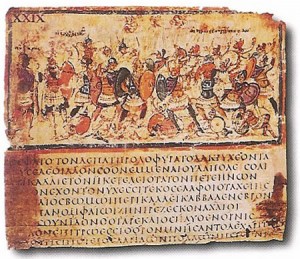
The classic study in this field is research done in 2004. German researchers studied the effect of reading The Iliad aloud — specifically due to its hexameter format. This is a form specific to Greek and Roman classical works, and the rhythm seems based on a breathing pattern which would make these long poems easy to recite. This makes sense as recitation would have been the usual method of hearing these poems. According to this study, reading The Iliad produced intermittent cardiac synchronization – essentially, heart and breathing rates fell into step more frequently due to this practice. Cardiac synchronization and an enhanced regulation of blood pressure, both outcomes of this study, are beneficial for post-heart attack patients. This raises an interesting point about why and how this ancient poetic form came to be; were our ancient forebears aware of this physical benefit in some way? You can read a summary of the original study by Cysarz, Betterman et. al. if you want all the scientific detail on this fascinating subject. Scientific American also reported on this research but in a much more general way, with some interesting quotes and further ideas put forth.

Other kinds of poetry have been known to have strong equalizing effects on breathing and blood pressure patterns as well. These are mostly religious verses, such as the Catholic Rosary, or the OM Mantra, according to the Science Blog. Both of these result in an approximate breathing pattern of six breaths a minute, which positively affects regulation of blood pressure.

So next time you are feeling in need of a stress break, do yourself a favour — take a deep breath, and recite a few verses of The Iliad aloud, or try out your favourite religious chant. If nothing else, you should get some time to yourself this way!

Thanks so much, Melanie.

About Melanie Kindrachuk:

Melanie Kindrachuk is the owner of Four Rooms Creative Self Care, a company focused on the power of the written word to lead us to wellness. Four Rooms provides workshops in journaling, explorative poetry and bibliotherapy, including personalized reading lists.

Melanie also is a working librarian and active book blogger at The Indextrious Reader.

***

Don’t forget to visit today’s stops on the National Poetry Month Blog Tour at Peeking Between the Pages, things mean a lot, and Jen’s Book Thoughts.

Mailbox Monday #79

I hope everyone has been enjoying the National Poetry Month Blog Tour; If you haven’t checked out the schedule or the posts, go here.  Today’s stop is at Bookalicio.us.

Marcia at The Printed Page and Kristi of The Story Siren both sponsor memes in which bloggers share what books they’ve received in the past week.  I’m going to continue calling these Mailbox Mondays, but The Story Siren also has In My Mailbox.  Just be warned that these posts can increase your TBR piles and wish lists.

Here’s what I received in the mail:

1.  God Damsel by Reb Livingston (and a toothbrush with the title of the book on it) from the poet for review.

2.  Life of Pi by Yann Martel — a win from Carrie at Books and Movies.

3.  The Confessions of Catherine de Medici by C.W. Gortner for a tour in June for Pump Up Your Book Promotion.

4.  Game Control by Lionel Shriver — a win from the April Dewey’s Read-a-Thon.

5.  Checker and the Derailleurs by Lionel Shriver — part of the win from the April Dewey’s Read-a-Thon.

What did you get in your mailbox?