Quantcast

Matterhorn by Karl Marlantes

Matterhorn by Karl Marlantes is bound to be an instant classic among Vietnam War literature.  Drawing from his experiences as a Marine Lieutenant, much like many of the other authors’ novels, Marlantes’s perspective is not only of Marines on the ground in the depths of the jungle, but of a lieutenant who experienced first hand the political battles and horrifying decisions made by other officers and politicians.  Weaving in political dilemmas and screw-ups into the narrative can be burdensome for many writers — dragging down the plot and characterization — but this is not the case with Marlantes’ Matterhorn.

Mellas, the main protagonist, enters Vietnam as a lieutenant with a variety of ambitions for advancement and medals.  He’s been to Ivy League schools, he’s had a charmed life compared to the others in the bush, but he likes to feel like one of the ordinary guys in the bush, though at the same time, he wants to fit in with the officers and to prove his worth.  He’s a dichotomy in himself, displaying openly the struggle between the grunts and the officers within one man.

“Mellas was amazed and ashamed.  He realized part of him would wish anything, and maybe even do anything, if it meant getting ahead or saving his own skin.  He fought that part down.”  (page 7)

Mellas is thrown into Bravo Company and told to take hold of Matterhorn, only to abandon it when the political forces deem Cam Lo a bigger priority.  But by not having the support necessary from the base camps, his company runs out of water and other supplies, forced to hump through the jungle dehydrated and shot up.  There is more than one instance in which this company is thrown into battle with impossible odds, which will remind many readers of the movies that glorify the marines and their victories.  However, this novel shows readers the true nature of those “hollow” victories.  While these men remain dedicated to their missions and each other, without proper strategy and backing their victories become senseless in the eyes of loss and terror.  Even victories become jokes once the reports are made to the command posts and the reports of confirmed and probable dead are doctored — something that was common during the war.

“The records had to show two dead NVA.  So they did.  But at regiment it looked odd — two kills with no probables.  So a probable got added.  It was a conservative estimate.  It only made sense that if you killed two, with the way the NVA pulled out bodies, you had to have some probables.  It made the same sense to the commander of the artillery battalion:  four confirmed, two probables, which is what the staff would report to Colonel Mulvaney, the commanding officer of Twenty-Fourth Marines, at the regiment briefing.”  (page 91-2)

Mellas finds his place within the company and even becomes respected, but his continued ambition clouds much of his judgment and often forces him into situations that are more dangerous than they need to be.  Beyond Mellas, the company is hampered by continued racial tensions between the “brothers” and their white counterparts, with some elements on both sides more violent and outspoken than others.  Others are aware of the increased tension and racial hatred, but attempt to brush it under the rug or ignore it.  The tension builds within the “brothers” camp, pitting China against Henry, in such a way that it can only be released in one way.

“Jackson folded his arms. ‘You think someone’s going to understand how you feel about being in the bush? I mean even if they’re like you in every way, you really think they’re going to understand what it’s like out here? Really understand?’

‘Probably not.’

‘Well, it’s like that being black. Unless you’ve been there, ain’t no way.'” (page 429)

As for the officers back at the base camp, readers will find in Lieutenant Colonel Simpson a possible mirror image for Mellas, depending on how well he reacts to combat situations and political decisions beyond his control.  Simpson is often drunk, quick to anger, and makes rash decisions just with a few promptings from peers and underlings.

There are so many layers to Matterhorn, it is impossible to discuss them all in a review.  Mellas is a troubled hero, but in a way the hero is not any individual Marine, but the jungle that surrounds them.  It beats them down; it disguises the enemy; and it leaves them begging for mercy, but it also can provide them shelter; offer them food; and improve their chances of success.  Psychological effects of war, loss, and camaraderie in highly intense situations can be devastating and enlightening.  One of the best books I’ve read all year and easily one of the best books of the last decade.  Readers interested in drama, tension, war-related literature, and human interactions and societal contexts will be as captivated by Matterhorn as any other book that has come onto the shelves.
This is my 63rd book for this challenge.

This is my 15th book for this challenge.

Week #4 Matterhorn Discussion

Today is week 4 of the Matterhorn by Karl Marlantes read-a-long that Anna and I started for the Vietnam War Reading Challenge‘s last hurrah!

Every Friday throughout December, Anna and I have discussed the chapters we’ve read of Matterhorn.

Today’s discussion on War Through the Generations will be about the final Chapters 16-23!

If you’d like to join us, please do so.  We’d love to hear your thoughts on the book.  Even if you join us later on in the month, we won’t mind.  We love book discussions.

Weigh in with your final thoughts on Matterhorn!

***Stay tuned for my final review of 2010 — Matterhorn.***

My Best Reads of 2010

It’s that time of year again when I reveal what my favorite reads from the year are.  Instead of talking about the books I disliked, I’m just going to focus on those that I really enjoyed out of the more than 100 books I read this year and break them down by category.  You can click on titles for my reviews.

For those of you signing up for the Fearless Poetry Exploration Challenge in 2011, I hope my Best of Poetry 2010 helps you.  I selected three our of the 16 poetry books I read this year:

  1. The Brontes by Pamela Norris
  2. Dien Cai Dau by Yusef Komunyakaa
  3. The Wrong Miracle by Liz Gallagher

For the Best Audiobooks of 2010, I selected two of the 9 I listened to:

  1. 127 Hours:  Between a Rock and a Hard Place by Aron Ralston
  2. Ravens by George Dawes Green

For the Best Historical Fiction of 2010, I selected three out of 16:

  1. Shanghai Girls by Lisa See
  2. Watermark by Vanitha Sankaran
  3. Confessions of Catherine de Medici by C.W. Gortner

For the Best of Vietnam War Fiction 2010, out of the 15 I’ve read, I selected three:

  1. Matterhorn by Karl Marlantes (review coming at 5 p.m.)
  2. The Lotus Eaters by Tatjana Soli
  3. Paco’s Story by Larry Heinemann

For the Best Young Adult Fiction 2010, I selected three out of the 6 I read:

  1. Fallen Angels by Walter Dean Myers
  2. Undercover by Beth Kephart
  3. Saving Cee Cee Honeycutt by Beth Hoffman

For the Best Nonfiction 2010, I selected 2 out of 6 I read:

  1. A Hundred Feet Over Hell by Jim Hooper
  2. Government Girl by Stacy Parker Aab

For the Best Chicklit of 2010, I selected one out of 4 I read:

  1. Take a Chance on Me by Jill Mansell

For the Best Reference of 2010, I selected one out of 5 I read:

  1. The Nighttime Novelist by Joseph Bates

For the Best Fiction of 2010, I selected three of the 47 I read:

  1. Safe From the Sea by Peter Geye
  2. Barnacle Love by Anthony De Sa
  3. City of Refuge by Tom Piazza

None of these selections are in a particular order, but these are the ones that I enjoyed the most and that have stuck with me throughout the year.

My 2010 Challenge Failures

OK, here comes the truth.  I signed up for 12 reading challenges this year, knowing full well that I would be unable to finish them all.  But it was meant to challenge me, right?  I was challenged and finished 9 out of 12 challenges.  Not a bad record, so I’m not going to feel too bad about it.

My biggest failure was the 2010 All About the Brontes Challenge for which I read ZERO books by the June 30th deadline.

However, I gave myself an extension through the end of the year, and I still only read 1 book of poetry.

My second failure is the Vampire Series Challenge.  I read 4 books for this challenge, though most of them were in the Sookie Stackhouse Series.  I did read the short novella from the Twilight series and the latest Christopher Moore book in his vampire series.  I only missed completing this one by 2 books.
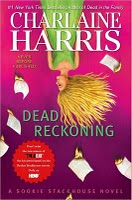
My third failure is the Sookie Stackhouse Reading Challenge, though for this one, I actually read 4 out of 10 books in the series.

I’m likely to finish reading all of these books at some point, so I’m sure you’ll see reviews of these in the new year.

What challenges did you finish?  Which challenges did you fail to finish?

The Watsons by Jane Austen

The Watsons by Jane Austen is an unfinished novel, but encompasses many elements from her finished novels, such as Emma and Sense & Sensibility.  Elizabeth and Emma Watson hail from a poorer family than the Osborne or the Edwards families.  Emma had been living with an aunt for many years, only to return home to a sickly father and a devoted sister, Elizabeth, who has not married despite her advanced age to care for their father.  The story begins with Elizabeth escorting herself to the Edwards’ home before the ball.

“‘I am sorry for her anxieties,’ said Emma, ‘ — but I do not like her plans or her opinions.  I shall be afraid of her.  — She must have too masculine and a bold temper.  — To be so bent on marriage — to pursue a man merely for the sake of situation — is a sort of thing that shocks me; I cannot understand it.  . . . ‘” (page 110)

Again we see Jane Austen’s insistence that marriage for wealth or improved situation are appalling, yet often done in society.  Emma is a bit more outspoken than Elizabeth Bennet, while Elizabeth has a sense of duty to the family, much like Elinore in Sense & Sensibility.  The sickly father is reminiscent of the father in Emma.  In may ways, The Watsons seems to be a starting point for many of Austen’s novels or at least an earlier work that inspired her to keep writing.

Although unfinished, readers can clearly see where the story would have gone eventually given the sickly nature of Emma and Elizabeth’s father.  One of the most interesting parts of the work are the relationship or lack there of that Emma has with her other brothers and sisters.  The love interests in the novel range from a self-indulgent, young man to an older Lord who knows his place in society and believes women should just fall for him instantly no matter how distant and self-indulgent he is.  Of course, there also is the quiet preacher who has caught the eye of a wealthy woman, but has a silent adoration for another.

The Watsons, like Austen’s other completed novels, has a depth that may be missed upon first reading, but her characters remain enduring and witty.  Gossip is prevalent in many of her novels, but the Watsons provides a great deal of snide remarks and backhanded comments.  Another enjoyable Austen read.

**Thanks to Anna for letting me borrow her copy so I could finish the Jane Austen Challenge.  I’ll probably be reading the other two novels in the new year.***

This is my 14th and final book for the Jane Austen Challenge 2010.  I’ve officially completed my 9th challenge.


This is my 10th book for the Everything Austen II Challenge.

My 2011 Reading Challenges

With the baby coming in the new year, I’m going light on the reading challenges, though I do still have the perpetual Reagan Arthur Challenge, which will carry into the new year and beyond until I quit.

Let’s start off with the challenge I will host in 2011 and the one I co-host every year with Anna at Diary of an Eccentric.

I’ll be reading about 5-10 poetry books, one of which will be for the group read-a-long and discussion, for my Fearless Poetry Exploration Reading Challenge.  The challenge officially requires participants to only read 1 book and just give poetry a chance in 2011.  I’m hoping a lot more of you that don’t read poetry will sign up to try just one book.  The challenge runs from January through December 2011.  Check out the details here.

War Through the Generations, a blog dedicated to war-related reading challenges, is hosting a U.S. Civil War reading challenge in the new year.  For this one, I’m going light with 3-5 books (or up to 2 movies).  I could end up reading more books, but I don’t want to over-commit myself.  The challenge runs through January through December 2011.  I hope many of you will join us for this challenge.

I really enjoyed this challenge this year, and I’m signing up to do it again in 2011.  While I did increase my goal to 50 new-to-me authors this year, in 2011, I will be sticking with the 25 new authors limit.  I read way more than 50 new-to-me authors this year, reaching 62.

These new authors don’t have to be debut authors, and the challenge runs from January through December 2011.  Check it out.

I’ll be signing up for the Wish I’d Read That Challenge 2011 at the curious level, with 3 books.  I could end up reading more than that.  One book I’ll plan on reading is Persuasion by Jane Austen and perhaps the Stieg Larsson series.  The challenge runs from January through December 2011.

I also enjoyed the Ireland Reading Challenge this year, and I am signing up to read for it again.  Carrie has a great list of suggested books and authors.  The challenge runs from January through November 30, 2011.  I’ll be signing up for the Shamrock level again with 2 books, and I plan on participating in the read-a-long.

Finally, I’m signing up for the Nordic Reading Challenge 2011, which runs from January through December 2011.  I’ll be reading for the Freya level of 3-5 books, with the intention of reading the Stieg Larsson series. I’ve meant to read these books for a long time.

That’s it for now.  How many have you signed up for?

***As of Jan. 6, 2011***

Ok, I broke down and signed up for a more informal challenge because I failed the Sookie Stackhouse Reading challenge last year, and this one gives me a chance to redeem myself.

Dar at Peeking Between the Pages is hosting her own 2011 Sookie Stackhouse Reading Challenge, and I’ve decided to throw in too.

I’ll be reading the remaining books in the series that I failed to read in 2010.

I hope you’ll join us.

The Cool Woman by John Aubrey Anderson

The Cool Woman by John Aubrey Anderson begins in 1970 when Lieutenant Bill Mann enters pilot training and begins to live his dream of becoming a fighter pilot.  Mann is a black man entering the military at a time when bigotry and ambition made a dangerous cocktail for his race.  He’s determined to make his mark and do his father proud, and in the process meets the love of his life, Pip.

“In the world of aviation, conventional wisdom says:  To keep an aircraft in the air, a pilot will always need at least one of three ingredients:  airspeed, altitude, or ideas. If any one or two of those ingredients is absent or in short supply, the pilot must have a proportionate abundance of whatever remains.” (page 3)

Throughout the novel, Anderson weaves in Mann’s background and hidden secrets, but he also unveils how the path to God and faith is wrought with many obstacles and trials.  Christian faith plays a large role in this novel, as it should given the combat situations and uncertainty in the lives of the families tied to Bill Mann and his friend Rusty Mattingly and every other combat pilot they encounter along the way.

The three ingredients necessary for aviation are like those necessary for faith, but readers will also note that these ingredients can be boiled down to one word — hope.  Hope is the main message of the novel despite the bullets and bigotry flying through its pages.  Anderson’s use of sparse language to tell his story makes the plight of Mann and his friends in the jungles of Vietnam immediate and harrowing at every turn, but it also helps illuminate the enduring camaraderie and bonds that were created between soldiers, nurses, administrators, and many others.

“Apparently, the sound told the gunners exactly where they were; the anti-aircraft fire intensified and became a steel curtain woven of angry red and white arcs.  Driver’s grip tested the stress tolerance of the handholds.  Within seconds the airplane was standing on its nose — the engine was threatening to come off the mounts; swarms of tracers flashed by on all sides, barely missing them.  Driver was as far down in his seat as he could get, mesmerized by one particular string of red balls that seemed frozen in space just outside the canopy.”  (page 107)

Overall, The Cool Woman is a captivating novel about Air Force pilots and the struggles they faced.  It also explores the racism in the military, the politics that gets things accomplished or screws things up, and the faith it takes to not only do what needs to be done, but get through the roughest patches.  Anderson’s cool woman is not the plane, but the inner self that must be crafted and nurtured in times of combat.

This is my 62nd book for this challenge.

This is my 14th book for this challenge.

Mailbox Monday #111

I hope everyone had a great holiday.  Mine was nice and quiet, minus the horrendous loss of the Celtics to the Magic.  Very sad.  We had a nice Christmas Eve with Anna and her family and got to see The Girl as Gabriel in the Christmas Pageant at her church.  She did wonderfully.

Mailbox Mondays (click the icon at the right to check out the new blog) has gone on tour since Marcia at The Printed Page passed the torch.  This month our host is Lady Q of Let Them Read Books.  Kristi of The Story Siren continues to sponsor her In My Mailbox meme.  Both of these memes allow bloggers to share what books they receive in the mail or through other means over the past week.

Just be warned that these posts can increase your TBR piles and wish lists.

Here’s what I received from Anna & her family as Christmas gifts, mostly for our baby girl who isn’t quite here yet:

1.  The Odious Ogre by Norton Juster and Jules Feiffer

2. It’s Christmas, David by David Shannon

3. Tony Baloney by Pam Munoz Ryan and Edwin Fotheringham

4. Thirst No. 2 by Christopher Pike, obviously for me.

5. Bedtime Stories published by Hallmark

These are from my Booklovers Secret Santa: (see photos below of the books and other goodies; Thanks so much Beverly)

6. The Sibling Society by Robert Bly

7. La Dame d’Esprit by Judith P. Zinsser

8. The Beautiful Cigar Girl by Daniel Stashower

What did you receive in your mailbox?

Merry Christmas! And the 77th Virtual Poetry Circle

My husband and I would like to wish everyone celebrating Christmas a wonderful day.  We’ll be watching the Celtics — or at least I will — and hanging out with movies.

However you celebrate the season of giving and peace, we hope that you enjoy yourselves and remember to be thankful for what you have in your lives whether it is family or friends or just a warm cup of coffee.

****

Now for today’s 77th Virtual Poetry Circle!

Welcome to the 77th Virtual Poetry Circle!

Remember, this is just for fun and is not meant to be stressful.

Keep in mind what Molly Peacock’s books suggested. Look at a line, a stanza, sentences, and images; describe what you like or don’t like; and offer an opinion. If you missed my review of her book, check it out here.

Today’s holiday themed poem is from one of my favorite poets, Robert Frost:

Christmas Trees

A Christmas Circular Letter
  
The city had withdrawn into itself  
And left at last the country to the country;  
When between whirls of snow not come to lie  
And whirls of foliage not yet laid, there drove  
A stranger to our yard, who looked the city,   
Yet did in country fashion in that there  
He sat and waited till he drew us out  
A-buttoning coats to ask him who he was.  
He proved to be the city come again  
To look for something it had left behind   
And could not do without and keep its Christmas.  
He asked if I would sell my Christmas trees;  
My woods—the young fir balsams like a place  
Where houses all are churches and have spires.  
I hadn't thought of them as Christmas Trees.    
I doubt if I was tempted for a moment  
To sell them off their feet to go in cars  
And leave the slope behind the house all bare,  
Where the sun shines now no warmer than the moon.  
I'd hate to have them know it if I was.      
Yet more I'd hate to hold my trees except  
As others hold theirs or refuse for them,  
Beyond the time of profitable growth,  
The trial by market everything must come to.  
I dallied so much with the thought of selling.      
Then whether from mistaken courtesy  
And fear of seeming short of speech, or whether  
From hope of hearing good of what was mine,  
I said, "There aren't enough to be worth while."
  
"I could soon tell how many they would cut,     
You let me look them over."  
 
                                    "You could look.  
But don't expect I'm going to let you have them."  
Pasture they spring in, some in clumps too close  
That lop each other of boughs, but not a few     
Quite solitary and having equal boughs  
All round and round. The latter he nodded "Yes" to,  
Or paused to say beneath some lovelier one,  
With a buyer's moderation, "That would do."  
I thought so too, but wasn't there to say so.   
We climbed the pasture on the south, crossed over,  
And came down on the north. 
 
                                    He said, "A thousand."  
  
"A thousand Christmas trees!—at what apiece?"  
  
He felt some need of softening that to me:       
"A thousand trees would come to thirty dollars."  
  
Then I was certain I had never meant  
To let him have them. Never show surprise!  
But thirty dollars seemed so small beside  
The extent of pasture I should strip, three cents    
(For that was all they figured out apiece),  
Three cents so small beside the dollar friends  
I should be writing to within the hour  
Would pay in cities for good trees like those,  
Regular vestry-trees whole Sunday Schools     
Could hang enough on to pick off enough.  
A thousand Christmas trees I didn't know I had!  
Worth three cents more to give away than sell,  
As may be shown by a simple calculation.  
Too bad I couldn't lay one in a letter.       
I can't help wishing I could send you one,  
In wishing you herewith a Merry Christmas.

Let me know your thoughts, ideas, feelings, impressions.  Let’s have a great discussion…pick a line, pick an image, pick a sentence.

I’ve you missed the other Virtual Poetry Circles.  It’s never too late to join the discussion.

Week #3 Matterhorn Discussion

Today is week 3 of the Matterhorn by Karl Marlantes read-a-long that Anna and I started for the Vietnam War Reading Challenge‘s last hurrah!

Every Friday throughout December, Anna and I will be discussing the chapters we’ve read of Matterhorn.

Today’s discussion on War Through the Generations will be about Chapters 11-15!

If you’d like to join us, please do so.  We’d love to hear your thoughts on the book.  Even if you join us later on in the month, we won’t mind.  We love book discussions.

You know you’re curious.  Go on, check it out!