Quantcast

Mailbox Monday #256

Mailbox Monday, created by Marcia at To Be Continued, formerly The Printed Page, has gone through a few incarnations from a permanent home with Marcia to a tour of other blogs.

Now, it has its own permanent home at its own blog.

To check out what everyone has received over the last week, visit the blog and check out the links.  Leave yours too.

Also, each week, Leslie, Vicki, and I will share the Books that Caught Our Eye from everyone’s weekly links.

Here’s what I received:
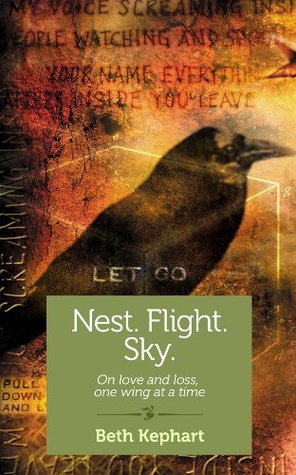
1. Nest. Flight. Sky: On Love and Loss, One Wing at a Time by Beth Kephart, purchased for Kindle with my Amazon gift card from Anna.

In Nest. Flight. Sky: On Love and Loss, One Wing at a Time, award-winning memoirist Beth Kephart returns to the form for the first time in years to reckon with the loss of her mother and a slow-growing but soon inescapable obsession with birds and flight. Kephart finds herself drawn to the startle of the winter finch, the quick pulse of hummingbirds, and the hungry circling of hawks. She discovers birds in the stories she tells and the novels she writes. She hunts for nests, she waits for song, she seeks the stories of bird artists, she waits. Nest. Flight. Sky. is about the love that endures and the hope that saves us. It’s about the gift of feathers.

2.  When the Cypress Whispers by Yvette Manessis Corporon for review from Harper.

On a beautiful Greek island, myths, magic, and a colorful cast of characters come together in When the Cypress Whispers, Yvette Manessis Corporon’s lushly atmospheric story about past and present, family and fate, love and dreams that poignantly captures the deep bond between an American woman and her Greek grandmother.

The daughter of Greek immigrants, Daphne aspires to the American Dream, yet feels as if she’s been sleepwalking through life. Caught between her family’s old-world traditions and the demands of a modern career, she cannot seem to find her place.

Only her beloved grandmother on Erikousa, a magical island off the coast of Greece, knows her heart. Daphne’s fondest memories are of times spent in the kitchen with Yia-yia, cooking and learning about the ancient myths. It was the thought of Yia-yia that consoled Daphne in the wake of her husband’s unexpected death.

What did you get in your mailbox? 

Also be sure to check the Mailbox Monday blog for the Books That Caught Our Eye feature and let us know what caught your attention.

239th Virtual Poetry Circle

Welcome to the 239th Virtual Poetry Circle!

Remember, this is just for fun and is not meant to be stressful.

Keep in mind what Molly Peacock’s book suggested.

Look at a line, a stanza, sentences, and images; describe what you like or don’t like; and offer an opinion. If you missed my review of her book, check it out here.

Also, sign up for the 2014 Dive Into Poetry Reading Challenge because there are several levels of participation for your comfort level.

For more poetry, check out the stops on the 2013 National Poetry Month Blog Tour and the 2012 National Poetry Month Blog Tour.  And think about participating in the 2014 National Poetry Month Blog Tour — signups will begin in March.

Today’s poem is from D. Nurkse from The Rules of Paradise:

Evening Practice

I asked my father,
“would you rather die
of cancer or a heart attack?
Would you rather be executed   
or put in jail for life?
Which would you rather be—
a spy or a sentinel?”
And he tried to answer
honestly, combing his thinning hair
with his fingers, thinking of something else.   
At last he fell silent. I ran out
to savor the dregs of dusk
playing with my friends
in the road that led to the highway.   
The ball flew up toward day
and landed in night.
We chanted. Every other minute
a truck, summoned by our warnings,   
brushed past in a gust of light,   
the driver’s curses muffled
by distance: the oncoming wheels   
were the point of the game,
like the scores in chalk
or the blood from scuffed knees   
that we smeared across our faces:   
so when my mother called,
her voice was quaint and stymied   
and I took all the time in the world   
trotting home past tarped barbecue pits,   
past names of lovers filling with sap,   
past tentative wind from sprinklers:
then I was stunned to see my golden window   
where all faces, hanging plants, dangling pots   
were framed by night and dwarfed   
by a ravenous inward-turning light.

What do you think?

Bad Intentions by Karin Fossum, translated by Charlotte Barslund

Source: Borrowed
Paperback, 184 pages
I am an Amazon Affiliate

Bad Intentions by Karin Fossum is the 9th book in the Inspector Konrad Sejer series and is set in Norway, but readers will get little sense of Norway other than the odd name here and there for places and people and the references to the bitter cold.  While Norway can be bitterly cold in the winter months, there has to be more to a country and its culture than that, but little of that comes across in this novel.  Additionally, the series stars Inspector Konrad Sejer, but readers will get little sense of him in this slim volume where he makes the rare appearance and the main focus of the book being on three young men — Jon, Reilly, and Axel.

“He disappeared into the kitchen and they heard him scrabbling.  Then he returned with the fireguard and placed it in front of the fire.  The cast-iron fireguard with two wolves baring their teeth.

Jon looked at the wolves and at his two friends.” (page 2)

Fossum has created a scenario that demonstrates the power that friends can have over one another, particularly when one of the friends is more dominant in the relationship than the others.  It is easier to agree to cover-up an accidental death than to call the emergency services, or is it.  These young men are like sketches of profiles that police would create following a crime, and while you uncover a little bit about their backgrounds and their pasts, you never really see them in full view, you cannot empathize with their decisions, and you cannot cheer for them to get away with their crimes.  The way in which Fossum has crafted these characters must be intentional, a cautionary tale against the pressures of friendship especially when it can lead to compromised principles.

“‘We’ve talked about the nature of truth before,’ he said.  ‘Many things are true, but they still need to be left alone.  Imaging if people always told the truth, it wouldn’t work.  Society would fall apart.  We need to start each day from scratch,’ he argued.  ‘Build something that people can see, that they can cope with and believe in.'” (page 10)

Bad Intentions by Karin Fossum could have been a stand alone novel without the inspector, as he plays a minimal role, but as it isn’t, the novel leaves readers with a desire for more — more characterization, so that the inspector and the young men become real.  Exploring the darker tendencies of peer pressure and how it tests our mettle when we are called upon to do what’s right is a tough subject to tackle.  Fossum explores a number of themes along this line, but with little background on the boys, it’s hard to keep up with their motivations.

***This experience hasn’t soured me on reading others in the series, but this one just fell short for me.

About the Author:

Karin Fossum is the author of the internationally successful Inspector Konrad Sejer crime series. Her recent honors include a Gumshoe Award and the Los Angeles Times Book Prize for mystery/thriller. She lives in a small town in southeastern Norway.

3rd book for 2014 European Reading Challenge; this is set in Norway.

12 Moons Video Project Is Live at Atticus Review

With the new year comes the monthly unveiling of the 12 Moons by Erica Goss, Kathy McTavish, Nic S., and Swoon at Atticus Review.

Beginning last year, Erica was kind enough to share some insight into the project, and now that it’s here and live with the first installment, I wanted to provide a central list of links for our previous guest posts and interviews below:

With that recap, I’d like to turn everyone’s attention to January’s post at Atticus Review.  Do spread the word, make comments, and wait anxiously for February’s installment…

I know I am.

Return to Tradd Street by Karen White

Source: Penguin
Paperback, 336 pages
I am an Amazon Affiliate

***Beware that this review could contain spoilers as this is the 4th book in the series.***

Return to Tradd Street by Karen White brings Melanie Middleton face-to-face with everything she’s been avoiding — her feelings for Jack Trenholm, the future of 55 Tradd Street, and her pending parenthood — but Melanie still falls back on her trademark effort to avoid tough decisions even when decisions look as if they’ll be made for her.  Her gift has helped her hone her avoidance skills over the years, but as she continues to live and refurbish one of the oldest houses in Charleston — one she inherited from a man she met only once — her skills are put to the test when another body is found on the property.  The infant body bricked up in the foundation of the house raises a lot of questions about the Vanderhorst family tree.

“Pregnancy hormones coupled with a rejected declaration of love and a marriage proposal based on pity had wreaked havoc on my self-confidence and backbone.  I wasn’t sure whether I could ever recover.  Besides I’d lived my life on the premise that if you pretended something wasn’t there it would eventually go away.  At least, it usually worked where dead spirits were concerned.”  (page 5)

Pregnancy can play with anyone’s emotions and confidence, but Melanie is particularly thrown by the uncertainty of the baby’s father’s feelings toward her.  Between her mother, Jack, and Sophie pushing her to face the reality of her pregnancy, Melanie is feeling the pressure.  White brings readers back to the characters they love, and they will still cheer for Melanie to get over herself and accept her feelings for Jack.  This story is a little spookier than the others in the series, but perhaps that’s because it will hit closer to home for mothers and parents.

“I smoothed down the red maternity dress, noticing how it fit much more snugly than when my mother had purchased it for me only a few months before.  I’d resisted wearing it, but it was Nola’s Christmas play and I wanted to look festive.  I wore my mother’s diamond pendant earnings that, according to her, would draw the eye upward, away from my expanding girth.  As I stared at myself in the vestibule mirror, I knew it was like planting flowers in the window boxes of a burned-out house so nobody would notice it needed painting.” (page 220)

Return to Tradd Street by Karen White is engaging, endearing, and enthralling with its mysteries, its pent up tension, and its historical tidbits, and White’s characters are always ready to give you a warm embrace when you need one.  The novel is about letting go of past hurts, embracing our histories as part of who we are today, and moving forward by grabbing a hold of what we want most out of life.

About the Author:

Known for award-winning novels such as Learning to Breathe, the Southern Independent Booksellers Alliance 2009 Book of the Year Award finalist The House on Tradd Street, the highly praised The Memory of Water, the four-week SIBA bestseller The Lost Hours, Pieces of the Heart, and her IndieBound national bestseller The Color of Light, Karen has shared her appreciation of the coastal Low country with readers in four of her last six novels.

Italian and French by ancestry, a southerner and a storyteller by birth, Karen has made her home in many different places.  Visit the author at her website, and become a fan on Facebook.

Mailbox Monday #255

Mailbox Monday, created by Marcia at To Be Continued, formerly The Printed Page, has gone through a few incarnations from a permanent home with Marcia to a tour of other blogs.

Now, it has its own permanent home at its own blog.

To check out what everyone has received over the last week, visit the blog and check out the links.  Leave yours too.

Also, each week, Leslie, Vicki, and I will share the Books that Caught Our Eye from everyone’s weekly links.

I want to thank Vicki for taking on the first month of Mailbox Monday postings at its permanent home.

Here’s what I received this week:

1.  The Obedient Assassin by John P. Davidson, which came unexpectedly from Meryl Moss.

Ramón Mercader was plucked from the front of the Spanish Civil War by the Soviets and conscripted to murder the great in­tellectual Leon Trotsky, a leader of the Bolshevik Revolution who was exiled in the 1920s for opposing Joseph Stalin.

As Ramón is trained for the task and assumes a new identity, he lives a lush life in Paris, befriending Frida Kahlo and other artists of the time. He falls in love with a left-leaning Jewish woman whom he is ordered to seduce as a means of getting at Trotsky.

From Barcelona to Paris and New York to Mexico City, the group controlling Ramón—including Ramón’s mother and her lover—guides the assassin on the inevitable resolution of his grim task as he must penetrate Trotsky’s compound.

What did you receive?

238th Virtual Poetry Circle

Welcome to the 238th Virtual Poetry Circle!

Remember, this is just for fun and is not meant to be stressful.

Keep in mind what Molly Peacock’s book suggested.

Look at a line, a stanza, sentences, and images; describe what you like or don’t like; and offer an opinion. If you missed my review of her book, check it out here.

Also, sign up for the 2014 Dive Into Poetry Reading Challenge because there are several levels of participation for your comfort level.

For more poetry, check out the stops on the 2013 National Poetry Month Blog Tour and the 2012 National Poetry Month Blog Tour.  And think about participating in the 2014 National Poetry Month Blog Tour — signups will begin in March.

Today’s poem is from Kevin Hughes in Poems for the Writing: Prompts for Poets (my review):

I Can't Stand You (page 60)

I cant stand you like I can't stand a paper cut,
Like I can't stand that guy
Talking on his cell phone in the library,
Like I can't stand driving behind a grandmother.

I can't stand you any more than I can stand
A smudge on my glasses,
Or a bug on my windshield,
Or a pimple on my nose.

I can't stand you the way
Poets can't stand clichés,
Nuns sacrilege,
Or teachers teacher's pets.

What do you think?

February Read-a-Long at War Through the Generations

As part of the War Through The Generations 2014 Reading Challenge with a Twist, we’ll be hosting a read-a-long for the Gulf Wars (Gulf War/Operation Desert Storm and Iraq War/Operation Iraqi Freedom).

In February, we’ll be reading Sunrise Over Fallujah by Walter Dean Myers, which is about Operation Iraqi Freedom.

Discussion questions will be posted on Friday for the designated chapters.

As there are no chapter numbers, we’ll have to use approximate page numbers. The copy Serena will be using is in the image to the left.  I’ve included some words for the beginning and ending of the sections to help guide those interested in participating.

Here’s the reading schedule and discussion dates: (these are the mass paperback pages)

  • Friday, Feb. 7: Pgs. 1-86 (ends with “I don’t mind, though.”
  • Friday, Feb. 14: Pgs. 87-152 (begins with “April 12, 2003”; ends with “nothing over here.”)
  • Friday, Feb. 21: Pgs. 153-214 (begins with “Sergeant Harris and Jonesy got” and ends with “toothpaste to the Iraqis.”)
  • Friday, Feb. 28: Pgs. 215-end (begins with “A tribal leader”)

We hope you’ll be joining us next month for our Gulf Wars read-a-long.

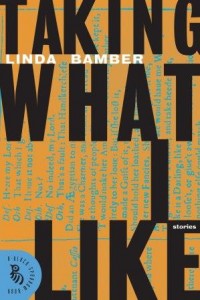
Taking What I Like by Linda Bamber

Source: TLC Book Tours and Linda Bamber
Paperback, 256 pages
I am an Amazon Affiliate

Taking What I Like by Linda Bamber is a collection of eight short stories that give new life to Shakespeare’s plays, Jane Eyre, and American artist Thomas Eakins.  Whether Desdemona is chair of the English Department and in charge of diversity or a professor sees herself as Jane Eyre, Bamber has created stories that are unique but not beholden to their original texts and plot lines.  Bamber clearly has an academic background and offers readers enough of the original background to provide them with guidance on where her story comes from and where it could go.

“Jane lies faint, sinks in deep waters, feels no standing.  As far as I can make out, Jane has an orgasm of grief.  Can I tell them that? Maybe.  It depends on the atmosphere.” (page 77)

The strongest of the short stories is “Playing Henry,” in which a stage actress Clare has to come to terms with not the leading role in the season’s fare but a more subordinate and less desirable role as Henry — from Shakespeare’s Richard II, Henry IV Part One and Henry IV Part Two, and Henry V.  Clare comes across as a real actress who is finally tested by a role she is given, and this is a test that she could fail.  It’s a struggle of her desire to remain an actress versus the subconscious doubt she’s carried since she was a young adult and her father tried to push her into something aimed at changing the world.

Some stories are likely to resonate more with readers than others, which is generally the nature of short story collections, but none of these stories will leave readers stranded or wondering where the inspiration came from, and none would be considered mere re-imaginings.  However, there are some stories where there seems to be too much explanation or backstory, like the author is making sure the reader is still where they should be and forces stories that should evolve more organically.

Taking What I Like by Linda Bamber is refreshing, imaginative, and fun, but it is also serious and reflective.  Bamber clearly flexes her academic muscles in these stories, but she’s also gifted at creating situations and characters that challenge readers’ preconceived notions about the source material.

About the Author:

Linda Bamber is a fiction writer, poet, and essayist and a Professor of English at Tufts University. Her recent fiction collection, Taking What I Like (David R. Godine), includes re-inventions of six Shakespeare plays, a riff on Jane Eyre, and a fictional look at the work of Thomas Eakins. She is the author of Metropolitan Tang: Poems (David R. Godine) and the widely reprinted Comic Women, Tragic Men: Gender and Genre in Shakespeare (Stanford University Press). She has published extensively in literary journals such as The Harvard Review, The Kenyon Review, Ploughshares, and Raritan, as well as traditional media such as The New York Times, The Nation, Tricycle, and Tikkun.  Visit her Website.

4th book for 2014 New Author Challenge

Poems for the Writing: Prompts for Poets by Valerie Fox and Lynn Levin

Source: Valerie Fox, one of the authors
Paperback, 150 pages
I am an Amazon Affiliate

Poems for the Writing: Prompts for Poets by Valerie Fox and Lynn Levin is a short book that guides readers through a series of poetry forms from writing fake translations to writing poems from mathematical sequences.  The guide offers step-by-step instructions on how to write these kinds of poems and offers practical advice on how to avoid over-thinking each attempt.  Rather than over analyzing how to write a fake translation, the authors suggest that poets take a poem in a language they do not know at all and look for patterns in syntax or line breaks or to take a poem in a foreign language they have some familiarity with but don’t know well enough to translate it word-for-word.

“Teachers and workshop leaders can use the get-to-know-you cinquain, a lighter form of the cameo cinquain, as an introductory exercise on the first meeting of a poetry writing class.  Put the class members in pairs, and then tell them to interview and observe one another for material to put in the cinquain.”  (page 17)

While each of the poem styles is explained and the poems included are designated by style in the latter part of the book, readers may have found it more helpful if the poems followed the guidelines and explanations of each style, rather than be in a separate section after all of the styles are explained.  However, other writers might prefer this organization as it provides them with the simple guidance they need to begin their own work without relying upon concrete examples that could rein in their creativity.

Poems for the Writing: Prompts for Poets by Valerie Fox and Lynn Levin is a new kind of guide that strays from the traditional forms of poetry, like sonnet, and demonstrates the variety of poems that can be created that still involve structure.  From advice column prose poems to the I-hate poem and the one based on phrases that catch a researcher’s eye, the book offers exercises that will expand any poet’s scope.

About the Authors:

Valerie Fox’s most recent book is Bundles of Letters, Including A, V and Epsilon (Texture Press), written with Arlene Ang. Previous books of poems are The Rorschach Factory (Straw Gate Books) and Amnesia, or, Ideas for Movies (Texture Press). Her work has appeared in many magazines, including Hanging Loose, The World, Feminist Studies, Siren, Phoebe, Watershed, sonaweb, and West Branch.

Poet, writer, and translator Lynn Levin is the author of four collections of poems: Miss Plastique (Ragged Sky Press, 2013); Fair Creatures of an Hour (Loonfeather Press, 2009), a Next Generation Indie Book Awards finalist in poetry; Imaginarium (Loonfeather Press, 2005), a finalist for ForeWord Magazine’s Book of the Year Award; and A Few Questions about Paradise (Loonfeather Press, 2000). She is co-author of a craft-of-poetry textbook, Poems for the Writing: Prompts for Poets (Texture Press, 2013). Birds on the Kiswar Tree, her translation of a collection of poems by the Peruvian Andean poet Odi Gonzales, will be published by 2Leaf Press in 2014.

Book 3 for the Dive Into Poetry Reading Challenge 2014.