Quantcast

Persuasion, A Final Tearoom Chat

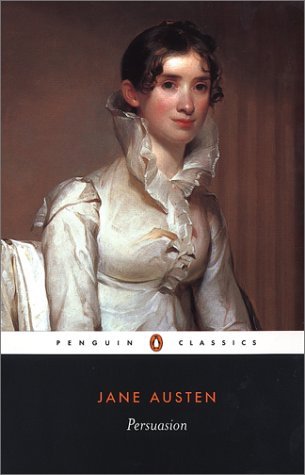
Anna and I are chatting about Persuasion by Jane Austen this month.  We hope that you’ll join us. 

Today’s discussion will be about the final part of the book — Vol. 2, Chapters 7-end.

Today, I’m drinking Orange and Cinnamon Spice tea, and Anna is having some water.

Serena:  The rain comes to Bath and there is some disagreement about whether Anne Elliot or Mrs. Clay will ride in Lady Dalrymple’s carriage.  Mrs. Clay seems to be motivated to walk with Mr. Elliot, but Anne seems as though she too wants to walk with him.  Is this a subtle rivalry for Mr. Elliot’s affections?

Anna: That’s how I took it, and it makes sense given what you find out about the two of them later. I thought it was interesting that there was even a discussion about it, but to me it also highlights Anne’s unimportance within her family. Mrs. Clay is no one to Lady Dalrymple, and Anne is a relation and definitely ranks higher than Mrs. Clay in social standing, so why was there even a question as to which one of them would get to accompany Elizabeth?

Serena: That’s what I find funny because in this situation, it wouldn’t matter what Mrs. Clay would want, Anne is of higher social standing. I do see this as the most blatant fore-shadowing of Austen’s books — well the one’s I have read.

I do find it interesting that in this little shop there is a moment when her sister, Elizabeth, can recognize and shun Wentworth, and Wentworth in turn can recognize Mr. Elliot as the man from Lyme, and he’s subjected to further gossip about him and Anne. That must have made him sad. I like that Austen is showing more of her hero even when he is separate from his heroine. What do you think about this in terms of her other novels? Do you think she had been developing her craft to this point throughout her other novels, so that she could show both sides more clearly?

Anna: From what I can remember, there is more about Captain Wentworth’s feelings, etc., than the other heroes. It may have been a sign of her maturity as a writer, to more effortlessly juggle both viewpoints, but I also think it serves as a contrast between him and Mr. Elliot. By letting the reader truly know Wentworth’s feelings and the way he handles himself amidst his jealousy and the awkwardness of their first meeting in Bath, you really get a sense of his feelings toward Anne being sincere, and it underscores the insincerity beneath Mr. Elliot’s charming facade.

What did you think of Mrs. Smith’s revelations to Anne about Mr. Elliot? I thought it was interesting how much she waffled about what to reveal. At first, she seemed to be saying nice things to Anne about him, and it was obvious she had an ulterior motive, and then as soon as Anne insists that she’s not going to marry him, then Mrs. Smith just lets loose.
Serena: I found Mrs. Smith’s waffling natural for not only someone of her position, but also of a dear friend. Friends always have a hard time telling the unvarnished truth to their friends because they don’t want to hurt their feelings, but they also don’t want their friends to be hurt by a scoundrel.

I think from Mrs. Smith’s point of view, the marriage was all but settled from the gossip she heard, which made her want to wish Anne well in her nuptials, even if it was to Mr. Elliot. And I’m sure her need for help with some land was also part of her motivation to say nothing bad about him, effectively turning her away from him on purpose, making him more reluctant to help even if Anne pleaded with him to do so.

I love when Anne and Wentworth meet in the Octagon room and they have a deeper conversation. I love that she finds strength in the stares from her father and sister. This is a true sign that she’s a stronger woman, ready to stand on her own, don’t you think?

Anna: I think you start to see Anne coming into her own almost from the moment that she finds out Wentworth isn’t engaged to Louisa, and as soon as she realizes Wentworth still loves her but that he’s jealous of Mr. Elliot, you see her go out of her way to try to let him know there’s nothing to worry about on that front.

I love Anne’s discussion with Captain Harville because, while Wentworth has made it clear in his references to Benwick and Fanny Harville that he still loves her, this is really the first time where Anne makes the strength and constancy of her feelings known to him. And of all the ways in which Austen’s heroes and heroines circumvent the rules limiting contact before marriage, the way in which Wentworth lets Anne know about his letter is by far the sweetest and most creative.

Serena: Anne in that conversation with Harville seems contrived to me. It’s almost as if Wentworth and he had a conversation about her and Harville helps him out by getting her to engage in conversation. But that could just be the skeptic in me.

I do know that their conversation incites Wentworth to write the letter to her, which is against social convention, and that it is a hurried letter. Even in a hurry, he’s very eloquent about his feelings for her. I do like how they are alone but not alone because he’s listening to her conversation and he is speaking to her in a letter. Austen must have loved that these two would go outside of convention to have this conversation.

I also love the contrast between the Musgroves and Anne’s own family — like when they unexpectedly show up to give everyone a card for an evening party at their place. It’s like an obligation that they all feel they have to comply with, and it’s surprising that Wentworth is given a card especially after how Elizabeth brushed him off in the shop. Why do you think he was given a card? Was that Elizabeth trying to get a better handle on his fortune so he could be a possible suitor, as Mr. Elliot seemed more interested in Anne?

Anna: I didn’t feel that way about the conversation. That may have been the case I suppose, but I took it as Harville, just like Wentworth, was surprised that Benwick was basically already done grieving for Fanny. I think Harville would take it even harder, given that she was his sister, and now he was tasked with getting the miniature that was intended for her framed for Louisa. Maybe I just got all wrapped up in the emotions, but I thought he was sincere about that, hence why Wentworth was taking care of the details and was at the writing desk in the first place.

Austen makes a point to show how the atmosphere in the room changes as soon as the rest of the Elliot clan arrives. They certainly suck the life out of the party. I don’t think Elizabeth was really interested in Wentworth; it was more that his social standing had risen and made him worth knowing, worth acknowledging, plus he also grabbed Lady Dalrymple’s attention at the concert.

I couldn’t help but notice at this point in the novel how very much the Musgroves, especially Mrs. Musgrove, enjoy having Anne around, even making a point to say that their box for the theater needed to be rescheduled so that Anne could for certain attend. I wonder what Elizabeth and Sir Walter would have said had they heard Anne so willing to skip the party at Camden-place to go to the theater with them.

Serena: Well I know what they would have thought, given how appalled he was that she went to see Mrs. Smith and not their “relative.” I love that they are so oppressive compared to everyone else. It makes me think that the Musgroves are the type of people Austen would have preferred herself, rather than the social climbers.

What do you think about the walk back where Anne and Wentworth get to converse?

Anna: What I find striking about their conversation after she reads the letter is that Austen gives them some privacy at first: “There they exchanged again those feelings and those promises … There they returned again into the past, more exquisitely happy, perhaps, in their re-union, than when it had been first projected…” And then there is the full accounting of what happened on his side so they can better understand one another.

Serena: Isn’t that true with most mature relationships. You already know who you are … more completely … and then you communicate with your partner and they understand you more completely. It’s like they loved each other, but Wentworth was not aware of how much, say, duty meant to Anne, for instance.

I like this more mature relationship, it’s better than that fairy tale that many expect.

This was fun! We’ll have to do this again for Northanger Abbey or Mansfield Park.

Anna: There’s a richness and fullness to their relationship that we don’t see in Austen’s other novels because they have a history. And while it’s painful to take this journey with them, especially at the beginning, I think they come out better for it. I think the maturity of their relationship is why this is one of my favorite Austen novels. After everything they’ve gone though, I can be confident that theirs will be a happy marriage. I like to think all of Austen’s couples lived happily ever after, but I’m most confident about Anne and Wentworth.

Yes, we definitely need to have another chat for another Austen novel down the road!

Serena: I agree, I am most confident that they will be happy as a married couple.

What’s your favorite Austen novel? Which do you think we should chat about in 2015?

Indian Captive: The Story of Mary Jemison by Lois Lenski

Source: Public Library
Hardcover, 272 pages
I am an Amazon Affiliate

Indian Captive: The Story of Mary Jemison by Lois Lenski is based on the true story of Mary Jemison who was captured as a young 12- or 15-year-old girl in Pennsylvania during the French and Indian War and traveled a great distance from the Ohio River Valley to upper New York to live with the Seneca Indian tribe.  The beginning of the novel outlines the facts that are included in the novel, particularly that the entire Jemison family was captured by Indians in 1758 and that only the two eldest brothers escaped capture and Mary was traded to live with the Seneca Indians.

“Then she saw that with the Indians there were white men, dressed in blue cloth with lace ruffles at their sleeves, speaking French in hurried tones.  She counted.  There were six Indians and four Frenchmen.  Were the Frenchmen wicked, too, like the Indians?” (page 19)

While there is foreshadowing about what happens to Mary — known as Molly to family and friends — the technique is not heavy-handed, though there are moments of repetition that she is the only white girl in the Indian village.  Lenski balances the negativity of life with the white man and Indians, careful not to take sides.  The battles between the French and English across the American wilderness sweep up not only the Native Americans, but also the pioneer and frontier families seeking to build lives for themselves.  Molly learns to fit in with her new family, but always she longs for her true family.  She spends many of her early days crying alone in the woods when she’s sent to fetch water, and its easy to see how devastating this new life could be for a child.

“She was living in two places at once, her body with the Indians, but her spirit where she wanted to be — at home with the white people.” (page 160-1)

The Native Americans expect her to work and adapt to their way of life, and some are more harsh toward her failings and her desire to return to the pale-faces at Fort Duquesne or return to the Englishman that arrive seeking the Iroquois help in their battles with the French.  Indian Captive: The Story of Mary Jemison by Lois Lenski is a good introduction for those ages eight to 12 to the French and Indian war and to the Native American way of life at a transitional period in history.

About the Author:

Lois Lenski was a popular and prolific writer of children’s and young adult fiction. One of her projects was a collection of regional novels about children across the United States.


10th book for 2014 Historical Fiction Reading Challenge.


8th book (French and Indian War) for the 2014 War Challenge With a Twist.


14th book for 2014 New Author Challenge.

A Year With Six Sisters’ Stuff: 52 Menu Plans, Recipes, and Ideas to Bring Families Together

Source: Shadow Mountain
Paperback, 242 pages
I am an Amazon Affiliate

A Year With Six Sisters’ Stuff: 52 Menu Plans, Recipes, and Ideas to Bring Families Together is a selection of 52 menus with recipes for main meals, desserts, appetizers, salads, and side dishes.  These menu plans can make the busy family life a little bit easier when you have a plan for every evening meal of the year, thanks to these ladies.  Each menu plan includes the ingredients, the steps for creating the meals, and pictures of the final product — and these pictures will make your mouth water.  Although there are some recipes you’ll have to modify if you have allergies — which is easy enough with some ingenuity — for the most part these recipes will allow you to use what ingredients you have on hand or in the cupboards.  For those who like to plan ahead, they can map out a week’s worth of meals and shop accordingly.

For instance, in menu 45 — Parmesan Spinach-Stuffed Mushrooms, Spinach Lasagna Rolls, and Garlic Breadsticks — I used the ingredients I had in the house to make the lasagna rolls, but not the other elements in the menu plan.  Making the stuffing for the rolls was as easy as mixing the cheese ingredients with egg and chopped spinach, but rather than use traditional lasagna noodles, I used my no-boil lasagna noodles.  Here’s the crazy part — I boiled them, but just long enough to make them pliable for rolling purposes — and that took less time that it would have if I used normal lasagna noodles, though these no boil noodles are shorter.  The recipe does make exactly 9 rolls and if you run out of sauce from a jar, you can always do what I did and used diced Italian-seasoned tomatoes from a can.  Here’s a picture of what they looked like before they went in the oven for 40 minutes:

Spinach Lasagna Rolls

And I can tell you, my husband is not a big spinach eater, but he gobbled these right up.  My next attempt at using the cookbook was for my daughter’s belated birthday bash with Anna and her family.  We used Menu # 27, which included Homemade Chicken Nuggets, Slow Cooker Macaroni and Cheese, and Applesauce Oatmeal Cookies.   Everything from this seemed to go over really well, though the cookies came out very cake-y and Anna and I prefer more crunchy cookies.  Also, my daughter selected her own dessert — rather than birthday cake — from a Menu # 48, Chocolate Raspberry Brownie Parfaits, which were really easy to make.

The chicken nuggets took the longest to make because of all the steps with cutting the chicken breast and preparing the breading, but you could cut out some steps by purchasing Kabob-ready chicken pieces.  The slow cooker mac-and-cheese took the next longest amount of time, and we wondered if cooking the pasta beforehand was necessary, but we did shorten the timing in the cooker because 2 hours seemed way too long.  The parfaits were easy to do once you made the box pudding and the brownies — all that was left was assembling them in dishes.  We also took from Menu # 1, the strawberry lemonade slush, which just needs lemonade from frozen concentrate, frozen strawberries, water, and some lemon-lime soda.  Check out the rest of the photos.

chocolatebrownie

After a big day at the house with friends, I hopped back into the cookbook to make something for breakfast that I’ve never made before — Egg Souffle from Menu #26. if you’re like me and get freaked out by large words like Souffle…this cookbook is for you. It made this so easy. After preparing the souffle and cooking it in the oven, I made bacon to go with it, rather than the French toast and strawberry sunrise drink — that will be for another day. Delicious, light, and moist.

A Year With Six Sisters’ Stuff: 52 Menu Plans, Recipes, and Ideas to Bring Families Together is not just a menu planning helper or cookbook, there are fun activities for the family to do together — like having a night where you shop for anything for dinner and end up with a smorgasbord of everyone’s favorites from cookies to bananas and pizza. Everyone at my house loved the food and it was something we’d definitely try again, and I cannot wait to try out more of these recipes.

About the Authors:

The Six Sisters—Camille, Kristen, Elyse, Stephanie, Lauren, and Kendra—grew up in Utah, but a few of them have lived in other parts of the country since moving out of the house. Between them there are five nieces and three nephews, and all of the sisters love playing “aunt.” The sisters started the blog in February 2011 to keep in touch while they were apart, but it has since gained popularity, garnering more than 9 million viewers per month and more than 307,000 followers on Pinterest. Check out their Facebook page.

a Rafflecopter giveaway

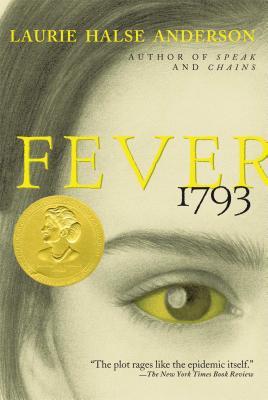
Fever 1793 by Laurie Halse Anderson

Source: Public Library
Paperback, 272 pages
I am an Amazon affiliate.

Fever 1793 by Laurie Halse Anderson is set during the epidemic of Yellow Fever that hit Philadelphia after the British lost to the Colonists in the U.S. Revolutionary War and a new government was taking root in the new country.  Mattie and her family run a local coffeehouse in the city for the politicians and businessmen, with help from Eliza, their freed black employee.  Mattie has big dream — expanding the family business and bringing French finery to America for sale — but her mother is busy keeping the shop running and saving in case of disaster, remaining cautious because she knows all too well that things can get worse like it did when her husband died.

“I tried not to listen to her.  I had not cleared the wax from my ears all summer, hoping it would soften her voice.  It had not worked.”  (page 6)

Anderson relies heavily on source material to provide authenticity to her story of Mattie and her family, and there’s a nice touch of quotes throughout the novel at the beginning of each chapter.  The characters are well drawn and feel like they’ve stepped out of history, with Mattie and her mother resembling any mother-daughter relationship influenced by teenage hormones and changing times.  The love Mattie has for her mother is tested in the worst possible way when the Yellow Fever strikes home, but the love for her grandfather and Eliza keeps her grounded, focused on what needs to be done.

“They told of terror: patients who had tried to jump out of windows when the fever robbed their reason, screams that pierced the night, people who were buried alive, parents praying to die after burying all their children.

I laid my pillow over my head to protect myself from visions of the dead, but I could not breathe.” (page 106)

Mattie’s fear becomes the reader’s fear as she no longer knows where she is or where her family has gone, and the city of Philadelphia and the surrounding towns become unrecognizable.  The city of brotherly love becomes more insulated and fearful, turning away neighbors to protect their own families and resorting to violence to take advantage of those who can no longer defend themselves.  Anderson pulls no punches in her portrayal of disease, competing medical theories, and the decline of a once prospering city struggling with pestilence.

Fever 1793 by Laurie Halse Anderson is a truncated look at the disease that spread through the city like wildfire, taking the lives of nearly 5,000 people or 10 percent of the population.  The author takes historical fact, including the mass burial of fever victims in Washington Square (old potter’s field), and breathes new life into the tragedies endured by a once bustling and budding city.  Mattie is strong-willed and carries herself forward even when all seems lost, relying on the love of those around her and her own gumption to pick up and start again.

About the Author:

Laurie Halse Anderson is the New York Times-bestselling author who writes for kids of all ages. Known for tackling tough subjects with humor and sensitivity, her work has earned numerous American Library Association and state awards. Two of her books, Speak and Chains, were National Book Award finalists. Chains also made the Carnegie Medal Shortlist in the United Kingdom.

Laurie was the proud recipient of the 2009 Margaret A. Edwards Award given by YALSA division of the American Library Association for her “significant and lasting contribution to young adult literature…”. She was also honored with the ALAN Award from the National Council of Teachers of English and the St. Katharine Drexel Award from the Catholic Librarian Association.

Also Reviewed:

9th book for 2014 Historical Fiction Reading Challenge.

Mailbox Monday #263

Mailbox Monday, created by Marcia at To Be Continued, formerly The Printed Page, has gone through a few incarnations from a permanent home with Marcia to a tour of other blogs.

Now, it has its own permanent home at its own blog.

To check out what everyone has received over the last week, visit the blog and check out the links.  Leave yours too.

Also, each week, Leslie, Vicki, and I will share the Books that Caught Our Eye from everyone’s weekly links.

Here’s what I received:

1.  The Late Parade by Adam Fitzgerald for review W.W. Norton’s Liveright Publishing.

Adam Fitzgerald “is a born poet whose extraordinary gift for phrasing, music, and verbal invention distinguish him from any young poet I know writing today,” writes Mark Strand about the twenty-nine-year-old American newcomer who follows “in the line of Arthur Rimbaud, Wallace Stevens, and John Ashbery” (Maureen McLane). Fitzgerald, whose title poem “carries the primal vision of Hart Crane into a future that does not surrender the young poet’s love of the real” (Harold Bloom), has already published in the Boston Review, A Public Space, Conjunctions, and the Brooklyn Rail and has become a poetic lightning rod in the East Village and other avant-garde settings. Here, in The Late Parade, he presents 48 poems that “fire dance around meaning itself” (Boston Review) yet help to redefine the modernist vision for the twenty-first-century with near-demonic displays of sonorous density and manic verbal fertility. This dazzling debut collection will be sure to “cause a commotion.”

2.  Nefertiti in the Flak Tower by Clive James for review from W.W. Norton’s Liveright Publishing.

Clive James’ power as a poet has increased year by year, and there has been no stronger evidence for this than Nefertiti in the Flak Tower. Here, his polymathic learning and technical virtuosity are worn more lightly than ever; the effect is merely to produce a deep sense of trust into which the reader gratefully sinks, knowing they are in the presence of a master. The most obvious token of that mastery is the book’s breathtaking range of theme: there are moving elegies, a meditation on the later Yeats, a Hollywood Iliad, odes to rare orchids, wartime typewriters and sharks – as well as a poem on the fate of Queen Nefertiti in Nazi Germany. But despite the dizzying variety, James’ poetic intention becomes increasingly clear: what marks this new collection out is his intensified concentration on the individual poem as self-contained universe. Poetry is a practice he compares (in ‘Numismatics’) to striking new coin; and Nefertiti in the Flak Tower is a treasure-chest of one-off marvels, with each poem a twin-sided, perfect human balance of the unashamedly joyous and the deadly serious, ‘whose play of light pays tribute to the dark’.

3.  Walking Home: A Poet’s Journey by Simon Armitage from W.W. Norton’s Liveright Publishing.

The wandering poet has always been a feature of our cultural imagination. Odysseus journeys home, his famous flair for storytelling seducing friend and foe. The Romantic poets tramped all over the Lake District searching for inspiration. Now Simon Armitage, with equal parts enthusiasm and trepidation, as well as a wry humor all his own, has taken on Britain’s version of our Appalachian Trail: the Pennine Way. Walking “the backbone of England” by day (accompanied by friends, family, strangers, dogs, the unpredictable English weather, and a backpack full of Mars Bars), each evening he gives a poetry reading in a different village in exchange for a bed. Armitage reflects on the inextricable link between freedom and fear as well as the poet’s place in our bustling world. In Armitage’s own words, “to embark on the walk is to surrender to its lore and submit to its logic, and to take up a challenge against the self.”

4.  Pansy in Paris: A Mystery at the Museum by Cynthia Bardes, illustrated by Virginia Best for review and Wiggles.

Pansy, the poodle who lives at the Palace Hotel in Beverly Hills and Avery, the little girl who adopted her, are off on a new adventure in Pansy in Paris. The two travel to the City of Lights to solve a new mystery: who is stealing paintings from the museum? With only one clue and their boundless curiosity, the two follow the trail, foil the thieves, and recover the missing artwork having great fun as they explore a beautiful new city and enjoy its treasures. Pansy and Avery learn about the joy of travel, the satisfaction of a job well done, and the special pleasure of teamwork.”

5.  The Nose Book by Al Perkins, illustrated by Joe Mathieu for Wiggles from her auntie Kelly for her birthday.

In this Bright and Early Book, Perkins offers a super-simple look at noses of all kinds, colors, and shapes, including their multiple uses and maddening maladies!

6.  Images of War: War in the Balkans: The Battle for Greece and Crete 1940-1941 by Jeffrey Plowman for review from the publisher.

Jeffrey Plowman s photographic history traces the course of the entire Balkan campaign from the first moves of the Italians through Albania and the invasion of Jugoslavia and Bulgaria by German forces through to the battle for Greece and the final airborne assault on Crete. He gives equal weight to every stage of the campaign he doesn t just combine the first stages and treat them as an introduction to the battle for Crete and he covers all the forces involved the Germans, the Greeks, and the Commonwealth troops. By shifting the focus to the mainland, he views the campaign as a whole, and he offers a balanced portrayal of a conflict that is often overlooked in histories of this phase of the Second World War. Most of the graphic photographs he has selected have never been published before, and many come from private sources.

What did you receive?

Sign-Up for the April 2014 War Through the Generations Read-a-Long

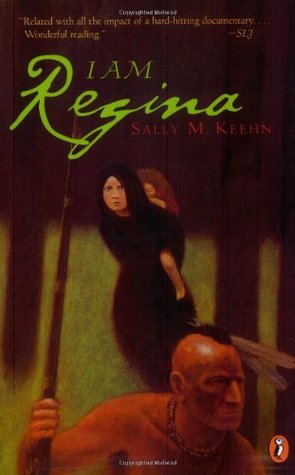
Next month at War Through the Generations, we’ll be hosting a read-a-long of I Am Regina by Sally M. Keehn for the French and Indian War.

Given the short nature of the young adult novel, we’ll be breaking it into just 2 discussions.  Here are the discussion post dates:

  • Friday, April 11: Chapters 1-13
  • Friday, April 25: Chapters 14-end (including afterword)

We hope that you’ll be able to join us!

246th Virtual Poetry Circle

Welcome to the 246th Virtual Poetry Circle!

Remember, this is just for fun and is not meant to be stressful.

Keep in mind what Molly Peacock’s book suggested.

Look at a line, a stanza, sentences, and images; describe what you like or don’t like; and offer an opinion. If you missed my review of her book, check it out here.

Also, sign up for the 2014 Dive Into Poetry Reading Challenge because there are several levels of participation for your comfort level.

For more poetry, check out the stops on the 2013 National Poetry Month Blog Tour and the 2012 National Poetry Month Blog Tour.

Signup for the 2014 National Poetry Month Blog Tour: Reach for the Horizon

Today’s poem is from Michael Schmidt’s New and Collected Poems:

Wasps' Nest

It was the fruit I wanted, not the nest.
The nest was hanging like the richest fruit
against the sun. I took the nest

and with it came the heart, and in my hand
the kingdom and the queen, frail surfaces,
rested for a moment. Then the drones

awoke and did their painful business.
I let the city drop upon the stones.
It split to its deep palaces and combs.

It bled the insect gold,
the pupa queens like tiny eyes
wriggled from their sockets, and somewhere

the monarch cowered in a veil of wings
in passages through which at evening
the labourers had homed,

burdened with silence and the garden scents.
The secret heart was broken suddenly.
I, to whom the knowledge had been given,

who was not after knowledge but a fruit,
remember how a knot of pains
swelled my hand to a round nest;

blood throbbed in the hurt veins
as if an unseen swarm mined there.
The nest oozed bitter honey.

I swaddled my fat hand in cotton.
After a week pain gave it back to me
scarred and weakened like a shrivelled skin.

A second fruit is growing on the tree.
Identical—the droning in the leaves.
It ripens. I have another hand.

What do you think?

Persuasion, A Tearoom Chat Week 3

Anna and I are chatting about Persuasion by Jane Austen this month.  We hope that you’ll join us. 

Click the button below for our 3rd discussion post of Vol. 2, Ch. 1-6.

Interview With Emma Eden Ramos

As I say on the back of Emma Eden Ramos’ Still, At Your Door: A Fictional Memoir:

Still, At Your Door: A Fictional Memoir is a powerhouse of emotion from the moment you begin.  Sabrina Gibbons’ story is upended from the moment her mother drags them out of their abusive home in Butler, Penn, and drops them off with their grandparents in the Big Apple.  Like New York City, this novella precariously teeters between nightmares and dreams, exploring mutual dependence where one wrong step over the threshold can lead to disaster.”

Today, Emma has agreed to answer a few questions about her latest work.  Please give her a warm welcome, and check out my review.

1. You now have 2 full length young readers works completed and published. What inspires you to write for that audience? Is there a message you are looking to get across?

Adolescence, while it only takes up a short chapter in our lives, is a time many of us look back on with relief. “Thank God that’s over,” we say. It’s easy to leave those eight years behind and pretend they are that section in a book we’d rather not underline and revisit. In divorcing ourselves from our own painful experiences, however, we can do a great injustice to young adults who want understanding and reassurance. Yes, being a teenager can feel torturous. Yes, it seems to go on for eternity. No, it doesn’t actually last forever. It’s been ten years since I was sixteen. I attempted suicide twice, engaged in dangerous and impulsive behaviors, and assumed my daily unhappiness would never dissipate. When I look back, I wish there’d been someone there to tell me my life would get better.

The demand for YA fiction is enormous. Authors like Jacqueline Woodson, Laurie Halse Anderson and Ellen Hopkins have helped teens make sense of their experiences and, most importantly, validate their feelings. I’d like to follow in the footsteps of these writers. I want to write stories that resonate with young readers. I want to let teens know that they are resilient and there is hope.

2. Sabrina’s life is far from the nuclear family most people envision. Was there a particular real life experience or inspiration for her and her situation?

The idea for Still, At Your Door: A Fictional Memoir came to me after an unpleasant conversation I had with someone I am happy to say no longer has a leading role in my life. “People like you,” she said, “should never have children.” The comment lingered with me for a few days. I’d recently read Linda Gray Sexton’s memoir titled Searching for Mercy Street: My Journey Back to My Mother, Anne Sexton, so exploring the mother-daughter relationship was something I already wanted to do. While reading Searching for Mercy Street, I found myself identifying with both Linda Gray and Anne Sexton. Linda Gray was the first daughter of a woman who suffered from a debilitating mental illness.

She, like many children of a parent who has a psychiatric disorder, was forced to grow up quickly and learn to fend for herself. While I empathized with Linda Gray’s struggle, I caught myself wondering if I would be the kind of mother Anne Sexton was. Would the stresses of motherhood be too difficult for me, too?

One evening I was brushing my teeth and, as I caught my reflection in the mirror, I asked myself (these are the exact words), “who is the mother I don’t want to be?” Sheila, Sabrina’s mother, was the answer to my question. That was the first line on the blueprint for Still, At Your Door.

3. You’ve studied psychology and that comes through in the Still, At Your Door. What particular behavioral conditions and knowledge did you use and why?

Sheila, Sabrina’s mother, suffers from Bipolar disorder. While she is an eccentric person between episodes, Sheila, when she cycles, is at the mercy of her illness. Bipolar disorder, like other psychiatric illnesses, varies in severity from person to person. Sheila is on the higher end of the spectrum.

There are psychiatric disorders that seem to be associated with creativity. Many famous artists, while they went undiagnosed because psychiatry was in its early stages of development, showed signs of particular disorders. Virginia Woolf, for example, seemed to be Bipolar. Like many sufferers, Woolf experienced severe depression, hypomania and mania. The hypomanic phase is the phase in which people tend to feel most creative. In Sheila’s case, it is in the hypomanic phase of her cycle that she is the fun-loving, creative woman her children adore. Sheila will learn all the lines to a play in just one evening, take her children on exciting outings and still have energy to entertain a crowded restaurant with Marlene Dietrich impressions. When she is experiencing depression or full-blown mania, however, Sheila is frightening and even dangerous.

I have been interested in mental illness and its effects on creativity for some time now. Two disorders that seem to be linked directly to creativity, Bipolar disorder and Borderline personality disorder, are especially interesting to me. I am not, however, merely curious in clinical sense. For me, it’s personal. That’s another story, though.

4. How would you describe your writing process?

I tend to begin plotting a story a month or so in advance. I do most of my plotting in my head because I have a habit of losing things. I once wrote out an idea for a piece on a pamphlet I received from the Hare Krishnas in Union Square Park.

I, at some point between discussing Krishna consciousness with a lovely woman named Gopi and riding the subway, lost the outline. I’m not sure which I missed more, the pamphlet or the story idea.

It generally takes me nine months to write a book. There have been times when I’ve started a story, abandoned it, then revisited it later on. Still, At Your Door was one of those stories.

5. What projects do you have coming up next?

I’m in the process of writing another YA book. Please stay tuned!

Thanks, Emma, for taking the time to chat with us!

Here We Are Now: The Lasting Impact of Kurt Cobain by Charles R. Cross

Source: It Books
Hardcover, 192 pages
I am an Amazon Affiliate

Here We Are Now: The Lasting Impact of Kurt Cobain by Charles R. Cross is not a biography, but an an examination of Kurt Cobain’s impact as a musician and artist on the music industry, fashion, and yes on the national dialogue about suicide and addiction.  Cross and Cobain did have friends in common, and he has relied on first-hand accounts and statements made by Nirvana’s members and Courtney Love, his wife at the time of his death.  Cobain’s impact on music is clear from the times Nirvana’s albums made the “best of” lists of magazines, alongside the band’s videos.

“I would argue that no rock star since Kurt has had that same combination of talent, voice, lyric-writing skill, and charisma — another reason he is so significant, two decades after his death.  The rarity of that magic combo is also part of the reason Kurt’s impact still looms so large over music.” (page 11)

This slim volume easily makes the case for Cobain’s impact on music before the onslaught of per-song downloads, and his lasting impressions on the Hip-Hop genre.  Readers will get a true dose of how the music world influenced fashion and how in the case of Grunge, which Cobain never understood how it could be attached to him or his music, was harder to bring to high-fashion houses.  Given that flannel and cardigans in Cobain’s style, which was born out of his monetary troubles, were easily obtained for a few dollars at local thrift stores or even just Kmart, fans were not interested in buying $6,000 trench coats or other high-priced fashion items made to resemble those thrift store finds.

“Many rock stars have an impact on fashion, but Kurt’s influence has truly been a bizarre outgrowth of his fame, and one that will last (even if his music will undoubtedly be his greatest legacy.).  Kurt very much planned his musical career, writing out imaginary interviews with magazines in his journals long before he became famous.  But he never considered that if he became a star, his ripped-up jeans and flannel shirts might one day end up on the runway’s of New York fashion shows.” (page 65-6)

Cross touches upon the studies of suicide rates following Cobain’s death and how his death led to the inclusion of resources in reports on suicide to help those in need.  Here We Are Now: The Lasting Impact of Kurt Cobain by Charles R. Cross is a book that focuses on the influence of a music talent on our culture without offering judgment on his personal choices in life.

About the Author:

Charles R. Cross is a Seattle-based journalist and author. He was the Editor of The Rocket in Seattle for fifteen years during the height of the Seattle music mania.

13th book for 2014 New Author Challenge.