Quantcast

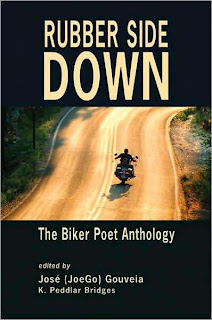
Rubber Side Down Edited By Jose Gouveia

Jose “JoeGo” Gouveia’s Rubber Side Down: The Biker Poet Anthology is one of the best contemporary poetry anthologies on the market. These poems will appeal to not only deep thinkers, but also readers looking for detailed aesthetics. While most of us will never know what it’s like to be hounded by cops, some of these poems will allow readers to live the biker life vicariously.

Bikers tend to be like brothers, easily accepting of their members no matter what location they find themselves in. These poems signify the lonely road these poets travel, the hardships they face, and the beauty of the road.

“Harley United” (Page 36)
by Richard Vagnarelli

Not to them
Do tortured tones
Of twisted two stroke
Twins appeal;
Racer’s crouch
Grand prix attire
Bright plastic
Wheel to wheel.

Who can deny
The virtues
Of obsession
In a marque,
Symbolic of
The freedom
Sought by those
In dark glasses.

Seated low
In upright posture,
Arms held high,
Feet to the fore,
Proud to live
Astride a legend
Rooted deep
In biker lore.

And in common
With like riders,
Who in the aura
Have delighted,
They remain an
Elite brotherhood,
Alike,
Harley united.

In addition to the poems celebrating brotherhood and connection, some of these poems celebrate famous bikers like Evel Knievel, the evolution of bikes, and women enchanted by the biker life. Some of these poems rhyme, and rhyme well–with an easy rhythm. These poems have a life of their own, and many of them will make you want to read them out loud for emphasis like in “Highway Poets (theme poem)” by K. Peddlar Bridges (page 80) where the lines read: “We’re motorcycle riding/Engine blasting/Line chasing/Gravel chewing/Bug spitting//HIGHWAY . . . POETS!”

Others are simply laugh-out-loud funny, readers should buy a copy simply to read “The Six-Legged Moose.” (I’m purposefully not including this poem in the review to entice you to get this anthology.)

Rubber Side Down is a compilation of witty verse dealing with a number of issues including how bikers deal with aging and the prospect of no longer riding and the freedom of riding and how it makes it difficult to settle back into a “normal” life. Moreover, Rubber Side Down is set up in a format that provides readers with poems and photos of actual bikers in alternating sections, which enables readers to ponder the poems while examining the visual context of these poets’ lives. Each of these biker poets knows poetic style and form and how to break convention without losing their audience, and Rubber Side Down will appeal to more than just bikers and their families.

“WTHEFM” (Page 99)
by: Susie Howard

No, it ain’t a radio station,
but I listen to it like its playing my favorite
moldy oldies, yeah,
I know the words, snap my fingers
to its back beat I can use it,
the rhythm of too many days
turned in or out, a place named
for itself, like “KCUB its a Bear”.

No, it ain’t the style on my FM dial
I heard over there when home was
for away and dry was a dream cause I sat on my helmet
in the hole, my feet turning to sludge in my boots to
keep the same from happening to my ass,
nodding off to the memory of her
soft thighs, the bow from her bra.

No it ain’t the voice from the box,
that bitch, Hot-Jane-Barbarella,
the Stones or little miss
sunshine Hanoi Rose harmonizing
with, “Have decided to
mid-Tet Offensive cease-fire.”
Its all beaucoup okay, G.I.,
tallRoundEyeCharlieScreamingEagle.

No it ain’t the drone of all the
shitty jobs I’ve had, been laid
off from, kicked out of, walked
on since I got back till my best
friend is the guy at the Port Authority turnstile
booth who lets me through
for a warm night on the benches,
so long as I move now and then.

No it ain’t the sweet sing song of
my kids, scared of me at night when they tried to
climb in my bed but
I freaked out, ready to kill, with
demons before me where my kids
should have been, cause she took
them to hide which was right.

No it ain’t the buzz in my brain
when I hear, the 60’s–
remember when Little Anthony was Imperial,
when my best friend checks in for methadone treatment,
(after forty years, it ain’t
no treatment), when they say,
“Son, we’ve got PTSD”.

No it ain’t a radio station.
When it doubt, you got to dance.
Its just a backward glance.
A trip from then to now.
A long lost life since Hell.
I’m over the comments.
What The Fuck Moments.
Wanna make a request?

Rubber Side Down packs a punch and made me want to get that ape hanger I’ve always talked about and go for a ride.

Want to go for a ride with these bikers? Here’s your chance; I’m offering to buy one copy of Rubber Side Down for one commenter. (Yes, this is international)

1. For one entry, comment in the form of a poem (no, it doesn’t have to be great; or I might have mercy on you and count your comment as an entry even if it isn’t in poem form.) about why you want to read this anthology.

2. Follow this blog or if you are a follower tell me in the comments.

3. Spread the word about the giveaway on your blog, Twitter, Facebook, etc. and leave a comment here with a link.

Deadline is May 15, 2009, 11:59 PM EST

***THIS GIVEAWAY IS NOW CLOSED***

Also Reviewed By:
Minds Alive on the Shelves

***Giveaway Reminders***

A giveaway of The Mechanics of Falling by Catherine Brady, here; Deadline is May 1 11:59 PM EST

5 Joanna Scott, author of Follow Me, books giveaway, here; Deadline May 4, 11:59 PM EST.

Giveaway for Eleanor Bluestein’s Tea & Other Ayama Na Tales short story collection, here; Deadline is May 6, 2009, 11:59 PM EST.

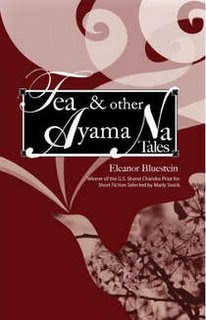
Tea & Other Ayama Na Tales by Eleanor Bluestein

Welcome to the TLC Book Tour stop for Eleanor Bluestein‘s Tea & Other Ayama Na Tales. Today, we have a bunch of things in store for you. After my review, please take a trip through Eleanor’s writing space (complete with photos) and enter the giveaway for her short story book, Tea & Other Ayama Na Tales.

About the Book:

The ten stories in Tea and other Ayama Na Tales take place in the fictional country of Ayama Na, a small Southeast Asian nation recovering from a devastating internal coup and a long drought, both of which have left the population reeling.

The fictional country of Ayama Na is inspired by the sights and sounds of Southeast Asia. A street of fortune tellers in Ayama Na borrows details from one in Singapore; royal palaces, Buddha shrines, and hill tribes echo their counterparts in Thailand; sidewalk cafes in Ayama Na’s capital roll up corrugated metal exteriors and blare music to the street as they do in Viet Nam. But in emotional content and historical detail, Ayama Na most closely resembles Cambodia, where a brave young population, still rebuilding both country and culture in the wake of the Khmer Rouge genocide, operates with a seriousness of purpose and good humor that fills the author of this collection with awe and admiration.

Bluestein’s short stories read like morality plays in which flawed characters struggle with what actions will lead them on the right path and bring about justice. From the McDonald’s worker, Mahala, who wants to set things right for her friend, co-worker, and fellow student, Raylee, to Dali-Roo, a down-on-his-luck farmer working at a Sony factory to make ends meet, Bluestein uses scene breaks to build tension and quicken the pace for some of her more ambitious story lines. She also does an excellent job of weaving in details of her fictional South Asian location, Ayama Na, including the setting, the language, and Asian mysticism.

“Home was a houseboat in a floating village not far from the mouth of the lake, a squalid kitchen and cramped bunk beds ruled over by a mother who hadn’t attended school three days in her life, who worked morning to night cooking and mending nets for Song’s father and brothers, whose stained and wrinkled hands smelled of shrimp and dried fish. The houseboat lapped up and down and moved in and out at the mercy of the weather, and in the dry season, it flowed with the whole floating village closer to the center of the lake, exposing garbage-strewn banks.” (“Skin Deep,” Page 77)

Readers will enjoy many of the stories in this volume, including “Skin Deep,” in which a university student, Song, enters a beauty pageant and takes a year off from school. She has no talents to speak of, but eventually writes and recites three poems before the local judges and wins the competition. Once at the nationals, she concludes she needs a more dazzling talent and embarks upon a journey. She becomes an amateur ventriloquist. The scenes between Song and her mother are wrought with tension because Song is not fulfilling her destiny, and her automaton, Lulu, agrees. The final scene of this story drives the moral home and–like many of the other stories in this book–with a bang.

“While he waited for the artist to take a breath and notice him, Jackman studied the tiny iridescent beetle exploring the edge of Faraway’s beard, the grime sloshing in the creases of his sweaty forehead, the shivers regularly shaking a body swaddled for a brisk fall Philadelphia day.” (“The Artist’s Story,” Page 94)

Each of these stories highlights the struggles facing the people of Ayama Na, which may mirror the struggles of many emerging nations today, as they strive to hold onto their traditions in the face of modernization and globalization. In many cases the modern world is juxtaposed with the cultural norms of this fictional society, and almost all of the characters are faced with a moral dilemma. From the surprise endings in “Skin Deep” and “Pineapple Wars” to quieter changes in character in “The Artist’s Story,” Bluestein is a gifted storyteller who will have readers examining their own lives and learning how to integrate their own cultural roots into their modern lives. These stories also help us examine larger societal issues, like providing aid to devastated nations and cities like New Orleans and China and providing assistance to developing nations. Bluestein’s short story collection showcases her talents, and the book will provide fodder for book club discussion.

Also Reviewed By:

Meghan
The Bluestocking Society
Bookstack
Nerd’s Eye View
Lotus Reads
8Asians
1979 Semi-finalist…
Ramya’s Bookshelf
Feminist Review
Trish’s Reading Nook
Everything Distils Into Reading
Hey Lady! Whatcha Readin’?

About the Author:

Eleanor Bluestein grew up in Brookline, Massachusetts, and attended Tufts University. After graduating with a degree in biology, Eleanor taught science in public school, first in New York and then in Maryland.

For a decade, along with an early literary mentor, Mel Freilicher, Eleanor co-edited Crawl Out Your Window, a San Diego based journal featuring the work of local writers and artists.

Eleanor spent a year in Paris, France, writing fiction and studying French at the Alliance Française. Later, she completed a Professional Certificate in Teaching English as a Second Language at U.C. San Diego. These experiences found their way into the novel Syntax, a current project.

I’d like for you to welcome Eleanor to Savvy Verse & Wit at its new domain.

Above my desk, on the wall to the right of my computer screen, there’s a framed collage created by Matt Foderer, an artist I worked with some years ago. Along with other writers, designers, artists, and computer programmers, Matt and I sat at cubicles in a vast office space, producing multimedia educational products. I wrote words; Matt did computer graphics to accompany the text.

We were as creative as we possibly could be, mindful of the kids who would use these instructional products. But Matt and I both wished we were somewhere else—he creating his own art in the studio behind his house, I at my computer in my narrow home office writing stories.

I have purchased several works of art from Matt—two oil paintings for my living room and the collage on the wall that you see in the photo of my office. I want to describe it to you a little more in words and tell you what it means to me. You can also see it in detail at Matt Forderer.

The collage is one in a series Matt calls “Typewriterheads.” In each work in this series, against some intriguing setting, Matt has placed a human figure who has an antique typewriter where his head should be. In the collage I own, standing with his back to the ocean, is a person I imagine to be a waiter, apron-clad, towel in his hands, an old Underwood for a head. To the waiter’s right a plane lands on the water, a goat on a rock rises from the ocean, and in the sky, looking for all the world like a flying saucer, a huge shell whirls against the clouds.

I bought this collage because, to me, it portrays the poignant life of a writer who needs to work for a living while his head teems with the fantastic stories he dreams of writing. And also because Matt’s collage represents what I aspire to in my own work. Like his art, I want my writing to be funny, smart, evocative, hyper-imaginative, a bit surreal, and poignant, all at the same time. That’s a tall order, and probably why there are so many pages on my cutting room floor.

I no longer live a “cubicle life.” I am fortunate. So many individual’s creative lives are limited or outright thwarted by poverty, illness, war, and the myriad other forms bad luck takes. So if I struggle to get the words on the page, if they fall short of what I hope for, if some days the delete key gets more pounding than any other, if I even think of forgetting how lucky I am, I can look up at my wall. There’s that waiter with his back to the ocean and the untyped words swirling in his funny old typewriter head, wishing he were me, sitting at my desk, making up stories.

Thank you so much Eleanor for an inspiring guest post! Now readers, if you would like to read Eleanor’s short story collection, Tea & Other Ayama Na Tales, check out the giveaway details below.

***Giveaway***

This is open internationally.

1. Leave a comment on this post about what you enjoyed most about this tour stop or what inspires you as a writer.

2. Spread the word about this giveaway and leave me a link on this post for a second entry.

3. Become a follower and leave me a comment telling me that you did (If you already do follow me, please leave me a comment about that) for a third entry.

Deadline is May 6, 2009; 11:59PM EST

Check out the other stops on the tour:

Wednesday, April 1st: The Bluestocking Society

Monday, April 6th: Bookstack

Thursday, April 9th: Nerd’s Eye View

Friday, April 10th: Lotus Reads

Monday, April 13th: 8Asians

Wednesday, April 15th: 1979 Semi-finalist…

Friday, April 17th: Ramya’s Bookshelf

Monday, April 20th: Feminist Review

Thursday, April 23rd: Trish’s Reading Nook

Tuesday, April 28th: Medieval Bookworm

Wednesday, April 29th: Savvy Verse and Wit

*** Giveaway Reminders***

There’s a giveaway for 5 copies of Girls in Trucks by Katie Crouch, here; deadline is April 29, 2009, 11:59 PM EST.

A giveaway of The Mechanics of Falling by Catherine Brady, here; Deadline is May 1 11:59 PM EST

5 Joanna Scott, author of Follow Me, books giveaway, here; Deadline May 4, 11:59 PM EST.

One for the Money by Janet Evanovich (audio)

Janet Evanovich’s One for the Money is the first in the Stephanie Plum series, and after reading/listening to the in-between-the-numbers Plum novels I can see why people would find the in-between books disconcerting. Those novels deviate from the mystery formula and from the narrative Evanovich already has established.

In One for the Money, Stephanie Plum is down on her luck; she’s lost her job, can’t find work, and has begun selling off her furniture to pay her bills. Eventually she falls into the bail bond business with her cousin Vinny and is tasked with apprehending Joe Morelli, who is a cop on the lamb for allegedly committing murder and is attempting to clear his name. In her travels, she apprehends some small time criminals to get by with the help of professional bounty hunter Ranger.

Readers will laugh out loud at Stephanie’s escapades and her attempts to become a tough bounty hunter when she doesn’t even know how to hold a gun, let alone shoot it. Stumbling upon Morelli at every turn, she fails to apprehend him as he outsmarts her, throws her car keys in a dumpster, and kisses her until she’s senseless. The tension between these characters is apparent from their first meeting, and there are definitely unresolved feelings between them. The tension between Ranger and Plum seems to be further in the background and more carnal.

The dynamics between Morelli and Plum leap off the page, and Plum comes into her own as a bounty hunter after she gets some tips on shooting and other tactics from Ranger and several other cops in Trenton, New Jersey. This is an enjoyable read on and off the page. Readers who love a good mystery or are interested in a fast-paced plot, should pick up this witty series.

About the Author:

Janet Evanovich is a writer born in South River, New Jersey.

She is principaly known to have created the character Stephanie Plum, a salesperson of lingerie that has to improvise as a bounty hunter to fill her fridge.

After four years at the art section of the Douglas College in New Jersey, Janet Evanovich decided to go into writing. Sending many manuscripts to several editors, she got as many refusals.

She builds Stephanie Plum with a well rhythmed style, strong characters as the funny Mamie Mazur. Those adventures enjoy a large success.

*** Giveaway Reminders***

Don’t forget to enter the Keeper of Light and Dust giveaway, here and here. Deadline is April 28 at 11:59 PM EST.

There’s a giveaway for 5 copies of Girls in Trucks by Katie Crouch, here; deadline is April 29, 2009, 11:59 PM EST.

A giveaway of The Mechanics of Falling by Catherine Brady, here; Deadline is May 1 11:59 PM EST

5 Joanna Scott, author of Follow Me, books giveaway, here; Deadline May 4, 11:59 PM EST.

Follow Me by Joanna Scott

Welcome to the April Hachette Group Early Bird Blog Tour for Joanna Scott’s Follow Me.

About the Book (From Hachette Website):

On a summer day in 1946 Sally Werner, the precocious young daughter of hardscrabble Pennsylvania farmers, secretly accepts her cousin’s invitation to ride his new motorcycle. Like so much of what follows in Sally’s life, it’s an impulsive decision with dramatic and far-reaching consequences. Soon she abandons her home to begin a daring journey of self-creation, the truth of which she entrusts only with her granddaughter and namesake, six decades later. But when young Sally’s father–a man she has never known–enters her life and offers another story altogether, she must uncover the truth of her grandmother’s secret history.

At more than 400 pages, Joanna Scott’s Follow Me is a very detailed account of Sally Werner’s background as told by her granddaughter, Sally. Scott has a gift for detail, which can become a drawback when Sally Werner is wandering in the woods after leaving her baby with her parents. The twists and turns Sally’s life takes are driven by her fear and her desire to fit in without revealing her true self in each new location, but often the poetic prose gets in the way. It isn’t until page 53 that readers discover Sally has red hair, and readers find this out at the moment when Sally is getting her hair dyed blond. Scott’s writing vacillates from run-on sentences to short fragments, both of which readers may find slow down the plot.

“Running, Running, Running up the jagged slope behind the rows of new corn, over the stone wall, through the woods and meadows. Sting of nettles. Gray sky of dawn. Bark of a startled deer.” (Page 15)

In some cases, the narrative opts for telling the reader what’s going on, rather than showing the action and development through character interaction. Moreover, detailed backgrounds of side characters like Gladdy Toffit are asides that do not propel the plot or character development forward.

“Other days she’d [Gladdy] dress in one of the three rayon skirt-suits she owned, gather bills from the rolltop desk in the living room, and get in the car and drive to the bank in Amity to confer with the person she called her financial adviser. Late in the afternoon she’d come back home to pour her bourbon, urging Sally to join her because, as she claimed, she didn’t like to drink alone.” (Page 119)

Scott introduces Mole into Sally’s life, and that’s when readers will begin to cheer her on, hoping she will take this new opportunity to turn her life around, grab onto her responsibilities, and emerge a stronger woman. When these characters come together, the scene is full of playful tension and drama as he and his friends sit in a room playing Russian Roulette.

“It was similar to a dream, inevitable and natural and illogical. A slanting light shone from the lantern; the radio crackled its song; the river splashed; the crickets chirped; the tension made breathing impossible; the air was so thick the boy could hardly lift his arm, raising the gun to his head in an attenuated motion, the effort exhausting him, drenching him in sweat, the heat of fear turning his pale skin into melting wax.” (Page 104)


About halfway into Follow Me–which as a title works well for this journey type of novel–the drama heats up forcing Sally Werner to make a tough choice, and these scenes were the most vivid and well crafted. These scenes are the most vivid because they propel the plot, they are full of action, and you are right there with Sally in the thick of it, watching how these events bring out her inner strength and how they are bound to impact and force her to take conscious action.

“It meant she had to cover her face, so the next time he hit her his knuckles struck the back of her hand, bouncing her head away from him but not actually hurting her, which only enraged him more, and with a swift movement he yanked her arm away . . . his fist caught her in the mouth, driving into her gullet, shattering bone, filling her vision with a blank darkness that matched the sky.” (Page 206)

“But Sally could guess what the sound signified and looked up in time to catch a glimpse of Leo leaping from the peaked roof above the door. But she didn’t know he had landed on Benny Patterson until she felt her attacker veer backward. He would have pulled her with him if she hadn’t ripped herself free from his grasp. He stumbled, tripped over the corner of the step, and as the cat leaped forward, Leo’s weight exacerbated Benny’s fall; he plunged backward, his feet came out from under him, and his head snapped hard against the brick wall of Potter’s hardware.” (Page 208)

Overall, it takes a long time to be drawn into this book, and readers may have a difficult time getting a fix on Sally Werner’s character. It was hard to feel sympathetic toward her when many of the problems she faces are self-created and she often portrays herself contrary to her own actions. For instance, she considers herself a hard worker and reliable, but she gives birth and leaves her child within 24 hours of bringing him into the world, which is not a prime example of a reliable woman. Scott’s prose is beautiful, but readers can easily lose their footing in the world Scott tells rather than shows her readers. Clearly, Scott is a gifted writer and uses description well to create a vivid scene, but this story may have worked better if it was told in a different way. Those readers who enjoy generational novels and coming of age stories may be interested in this novel unless they have a rough time with overly descriptive novels.

About the Author:

Joanna Scott is the author of nine books, including The Manikin, which was a finalist for the Pulitzer Prize; Various Antidotes and Arrogance, which were both finalists for the PEN/Faulkner Award; and the critically acclaimed Make Believe, Tourmaline, and Liberation. A recipient of a MacArthur Fellowship, a Guggenheim Fellowship, and a Lannan Award, she lives with her family in upstate New York.

Some of the Hachette Group Early Birds Blog Tour Participants:

Peeking Between the Pages
Bermudaonion
My Friend Amy
S. Krishna’s Books
Booking Mama
The Tome Traveller
Diary of an Eccentric
A Novel Menagerie
Necromancy Never Pays
Caribousmom
Drey’s Library
Redlady’s Reading Room
The Burton Review
A Bookworm’s World
Jenn’s Bookshelf

***Giveaway Details***

Hachette Group has offered one lucky U.S./Canadian reader a set of Joanna Scott’s books: Follow Me, Make Believe, Everybody Loves Somebody, Liberation, Tourmaline.

1. One entry, leave a comment on this post other than “pick me” or “enter me”
2. Second entry, blog, Facebook, Twitter, or spread the word and leave a link or comment on this post that you’ve done so.
3. Third entry, follow this blog and let me know.

Deadline is May 4, 2009, 11:59 EST.

*** Giveaway Reminder***

Don’t forget to enter the Keeper of Light and Dust giveaway, here and here. Deadline is April 28 at 11:59 PM EST.

There’s a giveaway for 5 copies of Girls in Trucks by Katie Crouch, here; deadline is April 29, 2009, 11:59 PM EST.

A giveaway of The Mechanics of Falling by Catherine Brady, here; Deadline is May 1 11:59 PM EST

The Mechanics of Falling by Catherine Brady

Welcome to the TLC Book Tour for The Mechanics of Falling and Other Stories by Catherine Brady. You’re in for a real treat today, not only a review, but also an interview and giveaway for my U.S. readers.

They came back inside to find Owen still at the table, a shot glass engulfed by his long, broad-tipped fingers. He was older than the others, his face taut and creased, so tall that he had to slouch in his chair to keep his knees from banging the table. He claimed he was the only black man within a radius of ten miles. What am I doing here? he said. I can’t walk through the campgrounds alone at night. (“Looking for a Female Tenet,” Page 7)

Catherine Brady’s had a lot of practice writing short stories, and it shines through in The Mechanics of Falling & Other Stories. In “Slender Little Thing,” Brady modifies a poetic form, known as Pantoum, in which the second and fourth lines of the first stanza are repeated as the first and third lines of the next stanza. The Pantoum is a variation of the Villanelle, in which the first and third lines in a three line stanza poem are repeated as a refrain alternately throughout the poem. Here’s an example of a Pantoum and an example of a Villanelle. Poets interested in form will enjoy this story because it uses a version of these forms to hammer home the heart of the story where a mother, Cerise, struggles with her lot in life as a nanny to richer parents and as a nurse assistant in a nursing home while trying to raise her daughter, Sophie, to be more than she is.

“The Dazzling World” packs a punch when Judith and Cam are robbed at gunpoint in a foreign country on their way to meet Judith’s sister at her archaeological dig site. Not only does this story immerse readers in a foreign nation, it also leads them on a journey of discovery, almost rediscovery for Judith.

While these stories are each around 20-30 pages each, the characters are complex and on the verge or dealing with a perspective shattering event. Many of these characters are somber, and more than complacent–resigned–until an event jars them awake to look at their world through different eyes.

She pulled a compact from the purse that still hung open on her arm, angling the mirror to examine her hair, reaching up to snag unruly strands. Of the beautiful, fluttering girl, only this artlessness remained. (“Scissors, Paper, Rock,” Page 85)

Settings in this volume of short stories are varied; the characters share common traits, but lead different kinds of lives–two young waitresses trying to pay for college and find themselves, a horse rancher and his roommate’s game of relationship chess, a mother trying to raise her daughter successfully and send her off to college, a couple whose relationship is disintegrating, and many more. Readers will enjoy the surface of these stories as well as their deeper meanings beneath the layers of protective skin. Brady’s prose is captivating and thought provoking all in just a few lines, and she easily fuses poetic lines and techniques into her narratives. (I should have asked her if she writes poetry.)

I want to thank Catherine Brady for her time in answering my questions about her writing. Check out the giveaway details after the interview. Without further ado, here are her answers:

1. I noticed on your website that you’ve published a number of successful short story collections. What is it about your execution of the genre that you think has made it so successful and do you have plans to expand into novel writing?

I feel lucky to have published three collections and for my work to be included in Best American Short Stories. I have a little bit of trouble defining success. If I were fully satisfied by any of my stories, I could quit and take it easy. I think you keep writing because you haven’t achieved all your ambitions for your work. The short story is such a challenging form that there’s plenty left for me to shoot for, and I really, really love the form. I could probably do a better job of defining what I am aiming for than guessing whether I’m successful or not.

I believe a good story satisfies any reader in the most basic way—you care about the characters and their fate. Art always opens a door for any reader, so if you like the plot, or connect with the characters, or enjoy the language, or even dissect every sentence, the story should reward you for whatever effort you are willing to make (and reward you more for more effort). The kind of story I hope to write is one that asks the reader to do some of the imagining and promises to engage her heart as well as her mind.

I am working on a novel right now, and I’ve really been enjoying the writing, which has never been true when I’ve attempted a novel before. So maybe someday I’ll have a novel.

2. Do you find publicizing your short story collections is more challenging that it would be to market a novel? Why?

Yes. It’s more difficult to promote stories. People assume they’re going to be literary and obscure and more difficult than a novel, and nobody really expects you to sell very many copies. It’s much easier to label a novel as being about a specific subject, and what people most enjoy about novels is the chance to get really intimate with a character. A book of stories keeps moving you on to a new set of characters and then another new set. BUT . . . each story should offer you the sudden, deep knowledge of another person that you experience in life when you’re thrown together with someone in a crisis. Which is a different kind of satisfaction.

3. Would you like to share some of your obsessions and how they keep you motivated or inspired?

In a story collection, you’re often writing about people whose lives have unexpected things in common. You get to explore how different people might be dealing with similar or related predicaments, and for me, the best thing about this is that each story poses its own truth, and each truth is partial. I’m obsessed with “yes, but” kinds of questions.

I’m also really motivated to write because you don’t know what will happen once you really get to work. You might think the story is headed in a particular direction, but nine times out of ten, surprises crop up. I often anticipate a story is going to end at a certain point, and I’ll be writing away when all of a sudden, much sooner than I’d expected, the ending just leaps up and declares itself. I’m also obsessed with grammar—prim pince-nez correctness but also the way that you can use sentence structure to build out a story, to make it more three-dimensional. I have strong personal feelings about punctuation, I like to pile up things in a long list, I hate semi-colons—you get the idea. Writing is something of a fetish. But it’s also a craft, and I want to get better at making a beautiful object. Musical sentences. Surprising images. Intricate little tricks that a reader might never notice, but I’ll know that they are there. So, for example, in The Mechanics of Falling and Other Stories, there are images of boxes and containers in nearly all the stories, which makes sense for a collection that’s concerned with how people are held in place in their lives, when that feels like safety and when it feels like a trap. I like knowing that there is this “below the radar” connection among the different stories.

4. If you could choose your favorite story from The Mechanics of Falling and Other Stories, what would it be and why?

I probably have a few favorites. I’m partial to “Slender Little Thing,” because it has a form that uses repetition in ways that aren’t supposed to be used in stories. I like to break rules once in a while, and this is also a story that means a lot to me personally. The main character is someone whose life can seem really hemmed in if you take a certain view of her, and one of the reasons I wanted to use repetition was to get that perspective on the page, so that I could then try to counter it. Let the reader see what’s wearingly repetitive and also what can’t be accounted for by a simple summing up of her life.

I also like “Dazzling World” and “Looking for Female Tenet.” I like “Wicked Stepmother” at least in part because some people have mentioned they didn’t much like the main character, and you always defend the child who’s being criticized by someone else.

5. Please describe your writing space and how it differs (if at all) from your ideal writing space.

I like the space that I’m working in. My home office opens on to our tiny back yard so I’ve got great light and I can look out at our garden. I’ve crammed in as many books as will fit, and I have a great big desk so that I can make a mess when I’m working and scatter papers all over. I really need to have my favorite books close by—when I get stuck, I just open a book of Pablo Neruda’s poems or Alice Munro’s story so I can remember that anything is possible, that a sentence might lead anywhere. It also helps to bow several times before Chekhov’s collected stories.

About the Author (From Brady’s Website):

Catherine Brady’s most recent collection, The Mechanics of Falling & Other Stories, was published in 2009. Her second short story collection, Curled in the Bed of Love, was the co-winner of the 2002 Flannery O’Connor Award for Short Fiction and a finalist for the 2003 Binghamton John Gardner Fiction Book Award. Brady’s first collection of short stories, The End of the Class War, was a finalist for the 2000 Western States Book Award in Fiction. Her stories have been included in Best American Short Stories 2004 and numerous anthologies and journals. Click Here to Read more about Catherine. Read some excerpts, here. Check out Catherine Brady’s list of appearances and her other tour stops with TLC Book Tours.

***Giveaway Details (Only for U.S. Residents)***

Catherine Brady has offered 1 copy of The Mechanics of Falling and Other Stories to one of my U.S.-based readers.

1. Leave a comment on this post about the review or interview and you receive one entry.

2. Blog or spread the word about this giveaway and leave a comment here with a link.

Deadline is May 1, 2009, 11:59 PM EST.

THIS GIVEAWAY IS NOW CLOSED!

***My Other Giveaways***

Don’t forget to enter the Keeper of Light and Dust giveaway, here and here. Deadline is April 28 at 11:59 PM EST.

There’s a giveaway for 5 copies of Girls in Trucks by Katie Crouch, here; deadline is April 29, 2009, 11:59 PM EST.

Keeper of Light and Dust by Natasha Mostert

Natasha Mostert‘s Keeper of Light and Dust is an elegant fusion of martial arts, tattooing, Eastern philosophy and medicine, and biophoton and chronobiological science set in modern London, England. Mostert deftly meshes information with characterization and plot, and there is never a dull moment in this spiritual thriller.

Some readers may find the science or Eastern philosophy and medicinal information daunting at first look, but readers will quickly become absorbed in the plot of this novel, cheering on the main characters and yelling at them when they fail to realize the dangers they face.

Mia Lockhart is a Keeper, who protects her marked fighters from danger and from failure in the ring; Nick Duffy is a skilled fighter with a lot of heart, Mia’s childhood friend, and a successful businessman with his own social networking business (KIME) for fighters and enthusiasts; Adrian Ashton (Ash) is a scientist, fighter, trainer, and vampire, though not in the traditional sense–he feeds on the chi of others.

In the following conversation between Ash and Mia, readers can garner a sense of each character’s personality and their perspective. Dialogue in this novel will have readers chuckling and thinking in the same breath.

“He shrugged again. ‘Who’s to say this light is chi? I believe it is; many scientists do not. Some are still struggling with the whole idea of light-inside-the-body to begin with. But it’s not just humans, of course: all living things emit a permanent current of photons, from only a few to a few hundred. Plants, animals. . . people.’

‘Shiny happy people. I like that. It’s very R.E.M.'” (Page 148)

The dynamic between the three characters is fluid and will have readers guessing. Readers will love watching these characters evolve and grow together. Mostert is a phenomenal writer with a gift for description. Check out the passage below for a taste of how well Mostert weaves the narrative and creates a world that is very tangible.

“Mia opened the first box. Inside was a nest of stainless-steel acupuncture filament needles–already sterilized by autoclave–and a small plastic filled with sticks of moxa: herb mixture.

She carefully touched the flame from needle to needle and ignited the moxa, causing it to smoulder. Breathing out slowly, slowly, she inserted the first needle into her skin approximately two finger widths away from the crease in her left wrist. Almost immediately she could feel the dequi sensation at the point of insertion. The second and third needles went into the be and gu points in the web between the thumb and the palm and the fourth at the base of her throat. She could feel her skin turning warmer from the conducted heat.” (Page 89)

Unlike some other novels, this novel sprinkles in some unique side characters, but those characters like Flash and Chilli stay on the periphery in their subordinate roles to help the main characters uncover the mysteries behind the deaths of several fighters and the mysterious The Book of Light and Dust.

Keeper of Light and Dust is great for readers who enjoy Eastern medicine, philosophy, and marital arts, as well as those that enjoy suspense/thrillers and fantasy/science fiction novels. However, the main characters in this novel are dealing with more than just spiritual and martial arts dilemmas, they are dealing with emotions, life-changing events, and the dynamics of friendship. This novel defies normal convention in the science fiction/fantasy category and transcends those confines to deliver a well constructed drama.

About the Author (From her Web site):

She is the author of five novels. Her latest novel, Keeper of Light and Dust (published in the UK under the title The Keeper) joins together ancient mysteries with cutting-edge science and introduces a fascinating heroine who belongs to a long line of Keepers: women who are healers, warriors and protectors of men who are engaged in hand-to-hand combat. Tattoos, quantum physics, chi and martial arts all combine in an intricately crafted plot.

Her fourth novel, Season of the Witch, is a modern gothic thriller about techgnosis and the Art of Memory and won the Book to Talk About: World Book Day 2009 Award. Her debut novel was The Midnight Side, a story of obsessive love and a ghost manipulating the London Stock Exchange. In The Other Side of Silence, a sinister computer game becomes the key to unravelling the riddle of the Pythagorean Comma: one of the oldest and deadliest mysteries in the science of sound. Her third novel, Windwalker, is a story of fratricide, redemption, ghost photography and soul mates searching for each other.

Educated in South Africa and at Columbia University, New York, Mostert holds graduate degrees in Lexicography and Applied Linguistics and a bachelors in Modern Languages majoring in Afrikaans, Dutch, English and German. She worked as a teacher in the Department of Afrikaans and Dutch at the University of the Witwatersrand, Johannesburg and as project coordinator in the publishing department of public television station WNET/Thirteen in New York City. Her political opinion pieces have appeared on the op-ed page of The New York Times, in Newsweek, The Independent and The Times (London).

Interests aside from writing include music, running and kickboxing. Future goals include writing poetry, executing a perfect spinning backkick and coming face to face with a ghost.

Check out Natasha Mostert’s Keeper Game. I ended up being The Thief; I’m not sure that’s a good thing.

The Thief

Dragonfly

Your sign is the Ninja. Your code word is stealth. Your totem is the dragonfly. You are highly focused in your goals but do not believe in knocking your head against a brick wall and will rather bide your time and wait for the most favourable moment. You can be ruthless and unsentimental, but also capable of great passion. You usually succeed in what you set out to do. Your head rules your heart unless you become obsessive, which you tend to be.

Your true mate is The Healer. Your opposite sign is The Warrior.

***Giveaway***

This giveaway is international. There is 1 copy of this fantastic book up for grabs.

To enter, play The Keeper Game and leave a comment about your results.

For a second entry, leave a comment on the interview from April 20.

For a Third Entry, leave a link to where you Twitter, Facebook, blog, or advertise this giveaway.

Deadline is April 28, 2009, at 11:59 PM EST.

Check Out These Other Reviews:

Literate Housewife

A Novel Menagerie

Literary Escapism

Wrighty’s Reads

Peeking Between the Pages

Jo-Jo Loves to Read

J. Kaye’s Book Blog

The Traitor’s Wife by Susan Higginbotham

I recently received The Traitor’s Wife by Susan Higginbotham from Sourcebooks for review and this April blog tour. Stay tuned for a giveaway after my review.

Susan Higginbotham’s research shines through in this historical fiction about the reign of King Edward II. Despite the large cast in this book and the multiple Edwards, Hughs, and Joans, readers will not have a hard time keeping track of the characters and even if they get stuck, there is a handy character breakdown in the front of the book. I don’t know much about 14th Century England, but I do remember Robert the Bruce from Braveheart, who does make a few appearances in the novel.

King Edward II is thrust onto the throne despite his wild ways after his father’s death, and his niece Eleanor becomes Isabella of France’s lady-in-waiting, Edward’s new bride and queen. Sweeping through battles, bedroom scenes, and the court, readers will get an inside look at the kingdom and the politics that dominated England in the 14th Century. After checking some historical information, quite of bit of Higginbotham’s plot is based upon well known facts about King Edward II and his kingdom at the time.

This novel is told from Eleanor’s point of view, which will quickly absorb the reader in the story and how the political uprisings impacted her family and her husband, Hugh Despenser the Younger. The passage below occurs between the new queen, Isabella, and Eleanor.

“‘And this Gaveston? Do you truly believe he and the king are nothing more than brothers to each other?’

‘I don’t know, your grace, and it would be presumptuous of me to guess, I think. I can only tell you this: The king loves Gaveston more than anyone in the world. And Gaveston for all of his ways loves the king too, I think.’

‘And I should accept this?'” (Page 23)

Readers will find the back-and-forth of the dialogue engrossing, and the prose is vivid, like the passage below when Eleanor trudges through the woods:

Walking in the opposite direction from the men, and praying that there were none to follow them, she caught sight of a stream. It would certainly lead her to the river. Sobbing with relief, she hurried to the stream, not seeing in the growing darkness the root that caught her foot and sent her headlong down the bank and into the water. Soaked to the skin, her hands scraped on the pebbles she had grabbed in a vain effort to stop her fall, she emerged coughing and sputtering from the water, only to find that her throbbing ankle would not bear her weight. She crawled out of the stream and pulled herself upon a large rock, utterly defeated. (Page 48)

Although there are several instances when Hugh, Eleanor’s husband, disappears, readers are not likely to be convinced of his blind ambition, which emerges later in the novel. Oftentimes, Hugh seems not to care much for court or the politics of the age when he interacts with his father, and he fails to show himself at court early on in his marriage to Eleanor, which to many readers could signify his ambivalence to wealth and power. However, Hugh plays a central role in the novel, seeking greater power, land, and favor from King Edward II. Another drawback to the novel is the tendency for the prose to tell rather than show plot points. Overall, this novel is engaging and informative for readers interested in 14th Century England and the nation’s struggles with Scotland and its political regime.

***Giveaway***

I have 3 copies for U.S./Canada residents available from Sourcebooks and 1 copy, my gently used ARC, for an international recipient.

1. Please leave a comment here about your favorite historical novel for 1 entry.

2. For a second entry, come back tomorrow and leave a comment on my interview with Susan Higginbotham tomorrow, April 16.

3. Spread the word about the giveaway and leave a link on this post for a third entry.

***Remember to leave your email address and indicate if you are international in your comments***

Deadline is April 22 at 5PM

THIS GIVEAWAY IS NOW CLOSED. For a list of winners, go here.

About the Author (from her Website):

Susan Higginbotham has been writing, off and on, as long as she can remember. Her first stab at a historical novel was in junior high school, where she whiled away my study halls writing about the adventures of five orphaned siblings living through the Blitz. Fortunately, most of the details have escaped her, but as she recalls her characters had an endless supply of money and very few relatives to get in their way. Aside from the remarks such as “There’s a war going on, you know” that she cleverly threw in once in a while, the characters could have just as easily been living in the suburbs of Washington, D.C., in the 1970’s (like herself) as in London in the 1940’s. But everyone has to start somewhere, eh?

Read Susan Higginbotham’s Website for the rest of her biography, here, and check out her blog, here. You can buy this book here in the United States and here in Canada.

Check out the other stops on the tour:

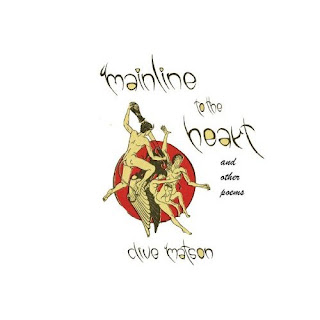
Mainline to the Heart & Other Poems by Clive Matson

Clive Matson‘s Mainline to the Heart and Other Poems, originally published in 1966 by Diane di Prima’s “Poets Press,” is a new edition from Regent Press. I received a copy of this book from Jacqueline Lasahn.

I want to caution readers that these poems can be very graphic and sexual in nature, which reflects the Beat Generation environment at the time and Clive Matson’s experiences. However, unlike other beat poems, this volume is edgier and raw. In some cases, these poems are surreal.

From “Outward Bound” (Page47-48):

“I reach out to him and nothing happens.
I want him for a friend and he’s somewhere else.
Or will he look up
with new light in his eyes when I draw back,
where will it end?
Already there is despair
and our engines will burn up the fuel,
I guess crash among wrecked dreams.
It’s ok,
tonight our parallel lives cross
& I see his gestures: steady curves
and knife edges.”

Many of these poems question daily activities, relationships, and other things, while at the same time offering implausible answers. In a number of these poems, there is an undercurrent of dissatisfaction, disgust, and longing. “Psalm” takes a look at drug use and the way it can twist thought and emotion into something ugly. One of my favorites from this collection is “My Love Returned.”

My Love Returned (Page 30)
© 1966 Clive Matson

The Moon rises
ass heavy: on the wane.
Wish it was full.

I dream &
a huge bat wing arcs over skeleton buildings
and dips to touch ruby pinprick traffic lights
on the street’s horizon in mute salute,

when I take in another block
the black wing blacks out the lights
and I know it is the Vampire,
my love returned
in the city calling me to bed
with faint irresistible siren
over the cool line of telepathic desire
or echoing “could be” to my need

broadcast live out dewy eyes, glib tongue
and come-on slouch for months.

How does she know? How the seasons change
and my veins hold new blood for her to suck now,
new blood I can bleed

over the white & untried bed
and my teeth are white and sharp to eat with.
Now I brim over with come to shoot in her,
I flap my jaw
and smile goofy at strangers
in the fullness of it.
Glad I’ll kill myself
& build a life with her. Glad
I’ll gaze into the wide blue eyes
I cannot fathom.

Not Christine not Huncke
not Martha could take her place.
I loved each and let each loose
the beautiful face no matter or
how strong my yearning ache,
Cut off
at dangerously hot by a circuit breaker
or fanned to blistering flame so
she turned cold shoulders in disgust,

Useless to give my all when it’s already given
to end lying anguished mornings on the same wrinkled sheet,
some yellow belly demon inside calculating
to save me for the One
or can I love at all?

Hear dark silence for the answer
& I’ve torn up the map, all highways
lead to the same dead end where
I see no exit
away from the Horror,
why not embrace it.

Love is possession
and we possess each other on a bone level
I don’t understand but we keep
a dim promise of happiness alive
or magic descends from the ceiling
& days light up now and then like sparkling incense,

I do what I want with her
as nuptial joy lifts toward bliss
that can not come true
and will carry me
thru boredom, fighting, anguish
the same scene repeated endlessly
1966, 1969, 1975 as
over the years
Time binds us tighter together
in orbit around our asteroid or lovely room
where we are each other’s parasite
and no friend in sight,
where we’ll die
within the same few seasons fatally wounded
our better half destroyed

or God insert the drug, body, faith
can bridge to the old dream she devours
& I love a spirit of the Dead.

Within this poem there is a somber undercurrent beneath the dark images of vampires and life-sucking situations, which are not clearly delineated as a relationship with a person or a drug. It could be either given that these poems are deeply personal according to the press sheet that came with the book. Overall, this volume provides a deep look into the struggles of the narrator with drugs and relationships, and its raw nature can teach readers about the darker sides of life.

Another unique aspect of this volume is the inclusion of sketches and drawings of ornately drawn women. Mainline to the Heart and Other Poems is not a volume for the faint of heart, but it will grip readers from its the first poetic lines. Some may find the images in these poems unsettling, but it is this nature that will encourage readers to critically rethink their world view and examine their environment with new eyes.

About the Poet:

Clive Matson arrived on the Lower East Side of New York City in 1960, a fresh-faced adolescent with a blank notebook under his arm. He quickly fell in with the Beat Generation – his first event was a reading at the Tenth Street Coffeehouse, where he met Allen Ginsberg, Gregory Corso, and Diane di Prima.

The proto-Beat Herbert Huncke became his second father, and Matson was captivated by John Wieners’ poetry and subsequently by Alden Van Buskirk’s. Diane di Prima published Matson’s first poems, and in the introduction John Wieners wrote, “One wonders about the nature of love in these poems. Are they vicious, or not?”

Matson ultimately emerged drug-free and healthy gave him full appreciation for 1960s passion and honesty. These qualities are crucially important, he thinks, for the current era. “Coming to terms with my youthful, energetic voice has been a challenge,” he admits. “It helps that I hear, in these poems, both an urgent need to connect and full cognizance of the difficulties.”

***GIVEAWAY REMINDER***

I have 1 copy of Jill Mansell’s An Offer You Can’t Refuse; get two entries, comment on my review and my interview. Deadline is April 11 at Midnight.

An Offer You Can’t Refuse by Jill Mansell

I received my ARC of Jill Mansell’s An Offer You Can’t Refuse from Sourcebooks for review.

An Offer You Can’t Refuse is witty, charming, engaging, and Chicklit to the max.

“‘I didn’t know reading could be like that, I had no idea. I’ve just never been a booky person. All these years I’ve been missing out.’

‘Ah, but now you’ve seen the light.’ . . . ‘You’ve become one of us. Welcome to our world; you’re going to love it here.'” (Page 100)

For a reviewer this was a treat to find in a book, this is definitely how many of us feel about books and reading, and reading these lines instantly cemented my attention to this book.

Lola is a young girl in love with a boy, Dougie, whose family is wealthy and whose mother hates her guts. His mother makes her an offer that she can’t refuse, so she takes it and says goodbye to the love of her life in a “Dear John” letter. Fast-forward to the present day and we find Lola has grown up physically, but still wears the same teenage, low-cut clothes and finds herself being mistaken for a prostitute when she walks into London bookstore after living in Majorca for about a decade. Eventually, Lola becomes more grounded and is the bookshop manager, but just as she thinks her life is stabilizing and in a good place, things get all topsy-turvy again.

This novel starts off in Lola’s past, but readers may find that more background is necessary, particularly where her relationship with Dougie is concerned. The only drawback of this novel, which really isn’t one, is that Lola’s story is pushed to the sidelines quite a bit as the Sally’s story takes center stage. However, Mansell carefully weaves the narration back to Lola and the resolution of her story. Readers may want to see more of Dougie, since he is one of the main characters but does not share equal narrative footing with the other narrators: Lola, Sally, and Lola’s friend Gabe.

“Aloud she said, ‘I’m guessing you don’t go into many bookshops.’

‘Me? No way.’ Proudly the boy said, ‘Can’t stand reading, waste of time. Hey, fancy a drink?’

‘No thanks. Can’t stand drinking, waste of time.’

He looked shocked. ‘Really?’

‘Not really. But drinking with you would be a huge waste of time.’ Lola excused herself and made her way over to the bar where Gabe, whose leaving party it was, was chatting to a group of friends from work.” (Page 37, 38)

Mansell’s writing is engaging, and though some of her characters, like Lola and Dougie’s sister Sally, are shallow at first, the complications in their lives force them to look beyond their own lives and come to terms with themselves, their families, and their love lives. Mansell’s An Offer Your Can’t Refuse is recommended for readers who love British humor, chicklit, and are in need of summer reading.

About the Author:

Jill Mansell lives with her partner and children in Bristol, and writes full time. Actually that’s not true; she watches TV, eats fruit gums, admires the rugby players training in the sports field behind her house, and spends hours on the internet marvelling at how many other writers have blogs. Only when she’s completely run out of displacement activities does she write.

***Giveaway***

Sourcebooks has offered 1 copy of Jill Mansell’s An Offer You Can’t Refuse to one lucky U.S. or Canadian reader.

All you have to do is comment on this post with something other than “pick me” or “enter me.”

Deadline is April 11, Midnight EST.

Come back tomorrow for my interview with Jill Mansell and another opportunity to enter the giveaway!

Also Reviewed By:
A Bookworm’s World
Diary of an Eccentric
Booking Mama
Book Escape
Reading Adventures

Naughty Neighbor by Janet Evanovich

Another audiobook by Janet Evanovich, but this one is not in the Stephanie Plum series or the Between-the-Numbers series. Naughty Neighbor is one of Evanovich’s earlier books, which have been dubbed “red-hot comedies.”

Louisa Brannigan is a nose-to-the-grindstone press secretary for an up-and-coming senator, Nolan Bishop. Louisa and her neighbor, Pete Streeter, are at odds, particularly since he callously snags her morning paper and receives phone calls at all hours. Streeter is a Hollywood screenwriter who has raised some eyebrows in the political arena and men are out to destroy his car and teach him a lesson he won’t soon forget. However, this web grows and soon Louisa becomes embroiled in Streeter’s intrigue to find a missing pig.

Readers understand that the tension between these two attractive people will eventually lead to the bedroom, but what they won’t predict is the internal struggles both of these characters have with committing to a relationship. Some of my favorite points in the book are when Louisa is arguing with herself about her feelings for Streeter. At one point, she swears she has succumbed to “romantic dementia.” Louisa is uptight and careful, while Streeter is relaxed and a risk taker. When these two get together, tension bursts into flames.

Another light read for pure entertainment value. I’d recommend this to those reading romance novels, but are interested in a more modern day tale with a touch of humor.

Stay Tuned for the ***Jill Mansell tour on April 6 and 7th***

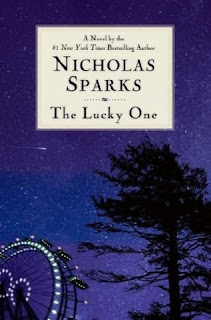
The Lucky One by Nicholas Sparks

I received Nicholas Sparks’ The Lucky One from Miriam at Hachette Group, and I sent it off to my mom for review. So without further ado, here’s my mom, Pat, and her review of The Lucky One.

Logan Thibault finds a picture in the dirt on his third tour of duty in Iraq. He keeps the picture hoping that he will find the owner. His best friend and buddy has an explanation for Logan’s good luck, the picture is his lucky charm.

Logan walks cross country with his dog from Colorado, stopping in towns to show the picture to people he meets. Nobody recognizes it. He ends up in Hampton, North Carolina where he meets Deputy Keith Clayton, who is divorced from Beth. Clayton and Beth have a son, Ben.

The journey Logan takes to find the picture’s rightful owner is engaging and demonstrates the hardships family and friends can undergo. Sparks creates a heart-wrenching story. This is a must read, fast-paced novel. I give this five stars.

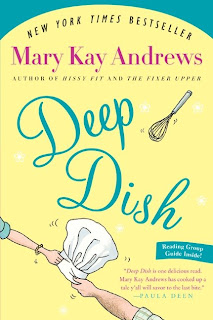
Deep Dish by Mary Kay Andrews

I received my copy of Deep Dish by Mary Kay Andrews from Book Club Girl for her BlogTalk Radio Show on March 25 at 7PM. Check at the end of this post for my thoughts on the show.

About the book (from the author’s Web site):

Chef extraordinaire Gina Foxton doesn’t expect anything to be handed to her on a platter. After years of hard work, the former runner-up Miss Teen Vidalia Onion is now the host of her own local Georgia public television show called “Fresh Start,” and she’s dating the show’s producer.

But when her show gets canceled, and she catches her boyfriend in flagrante delicto with the boss’s wife, Gina realizes that she’s meant for bigger and better things. The Cooking Channel is looking for its next star, and Gina is certain that she fits the bill. Trouble is, the execs also have their eye on Mr. “Kill It and Grill It” Tate Moody, the star of a hunting, fishing, and cooking show called “Vittles.” Tate is the ultimate man’s man, with a dog named Moonpie and a penchant for flannel shirts. Little does Gina know, though, that she and Tate are soon to embark on the cook-off of their lives.

Mary Kay Andrews’ Deep Dish stars Gina Foxton an older sister who is eager to please, cautious, and naive when it comes to men. Tate Moody is the man’s man, grills, hunts, and loves the outdoors. Throw these two in a pot and stir. The results are hilarious, spicy, and steamy. In addition to these polar opposites, you have Gina’s ex, Scott, who is out for himself and every woman he can get his hands on; Gina’s sister, Lisa, who operates without a compass, is passionate, and unable to commit; Val, Tate’s chain smoking, pressure cooker; Moonpie, Tate’s adorable pooch; and let’s not forget D’John, the gay, hair stylist and makeup artist with a heart of gold.

As an aside, one of my favorite character was Moonpie; he seemed to soften the edges the characters create for themselves in an attempt to defend themselves against pain. D’John, the makeup and hair stylist for Gina and Tate, is outrageous, and he provides each of the characters an anchor and support column. Mary Kay Andrews does a great job creating well rounded main and supporting characters.

“‘Oh, my God,’ Lisa said. ‘D’John is so awesome. I love his place. And he always gives me samples of the coolest makeup and stuff. Lemme go too, okay?’

‘Deal,’ Gina said. ‘Just one thing.’

‘What now?’

‘While I’m in the shower, you change your clothes. We are not leaving these premises with you dressed like some hoochie-mama.’

‘D’John’s gay, Geen,’ Lisa said. ‘He so is not looking at me that way.'” (Page 75)

The impending cancellation of Gina’s regional cooking show, pushes her into a reality show cook-off with Tate Moody, who has a successful outdoor hunting and cooking show. Food Fight is where the fun really picks up and Gina is forced to go out and forage Eutaw Island for ingredients before she can whip up a meal and dessert to impress three famous cooks, one of whom hates her guts. Tate Moody is in for the fight of his life even in spite of his hunting prowess as he is forced to make amazing meals out of regular household ingredients, including Frosted Flakes, to impress three judges, even one who hates his guts.

Deep Dish is a look at how one woman can dig deep within herself to find the courage to take ahold of her life and her destiny as well as a book that examines how each of us holds something back from the world and will only reveal our own personality gems to those we love.

Some of the best parts of this book occur when the reality show begins, and though some of the plot is predictable, it is done in a refreshing and new way. Southern cooking is the crux, and readers will be exposed to cuisine they may not see otherwise. Gina’s flashbacks to her family life and her mother’s cooking are vivid and enjoyable. These sections will likely remind readers of times when they smelled certain foods that evoke memories from their childhoods. If you need a light read, this is the book for you.

Book Club Girl’s Show:

I really love how much food plays a role in Mary Kay Andrews’ life and her relationship with her husband. Though she hasn’t thought about writing a cookbook, she would be open to the idea. My favorite little tidbit was about her writing space and how she hangs up all her book jackets on the walls of her writing space to keep herself motivated and writing. And Moonpie is based upon her setter Wyatt–too adorable for words.

About the Author:

Mary Kay Andrews is the author of the New York Times bestselling SAVANNAH BREEZE and BLUE CHRISTMAS, (HarperCollins) as well as HISSY FIT, LITTLE BITTY LIES and SAVANNAH BLUES, all HarperPerennial.

A former reporter for The Atlanta Journal-Constitution, she wrote ten critically acclaimed mysteries, including the Callahan Garrity mystery series, under her “real” name, which is Kathy Hogan Trocheck.

She has a B.A. in newspaper journalism from The University of Georgia (go Dawgs!), and is a frequent lecturer and writing teacher at workshops including Emory University, The University of Georgia’s Harriet Austin Writer’s Workshop, the Tennessee Mountain Writer’s Workshop and the Antioch Writer’s Workshop. Her mysteries have been nominated for the Edgar, Anthony, Agatha and Macavity Awards.

Married for more than 31 years to her high school sweetheart, Tom, she is the mother of 24-year-old Katie Abel and 20-year-old Andrew. After a three-year hiatus in Raleigh, NC, she and her husband recently moved back to their old neighborhood in Atlanta, where they live in a restored 1926 Craftsman bungalow.

Check out her blog here.

Also Reviewed By:
Redlady’s Reading Room
Diary of an Eccentric