Quantcast

C.O.R.A. Diversity Roll Call–Poets

I recently discovered this week’s C.O.R.A. Diversity Roll Call is about poetry and poets, so naturally I’m participating. While I’m supposed to talk only about a female African American poet, I’m going to broaden this to include my two favorite African-American Poets, Yusef Komunyakaa and Rita Dove, who is a more recent find thanks to The Writer’s Center and Kyle Semmel from where I won a book of poetry.

First, let’s talk about Rita Dove and share one of her poems. Rita is not only a poet, but also a script writer and story writer. She served as Poet Laureate of the United States and Consultant to the Library of Congress from 1993 to 1995 and as Poet Laureate of the Commonwealth of Virginia from 2004 to 2006. She now works at the University of Virginia in Charlottesville as an English professor. Check out her Webpage for more biography information.

This is one of my favorite poems, which can be found here with several others:

My Mother Enters the Work Force

The path to ABC Business School
was paid for by a lucky sign:
Alterations, Qualified Seamstress Inquire Within.
Tested on Sleeves, hers
never puckered — puffed or sleek,
Leg o’ or Raglan —
they barely needed the damp cloth
to steam them perfect.

Those were the afternoons. Evenings
she took in piecework, the treadle machine
with its locomotive whir
traveling the lit path of the needle
through quicksand taffeta
or velvet deep as a forest.
And now and now sang the treadle,
I know, I know….

And then it was day again, all morning
at the office machines, their clack and chatter
another journey — rougher,
that would go on forever
until she could break a hundred words
with no errors — ah, and then

no more postponed groceries,
and that blue pair of shoes!

I adore the detailed images in this poem and how each one is selected for its powerful message about the life and times of this mother entering the workforce. This is a very poignant social commentary about this one woman’s struggle as befitting to all others at the time.

I may have talked about Yusef Komunyakaa on this blog before during the last Book Bloggers Appreciation Week, but here he is again. I first learned of Komunyakaa’s work in a college seminar on Vietnam War literature and I’ve returned to his work ever since. Yusef was raised during the Civil Rights movement and served in the U.S. Army between 1969 and 1970 as a correspondent and editor of the Southern Cross during the Vietnam War.

Here’s one of my favorite poems from him, found here:

Camouflaging the Chimera

We tied branches to our helmets.
We painted our faces & rifles
with mud from a riverbank,

blades of grass hung from the pockets
of our tiger suits. We wove
ourselves into the terrain,
content to be a hummingbird’s target.

We hugged bamboo & leaned
against a breeze off the river,
slow-dragging with ghosts

from Saigon to Bangkok,
with women left in doorways
reaching in from America.
We aimed at dark-hearted songbirds.

In our way station of shadows
rock apes tried to blow our cover
throwing stones at the sunset. Chameleons

crawled our spines, changing from day
to night: green to gold,
gold to black. But we waited
till the moon touched metal,

till something almost broke
inside us. VC struggled
with the hillside, like black silk

wrestling iron through grass.
We weren’t there. The river ran
through our bones. Small animals took refuge
against our bodies; we held our breath,

ready to spring the L-shaped
ambush, as a world revolved
under each man’s eyelid.

Who are your favorites? Have you discovered any new African American poets?
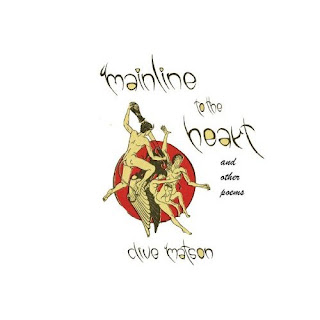
Mainline to the Heart & Other Poems by Clive Matson

Clive Matson‘s Mainline to the Heart and Other Poems, originally published in 1966 by Diane di Prima’s “Poets Press,” is a new edition from Regent Press. I received a copy of this book from Jacqueline Lasahn.

I want to caution readers that these poems can be very graphic and sexual in nature, which reflects the Beat Generation environment at the time and Clive Matson’s experiences. However, unlike other beat poems, this volume is edgier and raw. In some cases, these poems are surreal.

From “Outward Bound” (Page47-48):

“I reach out to him and nothing happens.
I want him for a friend and he’s somewhere else.
Or will he look up
with new light in his eyes when I draw back,
where will it end?
Already there is despair
and our engines will burn up the fuel,
I guess crash among wrecked dreams.
It’s ok,
tonight our parallel lives cross
& I see his gestures: steady curves
and knife edges.”

Many of these poems question daily activities, relationships, and other things, while at the same time offering implausible answers. In a number of these poems, there is an undercurrent of dissatisfaction, disgust, and longing. “Psalm” takes a look at drug use and the way it can twist thought and emotion into something ugly. One of my favorites from this collection is “My Love Returned.”

My Love Returned (Page 30)
© 1966 Clive Matson

The Moon rises
ass heavy: on the wane.
Wish it was full.

I dream &
a huge bat wing arcs over skeleton buildings
and dips to touch ruby pinprick traffic lights
on the street’s horizon in mute salute,

when I take in another block
the black wing blacks out the lights
and I know it is the Vampire,
my love returned
in the city calling me to bed
with faint irresistible siren
over the cool line of telepathic desire
or echoing “could be” to my need

broadcast live out dewy eyes, glib tongue
and come-on slouch for months.

How does she know? How the seasons change
and my veins hold new blood for her to suck now,
new blood I can bleed

over the white & untried bed
and my teeth are white and sharp to eat with.
Now I brim over with come to shoot in her,
I flap my jaw
and smile goofy at strangers
in the fullness of it.
Glad I’ll kill myself
& build a life with her. Glad
I’ll gaze into the wide blue eyes
I cannot fathom.

Not Christine not Huncke
not Martha could take her place.
I loved each and let each loose
the beautiful face no matter or
how strong my yearning ache,
Cut off
at dangerously hot by a circuit breaker
or fanned to blistering flame so
she turned cold shoulders in disgust,

Useless to give my all when it’s already given
to end lying anguished mornings on the same wrinkled sheet,
some yellow belly demon inside calculating
to save me for the One
or can I love at all?

Hear dark silence for the answer
& I’ve torn up the map, all highways
lead to the same dead end where
I see no exit
away from the Horror,
why not embrace it.

Love is possession
and we possess each other on a bone level
I don’t understand but we keep
a dim promise of happiness alive
or magic descends from the ceiling
& days light up now and then like sparkling incense,

I do what I want with her
as nuptial joy lifts toward bliss
that can not come true
and will carry me
thru boredom, fighting, anguish
the same scene repeated endlessly
1966, 1969, 1975 as
over the years
Time binds us tighter together
in orbit around our asteroid or lovely room
where we are each other’s parasite
and no friend in sight,
where we’ll die
within the same few seasons fatally wounded
our better half destroyed

or God insert the drug, body, faith
can bridge to the old dream she devours
& I love a spirit of the Dead.

Within this poem there is a somber undercurrent beneath the dark images of vampires and life-sucking situations, which are not clearly delineated as a relationship with a person or a drug. It could be either given that these poems are deeply personal according to the press sheet that came with the book. Overall, this volume provides a deep look into the struggles of the narrator with drugs and relationships, and its raw nature can teach readers about the darker sides of life.

Another unique aspect of this volume is the inclusion of sketches and drawings of ornately drawn women. Mainline to the Heart and Other Poems is not a volume for the faint of heart, but it will grip readers from its the first poetic lines. Some may find the images in these poems unsettling, but it is this nature that will encourage readers to critically rethink their world view and examine their environment with new eyes.

About the Poet:

Clive Matson arrived on the Lower East Side of New York City in 1960, a fresh-faced adolescent with a blank notebook under his arm. He quickly fell in with the Beat Generation – his first event was a reading at the Tenth Street Coffeehouse, where he met Allen Ginsberg, Gregory Corso, and Diane di Prima.

The proto-Beat Herbert Huncke became his second father, and Matson was captivated by John Wieners’ poetry and subsequently by Alden Van Buskirk’s. Diane di Prima published Matson’s first poems, and in the introduction John Wieners wrote, “One wonders about the nature of love in these poems. Are they vicious, or not?”

Matson ultimately emerged drug-free and healthy gave him full appreciation for 1960s passion and honesty. These qualities are crucially important, he thinks, for the current era. “Coming to terms with my youthful, energetic voice has been a challenge,” he admits. “It helps that I hear, in these poems, both an urgent need to connect and full cognizance of the difficulties.”

***GIVEAWAY REMINDER***

I have 1 copy of Jill Mansell’s An Offer You Can’t Refuse; get two entries, comment on my review and my interview. Deadline is April 11 at Midnight.

Interview With Poet Dan Albergotti

Things to Do in the Belly of the Whale

by Dan Albergotti

Measure the walls. Count the ribs. Notch the long days.
Look up for blue sky through the spout. Make small fires
with the broken hulls of fishing boats. Practice smoke signals.
Call old friends, and listen for echoes of distant voices.
Organize your calendar. Dream of the beach. Look each way
for the dim glow of light. Work on your reports. Review
each of your life’s ten million choices. Endure moments
of self-loathing. Find the evidence of those before you.
Destroy it. Try to be very quiet, and listen for the sound
of gears and moving water. Listen for the sound of your heart.
Be thankful that you are here, swallowed with all hope,
where you can rest and wait. Be nostalgic. Think of all
the things you did and could have done. Remember
treading water in the center of the still night sea, your toes
pointing again and again down, down into the black depths.

“Things to Do in the Belly of the Whale” by Dan Albergotti from The Boatloads.© BOA Editions, Ltd., 2008.

I’ve been working on a interview project with Deborah at 32 Poems magazine, and she kindly allowed me to interview past contributors to the magazine. We will be posting the interviews throughout the coming months, and our eighth interview posted on Deborah’s Poetry Blog of 32 Poems on March 31. I’m going to provide you with a snippet from the interview, but if you want to read the entire interview, I’ll provide you a link for that as well. For now, let me introduce to you 32 Poems contributor, Dan Albergotti :

1. Not only are you a contributor to 32 Poems, you are a professor of English at Coastal Carolina University and have a full-length collection of poems published called The Boatloads. You also have an MFA in Creative Writing and a PhD in Literature. Do you think poets have an easier time getting published with higher credentials? Why or Why not? Also of your “hats,” which do you find most difficult to wear and why?

Over the years, I’ve occasionally heard this suspicion that having a good cover letter can get you “in” at magazines and presses. I just don’t buy it. Only the work matters to editors. And if a lot of people being published have degrees in creative writing, isn’t there a rival hypothesis to the idea that the degree “got them in”? Doesn’t it make sense that someone who committed two-to-four years of his of her life to study writing at a post-graduate level might just have developed abilities to the point that he or she is writing poems worthy of being published?

I do wear a lot of hats, and it’s difficult in the sense that it stretches my economy of time very thin. But I’m lucky in that every hat I wear–as writer, teacher, editor–is wonderful, so it’s hard to apply the word “difficult” to any of it. I’m blessed, really.

2. Do you have any obsessions that you would like to share?

This will be my “J” response: Joy Division, Jack Gilbert, John Keats, Joss Whedon, Jeff Mangum (of Neutral Milk Hotel). I might be obsessed with the tenth letter of the alphabet.

3. When writing poetry, prose, essays, and other works do you listen to music, do you have a particular playlist for each genre you work in or does the playlist stay the same? What are the top 5 songs on that playlist? If you don’t listen to music while writing, do you have any other routines or habits?

I don’t really have any routines or playlists, but I love your question, and since you opened the door with your invitation of a “top five,” I will seize the opportunity to list my five favorite albums of all time, if for no other reason than to promote them to other people:

The Clash, London Calling

Radiohead, OK Computer

R.E.M., Murmur

Joy Division, Closer

Neutral Milk Hotel, In the Aeroplane over the Sea

While these aren’t necessarily playing when I’m writing, they are all albums that I find inspiring. I remember that great moment at the 2008 Oscars when Glen Hansard, at the end of his acceptance speech for best original song, exhorted the millions watching to “Make art, make art, make art!” When I listen to these five albums, I want to make art in any way I can. And that’s always a good feeling.

4. What current projects are you working on and would you like to share some details with the readers?

Lately I’ve been writing in form a good bit, which is something I haven’t done in a while (all the poems in The Boatloads are free verse). But I’ve been writing new free verse poems as well. I have a very general idea of the shape that my second full-length manuscript will take based on the kinds of poems I’ve been writing. I don’t have a systematic project to fill a collection, and I tend to avoid such thoughts of larger structures when writing poems. So I’m afraid I have little more detail to provide than “I’m writing poems.”

About the Poet:

Dan Albergotti is the author of The Boatloads (BOA Editions, 2008), selected by Edward Hirsch as the winner of the 2007 A. Poulin, Jr. Poetry Prize. His poems have appeared in The Cincinnati Review, Shenandoah, The Southern Review, The Virginia Quarterly Review, and other journals. In 2008, his poem “What They’re Doing” was selected for Pushcart Prize XXXIII: Best of the Small Presses. A graduate of the MFA program at UNC Greensboro and former poetry editor of The Greensboro Review, Albergotti currently teaches creative writing and literature courses and edits the online journal Waccamaw at Coastal Carolina University in Conway, South Carolina.

Want to find out what Dan’s writing space looks like? Find out what he’s working on now, his obsessions, and much more. Check out the rest of my interview with Dan here. Please feel free to comment on the 32 Poems blog and Savvy Verse & Wit.

Also, check out this interview with Dan on How a Poem Happens.

Conversations and Connections Writer’s Conference, D.C.

Remember that great recap post from last year’s Conversations & Connections writer’s conference in Washington, D.C.?

Well, you can expect another one this year. Anna and I have registered for this year’s conference, which is going to have many of the great features it had last year.

Where is it located?

Johns Hopkins University Advanced Writing Program campus
1717 Massachusetts Avenue, NW,
Washington, D.C. (Near DuPont Circle)

When do I need to be there?

April 11, 2009; Registration starts at 8:30 AM

Why do I need to be there?

Not only will you be exposed to some great writing advice from some of the authors and poets you love, but there will be time to buy books at the book fair, show your work to literary journal editors to solicit their advice, and network with great bloggers, like Anna and myself, and others in the industry. This may be the first time I get to meet Deborah Ager of 32 Poems in person; she and I have been working on poet interviews over the last several months.

What’s the line up?

Craft lectures are available as choices for each of the three sessions from writing sex scenes to fighting writer’s block with experimental prompts.

The three sessions also have a number of panel discussions to choose from, including juggling multiple points of view in a novel, creative nonfiction, and the inner workings of an agency.

Don’t forget speed dating with literary journal editors where they will provide feedback on your written work.

And of course, there is the featured speaker, Amy Hempel.
Check out the list of speakers, here.

What’s the cost? $55, which gives you a one-year subscription to a literary magazine, the conference sessions, featured speaker, one speed dating session with an editor, and one book.

Interview With Poet Jehanne Dubrow

From the Fever-World
By Jehanne Dubrow

In the fever-world, my dearest,

our hands aren’t clean

for very long, the brambles

biting in our palms,

deep thorns across our life lines–

here, even the shrub

surrendering fruit to the picker

resents the sacrifice and wants

its juices given back in blood.

if you are hungry, starve yourself.

Make a desert of your thirst.

Don’t fall asleep

Here, my dearest,

there’s only wilderness where fields

should be, only the blackberries

concealing knives,

cherries pitted with buckshot

to choke the unsuspecting throat,

and peaches whose centers hold

dark stones of cyanide.

– first appeared in The Barn Owl Review

I’ve been working on a interview project with Deborah at 32 Poems magazine, and she kindly allowed me to interview past contributors to the magazine. We will be posting the interviews throughout the coming months, and our seventh interview posted on Deborah’s Poetry Blog of 32 Poems on March 13. I’m going to provide you with a snippet from the interview, but if you want to read the entire interview, I’ll provide you a link for that as well. For now, let me introduce to you 32 Poems contributor, Jehanne Dubrow :

1. How would you introduce yourself to a crowded room eager to hang on your every word? Are you just a poet, what else should people know about you?

I suppose one of the most interesting things about me is my nomadic childhood. I was born in a little town in Northern Italy and grew up in Yugoslavia, Zaire, Poland, Belgium, Austria, and the United States. Oh, and when I twenty-years-old, I played a gangrenous valley girl in the movie An American Werewolf in Paris (sadly, I ended up on the cutting room floor). I still remember my line: “Claude’s parties are wack!!!”

2. Do you see spoken word, performance, or written poetry as more powerful or powerful in different ways and why? Also, do you believe that writing can be an equalizer to help humanity become more tolerant or collaborative? Why or why not?

For me, written poetry has the emotional force expected of spoken word and performance poetry, while also having a life on the page. I haven’t seen evidence that writing makes us more tolerant or collaborative. Writers tend to be a critical bunch—our craft depends on having a sharp eye and a small sliver of ice in the heart.

3. Do you have any obsessions that you would like to share?

I have an odd mix of obsessions, half scholarly and half not-so-much: Holocaust studies, American Jewish literature, my dog Argos, midcentury modern design, and Hermes scarves.

4. Poetry is often considered elitist or inaccessible by mainstream readers. Do poets have an obligation to dispel that myth and how do you think it could be accomplished?

Nowhere else in the world do people worry or complain about the elitism of poetry. When Americans complain that poetry is elitist, what they’re really addressing is the strong strain of anti-intellectualism in this country. Americans don’t like to feel stupid, and poetry often makes them feel stupid. I don’t think poetry needs to become less elitist; I think we need to do a better job teaching students how to read poems or, for that matter, how to look at paintings, how to listen to operas, how to watch ballets.

From the Spring Issue of 32 Poems by Jehanne Dubrow:

FRAGMENT FROM A NONEXISTENT YIDDISH POET
Ida Lewin (1906-1938)
AlwaysWinter, Poland

2.

Each year, the chill creeps in
By June, our eaves sharp
with iron icicles, our windows
rattling like teeth against the cold
AlwaysWinter we call this town
because the ground won’t thaw,
no matter how we press skin
to skin, make a fire from
this friction we call love.
Thistles remain needles, each blade
of grass a blade that slices
to our soles AlwaysWinter
we say to justify the frozen places
everywhere—the constant
the wind, the tundra buried
deep inside our bones

Want to find out what Jehanne’s writing space looks like? What music she listens to while she writes? Find out what she’s working on now, her obsessions, and much more. Check out the rest of my interview with Jehanne here. Please feel free to comment on the 32 Poems blog and Savvy Verse & Wit.

Jehanne Dubrow’s Bio:

Jehanne Dubrow’s work has appeared in Shenandoah, Poetry Northwest, Gulf Coast, and Prairie Schooner. She is the author of the poetry collection, The Hardship Post, winner of the Three Candles Press First Book Prize (2009), and a chapbook, The Promised Bride (Finishing Line 2007). A second collection, From the Fever-World, won the Washington Writers’ Publishing House Award and will be published in 2009. Her third poetry collection, Stateside, will be released by Northwestern University Press in 2010.

***GIVEAWAY REMINDER***

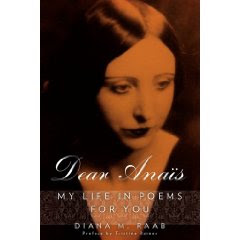
I also have two copies of Diana Raab‘s My Muse Undresses Me and one copy of Dear Anaïs: My Life in Poems for You. Deadline is March 18 at 5PM EST.

One gently used ARC of Reading by Lightning by Joan Thomas; Deadline is March 20 at Midnight EST.

Interview With Poet Andrea Defoe

I’ve been working on a interview project with Deborah at 32 Poems magazine, and she kindly allowed me to interview past contributors to the magazine. We will be posting the interviews throughout the coming months, and our seventh interview posted on Deborah’s Poetry Blog of 32 Poems on March 10.

I’m going to provide you with a snippet from the interview, but if you want to read the entire interview, I’ll provide you a link for that as well.

Previously published in Rattle:

“FOR A PIANO ABANDONED IN THE BREADBASKET

Perhaps it was too heavy
for the horses to haul it all the way west
or something else just mattered more.
Maybe someone was jealous
of how the girl played it
as if sweet little veeries were flying out her fingertips:
Snow White of the new frontier.
Maybe she hated it, but probably
it was her favorite thing and alone
nights nothing to smother the hollering
silence she rocked herself and thought
of her piano gathering snow, envisioned
the prairie rodents caching their food
between its wires, elk nosing the keys
in a song so random they could only
think of it like thunder. Maybe some Indian
had found it and grasped its beauty, hauled
it home to pay his dowry. But in the best
of these dreams she was sleeping and the piano’s
legs came to life–this didn’t frighten her,
she’d always known her piano was alive–
and worked its sunken heels out of the soil,
began to march then trot in the path
of the last wheels to pass this way
till one wind-rattled night she’d hear
a peculiar tap and find it there in the dark,
waiting for her to make it sing.

For now, let me introduce to you 32 Poems contributor, Andrea Defoe:

1. You are a contributor to 32 Poems, but what else can you tell us about yourself and your writing life? What do you find difficult about your writing practices?

I’m a stay-at-home parent and presently work from a high traffic area of the house, sharing computer time with my husband and three kids. The most difficult aspect for me is finding time to write when there are few distractions (I choose the word “few,” as there is always some). Functioning as a writer with ADHD is challenging for me, as well — particularly when it comes to reading. I have a lot of books that I’ve begun to read, but relatively few that I’ve been able to finish. A great appeal of poetry is that I can pick up a volume of it, open to any page and read a while without that Ugh! Yet another thing I couldn’t finish… feeling.

2. Do you see spoken word, performance, or written poetry as more powerful or powerful in different ways and why? Also, do you believe that writing can be an equalizer to help humanity become more tolerant or collaborative? Why or why not?

My greatest preference is to go somewhere quiet and be alone with a collection. I fixate heavily on individual lines and phrasings — often walking away, returning, and rereading several times before I finally feel ready to appreciate a poem as a whole package. When the poem is simply read to me in a straight stretch, I feel deprived of that — and at times it feels like an imposition, being told how to hear a poem. I’m of the mindset that a poem belongs to its reader. Having said that, some people give fabulous readings that truly do lend a strong voice to their work, so I can’t say this is how it is all of the time.

“Writing” is such an encompassing word. Even if it’s narrowed to mean simply “poetry” I do think the potential for impact is still huge. Elizabeth Alexander’s recent reading at President Obama’s inauguration springs most readily to my mind. The reading itself sapped the luster out of a good poem, but the discussion it inspired, the attention turned to poetry, were positive things.

3. Do you have any obsessions that you would like to share?

I do have an incredibly studly gray cat I call Sir Otter Von Klaus, but I prefer to keep him to myself.

Want to find out what Andrea’s writing space looks like? What music she listens to while she writes? Find out what she’s working on now, her obsessions, and much more. Check out the rest of my interview with Andrea here. Please feel free to comment on the 32 Poems blog and Savvy Verse & Wit.

Poet Bio:

Andrea Defoe lives with her husband, three children and several pets on the Red Cliff Indian Reservation in Wisconsin. Her poems have appeared in various literary journals, most recently Margie, New American Writing, Now Culture and 32 Poems. In addition to writing she enjoys drawing and painting, but is quite bad at both.

***GIVEAWAY REMINDER***

I have two copies up for grabs of Sharon Lathan’s Mr. & Mrs. Darcy: Two Shall Become One; the giveaway is international and the deadline is March 14 at Midnight EST.

I also have two copies of Diana Raab‘s My Muse Undresses Me and one copy of Dear Anaïs: My Life in Poems for You. Deadline is March 18 at 5PM EST.

One gently used ARC of Reading by Lightning by Joan Thomas; Deadline is March 20 at Midnight EST.

Interview with Poet Diana Raab

I’d like to welcome poet Diana Raab to Savvy Verse & Wit. Yesterday, I reviewed her poetry collection, Dear Anaïs: My Life in Poems for You. You can read my review of her collection, here.

Please welcome Diana:

1. Do you see spoken word, performance, or written poetry as more powerful or powerful in different ways and why? Also, do you believe that writing can be an equalizer to help humanity become more tolerant or collaborative? Why or why not?

I find all forms of poetry powerful—spoken word, performance and written poetry. Poetry nurtures the soul and expresses core emotions and for this reason it can serve as an equalizer to help us all become more tolerant. This is particularly true for what I call “accessible poetry,” or poetry that reaches out with words that the reader can understand, feel or touch.

2. Do you have any obsessions that you would like to share?

My obsession is writing and getting my words out into the universe. I spend at least ten hours a day in my office, either creating or marketing my work. My other passion is reading. I suppose there is a fine line between having an obsession and a passion. For me, writing and reading wear both of these hats.

3. Most writers will read inspirational/how-to manuals, take workshops, or belong to writing groups. Did you subscribe to any of these aids and if so which did you find most helpful? Please feel free to name any “writing” books you enjoyed most (i.e. Bird by Bird by Anne Lamott).

I have been writing since the age of ten, so it would be impossible to list all the books and resources which have inspired me as a writer.

In the 1980s and 1990s, I attended many writing conferences and workshops. There was something contagious about being around other writers producing work. Both The University of Iowa’s Summer Writing Program and AWP have sparked a great deal of interest for me. These days I teach at the conferences and even as a teacher it is inspiring.

As a journaling advocate, I have found that reading the journals of Anaïs Nin helped me find my own voice. This is the main reason I have decided to dedicate this latest book of poems to her.

4. Poetry is often considered elitist or inaccessible by mainstream readers. Do poets have an obligation to dispel that myth and how do you think it could be accomplished?

I think the idea of poetry being elitist and inaccessible is an old concept. Much of contemporary poetry is accessible. I believe that the former poet laureate of the United States, Billy Collins, is greatly responsible for this change. He brought poetry 180 into the schools. His accessible poetry has inspired many people, including myself, to write poetry.

5. When writing poetry, prose, essays, and other works do you listen to music? Do you have a particular playlist for each genre you work in or does the playlist stay the same? What are the top 5 songs on that playlist? If you don’t listen to music while writing, do you have any other routines or habits?

The decision to listen to music while writing depends upon my mood. Sometimes I need music, other times, any bit of noise irks me. If I do listen to music, I might listen to the words of Leonard Cohen and also some instrumental music such as new age music geared towards productivity and concentration.

My writing habit entails working on a few projects at the same time, often times in different genres. I enjoy the variety and find that each genre feeds off the other. However, if I have an impending deadline, I am able to focus and wrap up a project if I either put a ‘Do Not Disturb,’ sign on my door or just go away to an undisclosed place for a writing retreat.

6. In terms of friendships, have your friendships changed since you began focusing on writing? Are there more writers among your friends or have your relationships remained the same?

This is difficult to answer, since I have always written. I have a mix of literary and non-literary friends.

7. How do you stay fit and healthy as a writer?

I work out at the gym with a trainer three times a week. I try to walk every day with my dog anywhere from 30-60 minutes. I also do restorative yoga once a week and meditate every day. All these activities help me focus on my work.

8. Do you have any favorite foods or foods that you find keep you inspired? What are the ways in which you pump yourself up to keep writing and overcome writer’s block?

I do not believe in writer’s block. It’s just an excuse not to write. I think that those who keep journals rarely experience writer’s block. If I am not feeling creative, I will just free-write in my journal and usually something interesting will come of it. Sometimes I read the words of my favorite writers to inspire me. I also often read the journals of Anaïs Nin because both her sensibilities and voice seem to resonate with me.

9. Please describe your writing space and how it would differ from your ideal writing space.

I have a writing studio which is my favorite room in the house. In taking Virginia Woolf’s advice quite seriously, I have found a room with a view overlooking the mountains of southern California. I use a laptop on my desk and there are many bookshelves behind my desk with my favorite books, most of them autographed. I have a painting by Edward Hopper hanging on the wall opposite my desk.

Other framed items include the book jacket of my memoir, Regina’s Closet: Finding My Grandmother’s Secret Journal, and a quote by Mark Twain which says, “The difference between the almost right word and the right word, is really large matter—it’s the difference between the lightening bug and the lightening.” I am a lover of quotations and over the years, I have collected many favorite ones.

10. What current projects are you working on and would you like to share some details with the readers?

I have just finishing editing an anthology I compiled called Writers and Their Notebooks. It is forthcoming by the University of South Carolina Press in February 2010. I am very excited about this collection. It includes essays written by well-published writers who used journals in their practice, such as Dorianne Laux, Sue Grafton, John DuFresne, Kim Stafford, Ilan Stavans, Michelle Wildgen. The preface was written by Phillip Lopate.

I am also working on another poetry collection and a memoir.

11. I’ve noticed reading some of your initial poems that there is an ironic sense near the end of these verses. Was this sense of irony intentional? Like in “Jones Beach” where the mother is an environmentalist and yet serves her children cookies that are appetite suppressants.

Yes. My poems just come out of me in one fell-swoop. They are not premeditated or calculated.

12. Anaïs Nin was a diarist and your poems seem to be like diary entries as well. Did all of these poems come immediately following your in-depth reading of her work or did they evolve over time? Would you consider Dear Anaïs representative of all of your work or do you craft a variety of poem forms and types?

All of my poems were born on the pages of my journal. I create best with pen in hand. I devoted this latest collection to Nin because reading her journals helped me find my voice. I am a narrative poet and yes, my latest book of poetry is a fair representation of my work. I will be experimenting with other forms, but this is representative of my work at this point in time.

Thank you Diane for taking the time out of your busy schedule to answer my questions. I wish you luck with your latest projects and look forward to seeing your latest projects in print.

And now, for the giveaway information: (3 Winners)

Diana has graciously offered one copy of Dear Anaïs: My Life in Poems for You and 2 copies of her chapbook My Muse Undresses Me.

1. Leave a comment about what inspired you to give this collection a try on my review post, here.

2. Comment on this interview with something other than “pick me” or “enter me.”

Deadline is March 18, 5PM EST.

Randomizer.org will select the three winners; the first number selected will win Dear Anaïs: My Life in Poems for You.

Dear Anais by Diana Raab

I received Dear Anaïs: My Life in Poems for You by Diana M. Raab from the author for review, I’m thrilled to say that Raab’s use of language in a format that resembles diary entries is fantastic. The volume begins with a letter to Anaïs about how she inspired Raab through her journals, particularly Anaïs’ entries about the house Eric Lloyd Wright built for her.

Each poem provides the reader with an insider’s look at Raab’s life and her interactions with family and others. Mirroring Anaïs Nin’s style, Raab seeks to demonstrate how important love is to humanity and how important it is to maintain our connections to one another.

Here’s her poem, “Weekly Lottery“:

Giving into his obsessions
was one thing my father did
almost every day of his life
for the fifty years which
he lived after The Holocaust
which robbed him of his parents
and baby brother Josh, putting
he and his brother in Dachau’s
kitchen, slicing potatoes and
saving friends from starvation
as the Nazis dined off Rosenthal
plates confiscated from Jews
tossed into frigid barracks and
stripped of everything ever
important to them.

Dad’s first treat, after arriving
in the United States with his brother Bob,
was using his factory paycheck for
a weekly lottery ticket, awaiting
the easy windfall, a sham of
good fortune, as if winning
the lottery was a ticket for
a new freedom boat. His
bliss stretched to winning five
tickets, five more scratches of
horizontal square boxes with
the same 1945 nickel which
he always carried in his pocket
for good luck, maybe not
enough cents to keep the
inveterate smoker alive past 70.

Raab’s poetry is detailed, vivid, and critical of its own subject matter and the narrator’s voice is often ironic in the final stanza or lines, reminding readers of how haiku can shed light on the most mundane of natural circumstances. In this poem, “Weekly Lottery,” Raab uses short lines and long sentences to build momentum, which invariably builds suspense for the reader.

Poems about the holocaust and WWII and war in general often attract my attention, which is probably why this poem has stuck with me since I first read Dear Anaïs. And I’ve already read through this book several times. There are a number of poems in here about Raab’s relatives and their dealings with war and the concentration camps.

This is an enjoyable collection of contemporary poems for every reader. Readers can connect with Raab through her poetry, including the hardship of loss and the nuances of daily living. Writers will enjoy her poems that deal with the writing process such as “Sketch of a Writer’s Studio” and “Sheets.” My personal favorite in this section was “On Demand,” which is about much more than just writing poems upon request.

About the Poet:

Diana M. Raab, MFA is a memoirist, essayist and poet. She teaches memoir, journaling and poetry in the UCLA Writers Program and the Santa Barbara Writers Conference. She also narrates and teaches workshops around the country.

Diana has been writing from an early age. As an only child of two working parents, she spent a lot of time crafting letters and keeping a daily journal. In university she studied journalism, health administration and nursing, all serving as platforms for her years as a medical and self-help writer.

Raab’s memoir, Regina’s Closet: Finding My Grandmother’s Secret Journal (2007) won the National Indie Excellence Award for Memoir and was the recipient of many other honors.

Raab’s work has been published in numerous literary magazines and has been widely anthologized. She has one poetry chapbook, My Muse Undresses Me and one poetry collection, Dear Anaïs: My Life in Poems for You (2008).

She’s editor of a forthcoming anthology, Writers and Their Notebooks (USC Press, 2009) which is a collection of essays written by well-known writers who journal, including Sue Grafton, Kim Stafford, Dorianne Laux, John DuFresne, James Brown and Michael Steinberg, to name a few. The foreword is written by the world-renowned personal essayist, Phillip Lopate.

Stay Tuned for my Interview with Diana, tomorrow March 12.

And now, for the giveaway information: (3 Winners)

Diana has graciously offered one copy of Dear Anaïs: My Life in Poems for You and 2 copies of her chapbook My Muse Undresses Me.

1. Leave a comment about what inspired you to give this collection a try.
2. Tune in tomorrow and comment on my interview with Diana

Deadline is March 18, 5PM EST.

Randomizer.org will select the three winners; the first number selected will win Dear Anaïs: My Life in Poems for You.


THIS GIVEAWAY IS NOW CLOSED!

***Another Giveaway***

Check out this link to win a copy of Mr & Mrs Darcy: Two Shall Become One by Sharon Lathan.

***In Other News***

Savvy Verse & Wit has a spotlight guest post up at She Is Too Fond of Books; Check out my bookstore spotlight about Politics & Prose.

Interview With Poet Mary Biddinger

Originally published at La Fovea

MY UPPER PENINSULA
by: Mary Biddinger

We were all suffering from a kind of incandescence.
Would rather fling all the freshly-baked rolls
down the stairs than face the accuser.
I wondered if I was moldering. My mother
didn’t even recognize the ravioli that I edged
with my spinner. I’d filled it with scraps of cloth
anyway. All the girls in my class had hair like Journey
and mouths the slashes of red a wolf leaves behind.
Save me, oh god of direct and swift evacuations.
Some day I would be lecturing a class of students
or getting tangled in the horizontal blinds
in the middle of an emphatic statement. Nobody
there to wield the tin snips. My pack of girls only
a trigger on a night at the county fair, the reek
of funnel cakes scissoring long-sleeve blouses
into the ratty tanks we’d stash in our purses for later.
There was something dangerous under our skin.
I ask my class agai
n to mark up this draft of the globe.
They’ve never been drunk in Nice and vomiting across
multiple electrified rails. In a dream, the double that is more
authentic than the original walks down a street with me.
We stagger in unison. We’ve both had to begin the dessert
again from scratch, not being able to resist a swift punch
to the center of the springform pan. We’d both rather
surrender all of the wooden coins before anyone asks.
Is there anything more exhilarating than a good wait
in damp clothing, or the moment you open your mouth
and realize you know the language after all, you can call
off the dogs or invent the numbers for the payphone,

and the man who shows you to your room won’t leave out
a tour of the aluminum shower down the hall.
He whispers you can both fit in there. He’ll write down
every stranger who leaves a card at the front desk.

I’ve been working on a interview project with Deborah at 32 Poems magazine, and she kindly allowed me to interview past contributors to the magazine. We will be posting the interviews throughout the coming months, and our sixth interview posted on Deborah’s Poetry Blog of 32 Poems on March 3.

I’m going to provide you with a snippet from the interview, but if you want to read the entire interview, I’ll provide you a link for that as well.

For now, let me introduce to you 32 Poems contributor, Mary Biddinger:

1. Not only are you a contributor to 32 Poems, you also founded Barn Owl Review. What “hat” do you find most difficult to wear and why?

As a kid I loved the Dr. Seuss book The 500 Hats of Bartholomew Cubbins. Little did I know that it would be a literal representation of my future. I’m a poet, an editor of Barn Owl Review and the Akron Series in Poetry, and a writing program administrator moving into the directorship of a large, consortial MFA program (the Northeast Ohio Master of Fine Arts in Creative Writing Program, or NEOMFA). Outside that, I’m a mother and homeowner, a book club facilitator and a photographer of random Rust Belt detritus. I’m a person who rarely knows what day it is, but who plans what to cook for dinner a week in advance.

The only conflict between hats seems to be the administrative hat versus the artistic hat. They don’t want to stay on at the same time. The administrative hat wants to cover up the artistic hat. The artistic hat tells me to lie on the floor of my office and think about poems, while the administrative hat tells me to run down the hall and start ransacking the filing cabinet. Thankfully, the editorial hat doesn’t conflict with any of the other hats. It’s sort of the best of both worlds for me.

2. Poetry is often considered elitist or inaccessible by mainstream readers. Do poets have an obligation to dispel that myth and how do you think it could be accomplished?

I remind my students that poetry predates literacy, and that it belongs to all of us. I’ve found that today’s young people (school-agers) are more open to poetry than they were in the past. I think it’s the convergence of freestyle and academic poetry that creates the rift, though it really doesn’t have to be a rift. I try to keep my own poems out of the realm of the allusive and grounded in the everyday. If you’ve seen rebar before, you can “get it.”

3. How do you stay fit and healthy as a writer?

I work out at the gym about four days a week. I lift weights, run on the treadmill, attack the elliptical. I’m naturally an antsy person, and sitting at a desk doesn’t suit me for long periods of time. Working out gives me some balance. Otherwise, I try to eat healthy all of the time. No sweets, lots of protein, fruit, veg. There were times in my life where I existed only on pasta, and now I avoid it. I have a penchant for Basmati rice.

I used to get sick a lot, but so far 2009 has treated me well. I believe in the power of citrus. I drink too much coffee and diet coke, but hope that my good habits outweigh the bad.

4. What current projects are you working on and would you like to share some details with the readers?

My follow up to Prairie Fever, currently titled Hot Corners, is just starting to circulate to some publishers. This book contains a series of persona poems on a fictional reinvention of Saint Monica, patron of wives in bad marriages, among other things. Hot Corners includes non-Monica poems as well, and you can find poems from the book in current or forthcoming issues of Gulf Coast, Fifth Wednesday Journal, The Laurel Review, Memorious, Ninth Letter, North American Review, /nor, Third Coast, and many other journals.

The poem that’s forthcoming in 32 Poems, “The Velvet Arms,” is part of a new series that explores the urban transient hotel as a locus of everyday desire and transgression. The poems aren’t cemented in any particular timeframe, and slide between the 1940’s rooming house and the contemporary SRO (single room occupancy). I was inspired to write this series thanks to an apartment building I lived in for many years when I was in Chicago. It was an old vaudeville-era hotel, and I kept thinking of how I wasn’t so different from the people who had inhabited it before me. A number of the poems from this series, including “The Velvet Arms,” are written in exactly twenty lines of blank verse.

Beyond that series, which may be more of a chapbook that a book-length collection, I am working on a new manuscript that begins where Hot Corners ends. It’s coming together organically, rather than as a premeditated project. I’m not sure where it will go, but I can promise that there will be dirty snow, trembling baguettes, a terrifying carousel pony, and a watermelon tied up in a tree.

Want to find out what Mary’s writing space looks like? What music she listens to while she writes? Find out what she’s working on now, her obsessions, and much more. Check out the rest of my interview with Mary here. Please feel free to comment on the 32 Poems blog and Savvy Verse & Wit.

Mary Biddinger Bio:

Mary Biddinger was born in Fremont, California, in 1974. She grew up in Illinois and Michigan, and attended the University of Michigan (BA in English and Creative Writing), Bowling Green State University (MFA in poetry), and the University of Illinois at Chicago (Ph.D. in English, Program for Writers). She is currently an Assistant Professor at the University of Akron and NEOMFA: Northeast Ohio Master of Fine Arts program, which she will begin directing in the summer of 2009.

***Current Giveaways for the Carnival are here, here, and here. The Kingmaking has one international ARC available and 3 copies for U.S. and Canada residents (no P.O. Boxes). Drood is U.S. and Canada residents (No. P.O. boxes) only.***

Interview with Poet Barbara Orton

I’ve been working on a interview project with Deborah at 32 Poems magazine, and she kindly allowed me to interview past contributors to the magazine. We will be posting the interviews throughout the coming months, and our fifth interview posted on Deborah’s Poetry Blog of 32 Poems on Feb. 24.

I’m going to provide you with a snippet from the interview, but if you want to read the entire interview, I’ll provide you a link for that as well.

For now, let me introduce to you 32 Poems contributor, Barbara Orton:

1. You are a contributor to 32 Poems. What do you find most challenging about your writing practices and why? Would you have any advice to amateur poets?

Even though I’ve written for publication for 18 years, my writing practice is still erratic. I admire those writers who get up and write for an hour or two every morning, but I’ve never been one of them. In a productive year, I might finish ten or fifteen publishable poems; in a dry year, maybe one or two.

Right now, my biggest challenge is balancing my writing with my academic schedule. A year ago, I moved away from Washington, D.C., where I worked as a freelance editor, to enroll in the PhD program in English at Tufts. I love being a graduate student, but it sucks away my time and energy in a way that editing never did.

My advice to a beginning poet would be to find or create an ongoing writing group, and to take classes whenever you can. The criticism, friendship, and support can be invaluable, and so can the regular deadlines.

2. Do you see spoken word, performance, or written poetry as more powerful or powerful in different ways and why? Also, do you believe that writing can be an equalizer to help humanity become more tolerant or collaborative? Why or why not?

I don’t feel qualified to comment on spoken word or performance poetry because my exposure to it has been limited, and, honestly, what I’ve encountered hasn’t been very much to my taste. I don’t mean to dismiss its value or interest to other people; I just don’t think I can make a judgment on its importance. I do enjoy reading my own poems out loud, though, and listening to other poets read their work.

I’d like to believe that writing can help people become more tolerant, and possibly more collaborative, but I don’t necessarily aspire to that in my own work. I just try to write good poems–emotionally powerful, formally successful, surprising. I love lyric poetry, but I don’t think it’s the genre I’d choose if I were trying to make the world a better place.

3. Most writers will read inspirational/how-to manuals, take workshops, or belong to writing groups. Did you subscribe to any of these aids and if so which did you find most helpful? Please feel free to name any “writing” books you enjoyed most (i.e. Bird by Bird by Anne Lamott).

I always write more and better when I’m in a workshop. Over the past few years, I’ve taken classes at the Writer’s Center in Bethesda, Md., and I’m still in touch with the ongoing poetry group that developed out of one of those classes five years ago. I’ve also taken summer workshops at the Fine Arts Work Center in Provincetown, Massachusetts.

About the Poet:

Barbara J. Orton’s poems appear in four anthologies, The New Young American Poets (Southern Illinois University Press), New Voices (Academy of American Poets), Under the Rock Umbrella (Mercer University Press), and In Our Own Words: A Generation Defining Itself, Volume 7 (MW Enterprises). Her work also appears in journals including Ploughshares, Pleiades, and (most recently) The Yale Review, and in a Web chapbook published by The Literary Review and Web del Sol . She is currently seeking a publisher for her first two book manuscripts, Stealing the Silver and What I Did Instead of Love. She can be reached at [email protected].

Want to find out what Barbara’s writing space looks like? What music she listens to while she writes? Find out what she’s working on now, her obsessions, and much more. Check out the rest of my interview with Barbara here. Please feel free to comment on the 32 Poems blog and Savvy Verse & Wit.

Interview With Poet Alison Stine

I’ve been working on a interview project with Deborah at 32 Poems magazine, and she kindly allowed me to interview past contributors to the magazine. We will be posting the interviews throughout the coming months, and our fourth interview posted on Deborah’s Poetry Blog of 32 Poems on Feb. 23.

I’m going to provide you with a snippet from the interview, but if you want to read the entire interview, I’ll provide you a link for that as well.

For now, let me introduce to you 32 Poems contributor, Alison Stine:

1. Not only are you a contributor to 32 Poems, but you are also a composer and teacher. What “hat” do you find most difficult to wear and why?

And right now I’m a student too! I’ve gone back to school after six years away to pursue my PhD at Ohio University. I love it. Switching back and forth between learning and teaching isn’t as difficult as I had expected because I feel like I’m learning all the time. I feel my students really teach me. They constantly inspire me and surprise me. I learn from them, and I write for them, especially the high school students that I teach in the summer. I want to make them proud and write something they can believe in and relate to. As far as composing, at the moment, my music is very private. It’s still happening. I still write it. But it’s happening only for me. And that’s the hardest right now.

2. Most writers will read inspirational/how-to manuals, take workshops, or belong to writing groups. Did you subscribe to any of these aids and if so which did you find most helpful? Please feel free to name any “writing” books you enjoyed most (i.e. Bird by Bird by Anne Lamott).

I did get an MFA in Writing, and I’m in a PhD program now, but the best writing workshops I had were unofficial or off record. Having informal, friendly conversations about the poems really shaped them and made them strong, grow tendrils and vines I never expected. I was fortunate to be a part of two workshops in the summer at the Bread Loaf Writers’ Conference, and during the school year in a “non-school” setting at Stanford University as a Wallace Stegner Fellow. Those experiences absolutely changed my writing life. Saved it even. And those workshop leaders were the best teachers I have ever had. But everyone you meet is a potential teacher. You never know who will touch you or your poems, will come back to you years later when you need their words. I’ve never been able to finish a self-help or writing book of any sort, although I have tried. I just had a tennis book recommended to me for what it says about concentration, that that can be applied to writing. Who knows? Maybe this one will stick!

3. How do you stay fit and healthy as a writer?

I’m a new fan of the Wii Fit! My college-age brother got one for Christmas, and my parents ending up buying each of my siblings one because they’re hilarious and imaginative. I also run a lot, run and walk but don’t listen to music. I think when I’m running. I think in the silence of running. I especially love to run into the deep country and in the deep dark ice of early morning winter, when there’s no one around but snow and birds. I’m definitely a winter runner.

Want to find out what Alison’s writing space looks like? What music she listens to while she writes? Find out what she’s working on now, her obsessions, and much more. Check out the rest of my interview with Alison here. Please feel free to comment on the 32 Poems blog and Savvy Verse & Wit.

Check out some of Alison’s work at Prairie Schooner.

***Don’t forget my Arlene Ang, Secret Love Poems, giveaway***

Final Part of My Interview With Arlene Ang

Welcome Arlene Ang for her final questions from Savvy Verse & Wit. If you’ve missed the first two parts of the interview, click here and here. Additionally, you may have missed my review of her chapbook Secret Love Poems. If you have, check it out here. Stay tuned for giveaway details after the interview.

Without further ado, here’s Arlene:

7. While reading your chapbook “Secret Love Poems,” I noticed that there are five “numbered” Secret Love Poems (13th, 15th, 19th, 22nd, and 24th Secret Love Poems). Were there other numbered secret love poems that did not make the chapbook? If so, why were they not included?

The original plan was to have 69 for a book. I got as far as 35 before running out of gas. When I submitted the manuscript to Rubicon Press, the contents page looked so redundant with 1st Secret Love Poem, 2nd Secret Love Poem, etc that I decided to change most of the titles. Quite a bit of secret love poems are floating out there that weren’t included in the chapbook, mostly because they weren’t in context with the rest or were still awaiting first publication in a magazine at the time. Also, towards the end, I got a bit creative with the concept and wrote quite a lot of duds.

8. The poems included in “Secret Love Poems” obviously were chosen for their central theme. Were the poems written at the same time (Much like your self-proclaimed obsessions with words or ideas) or over a period of time in spurts?

Oh god, yes. I was obsessed with it — inspired by Apollinaire‘s secret poems (check out The 9th Secret Poem) — for a couple of months. I wrote all 35 in less than 60 days, I think.

9. Most writers will read inspirational/how-to manuals, take workshops, or belong to writing groups. Did you subscribe to any of these aids and if so which did you find most helpful? Please feel free to name any “writing” books you enjoyed most (i.e. Bird by Bird by Anne Lamott).

For many years, I was a member of the Internet Writing Workshop’s Poetry-W, a critique group that functions via e-mail. Because participation was a requirement, I was forced to write a poem at least once a week. Then I discovered SaucyVox — an online writers’ community, now defunct — which had this challenge to write 30 poems for 30 days together with other people. It was such a fun and inspiring experience that when the site closed down, the members just moved on. Right now, the 30:30 challenge is being hosted by Rachel Mallino at In The Writer’s Studio. As much as I hate to admit it, the cure for writer’s block is writing. Bookwise, my favorite is still John Drury’s Creating Poetry.

10. When writing poetry, prose, essays, and other works do you listen to music, do you have a particular playlist for each genre you work in or does the playlist stay the same? What are the top 5 songs on that playlist? If you don’t listen to music while writing, do you have any other routines or habits?

No music, no tv. I get easily distracted. One routine I learned is to start writing as soon as I wake up. Once I start thinking of other things, I’m a goner. When inspired, I usually write in bed with pen and paper. When desperate, and the 30:30 clock is ticking, I type directly on the computer. I also read something like 30-50 poems a day — between books and online journals — before writing. It works as a kind of sun salutation for me.

11. What current projects are you working on and would you like to share some details with the readers?

Valerie Fox and I might have another poetry book in the making. We’re trying to move towards real collaborative writing as opposed to writing poems based on each other’s poems. It’s rather unexpected since we just had our Bundles (of joy) last year, but we find that once we start writing in 30:30 together, we just go into collaborative writing mode. Another project would be to start updating/revising my full-length manuscript, “Seeing Birds in Church is a Kind of Adieu” for Cinnamon Press. It’s scheduled to go into print early 2010.

I want to thank Arlene for spending time with us here at Savvy Verse & Wit, and for taking time out of her busy schedule to answer my unusual questions.

***Giveaway Details:***

Originally, I had decided to pay for one or two winner to receive a copy of Secret Love Poems.

However, Arlene has generously offered to giveaway THREE copies of her chapbook, Secret Love Poems, to three lucky winners.

The giveaway is INTERNATIONAL, since she is in Italy herself, and she will be mailing out the copies. She’s such a doll, and she likes to mail things.

Deadline is FEB. 26, Midnight EST.

1. Leave a comment, ask a question, just don’t use the trite: “Please enter me” or “pick me” comments.

2. If you blog about the contest, refer someone to the contest and they drop your name, or whatever, leave me a link or comment about it and you will get another entry.

***This Just In, there are now FIVE copies of Secret Love Poems available for the giveaway, courtesy of Arlene*** Enter away!