Quantcast

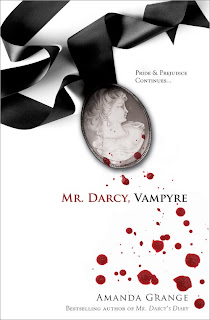
Mr. Darcy, Vampyre by Amanda Grange

“Her attention was attracted by movement close at hand and she saw the dark shape of a bird–no, a bat–heading towards the window. She closed it quickly, leaving the bat to hover outside. As she looked at it she was seized with a strange feeling. She thought how lonely it must feel, being shut out; being a part and yet not a part of the warmth and light within.” (Page 67 of the ARC)

Amanda Grange’s Mr. Darcy, Vampyre, published by Sourcebooks, catches up with Mr. & Mrs. Darcy right before their nuptials and follows them along their wedding tour. As plans change and the Darcys spontaneously tour Europe, mingling with Mr. Darcy’s friends, Elizabeth begins to feel that there is a deep dark secret her husband is hiding from her.

Throughout the novel, Grange adheres to Jane Austen’s characters and the time in which those characters live. Readers of Pride & Prejudice may have wondered why Fitzwilliam Darcy was so reserved, but Grange provides a paranormal alternative to mere position and wealth considerations in the 19th century. The lush landscape and dramatic plot will suck readers into Mr. Darcy, Vampyre as they travel with Elizabeth and Darcy through Paris, Italy, and the Alps.

“She needed no urging. The sumptuous atmosphere was starting to oppress her and the strangely sinuous people were unsettling. She was relieved to get outside and breathe the fresh air.

Night hung over the city like a dark mantle, pierced with the light of flambeaux and, up above, there seemed to be a thousand stars.” (Page 47 of ARC)

Elizabeth is captivated by her foreign surroundings, but eventually she begins to feel weary of her new acquaintances and the tension in her marriage. Readers will grow anxious and paranoid just as Elizabeth does. From bandits and wolves in the woods outside a secluded castle to the reappearance of Lady Catherine de Bourgh and her ties to Darcy’s secret, Grange weaves a twisted narrative that leaves Elizabeth, Darcy, and readers on the edge of their seats.

Mr. Darcy, Vampyre is a paranormal continuation of Austen’s Pride & Prejudice that is executed successfully. Even though the title does the novel a disservice by telling readers Darcy is a vampire, Grange is a master of this time period and her imagination shines through in this novel. There are enough descriptive clues and dialogue in Grange’s novel that a different title would not have detracted from its paranormal quality. It took me less than 3 days to read this novel in the free time I had at home. Readers will be absorbed by this paranormal world. Mr. Darcy, Vampire is another notch in Grange’s repertoire, and if readers have enjoyed Mr. Darcy’s Diary (click on the link for my review), they will enjoy this paranormal novel.

Feel free to check out the Mr. Darcy, Vampyre blog. And stay tuned for my interview with Amanda Grange and a giveaway on August 7. Check out more of the Mr. Darcy, Vampyre tour on the book’s blog.

This is my first book for the Everything Austen Reading Challenge. What books have you read for the challenge? What movies have you watched?

Also reviewed by:
Cafe of Dreams
Diary of an Eccentric


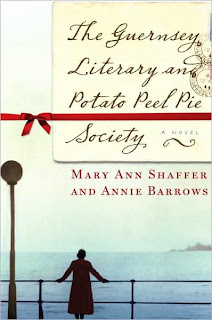
The Guernsey Literary and Potato Peel Pie Society by Mary Ann Shaffer and Annie Barrows

Mary Ann Shaffer and Annie Barrows’ The Guernsey Literary and Potato Peel Pie Society is a novel in letters between writer Juliet Ashton, her friends Sidney and Sophia, and her new friends from the Guernsey Channel Islands.

Ashton is in the midst of a book tour for a collection of her WWII articles under the pseudonym Izzy Bickerstaff. However, she is floundering on the topic for her next book, which is opportune for Ashton who begins to write articles for the Times about the practical, moral, and philosophical value of reading when she receives an unexpected letter of request from Dawsey Adams of Guernsey.

She begins getting letters from the remaining residents of Guernsey and their exploits as part of a literary society during the German occupation. These initial letters help with her series of articles and spur her muse into action.

“Perhaps there is some secret sort of homing instinct in books that brings them to their perfect readers.” (Page 10)

Like the above quote, this novel is one of those books that will hone in on the perfect reader. The Guernsey Literary and Potato Peel Pie Society is chock full of bookish quotes and must have been written with the love of books in mind. Beyond the WWII details, the rationing, the tip-toeing around German officers, and the loss of good friends shipped off to concentration camps, this is a novel about a writer who blooms in the countryside among new friends and new scenery.

“And then, being bright enough not to trust the publisher’s blurb, they will ask the book clerk the three questions: (1) What is it about? (2) Have you read it? (3) Was it any good?” (Page 16)

“The Library roof was some distance away from Juliet’s post, but she was so aghast by the destruction of her precious books that she sprinted toward the flames–as if single-handedly deliver the Library from its fate!” (Page 43)

“Reading good books ruins you for enjoying bad books.” (Page 53)

Readers will easily keep track of the numerous characters in this novel because each letter has an introduction line of who the letter is from and to whom it is addressed. Barrows and Shaffer have crafted quirky individuals with lively personalities from Dawsey and his quiet persuasive qualities to Isola and her outgoing nature. The Guernsey Literary and Potato Peel Pie Society is about how books can change lives and how people can impact one another’s lives.

This is one of the best books I’ve read in 2009.

Also Reviewed By:

Age 30+. . . A Lifetime of Books
Diary of an Eccentric
Jackets & Covers
It’s All About Books
Book Addiction
It’s All About Me (Time)
Katrina Reads
Peachy Books
The Book Nest

About the Authors:

Annie Barrows is the author of the children’s series Ivy and Bean, as well as The Magic Half. She lives in northern California.

Visit Annie’s website HERE.

Her aunt, Mary Ann Shaffer, who passed away in February 2008, worked as an editor, librarian, and in bookshops. The Guernsey Literary and Potato Peel Pie Society was her first novel.

For an excerpt from the book, go HERE.

For the rest of the TLC Book Tour schedule, go HERE.

To enter the Giveaway for 5 copies of the book for U.S. and Canadian residents:

1. Leave a comment on this post about your own book club or why you want to read this book.

2. Blog, Tweet, or spread the word and leave me a link or comment about it.

Silly me, I forgot the deadline, so here it is: August 12, 2009, at 11:59 PM

This is my 5th book for the War Through the Generations: WWII Reading Challenge.


Susan Helene Gottfried Speaks About Music, Obsession, and Writing

Susan Helene Gottfried, our good blogger friend, mind behind West of Mars, and author of Shapeshifter: The Demo Tapes Year 1, was kind enough to grant me an interview about her time at the University of Maryland in College Park, Maryland.

Where is this interview you ask?! It’s on my D.C. Literature Examiner here and here. Check out, leave some comments. I’m sure Susan will be by to check out your thoughts.

If you haven’t read Shapeshifter yet, you should get your hands on a copy of this bird’s eye view of the rock and roll universe.

***In Other News***

I updated my Book Review Policy and added a note to my readers.

Susan Helene Gottfried Reveals her Past and Inspiration

Susan Helene Gottfried, our good blogger friend, mind behind West of Mars, and author of Shapeshifter: The Demo Tapes Year 1, was kind enough to grant me an interview about her time at the University of Maryland in College Park, Md.
If you haven’t read Shapeshifter yet, you should get your hands on a copy of this bird’s eye view of the rock and roll universe.

Where is this interview you ask?! It’s on my D.C. Literature Examiner page. Check out, leave some comments. I’m sure Susan will be by to check out your thoughts.

Still not convinced you should read Shapeshifter, check out these reviews from Diary of an Eccentric and She Is too Fond of Books.

***In Other News***

I updated my Book Review Policy and added a note to my readers.

Rosemary Winslow Interview, Part 2

You might remember Rosemary Winslow’s first interview on Savvy Verse & Wit where we talked about her writing habits.

You also may remember my review of her book, Green Bodies.

Recently, she kindly agreed to answer some more pointed questions about her book, its cover art, and contemporary poetry for Examiner.com.

I hope you will all check it out because this will be a first in a number of literary interviews on my D.C. Literature Examiner page.

If you haven’t signed up for email alerts for my latest posts or as a subscriber and you love reading, authors, and poets, you are missing out on some great articles.

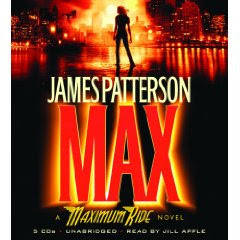
MAX by James Patterson (audio)

James Patterson‘s MAX on audio is chock full of sound effects, drama, and thrills. MAX is the fifth book in the young adult Maximum Ride series, which centers on winged kids that range from ages 6 to 16. Max leads the flock of winged children, and in this novel, they attempt to find Max’s kidnapped mother with the help of the U.S. military.

Not only does this novel immerse readers in the angst, confusion, and desire of these kids to fit in, it also is a coming of age story for Max as she begins to understand her feelings for Fang.

Listeners will be completely absorbed in the twists and turns of this thriller as the flock flies from South America to other locations and boards submarines to locate Max’s mother beneath the ocean’s surface. Check out this audio excerpt from James Patterson’s Website to hear the sound effects and the charged voice of Jill Apple.

If you are interested in this audiobook, just leave a comment to be entered. I’ll draw a winner on July 25, 2009.

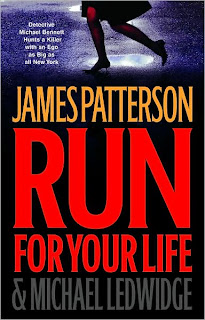
Run for Your Life by James Patterson and Michael Ledwidge

James Patterson and Michael Ledwidge’s Run for Your Life is another in the Michael Bennett crime drama series. My mom, Pat, will be your guest reviewer today, please give her a warm welcome.

Run for Your Life chronicles another adventure of Michael Bennett, a detective in the New York Police Department who is a single father to 10 children. In this novel, a murderer who calls himself “the Teacher” takes New York City by storm, slaughtering the powerful and arrogant rich people of the city. “The Teacher” selects his victims from those he meets.

Michael Bennett races across the city to investigate these vicious crime scenes, and many of these are difficult to visit. While “the Teacher’s” rampage across the city continues, Det. Bennett’s children fall ill with the flu, making his job even more difficult.

Run for Your Life is another page turner that readers will be unable to put down. Another five-star crime drama from James Patterson, chock full of action.

Thanks, Mom, for another detailed review. Look forward to more from her later this week.

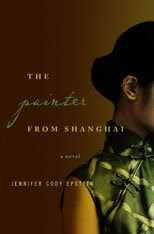
The Painter From Shanghai by Jennifer Cody Epstein

“That the buyer, if she finds one, probably won’t be able to read it means little. Yuliang doesn’t sign it for him. She signs for herself, to bind her work to her. To tattoo it with a message: she has won.” (Page 20)

Jennifer Cody Epstein’s The Painter From Shanghai, a debut novel, is a fictional account of Pan Yuliang’s rise from the ashes of her life as Xiuqing, a young child sold into prostitution. Through careful brushstrokes of her own, Epstein deftly fills her canvas with the sights, sounds, and images of China–from the dark alleys and brothels to the crowded, chaotic streets of Shanghai–in the early 1920s. Yuliang is a complex character who numbly makes her way through the obstacles she faces as a new prostitute under the thumb of corrupted merchants and a harsh and battered old woman, known as Grandmother. Emerging from the dank and corrupted halls of the brothel, she jumps into her new life as the concubine/second wife to Pan Zanhua and embarks on her career as a student and painter at the height of the Communist uprising in China during the 1930s.

“‘My husband,’ she says, twisting her wedding band, ‘writes that even more conservative Republicans will ally with the CCP now. For the nation’s sake.’

‘If anything, it’s a marriage of convenience.’ Now he looks straight into her eyes. ‘And one I doubt will last.'” (Page 318)

Epstein has a style all her own in which she easily weaves in relevant historical information through character interaction and development, but she also captures even difficult emotions with deft description and poise.

In the brothel, readers will feel Yuliang’s degradation as each man leers at her, touches her skin, and makes her kowtow to their desires. The one solace she has is the poetry of Li Qingzhao, which she recites from memory. Readers will enjoy the verse woven into the narrative as Yuliang examines herself at life-changing moments and seeks solace in the beauty of language.

Yuliang is molded by her mentors, but only truly blossoms when she becomes Zanhua’s wife and starts painting. Through painting she learns to combat her demons, her past, and her future, coming into her own as a painter and individual. As China is pulled in two directions between the republic and the communists, Yuliang is caught between her rebellious nature and Chinese tradition.

“Tearing off the sheet, she tries again, this time with better results. Use each object as a road into the next. She proceeds to the easiest object on the table, the orange . . . And in the space of a moment that neither registers nor matters, she is no longer outside the still life but working within it, running her mind’s hand over nubbly fruit skin. Pressing her face against the smooth tang of the bottle glass. Exploring a vase’s crevices with both finger and pencil tip, each item part of a visual sentence she is translating.” (Page 220)

The Painter From Shanghai
has a lot to offer book clubs, readers interested in painting, historical fiction, the struggle of women in society, China, and political history, and is one of the best novels I’ve read this year.

Check out my interview with Jennifer about her novel and writing habits.

1. Some writers will listen to music while writing and have a particular playlist for their novel or other work. Did you listen to any specific music while writing The Painter From Shanghai, and if so, could you list some of the titles? Or if you were to create a playlist for this novel, what would be the top 5 songs on that list?


I am actually highly distractible, so music is not a good idea for me in general unless it’s very low-level classical. Lyrics are bad–I can’t write words when I’m listening to other words. In general, I really just need quiet.

As for playlist: Hmmmm. Tough one with this book, as I’m not all that familiar with Chinese music from the period. I suppose the Charlston (which was the rage in Paris when Pan Yuliang was there), Verdi’s Macbeth (her first painting tutor is listening to Verdi when Yuliang first meets him); the first Shanghai pop song “Drizzzles” (Maomao yu)–a tune in folk style accompanied by New Orleans jazz-style music, Eric Satie’s Gymnopedie Number 1 (just because it’s the right general time frame and mood). And then maybe Aretha Franklin’s “Respect.”

2. Most writers will read inspirational/how-to manuals, take workshops, or belong to writing groups. Did you subscribe to any of these aids and if so which did you find most helpful? Please feel free to name any “writing” books you enjoyed most (i.e. Bird by Bird by Anne Lamott).

I loved Bird by Bird, actually. I also was a huge fan of Annie Dillard’s “The Writing Life” (I learned a ton from that) and “A Pilgrim at Tinker Creek.” In terms of workshopping–I find it enormously helpful. I went to Columbia to get my MFA and was very happy to have done so. As my husband pointed out at the time It’s expensive, and the whole precept of “teaching” writing is somewhat dubious. But for me, having mentors, feedback, criticism and–perhaps most of all–other people who were trying to do the same insane things with their lives as was I was really reaffirming.


3. The Painter From Shanghai is written with sometimes very broad and very detailed brushstrokes to mete out Pan Yuliang’s past. Have you studying painting at any point, and if not, is it something you have considered?

I took a few oil painting classes for the book, sat in on a Student Arts League class for a day, and also worked with a friend who is a painter on dissecting and trying to re-paint one of Pan Yuliang’s paintings, just to get a sense of what it feels like. I think it’s safe to say the world is lucky I paint with words only!

4. Do you have any obsessions that you would like to share?

Running. History. Good music. Frye boots. My Springer Spaniel Molly.

5. Please describe your writing space and how it would differ from your ideal writing space.

I generally write at a writer’s space, and it is pretty much ideal except for that it’s not easy to get to. I’d like to have it down my street, instead of a good half-hour by foot.
6. What current projects are you working on and would you like to share some details with the readers?
I’m currently working on a novel set in 1945, just before, during and after the Tokyo Firebombings. It’s quite different fromPainter” in that it will be told from a few different perspectives, and most of the characters aren’t as closely-based on real people. But like “Painter” it explores the intersection of different cultures, and the power of art (in this case, architecture) to both create and destroy.

Thanks, Jennifer, for taking time out of your busy schedule to answer my questions.

About the Author:

Jennifer Cody Epstein has worked in Japan, China, Hong Kong, Thailand and the U.S. for publications including The Wall Street Journal, The Asian Wall Street Journal, Mademoiselle, Self and Parents, as well as for the NBC and HBO networks. She has a Masters degree in International Affairs from Johns Hopkins SAIS and an MFA from Columbia. She lives in Brooklyn, New York, with her husband, filmmaker Michael Epstein, and their two daughters.

Check out her Web site, here.

She also very interested in speaking with Book Clubs about her novel by telephone and email if not in the New York City area or in-person if you are in New York City.

For reading group guides for The Painter From Shanghai, go here.

Here’s another interview with Jennifer at WOW! Women on Writing.

Interested in the real artist’s work, go here or here.

Check out the rest of The Painter From Shanghai tour with TLC, here.

Don’t forget my current giveaways:

2-year Blogiversary, here and here and here.

Guest Post: Hazel Statham, Author of Lizzie’s Rake

I would like to welcome Hazel Statham, author of Lizzie’s Rake, to Savvy Verse & Wit. She’s taken the time out of her busy schedule to share with us some tidbits about her mischievous dog, Mollie, and her writing space. . .

My Writing Space – Or Rather, Lack of

I wish, oh how I wish I had a workspace all of my own where I could spread my work out and no one would complain! It wouldn’t have to be a large room, I would be quite content with a very modest space – just large enough for a desk, a chair and a bookcase, but most importantly, with a door. Somewhere where I could just hide away from everyone and immerse myself in my own little historical world. There would be peace and quiet and when I was hidden away, everyone would know I wanted to be alone.

Of course, the dogs could come into my inner sanctum, they’re no trouble, except Mollie who, at just 12 months old, is still a little monkey – but we are imagining the ideal here. Sadly, the reality is not quite the same.

Due to the lack of an office, my computer is set up on a desk in a corner of the dining room – not very practical, I know, but as there’s no other space available, it has to be. I write when my husband is at work and the house is quiet. I can’t write when there’s noise around me as it disturbs my train of thought. Sometimes I can be at the computer from morning to night, sometimes for just a few short hours. Wherever I am, so are the dogs. Lucy is content to just lie by my chair but Mollie, more often than not, is always into some mischief or other. It’s not always easy typing with a Labrador trying to get on your knee.

There’s also a computer set up in the opposite corner and when my seven-year-old grandson comes to stay with me during the school holidays, he’s usually on it. He informs me that he’s writing a book about Mr. Bean and Star Wars. Rather a strange combination, I know, but one that seems to work for him.


Mollie getting into mischief!

About Lizzie’s Rake (From Hazel’s Website):

Can a rake reform his ways and truly love? Lizzie’s head tells her one thing, her heart another.

Infamous rake and Corinthian, Maxim Beaufort, Earl of St. Ive, finding himself in possession of a property in Yorkshire, is unprepared for the changes it will bring into his life. Irresistibly drawn to Elizabeth Granger, the former owner’s daughter, he attempts to help the family, finding himself filling the role of benefactor. When the house is razed to the ground, he arranges for

temporary accommodation for Elizabeth and her siblings on his estate.

When Elizabeth rejects his proposal of marriage, he is nonetheless determined to win her over. However, events and his reputation conspire to thwart his efforts and his course is one fraught with dangers.

Trust does not come easily and determined to protect her heart, Elizabeth struggles to resist her own longings. At times, their difficulties appear insurmountable but the earl is widely known as ‘The Indomitable’ and the name was not lightly earned.


Don’t forget my current giveaways:

2-year Blogiversary, here and here.

Guest Post: Renee Hand, Author of The Crypto Capers

I’d like to welcome Renee Hand, author of The Crypto-Capers, to Savvy Verse & Wit to talk about her writing process.

Her latest book The Case of the Missing Sock, for ages 9-12, is a story of two siblings, Max and Mia Holmes, and their good friend Morris and their flamboyant Granny Holmes as they unravel crimes by solving cryptograms left by criminals. Mia is the expert puzzle solver, and Max has great deduction and reasoning skills. Morris happens to be a computer genius, and granny is the “muscle” of the group. In this caper, the group heads to Florida and are hired by Mr. Delacomb, and readers have a chance to help these detectives solve the case through cryptograms and puzzles.

Here’s an excerpt from the book:

“FIVE MINUTES! JUST FIVE MORE MINUTES,” said Max Holmes quietly as he surveyed the dark room in front of him.

This should be the last place to reach, the highest test of his skills. He switched off his flashlight. He faced a rugged stone wall. From somewhere far above him, a crack let in a single, narrow beam of sunshine. It hit about the middle of the wall, barely lighting up a recess, an indention shaped into a rectangle, slightly taller than wide. A box could fit in there, Max thought, and he grew just a little nervous.

“Did I come here for nothing?” he asked in frustration as he glanced more intently at the wall. “Did I pick the wrong way?” For just a moment, he reviewed his route to this stone box of a room. No, he had made each choice carefully. “This has to be the right place. It has to be here!”

Without further ado, here is Renee and her writing process:

My writing process is interesting. I really just let my ideas come to me. I have a favorite tool that I use in my writing. I have what I call “an idea wall.” Whenever I get an idea I write it down and stick in on my wall for future consideration, as well as to remind me of things that I want to make sure I incorporate into my stories. In writing a series, there is so much that I have to remember, so I use my idea wall to help me remember these things. I also use it to help me when I get stuck on an idea. There are times when I am not sure where to go with an idea so I write it on my idea wall and refer back to it throughout the day as I am doing something else. This is a tremendous help to me and my idea wall has not failed me yet. I use it for many things in my writing.

My stories usually develop on the fly, which works great for me and my creativity. I write at my own pace the way that I want to write. If I felt that I was being pressured to write a certain way or at a specific time every day, I wouldn’t enjoy it as much. I make writing as fun and enjoyable as possible because I love to do it.

When developing my stories, I usually know what I want to have happen; all I have to do is find a great way to get there. I do a lot of revision and editing but when I begin a story I first just concentrate on getting my ideas down on paper. I don’t beat myself up if everything is not perfect. I just get my ideas down all the way to the end of the story. Once I have a base, which I must have, then I will go back and fine tune and develop the story better. I will do lots of research along the way to add more detail and description, or I will take a vacation somewhere to help aid in the experience and relate it in my story. What I start with usually always changes and becomes ten times better by the time I finish it. I will lay out certain ideas in a specific order at times, depending on the scene in my story and where I want it to go or what I need to have happen. So, certain ideas in my story are planned out to be in a certain way, but after that I let my creativity take me where I need to go.

By the time I am finished with my story it is in the best shape I can possibly make it. I am finding that with each story I write, I become a better writer. I am always improving and I can see it with each book that gets published. I have 4 to my credit, two of which have won awards.

Thanks, Renee for stopping by Savvy Verse & Wit and taking the time out of your busy schedule to share your writing process with us.

Check out Renee’s site, here. And if you’re interested in these capers for your kids, check out The Case of the Missing Sock, here, and The Case of Red Rock Canyon, here.

About the Author:

Since my first novel has been published I have done over 70 events. I have been on radio, TV, and have been in over 40 newspapers. I have experience talking in classrooms about writing. I have presented at various libraries, have
done several booksignings and many other venues with more going on in the future.

My family has encouraged my talents and creativity and I couldn’t have gotten this far without their support and love. Having Magic Hearts published really was a dream come true and I am thankful to God for all of the blessings in my life.

I have also received an award for Magic Hearts for Best 2006 Fantasy Romance. I am thrilled. My second novel Seduction of the Lonely Heart has won a National Literary Award for Best Romance of 2007. I am thankful for these two awards.

I have also ventured in writing other genres. I have a new children’s detective series that will be coming out. The first book of the series, The Crypto-Capers in the Case of the Missing Sock, is currently released. This story is filled with adventure and heart. With relateable characters and you, as the reader, are apart of the story, helping the detectives solve the case. Book 2 The Case of Red Rock Canyon, is also currently available. Book 3 will be out in the fall.


Don’t forget my current giveaways:

2-year Blogiversary, here and here.

Last Night in Montreal by Emily St. John Mandel

Emily St. John Mandel’s Last Night in Montreal, a debut novel, reads like sketched notes in a private investigator’s notebook. With chapters that alternate between the past and present and a variety of characters, readers will feel like they are investigating a child abduction case, while garnering a better understand of human motives and emotions.

“She’d been disappearing for so long that she didn’t know how to stay.” (Page 9 of the uncorrected proof)

Lilia Albert is abducted by her father, and as they move around the United States in and out of hotels, her sense of home is vanquished. She no longer knows how to stop and settle into a “normal” life. As an adult she continues to move from place to place, carrying with her the only photograph from her past that she has–a Polaroid of her and a waitress. Lilia is a complex character, her emotions deep below the surface, and she meets a variety of people along the way–Eli, an art gallery salesman working on his thesis; Erica, a girl from Chicago with blue hair; and Michaela, an exotic dancer and part-time tightrope walker from Montreal.

“She came out all dressed in black, as she almost always did, and carrying the three pieces of plate that had fallen off the bed the night before; it was a light shade of blue, and sticky with pomegranate juice.” (Page 2 of the uncorrected proof)

Mandel peppers each chapter with just enough description and information to keep the pages turning, as readers strive to uncover the moment when Lilia’s life changed and why it changed. But this mystery is more than what happens to Lilia, it’s about how an obsession can rip apart a private investigator’s family, encourage an ex-lover to step outside his comfort zone, and the myriad ways in which humans react to disturbing events from the past.

“Lilia’s childhood memories took place mostly in parks and public libraries and motel rooms, and in a seemingly endless series of cars. Mirage: she used to see water in the desert. In the heat of the day it pooled on the highway, and the horizon broke into shards of white. There was a map folded on the dashboard, but it was fading steadily under the barrage of light; Lilia was supposed to be the navigator but entire states were dissolving into pinkish sepia, the lines of highways fading to gray. The names of certain cities were indistinct now along the fold, all the borders were vanishing.” (Page 7 of the uncorrected proof)

Readers will itch to reach the resolution of this abduction case, not only to discover why Lilia’s father took her from her mother and brother, but also to see Lilia recover many of her earlier memories settled behind the dust kicked up by her continuous travels. The one minor drawback could be the chapters featuring the private detective and his obsessive pursuit of Lilia and her father even when he no longer desires their capture; these chapters dispel some of the suspense built up in previous chapters. However, Eli, Michaela, and Lilia’s story lines twist and mingle throughout the novel, and Mandel does well shifting between points of view. Last Night in Montreal is not a typical mystery, but still satisfying.

About the Author:
Emily St. John Mandel was born on the west coast of British Columbia, Canada, in 1979. She studied dance at The School of Toronto Dance Theatre and lived briefly in Montreal before relocating to New York. She lives in Brooklyn.

Check out this video for her book.

If you missed Emily’s guest post on Savvy Verse & Wit about her writing space, please check it out, here.

Also Reviewed By:

Violet Crush
Bookfoolery and Babble
Care’s Online Book Club
Everyday I Write the Book
She Is Too Fond of Books 
Musings of a Bookish Kitty 

Last Night in Montreal by Emily St. John Mandel

Emily St. John Mandel’s Last Night in Montreal, a debut novel, reads like sketched notes in a private investigator’s notebook. With chapters that alternate between the past and present and a variety of characters, readers will feel like they are investigating a child abduction case, while garnering a better understand of human motives and emotions.

“She’d been disappearing for so long that she didn’t know how to stay.” (Page 9 of the uncorrected proof)

Lilia Albert is abducted by her father, and as they move around the United States in and out of hotels, her sense of home is vanquished. She no longer knows how to stop and settle into a “normal” life. As an adult she continues to move from place to place, carrying with her the only photograph from her past that she has–a Polaroid of her and a waitress. Lilia is a complex character, her emotions deep below the surface, and she meets a variety of people along the way–Eli, an art gallery salesman working on his thesis; Erica, a girl from Chicago with blue hair; and Michaela, an exotic dancer and part-time tightrope walker from Montreal.

“She came out all dressed in black, as she almost always did, and carrying the three pieces of plate that had fallen off the bed the night before; it was a light shade of blue, and sticky with pomegranate juice.” (Page 2 of the uncorrected proof)

Mandel peppers each chapter with just enough description and information to keep the pages turning, as readers strive to uncover the moment when Lilia’s life changed and why it changed. But this mystery is more than what happens to Lilia, it’s about how an obsession can rip apart a private investigator’s family, encourage an ex-lover to step outside his comfort zone, and the myriad ways in which humans react to disturbing events from the past.

“Lilia’s childhood memories took place mostly in parks and public libraries and motel rooms, and in a seemingly endless series of cars. Mirage: she used to see water in the desert. In the heat of the day it pooled on the highway, and the horizon broke into shards of white. There was a map folded on the dashboard, but it was fading steadily under the barrage of light; Lilia was supposed to be the navigator but entire states were dissolving into pinkish sepia, the lines of highways fading to gray. The names of certain cities were indistinct now along the fold, all the borders were vanishing.” (Page 7 of the uncorrected proof)

Readers will itch to reach the resolution of this abduction case, not only to discover why Lilia’s father took her from her mother and brother, but also to see Lilia recover many of her earlier memories settled behind the dust kicked up by her continuous travels. The one minor drawback could be the chapters featuring the private detective and his obsessive pursuit of Lilia and her father even when he no longer desires their capture; these chapters dispel some of the suspense built up in previous chapters. However, Eli, Michaela, and Lilia’s story lines twist and mingle throughout the novel, and Mandel does well shifting between points of view. Last Night in Montreal is not a typical mystery, but still satisfying.

About the Author:
Emily St. John Mandel was born on the west coast of British Columbia, Canada, in 1979. She studied dance at The School of Toronto Dance Theatre and lived briefly in Montreal before relocating to New York. She lives in Brooklyn.

Check out this video for her book.

If you missed Emily’s guest post on Savvy Verse & Wit about her writing space, please check it out, here.

Also Reviewed By:

Violet Crush
Bookfoolery and Babble
Care’s Online Book Club
Everyday I Write the Book
She Is Too Fond of Books 
Musings of a Bookish Kitty