Quantcast

64th Virtual Poetry Circle

Welcome to the 64th Virtual Circle!

Remember, this is just for fun and is not meant to be stressful.

Keep in mind what Molly Peacock’s books suggested. Look at a line, a stanza, sentences, and images; describe what you like or don’t like; and offer an opinion. If you missed my review of her book, check it out here.

Let’s check out the contemporary poet David Antin:

6th Separation Meditation

it appears whole
it has been
thought of
as good
not reasoned out
he uses
he is bound
to a state
he has recognized
even if the description is a delusion
it is worth while to speak of logic
frequently
it depends on knowledge
to translate it
suggests conflict
which is
implied
in the word
demonstration
it would seem
the more formal
the meaning seems to be
the more
from the center of your being
that feeling
that nothing
either for me or my friend
the conjecture
this meaning
or material
is applied at the end
as the element
of commanding value
in contrast with joy
which is not of its essence
it is sometimes
supreme
something specially concerned
in conduct
interest
the true interest
the interest of true self
is mad
in this state
he is confronted by the rich
if you take a low view of politics
you will degrade yourself
see how things are going in the capital!
the senator
discovers
the soul’s moral equipment
is imperfect
the point seems to be
this indignity
the educated man
is untrained
to complete the sense
protest
the managers
the schools
taking cognizance of things
see
the community
its limitations
its hard circumstances
the insolence of the rich
all acts are appropriate
to the circumstances

Let me know your thoughts, ideas, feelings, impressions. Let’s have a great discussion…pick a line, pick an image, pick a sentence.

I’ve you missed the other Virtual Poetry Circles. It’s never too late to join the discussion.
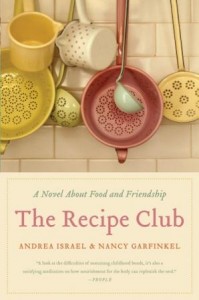
The Recipe Club by Andrea Israel and Nancy Garfinkel

The Recipe Club by Andrea Israel and Nancy Garfinkel is a narrative mostly written in emails and letters, shifting from a budding friendship between young girls and blossoming into adulthood.  Beyond the emails and letters, the novel also includes recipes, which mesh well with the story as each of the girls deals with lost loves and problems with family, including Lovelorn Lasagna.

The novel begins after Valerie and Lilly have endured a 26-year silence in their friendship.  After an attempt to regain their lost companionship, the narrative shifts to letters written as children and the start of their recipe club.  Recipes are garnered from their parents, family, and friends and often coincide with events in the girls’ lives.  Many of the letters are ripe with adolescent angst and childlike retorts as they quarrel over ideals and perspectives.

“It was so awful.  I was standing in a crowd of other girls I know, and the boys came up to inspect us like we were fruit to be picked.  I only got asked to slow-dance once, by a kid who looks like Ichabod Crane with zits.  We stepped on each other’s feet so hard that I was actually relieved to sit by myself for the rest of the night.”  (page 136 of hardcover)

Valerie is a straight-laced student and highly moral girl who doesn’t understand her friend Lilly as she begins to emulate her free-spirited, actress mother more and more and rebel further against her straight-laced father.  Val spends a great deal of time wondering whether her friendship with Lilly is solid and kowtowing to her friend’s desires and opinions.  In many ways these letters get a bit trying, but eventually Val evolves into a stronger woman.  Lilly’s letters are very self-centered, which also can be exhausting, but eventually Lilly is reformed.

Overall, The Recipe Club is an interesting collection of letters, emails, and recipes that illustrate the frustrations women find in relationships with one another.  The time passes quickly with these women, but in the end, the women reach a satisfying place in their relationship.

This is my 47th book for the 2010 New Authors Reading Challenge.

Barnacle Love by Anthony De Sa

Barnacle Love by Anthony De Sa is broken into two distinct narratives; one for Manuel Rebelo and one for his son, Antonio.  The first portion follows Manuel from his boyhood into his adulthood as he struggles with the expectations of his mother for greatness on the island of Sao Miguel, Acores, and his dream of seeing the wider world and eventually settling in Canada.  Unlike his brothers and sisters, Manuel’s light hair and blue eyes reminded his mother of her husband, who was lost at sea.  Effectively, he becomes her substitute companion and weighs him down with her expectations until he finally breaks free to live his dreams.  Unfortunately, he finds that his dreams are not so easily realized.

“Manuel used his forearms to part the stalks of corn.  His blood coursed through him.  He forged ahead, swiping at the brittle stems, nursing the anger that had pressed on him ever since he had arrived back home and Silvia had said no.”  (page 97)

De Sa uses a fast-paced narrative intertwined with folklore, tradition, and imagery to paint a picture of Manuel’s life, his homeland, and his new home in a way that they become almost surreal.  Is this man truly living his life here or is this his dream/nightmare made real.  Once Antonio takes over the narrative, the nightmare grows more surreal as family members become more like caricatures rather than people.

At times the narrative is disjointed and jostles readers from one point in time to another, making them wonder what happened in the intervening years.  However, the story does not lose its edge.  It demonstrates that love, even between father and son, mother and son, and even siblings is not always smooth and without obstacles.  Can forgiveness and love triumph over the wrongs each feels the other has done and will their dreams become reality?

“‘My husband used to say that men are all barnacles.  A barnacle starts out lie swimming freely in the ocean.  But, when it matures, it must settle down and choose a home.  My dear husband used to say that it chooses to live with other barnacles of the same kind so that they can mate.'”  (page 108)

Barnacle Love relies heavily on ocean imagery and the surreal-ness of its characters to illustrate the hurt that comes with family, but also the great love that stirs beneath its bristling core.  Anthony De Sa has created a memorable journey of Portuguese-Canadian immigrants that will leave readers wanting more and spending additional time trying to figure out the characters’ motivations.

This is my 46th book for the 2010 New Authors Reading Challenge.

I’m a bit AWOL this week

I’m sure you’ve all been wondering where I’ve been the last few days.  In short, my parents are in town and we’ve been very busy, so all is quiet here on the blog at least for the time being.

I will have a review for you if not tomorrow, maybe the end of the week.  Please bear with me.  I’ll also have festival reports for you as the National Book Festival and Baltimore Book Festivals are this coming weekend.

If you haven’t checked out these festivals and you are in the area, you should drop by even for a few hours.  You’ll not only get to meet great authors but some great readers as well.  I should be at one or both of these events.  Maybe my clan will run into you.

Mailbox Monday #97

Mailbox Mondays (click the icon at the right to check out the tour) has gone on tour since Marcia at The Printed Page passed the torch.  This month our host is Kathy of Bermudaonion Weblog.  Kristi of The Story Siren continues to sponsor her In My Mailbox meme.  Both of these memes allow bloggers to share what books they receive in the mail or through other means over the past week.

Just be warned that these posts can increase your TBR piles and wish lists.

Here’s what I received:

1.  Mr. Darcy Takes the Plunge by J. Marie Croft for review.

What did you receive in your mailbox?

Winners. . .

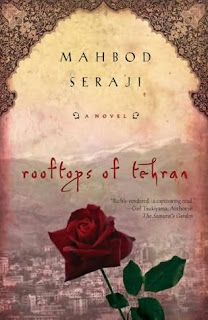
The long overdue announcement of winners for Rooftops of Tehran by Mahbod Seraji (Click the book cover for Amazon.com’s synopsis or the title for my review) is here.  In no particular order, the winners are:

J.T. Oldfield of Bibliofreak, who said, “I’d love to read this because I’ve read two books about Tehran this summer (Honeymoon in Tehran and Embroideries) and I guess I’m on a roll!”

Margie, who said, “I have heard many good things about this book.  I enjoy books which give you a glimpse of another culture.”

Sandra Muniz, who said, “I would like to read this books because I haven’t read anything like this before and I want to. I read some reviews and it seems an interesting read =D”

The winners of C. Allyn Pierson’s Mr. Darcy’s Little Sister (click the cover for Amazon’s synopsis or click the title for my review) are:

Grace from Books Like Breathing, who said, “I first read Pride and Prejudice when I was a freshman in high school. It was a revelation. I quickly declared it my favorite book and, as soon as I was finished the first time, I read it again. Then I saw the Colin Firth version of P&P and it was all over. I was ruined for other books for a long time.”

Wanda who said, “I loved Pride & Prejudice from the first page onward. It was different from anything I’ve read before.”

Congrats to all the winners.  There are more giveaways in the right sidebar in honor of BBAW, so enter today!

63rd Virtual Poetry Circle

Welcome to the 63rd Virtual Circle!

Remember, this is just for fun and is not meant to be stressful.

Keep in mind what Molly Peacock’s books suggested. Look at a line, a stanza, sentences, and images; describe what you like or don’t like; and offer an opinion. If you missed my review of her book, check it out here.

For our return to the classics, we’re going to visit the Greeks.  Let’s check out an excerpt from the epic poem The Iliad by Homer, book 1, lines 1-14:

Achilles’ wrath, to Greece the direful spring
Of woes unnumber’d, heavenly goddess, sing!
That wrath which hurl’d to Pluto’s gloomy reign
The souls of mighty chiefs untimely slain;
Whose limbs unburied on the naked shore,
Devouring dogs and hungry vultures tore.
Since great Achilles and Atrides strove,
Such was the sovereign doom, and such the will of Jove!

Declare, O Muse! in what ill-fated hour
Sprung the fierce strife, from what offended power
Latona’s son a dire contagion spread,
And heap’d the camp with mountains of the dead;
The king of men his reverent priest defied,
And for the king’s offence the people died.

Let me know your thoughts, ideas, feelings, impressions. Let’s have a great discussion…pick a line, pick an image, pick a sentence.

I’ve you missed the other Virtual Poetry Circles. It’s never too late to join the discussion.
BBAW 2010: Future Treasures

Today is about future goals and treasures.  I’m going to take a new twist on this topic as well.  Since my love of poetry is well known and I know that many of you are reluctant poetry readers, but generous people.  I’m going to put out a call for donations to my favorite poetry organization, The American Academy of Poets.

This organization not only has a free database of information about classic to contemporary poets, but it allows users to read and listen to poems online.  From Apps that bring poetry to your smartphone to local and national events for poets and poetry, the organization’s goal is to not only spread the word about the genre, but also support poets through competition for first book prizes and other awards.

Supporting American poets is one goal, but I’ve always thought one of their overarching goals is to widen the audience for poetry by capturing them online and in person.  I’d like to call on you to donate to this great organization to preserve the future poetry treasure that are yet to be written.

All you have to do to enter this global giveaway is donate — no sum is too small — to the academy, which runs programs for the public and poets, including support for National Poetry Month events across the United States.

  • Go to Poets.org and use the drop-down “Donate” menu to select Donate Now.
  • Fill out the required fields
  • A new screen will give you donation choices from $25-$1,000, but there is also an “Other” selection where you can input any amount.
  • You can designate any program you like from the drop-down menu.
  • After inputting your payment information, please paste the following in the comments section “Savvy Verse & Wit Poetry Donation Drive.”

Once you’ve done that, please come back and leave your confirmation number or email it to me at savvyverseandwit at gmail dot com with “Savvy Verse & Wit Poetry Donation Drive” in the subject.

I’ll pick a random winner for the following books:

1.  Wishing Trees by John Shors

2.  Safe From the Sea by Peter Geye

Deadline for this GLOBAL giveaway is Sept. 30, 2010 — Deadline extension to Oct. 30, 2010, at 11:59PM EST

THIS GIVEAWAY IS NOW CLOSED!

BBAW 2010 Forgotten Treasures

Forgotten treasures abound throughout literature from classics to unknown contemporary novels, but as expected, I want to talk about poetry and the forms of poetry that are not often used or attempted anymore.

A majority of poetry these days is in free verse, though there are some contemporary poets who do dabble in sonnet, which is considered a restrictive form.

Sonnets come in two styles:  Shakespearean and Petrarchan.  Shakespearean sonnets are those most taught in school and consist of 14 lines  in iambic pentameter, which could be thought of a normal speaking rhythm, and contain ten syllables in each line.  These sonnet also typically have the following rhyme scheme:  a-b-a-b, c-d-c-d, e-f-e-f, g-g — with the final lines rhyming one another.  Petrarchan sonnets, on the other hand, have an octave and sestet that offers a resolution at the end of the poem, while the ninth line offers a change in tone or mood.  The typical rhyme scheme begins with a-b-b-a, a-b-b-a, while the remainder of the rhyme scheme offers one of two choice:  c-d-e-c-d-e or c-d-c-c-d-c.

Check out the example from Shakespeare:

Sonnet 20

A woman’s face with nature’s own hand painted,
Hast thou, the master mistress of my passion;
A woman’s gentle heart, but not acquainted
With shifting change, as is false women’s fashion:
An eye more bright than theirs, less false in rolling,
Gilding the object whereupon it gazeth;
A man in hue all hues in his controlling,
Which steals men’s eyes and women’s souls amazeth.
And for a woman wert thou first created;
Till Nature, as she wrought thee, fell a-doting,
And by addition me of thee defeated,
By adding one thing to my purpose nothing.
But since she prick’d thee out for women’s pleasure,
Mine be thy love and thy love’s use their treasure.

Check out the example of a Petrarchan Sonnet by Petrarch:

Sonnet 131

I’d sing of Love in such a novel fashion
that from her cruel side I would draw by force
a thousand sighs a day, kindling again
in her cold mind a thousand high desires;

I’d see her lovely face transform quite often
her eyes grow wet and more compassionate,
like one who feels regret, when it’s too late,
for causing someone’s suffering by mistake;

And I’d see scarlet roses in the snows,
tossed by the breeze, discover ivory
that turns to marble those who see it near them;

All this I’d do because I do not mind
my discontentment in this one short life,
but glory rather in my later fame.

Villanelle is another style that has disappeared from contemporary literature and contains not only rhyme, but a refrain using either trimeter or tetrameter.  Trimeter is three metric feet per line, while tetrameter is four metrical feet.  The poem has 19 lines.  These poems only have two rhyme sounds and the first and third line of the first stanza are rhyming refrains that alternate as the final line of each successive stanza before forming a rhyming couplet at the end of the poem.

Here’s an example from Dylan Thomas:

Do Not Go Gentle Into That Good Night

Do not go gentle into that good night,
Old age should burn and rave at close of day;
Rage, rage against the dying of the light.

Though wise men at their end know dark is right,
Because their words had forked no lightning they
Do not go gentle into that good night.

Good men, the last wave by, crying how bright
Their frail deeds might have danced in a green bay,
Rage, rage against the dying of the light.

Wild men who caught and sang the sun in flight,
And learn, too late, they grieved it on its way,
Do not go gentle into that good night.

Grave men, near death, who see with blinding sight
Blind eyes could blaze like meteors and be gay,
Rage, rage against the dying of the light.

And you, my father, there on the sad height,
Curse, bless, me now with your fierce tears, I pray.
Do not go gentle into that good night.
Rage, rage against the dying of the light.

Sestina has six six-line stanzas with a tercet for a total of 39 lines.  The same six words end the lines of the six-line stanzas, but in alternating order:  123456, 615243, 364125, 532614, 451362, and finally 246531.  “These six words then appear in the tercet as well, with the tercet’s first line usually containing 6 and 2, its second 1 and 4, and its third 5 and 3,” according to Wikipedia.

Here’s an example from Ezra Pound:

Sestina:  Altaforte

Loquitur: En Bertrans de Born.
Dante Alighieri put this man in hell for that he was a
stirrer-up of strife.
Eccovi!
Judge ye!
Have I dug him up again?
The scene in at his castle, Altaforte. “Papiols” is his jongleur.
“The Leopard,” the device of Richard (Cúur de Lion).

I

Damn it all! all this our South stinks peace.
You whoreson dog, Papiols, come! Let’s to music!
I have no life save when the swords clash.
But ah! when I see the standards gold, vair, purple, opposing
And the broad fields beneath them turn crimson,
Then howl I my heart nigh mad with rejoicing.

II

In hot summer have I great rejoicing
When the tempests kill the earth’s foul peace,
And the lightnings from black heav’n flash crimson,
And the fierce thunders roar me their music
And the winds shriek through the clouds mad, opposing,
And through all the riven skies God’s swords clash.

III

Hell grant soon we hear again the swords clash!
And the shrill neighs of destriers in battle rejoicing,
Spiked breast to spiked breast opposing!
Better one hour’s stour than a year’s peace
With fat boards, bawds, wine and frail music!
Bah! there’s no wine like the blood’s crimson!

IV

And I love to see the sun rise blood-crimson.
And I watch his spears through the dark clash
And it fills all my heart with rejoicing
And pries wide my mouth with fast music
When I see him so scorn and defy peace,
His lone might ‘gainst all darkness opposing.

V

The man who fears war and squats opposing
My words for stour, hath no blood of crimson
But is fit only to rot in womanish peace
Far from where worth’s won and the swords clash
For the death of such sluts I go rejoicing;
Yea, I fill all the air with my music.

VI

Papiols, Papiols, to the music!
There’s no sound like to swords swords opposing,
No cry like the battle’s rejoicing
When our elbows and swords drip the crimson
And our charges ‘gainst “The Leopard’s” rush clash.
May God damn for ever all who cry “Peace!”

VII

And let the music of the swords make them crimson!
Hell grant soon we hear again the swords clash!
Hell blot black for always the thought “Peace!”

Cinquain is another often forgotten form that has two styles Crapsey and Didactic, but each has a five-line pattern.  Crapsey cinquains have a syllable count of 2, 4, 6, 8, 2, with a fixed number of stressed syllables in this pattern:  1, 2, 3, 4, 1, using iamb.  Didactic cinquains generally begin with a one-word title, followed by a pair of adjectives describing the title/subject of the poem.  The third line is a three-word phrase that provides more information about the title, and the fourth line has four words to describe feelings related to the subject.  In the fifth line is a single-word synonym or another reference to the title/subject.

Crapsey Cinquain example:

November Night

Listen. . .
With faint dry sound,
Like steps of passing ghosts,
The leaves, frost-crisp’d, break from the trees
And fall.

These forms do take quite a bit of patience and diligence to craft, and I applaud any contemporary poet that takes them on.  I’ve always loved sestinas and villanelles, but I can’t seem to write them well.  It’s something that will take a lot of practice.

For the GLOBAL giveaway:

Tell me which of these forms you would find hardest to write and why.

or

Provide an example of one of your favorite poems in one of these forms.

Deadline is Sept. 19, 2010, at 11:59PM EST

Books up for Grabs:

1.  A Reliable Wife by Robert Goolrick

2.  The Tudor Rose by Margaret Campbell Barnes

BBAW 2010 Unexpected Treasures

I want to thank everyone who has stopped by to check out the giveaway by making their own poem and those that read and commented on my interview with Book Harbinger.

Today’s topic is to discuss an unexpected treasure — a book or genre I’ve tried because of a blogger’s recommendation.  I cannot tell you how many times bloggers have influenced my reading choices.

Dewey began it when she recommended the novella The Uncommon Reader by Alan Bennett.  I miss her dearly — her reading and her enthusiasm for books was infectious.

In the last year, I’ve read Shutter Island by Dennis Lehane on audio book because Sandy at You’ve Gotta Read This!!! was blown away by the audio.  Her thoughts on the audio were infectious, and I had to check if my library had a copy of this audio.  I got it on playaway, and while the narration was eerie and engaging, the story itself didn’t affect me the way that it affected her, but I was OK with that.

On the other hand, My Friend Amy and Things Mean A Lot reviewed Nothing But Ghosts by Beth Kephart and I knew it was a book I had to read.  As a poet, I knew the lyrical and descriptive language would be right up my alley and I was not disappointed.  Kephart’s writing is something I had been searching for in young adult literature.  Her novels deal with universal themes of grief, death, sibling rivalry, love, and coming of age, but her writing pulls you in and will not let you go.

I was so enthralled by this writer and her novel that I’ve read two others since.  I really enjoyed Undercover, which spoke to my inner teenager who wrote in secret and was often on the outside of the social circles in my junior and senior high school years.  Kephart captured a time in my life that I thought no one could possibly understand.  Her latest book, Dangerous Neighbors, is a different young adult novel that is set in 1876 Philadelphia.  Many of the YA novels I’ve read are contemporary, and it was a real treat to read a novel set in the past.

For my second GLOBAL BBAW giveaway, all you have to do is answer one of the following questions.

What bloggers have influenced you this year? And what books have they encouraged you to read?

or

What book do you think readers have been influenced to read by your own blog?

Deadline is Sept. 19, 2010, at 11:59 PM EST

What’s up for grabs: (click the links for my reviews)

1.  The Widow’s Season by Laura Brodie

2.  Short Girls by Bich Minh Nguyen

3.  A Dangerous Affair by Caro Peacock

Stay tuned for more giveaways this week!