Quantcast

Short Story Friday: Christmas Canapes & Sabotage by Janel Gradowski

In a renewal, I’ve been reading some short stories in collections, and I really love Janel Gradowski‘s writing.  Her cozy mysteries are always full of food and fun.  One of her latest stories was published in the Cozy Christmas Capers: Holiday Short Story Collection.  I wanted to share a little bit about why I am enjoying these cozy mysteries from Janel and why we as a community should support more writers like her.
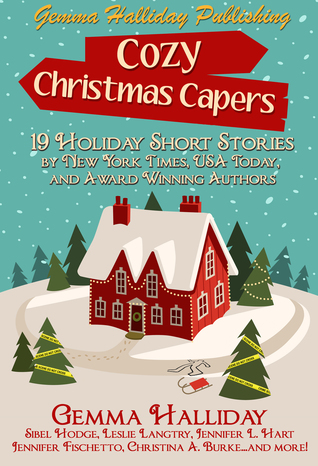
Christmas Canapes & Sabotage by Janel Gradowski is part of the culinary competition mystery series of books — her new one is coming out this month, Chicken Soup & Homicide — that find an amateur cook embroiled in a deadly mystery at local food competitions.  Amy is a winner when it comes to these amateur cooking competitions, but she is always humble about her skills, even if she is as inventive in the kitchen as some professional chefs.  Why do I gravitate to these books?  1. food 2. humor.

“‘Old Man Winter can ease up any time now.  It isn’t even Christmas, and I’m tired of the deep freeze.  I think the girl who handed my my registration packet had blue fingernails, and the color wasn’t from nail polish.'”

“‘You’re like a foodie super hero, saving the masses with a pot of tea.'”

Janel is the queen of the instant one-liners, and she’s a book blogger who has made her writing dreams a reality.  She started with flash fiction pieces published in online journals, and from there dove into more challenging, longer projects.  I love her spunk in tackling larger projects that challenged her, and I think that she’s found a great niche.

Have you found other book bloggers who’ve entered the world of authorship?  Have you read their books?  I’d love to hear about it.

To enter Janel’s party giveaway, go here.

Guest Post: Suitcase Secrets by K.J. Steele

Please welcome K.J. Steele, author of The Bird Box, in which she discusses finding inspiration for The Bird Box in unexpected places.

When a dead man speaks people listen. There is just something compelling about a voice that reaches out to us from beyond the grave. I’m not referring to spooks here, but rather to mankind’s phenomenal ability to impress ourselves onto the fabric of this world even long after the physical self has departed.

When I set out to write my novel The Bird Box, I spent some time on the grounds and in the buildings of a former insane asylum. Although the physical location was beautiful it was best described as a melancholy beauty. The memory of the former patients lingered.

I began to wonder about them. Not as patients but as people. Who were they? Before and during their committal’s? I went to the Mental Health Archives in search of answers. I found none. Researching patient files was often heartbreaking. Not so much by what was written there, but by the lack thereof.

After the initial admittance notes there was very little new information. Staff were busy and it was not uncommon to have whole lives –40–50–60– years condensed down to a few brief notes. The brevity of it haunted me. Not that I blamed the staff. Their hands were more than full with practical matters. But still, it felt inhumane to me that whole lives had been pared down to a few paltry lines. I wanted to know who these people were. Above and beyond the narrow label of psychiatric patient.

I was soon to find out. Their voices began a torrent of stories into my mind. They demanded a place on my page. They had stories to tell; lives and loves, laughter and tears. They too had experienced great joys and devastating loss. They had suffered deeply as well and yet none of these things fully defined them.

Synchronistically, as I was writing their stories I was sent a link to Jon Crispin’s stunningly evocative photographs of the Willard Asylum Suitcases. Jon’s photographs visually dovetailed so perfectly with my written efforts to portray the person behind the label of psychiatric patient that I knew immediately I had to travel to the exhibit The Changing Face of What is Normal in San Francisco to further explore his work.

What followed was an astounding opportunity to speak with the dead. Or rather – listen. Displayed alongside some of Jon’s photographs were the original suitcases and their contents. Each suitcase, no matter how carefully or haphazardly it had been packed for that initial trip to the asylum, spoke volumes to me. Each one was a virtual time-capsule illuminating the individuality of its owner. Bibles and poetry books, family pictures, lotions, musical instruments, detailed diaries, loving letters. Objects as seemingly disparate from one another as mending kits and (in one case) a small hand-gun. Items that symbolically spoke of the desperate need to either mend or end the suffering.

Those committed to the care of an asylum were in some ways excommunicated from the rest of humanity. They were held in institutions where their sense of autonomy was met with resistance. Their personal mail was opened and relieved of any unsettling or dissenting content. Their objections were routinely overruled. Not only did they become powerless they became voiceless as well.

Obviously it was far easier to silence people back then in an age before today’s instant and ubiquitous technology. Problematic dissenters were easier to erase; sometimes permanently.

And sometimes not so permanently as evidenced with the Willard suitcases. The contents of the suitcases serve to form an intimate choir of ghostly voices. They speak of each person’s individuality. Of their uniqueness. Some of them give evidence of seemingly competent minds while others show an obviously distorted grip on reality. Mental illness can be frightening. Perhaps to no one more so than to the person caught within its shifting shadows.

I have listened to their stories and endeavored to capture the echo of their hearts and minds in my novel The Bird Box. These were people who contributed to the diversity of life. And their lives mattered.

About the Book:

Broken and abandoned by the world, Jakie lives out his days in the silent desperation of an insane asylum. One night he discovers a young woman chained beneath a tree. The doctor commits her to a cellar room in the over-crowded institution. A fierce, protective love blooming in his heart, Jakie realizes that in order to free the girl he must find a way back into the strength of his truest self. In doing so he will alter both of their worlds profoundly.


About the Author:

KJ Steele is an author who most decidedly does not color between the lines. She is drawn to unusual characters with twisted, dynamic stories that they insist she tell. She has one previously published novel No Story To Tell, and was a contributor to the anthology You Look Too Young To Be A Mom. She is currently writing the sequel to The Bird Box. A mother of three and grandmother of one, she loves nothing more than the laughter of family and long horse rides up the mountain behind her house where the still-chatter of nature enlivens forward many entertaining worlds looking for a page.  Check this Website out.

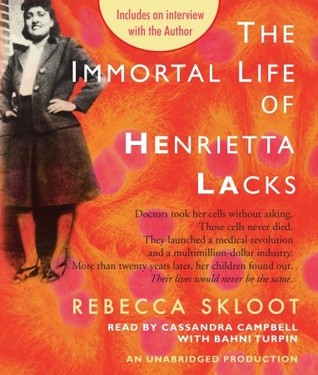
The Immortal Life of Henrietta Lacks by Rebecca Skloot (audio)

Source: Public Library
Audiobook, 12.5 hours
I am an Amazon Affiliate

The Immortal Life of Henrietta Lacks by Rebecca Skloot, narrated by Cassandra Campbell and Bahni Turpin, was our February book club selection.  Henrietta Lacks was a black woman who felt something was wrong, some lump was growing insider her, and that lump she had was eventually diagnosed as a kind of cervical cancer.  Her treatment commenced, but she bore it all on her own, telling very few in her family about it.  She also continued to bear children throughout the process.  Lacks has since become immortal in that her cancerous cells were collected and cultivated by scientists and renamed HeLa.  Those cells were used in the fight against polio and a number of other diseases.  While she was unable to see the fruits of her cells’ labors, she is in a way immortal.

Rebecca Skloot injects herself into this narrative, which becomes part memoir as she recounts her interactions with Lacks’ children, especially Deborah.  Skloot discovered that this family had been bombarded by requests for information long before she decided to write a book about Lacks and her cells, which had made them less than willing to speak to her.  Despite the many set backs and the paranoia that often ruled Deborah’s reactions to her questions, Skloot made headway and even took family members on road trips in ways that brought the true past of their mother back to the family.  In many ways, this is not just a story about Henrietta Lacks, how her cells helped science and cured disease, or about medical ethics, but it also is a story about a family regaining its connections and its past.

The audio production was well done, especially differentiating between Deborah’s thoughts and that of the author, making them easily discernible.  This audiobook also included an interview with the author about her research and her interactions with the Lacks family, as well as her writing process, which was fascinating.  And although the story shifts from the past to the current research, the book’s narrative flows well and is immediately engaging for those with an interest in science, medical research, and the history of HeLa.  But even then, this is a human interest story about how a family struggles to learn about their mother and her cells and what happened in the past.

The Immortal Life of Henrietta Lacks by Rebecca Skloot, narrated by Cassandra Campbell and Bahni Turpin, packs a punch — hitting the heart of medical research and the debate about who cells belong to, what rights patients have to their own cells, whether there should be more restrictions on their use, and whether compensation should be offered to those who donate their cells.

About the Author:

Rebecca Skloot is the author of the #1 New York Times Bestseller, The Immortal Life of Henrietta Lacks. Her award winning science writing has appeared in The New York Times Magazine; O, The Oprah Magazine; Discover; and many other publications. She specializes in narrative science writing and has explored a wide range of topics, including goldfish surgery, tissue ownership rights, race and medicine, food politics, and packs of wild dogs in Manhattan. She has worked as a correspondent for WNYC’s Radiolab and PBS’s Nova ScienceNOW.

Book Club had to be postponed due to a snowstorm, but I cannot wait for the discussion in March!

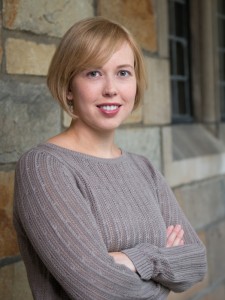
Guest Post: An MFA Program Can Build Confidence by Rebecca Adams Wright

tlc tour hostPlease welcome Rebecca Adams Wright:

I received my Master of Fine Arts from the University of Michigan in 2008. At the time, Michigan’s MFA in fiction was an esteemed two-year program, with a potential third-year writing fellowship offered to a handful of students. I received one of those third-year Zell Fellowships and so was lucky enough to remain immersed in the MFA community for an extra year. These days, the University of Michigan’s Helen Zell Writers’ Program is even more highly rated—vying for top place on many annual lists with the University of Iowa’s famous Iowa Writers’ Workshop—and so well-funded that all students admitted to the program are offered a third year.

I knew Michigan’s was a prestigious program when I arrived, and I will admit to feeling terribly nervous upon first meeting my fellow graduate students. I was 22 when I came to campus in 2006, the youngest in my cohort, and though I was enthusiastic, I knew I had a lot to learn about the craft of writing and the art of telling a story. I had one small edge on the other students: having attended the University of Michigan as an undergrad, I was familiar with campus and still had some college friends living in the area. But that familiarity didn’t feel like much of an advantage when I learned what talented writers and accomplished people the other students were. Some had finished novels, were raising children, already worked fulfilling careers, or were earning a PhD alongside their MFA. They were an intimidating group who all seemed to have experienced so much more of life than me.

In the end, those daunting fellow students became some of my wisest teachers and closest friends. My stories benefitted from their broad experience, and I did my best to contribute to their understanding what was unique to my perspective. Working with such a talented cohort, and with the excellent teaching faculty at Michigan, was one of the transformative experiences of my writing life. I left the MFA program with three tangible rewards—I could articulate what made a story a story (and what was just words on a page), I could write more meaningful stories (usually), and I had a group of great contacts—writer friends who had read my work and would continue to read it as I matured and improved, who would share their work with me, and with whom I could trade encouragement as we stumbled together down the rocky path to publication.

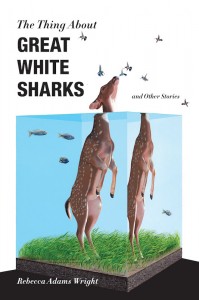
The connections I formed during my time in the MFA program ended up being one of the best investments I ever made in my artistic self. Michigan faculty have promoted and blurbed my latest collection, The Thing About Great White Sharks. Members of my fiction cohort read the unpublished manuscript and suggested changes that dramatically improved the included stories. One of my closest friends from the MFA program put me in touch with the editor who ultimately purchased the completed book.

Just as importantly, the relationships I formed at Michigan made me feel like a professional. At a crucial period in my development as a writer, I was not only allowed but encouraged to treat my dream like a job—that is, like something important and meaningful that I should be working at daily. The curriculum at Michigan was demanding, but working alongside artists who took art seriously helped me to develop my own writing discipline. Even when I questioned my talent I knew that I was picking up the right skills for continued improvement.

The MFA experience may not be for everyone, but it was an immensely valuable experience for me. I emerged from my program a steadier, more precise, and more confident writer, and one who understood the importance of a sustaining community. When I came to Michigan’s MFA program, I wrote because I felt inspired. When I left, I wrote because I was a writer.

About the Book:

In this collection’s richly imagined title story, our brutal and resourceful protagonist is determined to protect her family from a murderous, shark-ridden world—at any cost. Elsewhere, an old woman uncovers a sinister plot while looking after a friend’s plants (“Orchids”), and a girl in the war-torn countryside befriends an unlikely creature (“Keeper of the Glass”). In “Barnstormers,” a futuristic flying circus tries to forestall bankruptcy with one last memorable show. At the heart of “Sheila” is the terrible choice a retired judge must make when faced with the destruction of his beloved robotic dog, and “Yuri, in a Blue Dress” follows one of the last survivors of an alien invasion as she seeks help.

Extending from World War II to the far future, these fifteen stories offer a gorgeously observed perspective on our desire for connection and what it means to have compassion—for ourselves, for one another, for our past…and for whatever lies beyond.

About the Author:

Rebecca Adams Wright is a 2011 graduate of the Clarion Science Fiction and Fantasy Writers’ Workshop and a former University of Michigan Zell Writing Fellow. She has an MFA in fiction from the University of Michigan and has won the Leonard and Eileen Newman Writing Prize. Rebecca lives in Ypsilanti, Michigan, with her husband and daughter.  Connect on Facebook and Twitter.

Visit the rest of the stops on the TLC Book Tour.

Mailbox Monday #311

Mailbox Monday, created by Marcia at To Be Continued, formerly The Printed Page, has a permanent home at its own blog.

To check out what everyone has received over the last week, visit the blog and check out the links.  Leave yours too.

Also, each week, Leslie, Vicki, and I will share the Books that Caught Our Eye from everyone’s weekly links.

Here’s what I received:

1.  My Friend Suhana by Shaila Abdullah and Aanyah Abdullah for review from Loving Healing Press, Inc.

A simple tale of love and friendship to warm your heart.  Award-winning author and designer Shaila Abdullah teams up with her 10-year-old daughter Aanyah to bring you this heartwarming tale of a little girl who forms a close bond with a child with cerebral palsy. The girl finds that through her art, she can reach her special friend Suhana.

What did you receive?

294th Virtual Poetry Circle

Welcome to the 294th Virtual Poetry Circle!

Remember, this is just for fun and is not meant to be stressful.

Keep in mind what Molly Peacock’s book suggested.

Look at a line, a stanza, sentences, and images; describe what you like or don’t like; and offer an opinion. If you missed my review of her book, check it out here.

Today’s poem is from Billy Collins, recited by Jackson Hille:

Forgetfulness

The name of the author is the first to go
followed obediently by the title, the plot,
the heartbreaking conclusion, the entire novel
which suddenly becomes one you have never read, never even heard of,

as if, one by one, the memories you used to harbor
decided to retire to the southern hemisphere of the brain,
to a little fishing village where there are no phones.

Long ago you kissed the names of the nine muses goodbye
and watched the quadratic equation pack its bag,
and even now as you memorize the order of the planets,

something else is slipping away, a state flower perhaps,
the address of an uncle, the capital of Paraguay.

Whatever it is you are struggling to remember,
it is not poised on the tip of your tongue
or even lurking in some obscure corner of your spleen.

It has floated away down a dark mythological river
whose name begins with an L as far as you can recall

well on your own way to oblivion where you will join those
who have even forgotten how to swim and how to ride a bicycle.

No wonder you rise in the middle of the night
to look up the date of a famous battle in a book on war.
No wonder the moon in the window seems to have drifted
out of a love poem that you used to know by heart.

What do you think?

The Trigger by Tim Butcher (audio)

Source: Public Library
Audiobook, 10 hrs.
I am an Amazon Affiliate

The Trigger: Hunting the Assassin Who Brought the World to War by Tim Butcher, narrated by Gerard Doyle, is a mixture of travelogue and a sort-of-biography of Gavrillo Princip, the man who killed Archduke Franz Ferdinand and set the wheels in motion for World War I.  Princip has been considered a radical in many texts, but Butcher seeks to remedy that image and bring to life a more rounded view of the assassin, who eagerly sought the unification of the Slav people in a single nation of their own.

Butcher travels as Princip had traveled from his days growing up and in school and until he joins a group aimed at creating a unified nation free from foreign rule.  Moving from the feudal frontier village of his birth through the mountains in the northern Balkans to Belgrade and Sarajevo where Ferdinand was murdered.  While the story of Princip is engaging, the constant reflections on Butcher’s life as a war reporter in the 1990s during a more modern war in Bosnia draws parallels while pulling readers out of the story about the assassin.  Butcher meets some well-meaning people on his journey and some have no information about Princip, while others have pre-formed perceptions of the teen.

Doyle does an excellent job narrating and maintains the readers attention with his inflections and enthusiasm for the subject.  Butcher’s reminiscences about growing up in Britain after WWI and reporting on modern war are distracting.  The most interesting parts of the story are obscured by the travelogue for the most part and could have been reduced significantly to ensure the history shines through.  Readers interested in the history of the region and why Princip assassinated Ferdinand would be better served by another account of the man’s actions.  The Trigger: Hunting the Assassin Who Brought the World to War by Tim Butcher, narrated by Gerard Doyle, takes too much time outlining the travels of Butcher and his past, focusing merely one-third on Princip, how he was shaped, and why he assassinated the archduke.

About the Author:

Tim Butcher is a best-selling British author, journalist and broadcaster. Born in 1967, he was on the staff of The Daily Telegraph from 1990 to 2009, covering all major conflicts across the Balkans the Middle East and Africa. Recognised in 2010 with an honorary doctorate for services to journalism and writing, he is based with his family in the South African city of Cape Town.

Hansel & Gretel: A Fairy Tale With a Down Syndrome Twist by Jewel Kats, illustrated by Claudia Marie Lenart

Source: Loving Healing Press Inc.
Hardcover, 44 pgs
I am an Amazon Affiliate

Hansel & Gretel: A Fairy Tale With a Down Syndrome Twist by Jewel Kats, illustrated by Claudia Marie Lenart, is a revised Grimm fairy tale in which Hansel has Down’s Syndrome.  Like most families with a disabled child, there is one parent that is overly protective and another who is eager to let the child explore their abilities and take on more responsibility.  The mother is the protective parent here, as many would expect, and the father is willing to allow his son some freedom from parental supervision, at least on an outing with his sister, Gretel.  Like the pastel image of the cover, each picture is depicted with a similar softness.

In this dark tale, Hansel is made fun of by the witch and her toad, but he’s smarter than they expect.  He grabs her broom so she cannot fly away, and she has little choice but to hear out his demands.  In this twisted tale, the witch learns that there are some things she has not experienced in her long life.  The family is surprised by Hansel’s resourcefulness and the witch is surprised by his kindness.

Kats has created a tale that touches upon the prejudices inside and outside the family home of the disabled and seeks to teach children that opportunities are endless no matter what challenges they face.  Moreover, Hansel & Gretel: A Fairy Tale With a Down Syndrome Twist by Jewel Kats, illustrated by Claudia Marie Lenart, illustrates how one act of pure kindness can benefit all, even a witch.  Another great teaching tool from this children’s author.

About the Author:

Once a teen runaway, Jewel Kats is now a two-time Mom’s Choice Award winner. For six years, Jewel penned a syndicated teen advice column for Scripps Howard News Service (USA) and The Halifax Chronicle Herald. She gained this position through The Young People’s Press. She’s won $20,000 in scholarships from Global Television Network, and women’s book publisher: Harlequin Enterprises. Jewel also interned in the TV studio of Entertainment Tonight Canada. Her books have been featured in Ability Magazine (USA) twice. She’s authored eight books-five are about disabilities. The Museum of disABILITY History celebrated her work with a two-day event. Jewel has appeared as an international magazine cover story four times! Recently, her work was featured in an in-depth article published in “The Toronto Star”. Jewel’s work has also appeared as an evening news segment on WKBW-TV and on the pages of “The Buffalo News”.

Scent of Butterflies by Dora Levy Mossanen

tlc tour host

Source: TLC Book Tours and Sourcebooks
Paperback, 288 pgs
I am an Amazon Affiliate

Scent of Butterflies by Dora Levy Mossanen is a novel of vengeance as an Iranian Jewish woman, Soraya, convinces her husband, Aziz, to let her go to America on an assignment.  As with many revenge tales, Soraya spends a great deal of time building her trap, complete with sweet nectar, only to find herself ensnared in her own web.  Readers will be holding their breath as she weaves her garden of plants in America, making it lush and beautiful to attract her prey.  She spends most of her days cultivating the land around her and taking photographs of American and Iranian men to make her husband jealous.

“Humans get buried under earthquake rubble, break their bones in tornadoes, drown in stormy seas.  Butterflies, despite their fragility, are hardly affected by most of these natural disasters.  Not only that, they are capable of migrating unimaginable distances.  They simply float with the wind, staying on track with uncanny tenacity until they arrive at their intended destination, just as my friend did.”  (page 50)

Growing up in Iran and enjoying certain freedoms, Soraya is taught to become independent, but once those freedoms are taken away following the revolution, she has little choice but to obey the strict tenants of her religion.  Her Baba has called her an artist since she was a little girl, but like many things in her life, there is an undercurrent of deception.  As she flees Iran and her pain, she tries on new identities before settling back into her own.  Readers will be at once baffled by her actions and heartbroken for her, but will they understand that this passionate woman has lost her entire world when her husband betrays her with another woman?  Sympathy from the reader can be a tough balance in a story of revenge, but Mossanen has created a character bucking the repression of her culture and the tumultuous nature of a country with conflicting identities.

Scent of Butterflies by Dora Levy Mossanen is complex and a lush novel for the senses that will have readers debating how far a woman scorned would go to right a betrayal and how far she would go to retain her freedom.  Very well written and absorbing, readers will be attracted by the decadent honey in Soraya’s web.

About the Author:

Dora Levy Mossanen was born in Israel and moved to Iran when she was nine. At the onset of the Islamic revolution, she and her family moved to the United States. She has a bachelor’s degree in English Literature from the University of California-Los Angeles and a master’s in Professional Writing from the University of Southern California.

Dora is the bestselling author of the acclaimed novels Harem, Courtesan, and The Last Romanov. Her fourth and most provocative book, Scent of Butterflies, was released January 7, 2014. She is a frequent contributor to numerous media outlets including the Huffington Post and the Jewish Journal. She has been featured on KCRW, The Politics of Culture, Voice of Russia, Radio Iran and numerous other radio and television programs. She is the recipient of the prestigious San Diego Editors’ choice award and was accepted as contributor to the Bread Loaf Writers’ Conference. Dora Levy Mossanen’s novels have been translated into numerous languages world-wide.

Mailbox Monday #310

Mailbox Monday, created by Marcia at To Be Continued, formerly The Printed Page, has a permanent home at its own blog.

To check out what everyone has received over the last week, visit the blog and check out the links.  Leave yours too.

Also, each week, Leslie, Vicki, and I will share the Books that Caught Our Eye from everyone’s weekly links.

Here’s what I received:

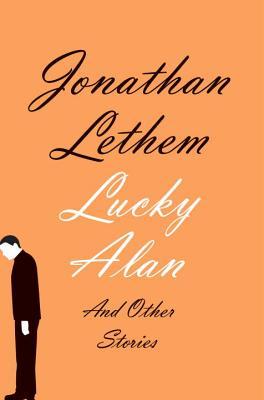
1.  Lucky Alan and Other Stories by Jonathan Lethem from Penguin Random House for review.

Jonathan Lethem stretches new literary muscles in this scintillating new collection of stories. Some of these tales—such as “Pending Vegan,” which wonderfully captures a parental ache and anguish during a family visit to an aquatic theme park—are, in Lethem’s words, “obedient (at least outwardly) to realism.” Others, like “The Dreaming Jaw, The Salivating Ear,”, which deftly and hilariously captures the solipsism of blog culture, feature “the uncanny and surreal elements that still sometimes erupt in my short stories.”

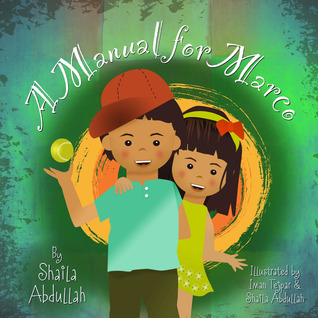
2. A Manual for Marco: Living, Learning, and Laughing With an Autistic Sibling by Shaila Abdullah, illustrated by Iman Tejpar for review from Loving Healing Press Inc.

An 8-year old girl decides to make a list of all the things she likes and dislikes about dealing with her autistic brother, and in doing so realizes that she has created A Manual for Marco.

3.  Ella by Mallory Kasdan, illustrated by Marcos Chin from Penguin for review.

This is ELLA. She is six years old. She lives at the Local Hotel. She has a nanny called Manny. He has tattoos for sleeves and he might go in with some guys to buy a grilled cheese truck. Sometimes Ella weaves purses out of Ziploc bags and reclaimed twine. (She is artsy of course.) She has a dog named Stacie and a fish named Rasta and a scooter which is important for getting everywhere she needs to be. Altogether she has been to 62 events including that Hillary Clinton fundraiser. She is NEVER bored. If Ella and Kay Thompson’s Eloise got together for a play date, they would have a very good time indeed.

What did you receive?