Quantcast

330th Virtual Poetry Circle

Welcome to the 330th Virtual Poetry Circle!

Remember, this is just for fun and is not meant to be stressful.

Keep in mind what Molly Peacock’s book suggested.

Look at a line, a stanza, sentences, and images; describe what you like or don’t like; and offer an opinion. If you missed my review of her book, check it out here.

This poem is from Leo Marks, a code poem for the French Resistance during WWII:

The Life That I Have

The life that I have
Is all that I have
And the life that I have
Is yours

The love that I have
Of the life that I have
Is yours and yours and yours.

A sleep I shall have
A rest I shall have
Yet death will be but a pause
For the peace of my years
In the long green grass
Will be yours and yours and yours.

What did you think?

Seriously, You Have to Eat by Adam Mansbach, illustrated by Owen Brozman

Source: LibraryThing Early Reviewers
Hardcover, 32 pgs.
I am an Amazon Affiliate

Seriously, You Have to Eat by Adam Mansbach, illustrated by Owen Brozman, is similar to his previous book about the struggles of parenting, though this one is a little more kid friendly.  Rather than rely on the outrageous language and profanity, this book focuses on the food asked for an not eaten, the animals that eat no matter what is given to them by their parents, and the astonishing amount of energy that kids seem to have even if they do not eat their meals throughout the day.  My daughter was not as tickled by this book as I would have thought.  The illustrations are fine and the rhymes are pretty good for the most part, but she may not have seen the sarcastic humor in this one.  It may still be a little more geared to those struggling parents, than their kids.

Beyond the struggles with getting kids to eat, this one also touches on the little battles over what kids want to wear versus what they should be wearing to school.  There is one moment in the book in which the child is given milk to drink and the “kitchen” is closed, but the parent grabs a drink that smells like “peat.”  As a parent of a young child — we glossed over this part — I’m leery of introducing the idea that alcohol is a way to “solve” or deal with problems.  Yes, parenting is stressful, and yes, parents may take a drink to unwind, I’m just not sure that’s a message kids should be learning.

Seriously, You Have to Eat by Adam Mansbach, illustrated by Owen Brozman, is a book more fore parents than children, even though the language is less profane.  Even if parents share this book with their kids, they may want to gloss over certain things or change them up a bit.

Other Reviews:

Go the F**k to Sleep

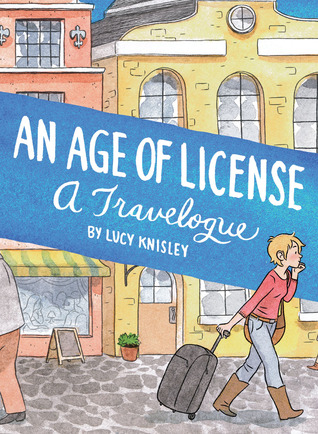
An Age of License by Lucy Knisley

Source: Public Library
Paperback, 195 pgs.
I am an Amazon Affiliate

An Age of License by Lucy Knisley is another graphic memoir of a young artist who has a compulsion to draw those around her, no matter how creepy that may appear in a crowded restaurant.  These graphic memoirs are a great way to quickly get a look inside someone’s life, their fears, and their happy moments without feeling like you’re prying.  The comics provide just the right amount of distance to the narrative, and Knisley’s style is very conversational and intimate, but there are moments she keeps to herself — that’s ok too.

Knisley is someone many of us were in our twenties — adventurous in spite of the anxiety — beginning the lives we’ll lead into the future either alone or with a family of our own.  We explore; we get to know who we are as people; what we’re looking for; and sometimes finding things we didn’t know we wanted.  While we often find that we are jealous of our friends who find themselves, their callings, or the families they desire before we do, we still love them and hope that we’ll find those things too.

Knisley’s graphic memoirs seem to be written as she goes along, but it is clear that more thought goes on and further work takes place after her adventures are done.  These memoirs have their own conversational quality and she clearly digs deep into her experiences.  In this memoir she takes a trip to Norway for a comics convention, which turns into a whirlwind of visits in other countries throughout Europe — Germany, France, and Sweden.  She questions the direction of her life and career, she questions her inability to find stability in relationships, but most of all, she questions her perspective, which comes from a relative place of privilege compared to others.

An Age of License by Lucy Knisley is a realistic look at traveling abroad as someone who does not know a language other than English, and who is still struggling to find her place and become grounded.  It is often good to get away from the daily grind to think about life as it is and determine if that’s what you want it to be for the rest of your life, and Knisley asks and somewhat answers these questions for herself.  One point in the memoir was a bit ironic in that lovers go to Paris, engrave their names on locks, and add those locks to a bridge as a sign of undying devotion, only for those locks to be eventually torn off by authorities and thrown away.  Even those things that we find permanent may not be.

***Another shout out to Bermudaonion for pointing me in Knisley’s direction.  I’ve loved these books.***

Other reviews:

About the Author:

Beginning with an love for Archie comics and Calvin and Hobbes, Lucy Knisley (pronounced “nigh-zlee”) has always thought of cartooning as the only profession she is suited for. A New York City kid raised by a family of foodies, Lucy is a graduate of the School of the Art Institute of Chicago currently pursuing an MFA at the Center for Cartoon Studies. While completing her BFA at the School of the Art Institute, she was comics editor for the award-winning student publication F News Magazine.

Lucy currently resides in New York City where she makes comics. She likes books, sewing, bicycles, food you can eat with a spoon, manatees, nice pens, costumes, baking and Oscar Wilde. She occasionally has been known to wear amazing hats.

Shiver by Maggie Stiefvater (audio)

Source: Public Library
Audiobook, 9 CDs
I am an Amazon Affiliate

Shiver by Maggie Stiefvater, narrated by Jenna Lamia and David Ledoux, is one of those young adult novels that adults who can engage in magical worlds will enjoy.  Boundary wood in Mercy Falls, Minn., is populated with wolves, and while most of the time they keep to themselves, there are those incidents of attacks and the inevitable backlash by hunters with guns.  Sam Roth and Grace Brisbane have lingered just on the outskirts of one another for six years, and while Grace was bitten by wolves as a child, she barely remembers what happened, other than the beautiful white-gray wolf who was their rescuing her and his piercing yellow eyes.  The woods near Grace’s house are where she sees the wolves in the winter, but never in the summer, and she’s fascinated by their grace and beauty.

Her obsession with the wolves does distance her from her friends, but she doesn’t seem to mind until they begin disappearing.  Sam is a boy with a dark family history, who was “saved” by Beck as a young boy.  Grace and he instantly connect, and only his glittering yellow eyes reveal who he truly is.  Grace is then swept up into a world she marginally knew existed, and her first love consumes her.  Jenna Lamia is a believable teenage girl, and she has the right timber and pace for Grace’s character, and David Ledoux provides fantastic depth to Sam’s character in the narration.  On audio, this book shines in the darkness of the snow-lit woods.

Shiver by Maggie Stiefvater, narrated by Jenna Lamia and David Ledoux, is a stunning opener to a paranormal series of books for young adults.  Stiefvater creates dynamic characters who are forced to deal with tough issues in unreal situations, and these characters are unforgettable.  Like many books in this category, there is a series, but this one has a lot of potential.  I’m looking forward to the next audio installment.

About the Author:

New York Times bestselling author of The Shiver Trilogy, The Raven Cycle, and The Scorpio Races. Artist. Driver of things with wheels. Avid reader.  All of Maggie Stiefvater’s life decisions have been based around her inability to be gainfully employed. Talking to yourself, staring into space, and coming to work in your pajamas are frowned upon when you’re a waitress, calligraphy instructor, or technical editor (all of which she’s tried), but are highly prized traits in novelists and artists. She’s made her living as one or the other since she was 22. She now lives an eccentric life in the middle of nowhere, Virginia with her charmingly straight-laced husband, two kids, two neurotic dogs, and a 1973 Camaro named Loki.

Interview with Kate Kerrigan

Kate Kerrigan is the author of Ellis Island, City of Hope, and Land of Dreams — a series of books I loved! She has two new books coming out The Miracle of Grace and Recipes for a Perfect Marriage.  Please give her a warm welcome today.

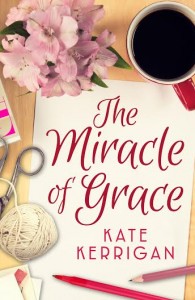
KerriganMiracleAbout The Miracle of Grace:

Grace’s mother Eileen is a great list maker, so when Grace walks into Eileen’s kitchen to drop off a postal package and sees her garish ‘To Do’ pad on the counter, she thinks nothing of it, until she sneaks a look. There, at No 8, ranked in importance well below bread, telephone bill and bins is ‘Tell G I have ovarian cancer, probably terminal’. Grace goes into shock, primarily at the thought that her mother is dying, but also at the fact that her mother simply couldn’t tell her to her face. Is their relationship really so bad?

Eileen has been brought up in rural Ireland in the 1950s, in thrall to the rules of her community – church first, then husband, then children. So she’s had little time for herself and even now finds it impossible to put her own problems and desires to the fore. It is only when Grace confronts her, that she is able to go back over her past, to her own childhood, her early marriage, and the birth of her cherished only daughter to find memories of happiness and unbearable tragedy that have coloured her life forever.

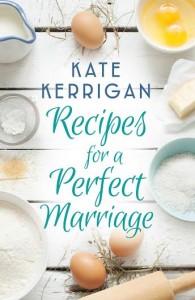
kerriganRecipesAbout Recipes for a Perfect Marriage:

Successful New York food writer Tressa Nolan has a great life — wonderful friends, a gorgeous apartment, and of course fabulous food — but the idea of turning forty alone scares her, so she marries the next man who asks: Dan, her building’s super. He’s handsome and he adores her, but soon after the wedding Tressa regrets her decision. Everything from Dan’s unsophisticated interests to his enormous (and intrusive) Irish-American family sets her teeth on edge. Why couldn’t she have the perfect marriage her grandparents had? What Tressa doesn’t know — what she only discovers when she reads her Grandma Bernadine’s journal-cum- recipe book — is that she’s following in Bernadine’s footsteps, and like all the best recipes, a perfect marriage calls for a long, slow simmer.

How do you come up with your ideas? Are they character or concept driven?

A bit of both. The concept comes first – but then once the characters present themselves and start to develop depth as they do in those early chapters, the story becomes theirs and they drive the narrative absolutely.

You often have dual timelines. Why is that? What is it about historical fiction that interests you so much?

I am fascinated by how the differences in our historical circumstances shape who we are and how we behave — especially in the way it affects our emotional landscapes. Stoicism, for instance, has gone way out of fashion as a way of being — yet it was a way of life for so many women, for so long — forced into unhappy marriages by religion for or utterly financially dependent on men they did not love. Yet — so much of what was good about value systems in the past: loyalty, a strong sense of identity, and place — still hold true today. I love drawing comparisons between how things were and how they are now and showing how while history may alter our circumstances, in the most real, important sense human beings never fundamentally change.

For all the freedom and money history has given us women in the western world — are we any happier now than our grandmothers were?

What’s your favorite part of the writing process?

Starting and finishing: one week at either end. Finishing is best. Honestly? The rest is pretty much just hard work: I write out of a compulsion to tell the story not because I enjoy the act of writing itself. The longer I do it – the less I feel I know about writing and the harder it gets! I get very close to my characters and I cry a lot. It’s an emotional rollercoaster — and I am always a bit sad to get off at the end — but relieved too.

Describe a typical day as a writer.

On a good day, I go into my accountants office, work from 9-5 and get 1,500 words written — this is what I intend every working day to be. However most days, I go into my accountants office, work from 9-5 and get 500 words written and know it’s not enough. On a bad day I get distracted by life. I chase around shopping, collecting kids, doing hideous admin., having lunch with my mother – I get nothing written and get whipped up into a state of blind panic at not having written anything. I have a lot of bad days.

Which authors inspire you?

People who write from the heart: Marian Keyes, Patrick McCabe – a lesser known but brilliant Irish writer called Frank Ronan. Probably the biggest influences over my lifetime as a reader and writer have been Agatha Christie for plot and PG Wodehouse for his vocabulary and use of language.  I never read historical fiction — I don’t have the confidence! However — for pleasure and relaxation I rarely read anything other than contemporary thrillers — David Balducci is my current thrill!

Do you have any advice for aspiring authors?

Just write, write, write – don’t be discouraged and keep going. Writing is 1% talent and 99% hard work and tenacity. I found writing groups and courses fantastic in my pre-published days. It’s not always easy to motivate yourself and a good writing group can really give you the encouragement and support you need.

What do you hope readers will take away from your books?

Identification with the characters and at least one lesson they can relate to their own lives.

Thanks so much, Kate, for stopping by and sharing your thoughts on dual narratives, your favorite authors, and writing.

Mailbox Monday #347

Mailbox Monday, created by Marcia at To Be Continued, formerly The Printed Page, has a permanent home at its own blog.

To check out what everyone has received over the last week, visit the blog and check out the links.  Leave yours too.

Also, each week, Leslie, Vicki, and I will share the Books that Caught Our Eye from everyone’s weekly links.

Here’s what I received:

National Geographic Book of Nature Poetry: More than 200 Poems With Photographs That Float, Zoom, and Bloom! by J. Patrick Lewis for review from Media Masters Publicity.

When words in verse are paired with the awesomeness of nature, something magical happens! Beloved former U.S. Poet Laureate J. Patrick Lewis curates an exhuberant poetic celebration of the natural world in this stellar collection of nature poems. From trickling streams to deafening thrunderstorms to soaring mountains, discover majestic photography perfectly paired with contemporary (such as Billy Collins), classics (such as Robert Frost), and never-before-published works.

What did you receive?

329th Virtual Poetry Circle

Welcome to the 329th Virtual Poetry Circle!

Remember, this is just for fun and is not meant to be stressful.

Keep in mind what Molly Peacock’s book suggested.

Look at a line, a stanza, sentences, and images; describe what you like or don’t like; and offer an opinion. If you missed my review of her book, check it out here.

This poem is from Edgar Allan Poe (of course — Happy Halloween):

The Raven

Once upon a midnight dreary, while I pondered, weak and weary,
Over many a quaint and curious volume of forgotten lore—
    While I nodded, nearly napping, suddenly there came a tapping,
As of some one gently rapping, rapping at my chamber door.
“’Tis some visitor,” I muttered, “tapping at my chamber door—
            Only this and nothing more.”
    Ah, distinctly I remember it was in the bleak December;
And each separate dying ember wrought its ghost upon the floor.
    Eagerly I wished the morrow;—vainly I had sought to borrow
    From my books surcease of sorrow—sorrow for the lost Lenore—
For the rare and radiant maiden whom the angels name Lenore—
            Nameless here for evermore.
    And the silken, sad, uncertain rustling of each purple curtain
Thrilled me—filled me with fantastic terrors never felt before;
    So that now, to still the beating of my heart, I stood repeating
    “’Tis some visitor entreating entrance at my chamber door—
Some late visitor entreating entrance at my chamber door;—
            This it is and nothing more.”
    Presently my soul grew stronger; hesitating then no longer,
“Sir,” said I, “or Madam, truly your forgiveness I implore;
    But the fact is I was napping, and so gently you came rapping,
    And so faintly you came tapping, tapping at my chamber door,
That I scarce was sure I heard you”—here I opened wide the door;—
            Darkness there and nothing more.
    Deep into that darkness peering, long I stood there wondering, fearing,
Doubting, dreaming dreams no mortal ever dared to dream before;
    But the silence was unbroken, and the stillness gave no token,
    And the only word there spoken was the whispered word, “Lenore?”
This I whispered, and an echo murmured back the word, “Lenore!”—
            Merely this and nothing more.
    Back into the chamber turning, all my soul within me burning,
Soon again I heard a tapping somewhat louder than before.
    “Surely,” said I, “surely that is something at my window lattice;
      Let me see, then, what thereat is, and this mystery explore—
Let my heart be still a moment and this mystery explore;—
            ’Tis the wind and nothing more!”
    Open here I flung the shutter, when, with many a flirt and flutter,
In there stepped a stately Raven of the saintly days of yore;
    Not the least obeisance made he; not a minute stopped or stayed he;
    But, with mien of lord or lady, perched above my chamber door—
Perched upon a bust of Pallas just above my chamber door—
            Perched, and sat, and nothing more.
Then this ebony bird beguiling my sad fancy into smiling,
By the grave and stern decorum of the countenance it wore,
“Though thy crest be shorn and shaven, thou,” I said, “art sure no craven,
Ghastly grim and ancient Raven wandering from the Nightly shore—
Tell me what thy lordly name is on the Night’s Plutonian shore!”
            Quoth the Raven “Nevermore.”
    Much I marvelled this ungainly fowl to hear discourse so plainly,
Though its answer little meaning—little relevancy bore;
    For we cannot help agreeing that no living human being
    Ever yet was blessed with seeing bird above his chamber door—
Bird or beast upon the sculptured bust above his chamber door,
            With such name as “Nevermore.”
    But the Raven, sitting lonely on the placid bust, spoke only
That one word, as if his soul in that one word he did outpour.
    Nothing farther then he uttered—not a feather then he fluttered—
    Till I scarcely more than muttered “Other friends have flown before—
On the morrow he will leave me, as my Hopes have flown before.”
            Then the bird said “Nevermore.”
    Startled at the stillness broken by reply so aptly spoken,
“Doubtless,” said I, “what it utters is its only stock and store
    Caught from some unhappy master whom unmerciful Disaster
    Followed fast and followed faster till his songs one burden bore—
Till the dirges of his Hope that melancholy burden bore
            Of ‘Never—nevermore’.”
    But the Raven still beguiling all my fancy into smiling,
Straight I wheeled a cushioned seat in front of bird, and bust and door;
    Then, upon the velvet sinking, I betook myself to linking
    Fancy unto fancy, thinking what this ominous bird of yore—
What this grim, ungainly, ghastly, gaunt, and ominous bird of yore
            Meant in croaking “Nevermore.”
    This I sat engaged in guessing, but no syllable expressing
To the fowl whose fiery eyes now burned into my bosom’s core;
    This and more I sat divining, with my head at ease reclining
    On the cushion’s velvet lining that the lamp-light gloated o’er,
But whose velvet-violet lining with the lamp-light gloating o’er,
            She shall press, ah, nevermore!
    Then, methought, the air grew denser, perfumed from an unseen censer
Swung by Seraphim whose foot-falls tinkled on the tufted floor.
    “Wretch,” I cried, “thy God hath lent thee—by these angels he hath sent thee
    Respite—respite and nepenthe from thy memories of Lenore;
Quaff, oh quaff this kind nepenthe and forget this lost Lenore!”
            Quoth the Raven “Nevermore.”
    “Prophet!” said I, “thing of evil!—prophet still, if bird or devil!—
Whether Tempter sent, or whether tempest tossed thee here ashore,
    Desolate yet all undaunted, on this desert land enchanted—
    On this home by Horror haunted—tell me truly, I implore—
Is there—is there balm in Gilead?—tell me—tell me, I implore!”
            Quoth the Raven “Nevermore.”
    “Prophet!” said I, “thing of evil!—prophet still, if bird or devil!
By that Heaven that bends above us—by that God we both adore—
    Tell this soul with sorrow laden if, within the distant Aidenn,
    It shall clasp a sainted maiden whom the angels name Lenore—
Clasp a rare and radiant maiden whom the angels name Lenore.”
            Quoth the Raven “Nevermore.”
    “Be that word our sign of parting, bird or fiend!” I shrieked, upstarting—
“Get thee back into the tempest and the Night’s Plutonian shore!
    Leave no black plume as a token of that lie thy soul hath spoken!
    Leave my loneliness unbroken!—quit the bust above my door!
Take thy beak from out my heart, and take thy form from off my door!”
            Quoth the Raven “Nevermore.”
    And the Raven, never flitting, still is sitting, still is sitting
On the pallid bust of Pallas just above my chamber door;
    And his eyes have all the seeming of a demon’s that is dreaming,
    And the lamp-light o’er him streaming throws his shadow on the floor;
And my soul from out that shadow that lies floating on the floor
            Shall be lifted—nevermore!

What did you think?

I Want to Eat Your Books by Karin Lefranc and Tyler Parker

Source: Sky Pony Press
Hardcover, 32 pgs.
I am an Amazon Affiliate

I Want to Eat Your Books by Karin Lefranc and Tyler Parker was a fun read to get us in the mood for Halloween.  Eric is followed by a zombie to school, but rather than a brain-sucking zombie, he’s chased by a book eating zombie.  Halloween allows the dark and scary to surface in town, and Eric is scared when the zombie approaches.  When the zombie eats his book, the kids and teachers are running scared and trying to save their books.  From fiction to nonfiction, this zombie does not discriminate.  However, teachers would prefer if this zombie kid would read the books, rather than eat them.

Once in the library, the zombie is enlightened to the power of reading.  Eric hands him a book that changes his outlook.  While he is a zombie, he has manners and asks that Eric read to him.  This change is magical, and soon he’s devouring books in a completely new way.  Someone on the paranormal wire must have heard about the goodies in the library and passed along the news, because soon the school library is attracting mummies and zombies.

I Want to Eat Your Books by Karin Lefranc and Tyler Parkeris a fun book about the power of reading, and the knowledge that books can provide.  My daughter and I took to shouting, “I want to eat your books!” as the zombie made his way through the school, and by the end we were giggling.  This book is sure to create bookaholics like me.


Mind Your Monsters by Catherine Bailey, illustrated by Oriol Vidal

Source: Sterling Children’s Books
Hardcover, 32 pgs.
I am an Amazon Affiliate

Mind Your Monsters by Catherine Bailey, illustrated by Oriol Vidal, has a modern style of illustration that brings neighborhoods to life, even as the monsters surface from behind buildings.  These monsters are wreaking havoc in town, terrorizing parents and children.  From zombies and vampire bats to one-eyed and furry monsters, people are unsure how to handle these monsters and their destruction.  Turned over cars, chewed up mailboxes, and more.  Parents are scared for themselves and their children, and without a solution in sight, they are prepared to leave town.

Wally decides that he’s going to take a different approach.  He’s going to talk to them.  When that doesn’t work, he throws his sister at the monsters because he considers her evil enough to fight them — or so it is implied.  He employs other tactics, using tricks and treats, lollipops, and more.  When the parents make the decision to leave, their escape is blocked by a giant ogre.  Everyone is fearful and wants to run, but there is no escape and no where to run to.  Wally, in a desperate plea, asks them to please stop terrorizing the town.  Through the use of his manners, he’s able to get through to the monsters.  The monsters stop making messes and begin to cleanup.

Mind Your Monsters by Catherine Bailey, illustrated by Oriol Vidal, is a colorful and fun way to introduce the idea of using manners to children.  There’s the promise of more fun when the monsters agree to return again.  Most little kids know that “Please” is considered the magic word, and this book plays with that knowledge.  It demonstrates that manners are important in communicating with adults, monsters, and others.  The one thing missing from this story is the use of “Thank You.”


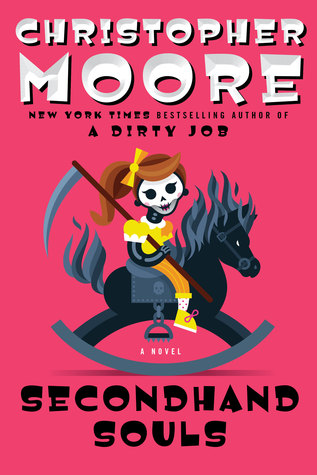
Secondhand Souls by Christopher Moore

Source: LibraryThing Early Reviewers
Hardcover, 352 pgs.
I am an Amazon Affiliate

Secondhand Souls by Christopher Moore is a long-awaited follow-up to A Dirty Job, which I loved.  Readers should start with the first book before reading this one.

Charlie Asher, a death merchant, has taken on a new form, and his daughter is living with his sister even as his situation becomes more hopeless.  Minty Fresh reprises his role as comic relief, but there really is much more of that going around in this novel.  San Francisco is one again under threat from dark forces.  The Big Book of the Dead has sensed the change, and as things happen magically, the instructions in the book morph into dire warnings — most of which are ignored, at least until the banshee shows up.  Through a mix of characters from the previous book, Moore is at his best with these sarcastic, wise-cracking misfits who riff off one another like guitarists in a large band.  Their tune is haphazard but effective in this hunt for balance in the world of the dead.

“‘Sure, you could say talked. Ghosts mostly communicate by odor. Gotta tell you, you got a house that smells like farts, you got a haunted house.'” (pg. 75)

“With that, great clouds of fire burst out the twin tailpipes of the Buick and it lowered its stance like a crouching leopard before bolting out of the turnout.” (pg. 122)

Moore is a talented writer, who can write a funny quip and hilarious dialogue in one stroke and a gorgeous set of literary images in another. This duo of books combines the best of those talents, along with some great supernatural elements that are based not only on Egyptian mythology but also Buddhist teachings. This mash-up is unique and engaging, and his characters bring it to life easily. From Minty Fresh who wears all lime green clothes and owns a secondhand music store to Lemon who wears all yellow and has a calm demeanor that covers his dark motives, Moore’s characters will have readers laughing and questioning every turn of plot.

Secondhand Souls by Christopher Moore is a wonderful follow-up that will have readers wondering about where their soul is headed, who will guide it where it needs to go, and whether they will one day find themselves with a super-ability they never wanted.  It’s another winner from this author.

About the Author:

Christopher Moore is an American writer of comic fantasy. He was born in Toledo, Ohio. He grew up in Mansfield, Ohio, and attended Ohio State University and Brooks Institute of Photography in Santa Barbara, California.