Quantcast

By Broad Potomac Shore: Great Poems from the Early Days of Our Nation’s Capital edited by Kim Roberts

Source: Publisher
Paperback, 356 pgs.
I am an Amazon Affiliate

By Broad Potomac Shore: Great Poems from the Early Days of Our Nation’s Capital edited by Kim Roberts is a well crafted and contains some well-known poets as well as some obscured by history. In the preface, Roberts says, “These poets were born in, or drawn to, the nation’s capital as it grew from its founding, through such major upheavals as the Civil War, Reconstruction, and World War I. … But I have taken particular pleasure in seeking out poems by lesser-known poets as well, especially women, working-class writers, and writers of color.” The anthology also speaks about the homes in which these poets lived and whether they still exist today, as well as what they are today, with some of them homes to embassies of other nations. Roberts has clearly done her research and it is appreciated.

If there was ever a time for a literary historian, that’s today. Kim Roberts has done painstaking research and it it is evident in this look at 100 years of our nation’s history. Of note in the first part of the anthology is Emma Willard, who was a passionate advocate for women’s rights and dedicated her life to educating women and girls. I loved learning about this early advocate for women to be educated, especially about her speech in which she says that women are “primary existences … not the satellites of men.”

It was also interesting to note that a white man, John Pierpont, wrote a persona poem from the point of view of an enslaved man, which is found in the second part of the anthology. To my modern sensibilities, I was wondered aloud how on earth this white man could capture that point of view, especially a man who worked in finance. “Oft, in the Chilly Night,” is chilling in how it depicts an enslaved man almost at peace looking at the night and seeking God’s guidance, but by the end, it seems the man now simply wishes for the peace of death! But it is not the only persona poem from an enslaved person’s point of view written by a man.

Not only are these poems significant in demonstrating that ideas of equality were present in the early years of our nation, but they also show that even as the country evolved slowly there were very forward thinkers inside and outside government who wrote those ideas in poetry. And some of the homes of these poets became part of antislavery efforts and so many other efforts.

By Broad Potomac Shore: Great Poems from the Early Days of Our Nation’s Capital edited by Kim Roberts is chock full of information about the poets, poems, the nation’s capital and so much more. You can dip into this collection at any time to explore the time period, and you’ll see different styles and topics throughout each second. As you move through the collection, the poems do take on more modern styles and are less antiquated in language. It does provide a good evolutionary look at poetry in Washington, D.C., and written by a variety of poets.

RATING: Cinquain

Check out the Gaithersburg Book Festival Panel discussion with Joseph Ross, Tara Campbell, Kim Roberts, and E. Ethelbert Miller:
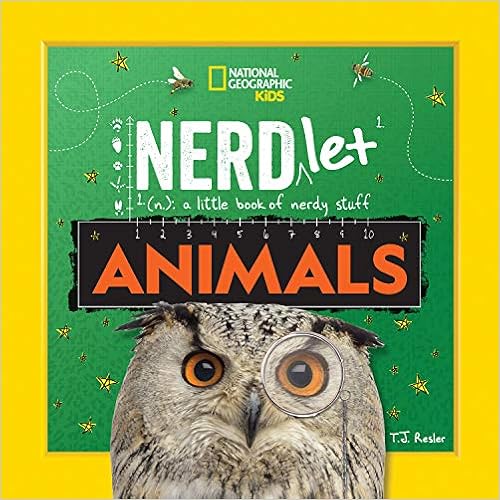
Nerdlet: Animals by T J Resler

Source: Media Masters Publicity

Paperback, 216 pgs.

I’m an Amazon Affiliate

Nerdlet: Animals by T J Resler is another fun and fact-packed book for kids to learn about the animal kingdom. The book includes some fun and unusual facts about animals, including spiders (which we are not too fond of). The pictures are gorgeous as always. Even though we’ve seen some of these animals in other books before, this little gem includes some quirky and fun facts about these animals. You’ll learn about why lemurs sit up and stretch their arms wide and how the cute faced platypus can be dangerous.

One of our favorite parts of the book are quizzes that you can take to find out what superhero you are based on animal characteristics, what species of fox you are based on how you like to play, and what kind of pet is best for you. These are the types of quizzes we love to take and enjoy as a family. We learn how we’re similar and different, but sometimes the choices are hard, especially for my daughter who definitely wanted the pet quiz to demonstrate to her parents that she was best suited for a pet cat.

Nerdlet: Animals by T J Resler can be read together as a family or dipped into occasionally on your own. What we love is that this is a book for sharing. We love animals and this is definitely something we’ll enjoy on more than one occasion. The only thing we wanted more of were those quizzes. We had a blast with those and would have liked at least 3 or 5 or 10 more. A good gift for the animal lover in your life.

RATING: Quatrain

Elizabeth: Obstinate Headstrong Girl edited by Christina Boyd (audio)

Source: Publisher

Audiobook, 10+ hours

I am an Amazon Affiliate

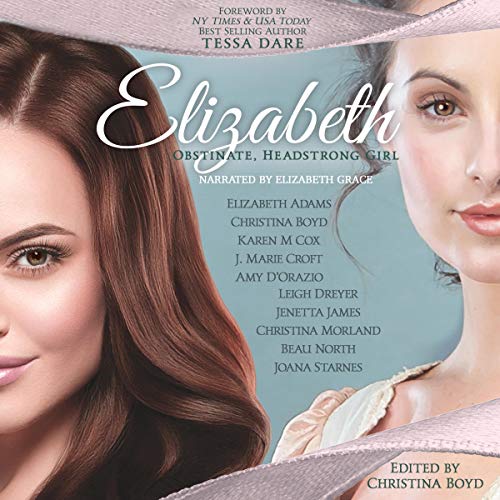
Elizabeth: Obstinate Headstrong Girl edited by Christina Boyd, narrated by Elizabeth Grace, is a delightful collection of short stories written by some of the best Jane Austeneque writers — Joana Starnes, Amy D’Orazio, Jenetta James, Karen Cox, Christina Morland, Elizabeth Adams, Beau North, J. Croft, and Leigh Dreyer. From historic pieces and those set during the time of Austen’s Pride & Prejudice to modern stories in which Elizabeth is an electrical engineering student in a male-dominated field, these authors explore the inner workings of Elizabeth. We see her prejudices and preconceptions, but we also see her flaws, as well as her self-analysis of her own actions and those of others.

Elizabeth Grace is a wonderful narrator, breathing light into each of these Elizabeths and situations. She’s an admirable narrator who becomes a one-woman cast.

“Resistive Currents” by Karen M Cox is one of the more modern tales. Here, we see conundrum of a teaching assistant Mr. Darcy drawn to an intelligent electrical engineering student, Elizabeth, bent on proving to the male-dominated field that she’s a capable student who just wants a fair shot — the same as her male colleagues. First, the title of this story is brilliant given the content, and I love how it plays on the electricity between Elizabeth and Darcy as they navigate the relationship of student and TA in a world where Elizabeth feels she has to continually prove herself worthy. Like this story, Christina Morland’s “Atmospheric Disturbances” explores the tensions that are bound to rise up between two passionate and strong-willed people in love. Every moment of the drawing room is meant to build the tension between these characters that barely know one another — a tension borne of a lack of knowledge between them.

Elizabeth Adams’ “Something Like Regret” brings to life the thoughts of Elizabeth on her visit to Pemberley after her rejection of Mr. Darcy’s proposal at Rosings. It’s a time when many have speculated that she would accept Darcy because of his fortune or because his housekeeper praised his disposition, but as a rational and passionate creature, Elizabeth must make a more intelligent and deeper examination of her rejection of him and many of their exchanges. I love this introspection as she walks about the house and the gardens and how Darcy appears. It is a beautiful story. I love her observations of the changes in him upon first seeing him. She’s so observant here, despite the shock of seeing him. “The Last Blind Date” by Leigh Dreyer is a delightful modern story that reminded me of those awkward dates you have and the tentative exchange you have as strangers until you realize there could be something more. Darcy is not talkative, and Elizabeth is quick to judge, but rather than call the blind date quits, they move ahead with it, tentatively.

Elizabeth: Obstinate Headstrong Girl edited by Christina Boyd, narrated by Elizabeth Grace, is another anthology winner, hitting the stories out of the park with a range of angst, love, prejudice, and pride, but what I loved based about these sweet stories is that we see Elizabeth in all her turmoil and introspection. She’s forced to rethink her past actions, her current actions and behavior, and she forces herself to apologize on more than one occasion. These stories are deep, emotional, and about the roller coaster ride of young love when it is first budding.

RATING: Cinquain

Cold Moon: On Life, Love, and Responsibility by Roger Rosenblatt

Source: publicist

Hardcover, 98 pgs.

I am an Amazon Affiliate

Cold Moon: On Life, Love, and Responsibility by Roger Rosenblatt is an undulating wave of stories that the author uses to illustrate the lessons: appreciate being alive, recognizing the gift and power of love, and exercising responsibility toward others. Rosenblatt relies on the image of the Cold Moon, which occurs in late December as winter solstice arrives, as a symbol for the later years of his own life. He reflects on the stories he had written for Time magazine and other outlets and what they have taught him about the resiliency and love that is still present a world that sometimes seems cold and unwelcoming.

“The only thing I’m certain of is my uncertainty.” (pg. 27)

So much of life is uncertain for all of us, despite the plans we make or the directions we wish to go. Like these times of isolation and social distancing during COVID-19, Rosenblatt’s words ring true. “And to the little mechanical hand of the self-defeating box? In the few-second interim from when the time on becomes off, why don’t you learn to play the mandolin?” (pg. 28) He also reminds us that like termites, we’re dependent upon one another. We are responsible for our survival and that of those around us, even if it seems as though we are separate and unlike others around us.

Like writing and music, life happens between the noise. Cold Moon: On Life, Love, and Responsibility by Roger Rosenblatt is a meditation that reads a little disjointed, but the messages are sound.

RATING: Tercet

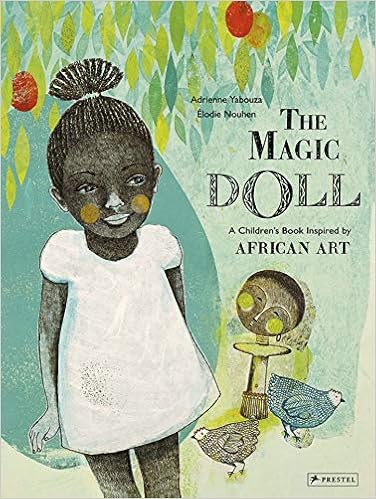
The Magic Doll: A Children’s Book Inspired by African Art by Adrienne Yabouza, illustrated by Élodie Nouhen

Source: Media Masters Publicity

Hardcover, 32 pgs

I am an Amazon Affiliate

The Magic Doll: A Children’s Book Inspired by African Art by Adrienne Yabouza, illustrated by Élodie Nouhen, is an inspirational tale of a family in a small village in West Africa in which a girls explains the special way in which she was born. Unlike other newlyweds, her mother and father struggled to conceive a child in their first years of marriage. The father suggests that she have a carved doll made to hasten the fertility process. The mother does so and carries the wooden child around with her.

This story is touching in how it tackles the struggles of fertility and the traditions of Akua-Ba fertility figures of the Akan people of Ghana. My daughter asked a lot of questions about these dolls and what was going on, and many of these questions were answered in the back of the book. We had a good discussion about this cultural tradition. We loved the collage-like images and the colors. It was a gentle story complimented by the color-scheme chosen by the illustrator.

The Magic Doll: A Children’s Book Inspired by African Art by Adrienne Yabouza, illustrated by Élodie Nouhen, was a wonderful story about family, fertility, and relationships between mothers and their children.

RATING: Quatrain

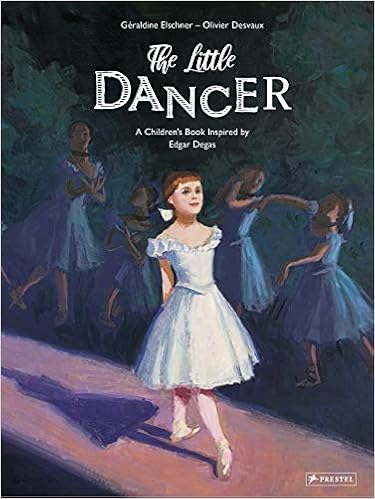
The Little Dancer: A Children’s Book Inspired by Edgar Degas by Géraldine Elschner, illustrated by Olivier Desvaux

Source: Media Masters Publicity

Hardcover, 32 pgs.

I am an Amazon Affiliate

The Little Dancer: A Children’s Book Inspired by Edgar Degas by Géraldine Elschner, illustrated by Olivier Desvaux, is the perfect holiday gift for the ballerina’s in your family, as well as the artists. Not only will children see ballet through the eyes of a young child who’s a ballerina, but they will also see the wonder captured by the hands and eyes of Edgar Degas.

Jeanne’s mother sacrifices everything to move to Paris to help her daughter achieve her dreams, but while ballet is not precisely what she’s after, her role in the background on stage catches the eye of Degas. Marie, another ballet dancer in the corps, has taken ill and Jeanne is asked to stand in as a model until her return. This will mean additional money for her family.

Degas’ techniques are explored, and the illustrations are gorgeous reproductions of his art. The entire book is similar to his style. While the book focuses on the awe of ballet and art, it does not shy away from the desperate times many of these ballerina’s faced as members of poor families.

My daughter and I loved this book, and it probably doesn’t hurt that her favorite movie that we’ve seen a million times is Leap! about a girl facing similar choices, and not always making the best ones. Here, Jeanne seems to have a good head on her shoulders and makes some good choices to earn her family more money. While we do not know exactly what happens to her career, it does provide a look at the ballet corps’ use of children to fill the backstage and the unique opportunities some of them found there.

The Little Dancer: A Children’s Book Inspired by Edgar Degas by Géraldine Elschner, illustrated by Olivier Desvaux, is definitely a book you’ll want to share with your artists and ballerinas.

RATING: Cinquain

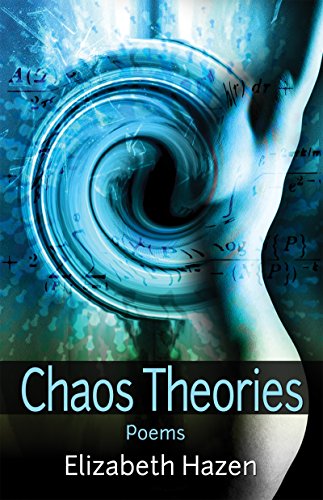
Chaos Theories by Elizabeth Hazen

Source: the poet

Paperback, 88 pgs.

I am an Amazon Affiliate

Chaos Theories by Elizabeth Hazen is a collection of poems that explore the spiraling, out-of-control nature our lives can sometimes take on and how to cope with that chaos and uncertainty. It’s a collection for the current times in that it provides us with a look at life amidst uncertainty, albeit unrelated to COVID-19. Through the art of words and the certainty of science, Hazen strikes into new frontiers with her poems, exploring divorce, motherhood, the turbulent nature of emotions. In “Chaos Theory,” Hazen establishes the unstable ground of these poems by grounding it into a personal moment of “rage [that] comes out of nowhere — the glass explodes/when it hits the wall, as physics says it must,//” (pg. 3)

Ghosts haunt in “Ghost Story” but are they just voices in the narrator’s head spilling her secrets? But the secrets won’t stop just because there are three or four fingers of warm liquid in the glass. Hazen calls us to face our own ghosts head on, not to dull the sharpness of their criticisms or their secrets. To understand the chaos, we must all start from the beginning. “…and no matter what you tell/yourself tonight, no matter what you tell//yourself in twenty years, you are still there,/” (pg. 10, from “Girls at the Bus Depot”)

Hazen’s poems are like an archeological dig, an excavation of the self. In “Extraction,” the narrator says, “…A body holds more mysteries/than the mouth can bring itself to speak./” It’s true that when we’re young and sometimes as we age, we don’t really know our true selves, unless we’ve taken that time to delve deep into who we are, what our desires may be, and what we’re passionate about. It is a journey we must take on our own, but also one that must be done. Without it, we can be lost and make many harmful and wrong decisions.

There are many losses along the way in our journeys, as we search for the truth of ourselves, but those losses are memories that can be recalled with the slightest scent or picture. “or a room holds the vibration of a voice,/a person’s scent, long after he has gone.” (pg. 43, “The Spectroscope”) While loss can be sad and make us feel empty, there are those losses that can bring joy at the happiness some moments held, like uncovering trilobites in the soil.

Chaos Theories by Elizabeth Hazen warns us not to get too caught up in the loss and the memories — “My memory is a haunted house that will/not let me leave.” (pg. 44, “When I Was a Girl”) We must learn to break free from the chaos — sometimes self-created — to find the right path, the calm, and the joy we all seek. At the heart, we’re all working against nature and the passage of time, like the house in “Erosion.”

RATING: Quatrain

Other Reviews:

About the Poet:

Elizabeth Hazen is a poet, essayist, and teacher. A Maryland native, she came of age in a suburb of Washington, D.C. in the pre-internet, grunge-tinted 1990s, when women were riding the third wave of feminism and fighting the accompanying backlash. She began writing poems when she was in middle school, after a kind-hearted librarian handed her Lawrence Ferlinghetti’s A Coney Island of the Mind. She has been reading and writing poems ever since.

Hazen’s work explores issues of addiction, mental health, and sexual trauma, as well as the restorative power of love and forgiveness. Her poems have appeared in Best American Poetry, American Literary Review, Shenandoah, Southwest Review, The Threepenny Review, The Normal School, and other journals. Alan Squire Publishing released her first book, Chaos Theories, in 2016. Girls Like Us is her second collection. She lives in Baltimore with her family.

National Geographic Little Kids First Big Book of Science by Kathleen Weidner Zoehfeld

Source: Media Masters Publicity

Hardcover, 128 pgs.

I am an Amazon Affiliate

National Geographic Little Kids First Big Book of Science by Kathleen Weidner Zoehfeld is so well organized with fact boxes, interactive questions, and tips for parents to use with their kids who are interested in doing more with science. The full-color photographs are gorgeous, and my daughter didn’t want to stop reading this one. It definitely opens kids’ eyes to the world around them, the simple ways in which science can be done, and explains how they too can become scientists.

From what our senses tell us about the world around us to how we can find answers to our questions, this book provides a great foundation for kids. My daughter has already kept a science journal for class in 2nd and 3rd grade when they were studying clouds and the growth of seeds, but this book also goes more into depth about hypotheses and theories and the difference between them. I loved the “Branches of Science” tree included in the book, though the branches of engineering, ecology, and physical science seemed a bit short to me; I’m sure there are more branches coming off of those. There is so much more that this book could cover in each chapter, but as a “first” book of science for kids, it does a wonderful job.

We loved how easy to read this was for my daughter. She read it to us on more than one occasion when she got excited about something she learned. I hope that this is just the first in the series and that there are more of these books about the other branches of science that are not covered in this volume. National Geographic Little Kids First Big Book of Science by Kathleen Weidner Zoehfeld is a great addition to any library and will be fun for both parents and kids with plenty of activities to share.

RATING: Cinquain

5,000 Awesome Facts (About Everything!)

Source: Media Masters Publicity

Hardcover, 224 pgs.

I am an Amazon Affiliate

5,000 Awesome Facts (About Everything!) from National Geographic Kids packs a lot of information into its little more than 200 pages, and many of these pages have full color photographs. The layout of the pages differs, but they are each packed with some fun and unusual facts from the 15 facts about mysteries throughout history to facts about animals (like penguins and dolphins) and facts about women, transportation, robots, paranormal activity, space junk, the Olympics, swimming, and Antarctica, among others.

We did notice that certain lists of facts are super long and don’t fit well into a fun and engaging bubble or other format, which means they were simply listed with one large photo or two medium photos. For instance, the two pages of sharks were just a list with one photo of a Great White Shark, and the text was a bit small. While my daughter loves watching shark week, this page of facts was not engaging to her. Neither were the two pages about skeletons and muscles, which was similarly arranged.

However, this book is chock full of information that kids can explore at their leisure and share with their parents. We love using these books to quiz each other and share what we found interesting. It’s fun to see our daughter say, “I knew that.” And then she’ll share a fact that she found interesting by first asking, “Mom, did you know…” I love these kids of books for this reason alone. My daughter also loved learning about inventions and some other things that she wouldn’t think to ask about. This book provides her with new thinks to explore on her own and with help.

5,000 Awesome Facts (About Everything!) from National Geographic Kids is a great gift for kids who are curious about the world around us — including the man-made parts of our world. My daughter loves nature, so those parts of the book were most interesting, but we did have some conversations about space junk and other things she had no idea about. We’ll likely turn to this book again and again, especially when we can get back to doing road trips.

RATING: Quatrain

Weird But True: Halloween 300 Spooky Facts to Scare You Silly by Julie Beer

Source: Media Masters Publicity
Paperback, 208 pgs.
I am an Amazon Affiliate

Weird But True: Halloween 300 Spooky Facts to Scare You Silly by Julie Beer contains all things Halloween, the quirky, the factual, the fun, and the ghoulish. I wanted to review this one on Oct. 13 because it is a mirror for Oct. 31 and because 13 is considered an unlucky number.

My daughter loved the fun facts in this book and was awed by the spectacular displays throughout that people made with carved, lighted pumpkins. These displays are massive and inventive. I was riveted by the unusual: did you know that Halloween was once associated with love and romance? Or that in Scotland, people peeled apples in one long strip and tossed the peel over their shoulder to see what the first letter of their future love would be? Or that people in England used to take the front doors off their neighbors’ homes and hide them? And one I never would have known without reading this book is that the filling of Kit Kats is made from ground up Kit Kats.

Some of the fun facts I knew in here, especially the ones about Macbeth and The Legend of Sleepy Hollow, but there wasn’t much about my favorite Halloween reads, but then again, perhaps my personal readings of Edgar Allan Poe are not traditions elsewhere.

There are even some goodies in here that I hope to try with my daughter on Halloween in lieu of Trick or Treating — some mummy wrapping, apple bobbing, and carving challenges. Weird But True: Halloween 300 Spooky Facts to Scare You Silly by Julie Beer is a delightful look at the holiday and all the craziness that it inspires. Definitely a great gift to offer kids when candy and door-to-door stops is ill-advised.

RATING: Quatrain

Daughter of Black Lake by Cathy Marie Buchanan

Source: publisher
Hardcover, 320 pgs.
I am an Amazon Affiliate

Daughter of Black Lake by Cathy Marie Buchanan is like the oral tales of old where facts are distorted by the story teller from ear to ear. During the Roman invasion of Britannia, we meet the Smith family in which Hobble is a runt because of her gait issues, her mother is a healer for the tribe at Black Lake, and her father is the blacksmith. Like the lake with its dark, unknowable depths, much of the nature-based religion and philosophy of the Druids leaves the village’s families tentative in their dealings. With certain families currying favor with hunted meat and others who are too meek to stand up to a dying religion, there are mysteries lurking.

The Smith family was once considered among the best and most generous, but their fall from First Family has left Devout, Hobble, and Young Smith doing their best to appease the lone druid who comes to Black Lake and the Hunter family, who now holds that coveted place in society, are just waiting to pounce and reclaim their place.

Hobble has been training with her father to run fast despite her disability. Weak members or runts are considered possible sacrifices to appease the gods if needed. Devout, her mother, has a secret, and like the Black Lake she is impenetrable, at least in Hobble’s eyes. Their relationship is muddied by the secrets she holds, even as Hobble displays a gift of foresight and an ability to “see” the truth. She is unique compared to the other bog dwellers, but her vision of the invading Romans becomes a serious concern for her family, the village, and the lone druid who comes to seek brave men to join his rebellion.

“Though we do not speak of my birth, I can describe the deep blue veins webbing my mother’s breasts, the slight tremble of my father’s hand as he clenched his knife, and above all, the way she hid the crescent from his view. The finer points of the scene glinted before me with the exactness of a sharpened blade, same as they had for that vision of R0mans at Black Lake.” (pg. 3)

This mystical tale is woven like a tapestry with each strand hard to hold onto until it comes together with the other colors to create a full scene of village life under the druids and the change that hovers on the horizon under Roman rule. In the backdrop the struggle for power plays out just as it does in the foreground between the Smiths and Hunters where the power shifts from one to the other. Buchanan’s story unfolds in a deliberate way to immerse the reader in this ancient time when even writing was not done and knowledge was passed from person to person. Daughter of Black Lake by Cathy Marie Buchanan is a struggle for survival amid a world of secrets and lies, political gains and losses, and magic.

RATING: Cinquain

Other Reviews:

Photo Credit: Heather Pollack

About the Author:

Cathy Marie Buchanan is the author of the nationally bestselling novels The Day the Falls Stood Still and The Painted Girls. She lives in Toronto. Find out more about Cathy at her website, and connect with her on Facebook and Instagram.


EXCERPT:

Join us for a fun tour with reviews accompanied by progressive excerpts on the blogs and a game of finding out your “Black Lake name” on Instagram beginning Oct. 8!

Please use the hashtag #daughterofblacklake, and tag @tlcbooktours, @riverheadbooks, and @cathymbuchanan.

Devout was once a maiden of thirteen, wandering the woodland at the northern boundary of the clearing at Black Lake. She felt the sun reaching through her skin cape and her woolen dressas she walked, gaze sweeping the curled leaves, twigs, and fallen branches of the woodland floor. She bristled with anticipation. Now that she had begun to bleed, that very evening she would join the rest of the youths eligible to take mates in celebrating the Feast of Purification. Together they would mark the advent of a new season, and in doing so leave behind the cold, bitter season called Fallow and welcome the slow thaw of the season called Hope. At such a promising juncture, Black Lake’s boys offered trinkets to the maidens. With a polished stone or an opalescent shell, a boy made known his desire to take a particular maiden as his mate, and with that gift accepted and then a witnessed declaration, a maiden cast her lot.

Devout told herself not to beselfish, not to set her heart on holding in her cupped palms evidence of a boy’s yearning. It was her first Feast of Purification, and the possibility of a mate remained as unfathomable as the distant sea. Still, the idea of a trinket, of being singled out, of wide eyes and maidens gushing that she had drawn affection—all of it glinted like a lure before a fish.

She stooped to peer beneath a bush, looking for the bluish‑purple petals of the sweet violet she had come into the woodland to collect. The flowerheld strong magic: A draft strained from a stew of its boiled flowers brought sleep to those who lay awake. A syrup of that draft mixed with honey soothed a sore throat. A poultice of the leaves relieved swellings and drew the redness from an eye. She touched her lips, then the earth. “Blessings of Mother Earth,” she said.

Mother Earth would come that night, and in Devout’s mind’s eye, she pictured her arrival, imagining it much like the mist rolling in from the bog. Mother Earth would glide into the clearing, permeate the clutch of roundhouses, and in doing so chase away vermin, dis‑ ease, wickedness. The cleansing put the bog dwellers at ease. Though the Feast of Purification came at a time when the days were growing longer, still night ruled. After a daythat was too short for the bog dwellers to have grown tired, they tossed amid tangles of woven blan‑ kets, furs, and skins, worry creeping into their minds. Would the stores of salted meat, hard cheese, and grain last? Was there enough fodder left for thesheep? Had slaughtering all but a single cock been a mistake? Were the ewes’ bellies hanging sufficiently low? Were their teats adequately plump?

Check out the next stop on the blog tour and the next excerpt at Lit and Life.

National Geographic Kids: Beginner’s United States Atlas and United States Atlas

Source: Media Masters Publicity
Paperbacks, 128 pgs and 176 pgs.
I am an Amazon Affiliate

National Geographic Kids has a new 2020 edition of both the Beginner’s United States Atlas (3rd edition) and the United States Atlas (6th edition). The Beginner’s atlas includes the basics about what a map is, the land, the people, and the national capital, as well as individual maps and facts about each states. The atlas divides the country into 5 regions designated by different colors, and the back of the book contains a glossary, postal codes, and metric conversion chart. We love the full color topographical maps in this volume and the large text that makes the information easy to read.

My daughter and I will spend a great deal of time learning about maps and what features on the map signify, as well as the importance of the scale and compass. The full color photos in the atlas are gorgeous and vivid. They include natural features and animals, historical elements, and the state birds and flowers, among other things. The beginner’s atlas is a great place to start with elementary school students to help them learn about the different states in our country. We’ve already checked out our home state of Maryland.

The United States Atlas is a smaller paperback atlas that also includes full color photos and is chock full of information. This atlas includes information about the physical aspects of our country, including its climate and natural hazards, and information about our population, energy, the national capital, and people on the move. Again the atlas is broken up into 6 regions (one of which includes the U.S. Territories) that are color coded. There are facts and figures, postal abbreviations, map abbreviations, place names in an index, and more. This one has more in-depth information than the beginner’s atlas.


We love that both of these provide text and facts, but that they also provide photos that bring each state to life. National Geographic Kids’s new 2020 edition of both the Beginner’s United States Atlas and the United States Atlas will be a great addition to homeschooling and virtual schooling this year. With the topsy-turvy COVID-19 pandemic still underway, this will give us a needed break from Zoom classes and allow her to explore the country — at least in a book.

RATING: Cinquain