Quantcast

Week 3 of the Stella Bain Read-a-Long

This year at War Through the Generations we’ve been hosting a read-a-long specific to one of the 6 wars we are covering.

As this year marks the 100th anniversary of WWI, we’ve decided to select one of our favorite authors — Anita Shreve — to honor the war.

Stella Bain is our selection for August. Synopsis from GoodReads:

When an American woman, Stella Bain, is found suffering from severe shell shock in an exclusive garden in London, surgeon August Bridge and his wife selflessly agree to take her in.

A gesture of goodwill turns into something more as Bridge quickly develops a clinical interest in his house guest. Stella had been working as a nurse’s aide near the front, but she can’t remember anything prior to four months earlier when she was found wounded on a French battlefield.

In a narrative that takes us from London to America and back again, Shreve has created an engrossing and wrenching tale about love and the meaning of memory, set against the haunting backdrop of a war that destroyed an entire generation.

Beware of spoilers.

Discussions will be posted on Friday for the designated chapters. Here’s the reading schedule and discussion dates:

Friday, Aug. 8: Pages 1-70
Friday, Aug. 15: Pages 71-138
Friday, Aug. 22: Pages 139-207
Friday, Aug. 29: Pages 208-end

We hope that you’ll join us for the read-a-long and discussions at War Through the Generations.

Inspiration, Saying Thank You

Rules

  • Thank the person who nominated you.
  • Add the “Very Inspiring Blogger Award” logo to your post.
  • Share 7 things about yourself.
  • Nominate 15 bloggers who inspire you.
  • Include the set of rules.
  • Inform your nominees by posting a comment on his/her blog.

Thanks to Hattie from Books Make Me Happy for nominating me.  Normally, I don’t pass on these awards because I haven’t the time to, but I’m making time today.

7 Things:

  1. I write poems, short stories, and have 3 unfinished novels.
  2. I love big cities.
  3. I love to read books — all kinds, though lately a lot of historical fiction.
  4. I’m finally in a book club that has lasted more than 3 months.
  5. I love my family, and my little girls is getting so tall!
  6. I want to inspire others to read more poetry.
  7. It’s the little things that make me happiest — a bouquet of sunflowers, orchids, etc., putting away the dishes before I get to them, watching my little girl laugh, hanging out with friends over good coffee or wine and dessert (anything chocolate, really).

Bloggers Who Inspire Me; I’m limiting myself to 7:

  1. Rhapsody in Books because she challenges me to read more YA and nonfiction
  2. Bermudaonion because she’s always so kind and comments on everyone’s blogs
  3. Book Chatter because she loves those dark stories that I love.
  4. Diary of an Eccentric because she’s as passionate as I am about Jane Austen and war-related fiction — nevermind I’ve known her in real life for more than a decade.
  5. Unabridged Chick because she’s passionate about historical fiction and has great taste.
  6. Caribousmom because she’s always so kind, utterly talented at quilting, and a dog lover.
  7. Under My Apple Tree because she has a great eye for birds, nature, and photography.

Week 2 of the Stella Bain Read-a-Long

This year at War Through the Generations we’ve been hosting a read-a-long specific to one of the 6 wars we are covering.

As this year marks the 100th anniversary of WWI, we’ve decided to select one of our favorite authors — Anita Shreve — to honor the war.

Stella Bain is our selection for August. Synopsis from GoodReads:

When an American woman, Stella Bain, is found suffering from severe shell shock in an exclusive garden in London, surgeon August Bridge and his wife selflessly agree to take her in.

A gesture of goodwill turns into something more as Bridge quickly develops a clinical interest in his house guest. Stella had been working as a nurse’s aide near the front, but she can’t remember anything prior to four months earlier when she was found wounded on a French battlefield.

In a narrative that takes us from London to America and back again, Shreve has created an engrossing and wrenching tale about love and the meaning of memory, set against the haunting backdrop of a war that destroyed an entire generation.

Beware of spoilers.  Discussions will be posted on Friday for the designated chapters. Here’s the reading schedule and discussion dates:

Friday, Aug. 8: Pages 1-70
Friday, Aug. 15: Pages 71-138
Friday, Aug. 22: Pages 139-207
Friday, Aug. 29: Pages 208-end

We hope that you’ll join us for the read-a-long and discussions at War Through the Generations.

Week 1 of the Stella Bain Read-a-Long

This year at War Through the Generations we’ve been hosting a read-a-long specific to one of the 6 wars we are covering.

As this year marks the 100th anniversary of WWI, we’ve decided to select one of our favorite authors — Anita Shreve — to honor the war.

Stella Bain is our selection for August. Synopsis from GoodReads:

When an American woman, Stella Bain, is found suffering from severe shell shock in an exclusive garden in London, surgeon August Bridge and his wife selflessly agree to take her in.

A gesture of goodwill turns into something more as Bridge quickly develops a clinical interest in his house guest. Stella had been working as a nurse’s aide near the front, but she can’t remember anything prior to four months earlier when she was found wounded on a French battlefield.

In a narrative that takes us from London to America and back again, Shreve has created an engrossing and wrenching tale about love and the meaning of memory, set against the haunting backdrop of a war that destroyed an entire generation.

iscussions will be posted on Friday for the designated chapters. Here’s the reading schedule and discussion dates:

Friday, Aug. 8: Pages 1-70
Friday, Aug. 15: Pages 71-138
Friday, Aug. 22: Pages 139-207
Friday, Aug. 29: Pages 208-end

We hope that you’ll join us for the read-a-long and discussions at War Through the Generations.

Read-a-Long of Anita Shreve’s Stella Bain

This year at War Through the Generations we’ve been hosting a read-a-long specific to one of the 6 wars we are covering.

As this year marks the 100th anniversary of WWI, we’ve decided to select one of our favorite authors — Anita Shreve — to honor the war.

Stella Bain is our selection for August.  Synopsis from GoodReads:

When an American woman, Stella Bain, is found suffering from severe shell shock in an exclusive garden in London, surgeon August Bridge and his wife selflessly agree to take her in.

A gesture of goodwill turns into something more as Bridge quickly develops a clinical interest in his house guest. Stella had been working as a nurse’s aide near the front, but she can’t remember anything prior to four months earlier when she was found wounded on a French battlefield.

In a narrative that takes us from London to America and back again, Shreve has created an engrossing and wrenching tale about love and the meaning of memory, set against the haunting backdrop of a war that destroyed an entire generation.

Discussions will be posted on Friday for the designated chapters.  Here’s the reading schedule and discussion dates:

  • Friday, Aug. 8: Pages 1-70
  • Friday, Aug. 15: Pages 71-138
  • Friday, Aug. 22: Pages 139-207
  • Friday, Aug. 29: Pages 208-end

We hope that you’ll join us for the read-a-long and discussions at War Through the Generations.

War Babies Read-a-Long and Happy Birthday

First, this message for my husband:

Secondly, Today, at War Through the Generations, Anna and I are holding our first discussion for the Korean War read-a-long pick, War Babies by Frederick Busch.

We hope that you’ll join us in a discussion of this short book. For this week, we’re focusing on pages 51-end of the book.

Check out the discussion here.

For the first part of the discussion, go here.

Guest Post: The Secret Language of Stamp Placement

We live in an age where communication is simply a matter of typing a few lines of text and hitting the ‘send’ button. It doesn’t matter where we are in the world, we can send our loved ones a few loving words whenever we want – in the knowledge that they will be received within just a few seconds. There was a time, however, when a message of love could take more than a week to arrive. The sending of letter may be a dying art these days, but it used to be a heartfelt, romantic gesture, and young lovers would often choose the placement of a stamp to convey a hidden message.

‘The language of stamps’ may now be consigned to the annals of history, but before the advent of digital communication, it was a used as a way of sending a clandestine message of love – or in some cases – rejection. In many ways, the placement of stamps on envelopes was one of the earliest forms of text speak, but instead of the now widespread use of LOL, LMAO and OMG, the orientation and location of a stamp told the story.

This mysterious cypher was developed in Victorian England, and for more than 100 years, the sight of oddly positioned stamps on letters and picture postcards was commonplace. The idea behind the secret language of stamps developed at a time when courtship and romance were subject to a strict code of conduct. Young men were expected to be respectful in their proclamations of affection, and it was incumbent on young ladies to act with chastity and dignity during the first throes of romance.

However, courting couples could send secret messages to one another through a series of stamp placements – which would usually evade the attention of suspicious parents. The secret language quickly caught on throughout the world, but the problem of seemingly arbitrarily placed stamps on letters and postcards became so bad, many national postal services introduced strict guidelines on where to position stamps. Indeed, some letters would simply be returned to the sender unless those guidelines were followed.

So, what were these mysterious stamp placements? And exactly what romantic messages did they stand for? Well, perhaps the most commonly used stamp placement was upside down at the top left corner of a postcard or envelope, which stood for: ‘I love you’. Any young lady receiving correspondence with a stamp positioned in this way would have either been giddy with excitement or filled with dread.

Unfortunately, the news conveyed by a stamp was not always positive. For instance, a stamp placed sideways at the top left corner of an envelope stood for: “My heart is another’s”. And many a broken heart has been caused by an upside down stamp placed at the top right corner, as this was the universally accepted stamp placement for: “Write no more”. While there were several secret messages that no smitten recipient ever wanted to receive, few would have been more heartbreaking than the “I hate you” placement, which was represented with a stamp placed at a right angle in the top left corner.

While there is undoubtedly an element of humour to be found in this quirky practice, there is also something charming and romantic about it. Illicit love has long been a subject of verse and play, and to know that young lovers communicated their feelings to one another in this way provokes images of romance during simpler times. If you are thinking of using the secret language of stamps to express your love for someone, a full list of the universally accepted stamp placements can be found at the Philatelic Database.

Company Profile:
Ace-Envelopes is one of UK’s leading suppliers of envelopes, over 25 million envelopes in different sizes, colours and shapes available for next day delivery services to meet your needs.

Summer Reading…Do You Have a List?

DSC_0147This is what I think about when I think of summer.  Relaxation, no work, beaches, water, and fun with my family, especially with my daughter who loves everything about the outdoors.  But it’s also a time when my reading gets less heavy.  I tend to read books to sweep my cares away and that leave me with a hopeful or happy feeling.  I’m just in that mood.

I’m not really sure how much reading I’ll get through, but I do have a preliminary list for this summer.

I’d love for everyone to share their lists, if you have them, or just the book you’re reading now — I might end up adding them to my list.

Here goes:

A Long Time Gone by Karen White — I’m reading this now and really enjoying it.
The House on Mermaid Point by Wendy Wax
Another World Instead: The Early Poems of William Stafford with an introduction by Fred Marchant
China Dolls by Lisa See
Tangle by Julie Cameron Gray
Muse by Dawn Marie Kresan
Grand Central: Original Stories of Postwar Love and Reunion (short story collection)
Don’t Want to Miss a Thing by Jill Mansell

Do you find that you read certain types of books because of the season?  What books are on your list?

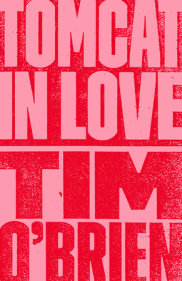
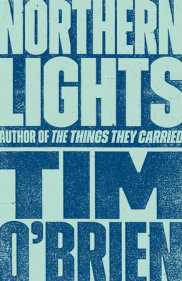
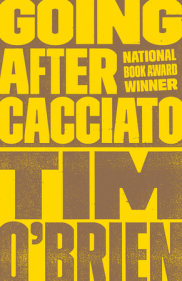
Giveaway: Newly Reissued Tim O’Brien Books

Tim O’Brien is my go-to writer for Vietnam War-related literature, but even for those who are not interested in war literature, he’s a fantastic story-teller.  You can get lost in his books, totally taken in by his prose and his damaged characters.

I have read everyone of his books, except Going After Cacciato, which Anna and I will be doing later this year in a read-a-long at War Through the Generations in December.

Random House has kindly offered a prize pack of Tim O’Brien books (those 4 books pictured above) for one of my U.S.-based or Canada-based readers.

Giveaway will run through June 6, 2014, at 11:59 PM EST  Use the form.

Korean War Read-a-Long at War Through the Generations

As part of the War Through The Generations 2014 Reading Challenge with a Twist, we’ll be hosting a read-a-long for the Korean War.

In June, we’ll be reading War Babies by Frederick Busch.

Discussion questions will be posted on Friday for the designated sections.  As there are no chapter numbers, we’ll have to use approximate page numbers.

Given the small size of the book, we’ll only hold 2 discussions, instead of the usual 4.

Here’s the reading schedule and discussion dates:

  • Friday, June 13: Pgs. 1-50 (ends with “mine and squeezed.”
  • Friday, June 27: Pgs. 51-the end (begins with “We didn’t speak again”)

We hope you’ll be joining us next month for our Korean War read-a-long.

Spotlight: Empower: Fight Like A Girl for Lupus Awareness Month

"Empower: Fight Like A Girl" on sale now!
Goodreads and Amazon

Praise for Empower: Fight Like A Girl

“Even non-girls will feel empowered by these stories about ordinary, flawed characters finding their own strengths. Highly entertaining and original.”

– Lee Goldberg, New York Times bestselling author of The Chase and King City, whose mother lost her hearing to lupus.

Women of TV have united against lupus! Presenting Empower: Fight Like A Girl, a special collection of short stories by top women writers from some of your favorite shows, including: Marvel’s Agents of S.H.I.E.L.D., Family Guy, Person of Interest, Grimm, Battlestar Galactica, Buffy the Vampire Slayer, Law & Order: SVU, Star Trek: Voyager, Eureka, Twisted, The 100, Malcolm in the Middle, Millennium, Being Human, The Shield, Castle, Chuck, Gilmore Girls, and Game of Thrones. In this anthology, you’ll discover supernatural thrillers, crime mysteries, horror, comedies, and more.

Authors contributing stories to this volume include:

All proceeds will be donated to the Lupus Foundation of America to help solve the cruel mystery of lupus.

Response Poetry

Response poetry is often one of the easiest kinds of poetry to write for poets who are starting out because it often relies on the text of another poet.

Writers just starting out in poetry will often imitate the style of another poet until they can find their own, and some even write poems outwardly replying to another poets work, like Sir Walter Raleigh’s response to Christopher Marlowe’s “The Passionate Shepherd to His Love.” Other options include building off a primary metaphor that the poem works from, stealing the first line of the poem, using a passage as an epigraph, turning prose into verse, or writing the opposite of the poem.

For further information about these techniques, go here.

Today, I’m going to give you a poem, and my response, and I’d love to see what your response poems would be in the comments either to the original poem or to my response.

The Young Man's Song by W.B. Yeats

I whispered, "I am too young,"  
And then, "I am old enough";   
Wherefore I threw a penny   
To find out if I might love.   
"Go and love, go and love, young man,
If the lady be young and fair,"   
Ah, penny, brown penny, brown penny,   
I am looped in the loops of her hair.   
   
Oh, love is the crooked thing,   
There is nobody wise enough
To find out all that is in it,   
For he would be thinking of love   
Till the stars had run away,   
And the shadows eaten the moon.   
Ah, penny, brown penny, brown penny,
One cannot begin it too soon.

Here’s my response poem:

A Young Woman's Lament

I spied him at the fountain
caressing a brown penny as he stared
a long time into the flowing water.
Dark curls tumbling to his neck,
a suit crisp and bright.

The dark copper revealing its shine
reflecting the sun's rays.
I smile at the thought, until
Whispering to himself,
he seems to argue, flailing his arms.

I scratched my head,
"He's cute, but clearly crazy," I said.
The fear crept along my skin
He turned to stare right at me.  With a splash,
he squared his shoulders, sauntered toward my dry mouth.

For today’s 2014 National Poetry Month: Reach for the Horizon tour stop, click the image below: