Quantcast

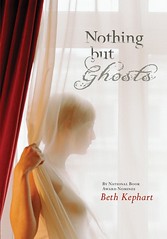
Nothing But Ghosts by Beth Kephart

Beth Kephart’s Nothing But Ghosts follows Katie D’Amore’s struggle to recover enough to live after the death of her mother, but her mother’s ghost is not the only spirit present in this novel.  Lost loves, mysterious socialites locked inside their estates, and other specters haunt these pages.  Kephart’s narration from the point of view of Katie is limiting, but an excellent choice as readers unravel the mystery of her town’s hermetic socialite alongside Katie.

“My dad has this knack for lighting the darkness, for uncracking all the cracks that break images apart, for returning the disappeared to the land of the living.”  (Page 5)

Katie must face her loss, her future, and the past, and she does it in the basement of a library and in a garden of Miss Martine’s estate as she and other kids work through the summer digging a hole for a gazebo foundation.  What Katie doesn’t expect is to find life in the past and the present, nor does she expect to see her father emerge from his own opaque painting to whisk broad, vivid paint across a new canvas.

“If you were looking down on me and my bike from a cloud above, you’d think we were a zipper.  That’s how fast we go, how straight down, all the way to Miss Martine’s.”  (Page 9)

“What if the glass breaks and the bird flies in? What if the whole upstairs shatters and crumbles? I imagine the finch making a nest inside my lamp shade — dropping the feathers into my shoes, over my breadspread, over my pillow, over me.  I imagine everything giving way to the finch.”  (Page 22)

Nothing but Ghosts is not simply a coming of age story, but a tale of how each of us deals with loss.  Kephart is a master of description, making each image vivid, each plot line significant, and she does it all in concise, poetic language.  In a way, readers may find that parts of this novel are simply a large narrative poem.  Very enjoyable, quick read, with deeper meaning and an even deeper sense of understanding.

Check out this book trailer too:

About the Author: (from author’s Website)

Beth Kephart is the author of five memoirs, an autobiography of a river, a young adult novel, and a newly released corporate fable called ZENOBIA: THE CURIOUS BOOK OF BUSINESS (co-authored with Matthew Emmens); four new books are forthcoming. A SLANT OF SUN was a 1998 National Book Award finalist, a Salon.com Best Book of the Year, and the winner of other honors. INTO THE TANGLE OF FRIENDSHIP was written with the support of an NEA grant; GHOSTS IN THE GARDEN was a Book Sense pick; FLOW: THE LIFE AND TIMES OF PHILADELPHIA’S SCHUYLKILL RIVER was supported by a Pew Fellowships in the Arts grant; and UNDERCOVER, released in September of 2007, was named a best young adult book of the year by School Library Journal, Kirkus, Amazon, and others. The winner of the 2005 Speakeasy Poetry Prize, a contributor to many anthologies, an occasional teacher and frequent reviewer, Kephart has written for publications ranging from the New York Times, Chicago Tribune, and Washington Post, to Family Circle, Philadelphia magazine, Salon.com, Real Simple, and Parenting. Kephart is the strategic writing partner in an award-winning, boutique marketing communications firm called Fusion.

FTC Disclosure:  All title links and images will bring you to an Amazon Affiliate page; No purchase required.  Additionally, my copy of Nothing But Ghosts was borrowed from my local library and recommended by Amy of My Friend Amy and Beth Fish Reads.  

It may take me a while to get to books recommended by bloggers, but I do get to them.  Thanks everyone.
Interview With Garth Stein

If you haven’t seen my review of Garth Stein’s The Art of Racing in the Rain, you should check it out, here.

Garth Stein kindly took some time out of his busy schedule to answer a few interview questions for me over at the D.C. Literature Examiner.

I know we’re all busy with the holidays, but I hope you will take the time to pop over and comment on my interview and the second part.

My First Library Loot

Library Loot is a weekly event co-hosted by Eva and Marg that encourages bloggers to share the books they’ve checked out from the library. If you’d like to participate, just write up your post-feel free to steal the button-and link it using the Mr. Linky any time during the week. And of course check out what other participants are getting from their libraries!

I’ve never participated in Library Loot before because I’ve generally stuck all my books in the Mailbox Monday posts.  But since I forgot that I picked up my long-awaited library books over the weekend, I figured I would join in the fun.  So here it goes:

1.  Nadirs by Herta Muller, who recently won the Nobel Prize in Literature, check out my article on her, here.

2.  Unmasked by Ian Halperin

What did you pick up from the library?

Clicking on titles and cover images will bring you to my Amazon Affiliates page; no purchases are necessary. 

Mailbox Monday #57

It’s Monday again and we’re here with another peep at my mailbox.  Mailbox Monday is sponsored by Marcia at The Printed Page.  If you haven’t checked out her blog, you should, especially since she started sharing her vacation photos from New Zealand and more.

Anyway, here’s what came in the mail this week:

1.  Hotel on the Corner of Bitter and Sweet by Jamie Ford for a January tour date with TLC Book Tours.

2.  2 copies of When She Flew by Jennie Shortridge, one will be given away to a reader of my blog; naturally, it will be an international giveaway.

3.  Fire in the Lake by Frances FitzGerald, which is going in the box of giveaway books for the 2010 Viet Nam War Reading Challenge.  Stay tuned at War Through the Generations for more information on Dec. 1.  I got this copy in excellent condition from the library sale shelves for 50 cents.  Be advised that the cover image is not the same as the bargain book.

Clicking on titles and cover images will bring you to my Amazon Affiliates page; no purchases are necessary.

What did you get in your mailbox?

22nd Virtual Poetry Circle

Wow, 22 Virtual Poetry Circles!  I’m amazed that this project has been successful.  I really had no hope for it at all.  I thought each week would have zero comments.  Surprised me!

So, if we all continue to do well, I’ll host a giveaway on the 25th Virtual Poetry Circle, which will fall on December 12, for all of you who’ve commented on these weekly events.  I’ll pop your names in a hat and choose a winner.  Easy right?!

OK, Here’s a poem up for reactions, interaction, and–dare I say it–analysis:

Remember, this is just for fun and is not meant to be stressful.

Keep in mind what Molly Peacock’s books suggested. Look at a line, a stanza, sentences, and images; describe what you like or don’t like; and offer an opinion. If you missed my review of her book, check it out here.

Contemporary Poet John Amen is also a musician and editor of The Pedestal MagazineThis poem is from his most recent collection At the Threshold of Alchemy:

At The Funeral (Page 17)

The floorboards exhaled,
walls slept for the first time in years.

Grandma slouched in the foyer, 
her belly mounding in her lap, makeup streaked.
I distracted myself in the basement, thinking
of Ms Gilham, my face in her cleavage.

Upstairs, aunts and neighbors — the mercenaries
of resilience — cooked, cleaned, scrubbed
until the house could have passed for a delivery room.

I reemerged, 
dad and his brother gnawing the gristly silence.
No one noticed the stain on my corduroys
or saw me put a silver spoon in my pocket.

Let me know your thoughts, ideas, feelings, impressions. Let’s have a great discussion…pick a line, pick an image, pick a sentence.

I’ve you missed the other Virtual Poetry Circles, check them out here. It’s never too late to join the discussion.

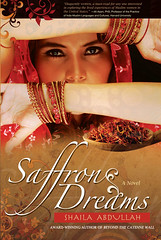
Winner of Saffron Dreams

Out of more than 60 entries into the Green Books Campaign giveaway for Saffron Dreams by Shaila Abdullah, Random.org selected:

Sheila from One Persons Journey Through a World of Books

Congrats to the winner and thanks to everyone who entered.  If you didn’t win, please pick up this book at your local bookstore or online.  You won’t be disappointed.

***

As an aside, I recently came across this great online walking tour of Washington, D.C.  Check it out here.

Win Amazon Kindle 2 at Bibliofreak, International Entrants Need Apply

Bibliofreak is a blog I found not too long ago and just love reading. She’s started up her own weekly newsletter and as a thank you to those who sign up, you get a chance to win a free Amazon Kindle 2, which is the one that works internationally!
I’ve been reading and I’ve wondered what was in the large Amazon box that she talked about, and now I know and so do you!
There are so many ways to enter, but one is to sign up for the weekly newsletter and confirm that subscription.  Easy, right?!  But if you follow her on Twitter and Facebook, you get even more entries. Do you like making YouTube videos?  Do it and get more entries! 
So what’s stopping you??  Its a free Kindle and its something you can do for the environment.  Think about all those trees you can save by not purchasing hard copy books!!
Deadline for this puppy is Dec. 18, 2009!  Don’t be late!

Interview With Poet Temple Cone

Temple Cone recently agreed to an interview with myself and 32 Poems. And here is what he had to say.

How would you introduce yourself to a crowded room eager to hang on your every word? Are you just a poet, what else should people know about you?

I love telling people that I’m a poet. Just a poet. Not vaguing it up by saying that I’m a “writer” or qualifying it by adding that I’m a professor of English at the U.S. Naval Academy. I think that, deep down, people appreciate the uselessness of poetry, its lack of clear market value and profit potential. “For poetry makes nothing happen,” as Auden said in his elegy for Yeats, adding a little later that poetry is “A way of happening, a mouth.” For just a moment, they encounter something that can’t really be bought and sold, or at least not dearly.

Some people feel a bit threatened by that, or indifferent to it, but most are curious, and then a little amazed, as if they’d just met someone who could photosynthesize and therefore didn’t need to spend time working in order to buy food. Of course, the question “How can you live on that?” inevitably comes up, to which I always say, “Prize money.” That way they get the impression that they’ve met a really good poet. And who knows, maybe they’ll look me up.

Most writers will read inspirational/how-to manuals, take workshops, or belong to writing groups. Did you subscribe to any of these aids and if so which did you find most helpful? Please feel free to name any “writing” books you enjoyed most (i.e. Bird by Bird by Anne Lamott).

I completed two graduate degrees in creative writing (one at Hollins, one at UVA), and while I’d say I write quite differently from how I wrote back then, I think that those workshop experiences were crucial for me, because they allowed me to accelerate through many styles (and errors) that likely would have taken me a decade to reach, let alone write through.

Before that time, I was a bit isolated as a writer (I wasn’t even an English major in college), but I was lucky in the writing books I encountered, and a few have stuck with me. When I began writing poetry in college, a close professor friend of mine sent some of my poems to James Merrill, who was a good friend of his. Merrill sent me some very encouraging letters, along with a copy of John Hollander’s Rhyme’s Reason, which I read religiously for years. Richard Hugo’s The Triggering Town was a wonderful practical aid, and Hugo’s wry gruffness made him a good companion during less productive stretches. I’m also truly thankful for my copy of Walter Skeat’s Etymological Dictionary of the English Language, which I delve into constantly, stunned by the marvelous ways our words refer to ‘the things of this world.’ And these days, the book that’s most on my mind is Robert Bly’s Leaping Poetry; Bly is wonderful when one doesn’t take him too seriously.

How do you stay fit and healthy as a writer?

I run (rather slowly these days), and whenever I’m stalled on a line, I do push-ups. Eat well, etc. Try to stay away from booze, but coffee’s another story.  

A Psalm Before Healing

A bowl of noodles with oil and sesame on a drizzly night,
A mug of scalding coffee, a braid of chala from the neighbor,
These small services uphold the firmament of stars, selah.
Never forget that the dove grieves but won’t share her story.
The hunters never understand. When she bolts skyward,
She is the skiff the exile rows through morning rain, selah.
How lissom the homerun swing of the left-handed catcher,
As if his bat had caught a comet’s arc and made it shine.
He shall never read this poem or know his own grace, selah.
With its notched legs, the Jerusalem cricket can’t help but sing.
The Alps can’t help but storm. The corn can’t help but grow.
The world is a second language we can’t help but speak, selah.
Once healed, the blind must be taught the ways of vision.
Diamonds in a green cloud are sunlight showing through leaves.
They learn, but dream of seeing in the dark once more, selah.
Just when you think you’re coming to the end of these poems,
Of your life, of a bowl of noodles, there’s an unexpected sweetness,
A last trace of oil you can sop with a handful of bread, selah.

If you’ve enjoyed Temple’s answers so far, I suggest you check out the rest of my interview with him over at 32 Poems Blog. Once there, you can find out about his workspace, inspirations, and much more. Feel free to leave me comments about his interview or your thoughts on poetry in general.

About the Poet:

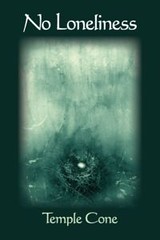
Temple Cone is an associate professor of English at the United States Naval Academy.  His first book of poems, No Loneliness, received the first annual Future Cycle Poetry Book Award in 2009.

Awards for his work include two Dorothy Sargent Rosenberg Prizes in 2007 and 2008, the Christian Publishers Poetry Prize in 2008, a Maryland State Arts Council (MSAC) Individual Artist Award in Poetry in 2007, and the John Lehman Award in Poetry from the Wisconsin Academy Review.

Cone holds a PhD in English from the University of Wisconsin, an MFA in creative writing from the University of Virginia, an MA in creative writing from Hollins University, and a BA in philosophy from Washington and Lee University.  He lives in Annapolis with his wife and daughter.

Fair Creatures of an Hour by Lynn Levin

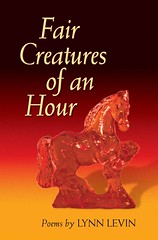
Lynn Levin‘s Fair Creatures of an Hour is a collection of poetry that draws on current events — Smarty Jones in “Little Red Telegram” and skydivers Sara Loshe and Ron Samac in “Freefall” — imagery, and culture to draw in its readers.  Levin intertwines traditional Jewish rituals and stories into her poems, and interjects a fresh perspective.  Readers will intimately understand her and mimic her lines.

“What finer thing is there than to pour out
your thoughts and have someone drink
of your meaning?
It is better than being loved
I sometimes think
for love is not everything.”  (Page 61, “I Wanted to Tell You”)

Levin creates a wistful atmosphere in some of her poems, but easily turns that into something playful.  Even in her most serious poems, Levin cultivates an undercurrent of sarcasm, playfulness, and hope.  From “Peace Is the Blithe Distraction,” Levin repeats the word “peace” and uses each subsequent line to illustrate what peace can mean to even the worst of enemies and how hope plays an integral role.

On the other hand, her humor is ever present as she begins more than one poem with horoscope predictions and planet alignments.  Readers will enjoy the wit shown in these poems and will nod in agreement with many of them.  Levin has an eye for the human condition and the emotions, even those not most desirable. 

The White Puzzle (Page 42)

To love jigsaw puzzles, you have to love trouble —
the mad messing of a picture, the slow steps back to art.
Years ago, my brother and I spent hours
breaking up then piecing back
The Skating Pond by Currier & Ives,
Remington’s The Old Stage-Coach of the Plains
the cardboard pieces colonizing
the game table in the family room.
There was satisfaction in the fitting together
the doing of the definite task
then some days of admiration
of the solved thing before the sundering.
Once someone gave us a white puzzle,
a real head-breaker, the blank pieces
many and small like the counties of a state.
This was fitting for the sake of fitting.
No art in it that we could see, but we stuck to it,
and after a while the pieces began to clump together
like new snow on the lawn.
I remember the way our small talk
scribbled itself over the gathering page:
something about a math bee and Old Man Sprague
who kept sheep in his backyard and had a gun.
We nibbled popcorn, made Montana take shape
with its three sides and human profile,
the pieces knit like bone.
When the white puzzle was complete
we loved the way it lay like moonlight on the floor
then sat before our conquered space,
two Alexanders wanting more.

The poet includes references and explanations in the back of Fair Creatures of an Hour, of which the title is taken from a John Keats poem, “When I Have Fears That I May Cease to Be.”  Levin’s collection is about embracing the moment and being comfortable with oneself before fate steps in.  Well worth reading again and again, Levin’s collection will leave readers wanting more.

Please check out 20th Virtual Poetry Circle for a discussion of Levin’s “Helium.”  Also, for another review, please check out The Pedestal Magazine.  Stay tuned for an interview with Lynn Levin.

I want to thank the poet, Lynn Levin, and Arlene Ang for setting me up with a free copy for review. 

This is my 7th book for the poetry review challenge.

The Michael Jackson Tapes by Rabbi Shmuley Boteach

“MJ:  Everybody’s funny bone is the same color, isn’t it? We are all the same, really.  I have seen that a lot.”  (Page 258)

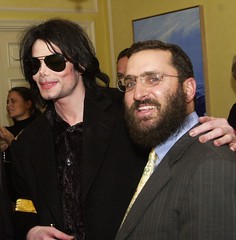
Rabbi Shmuley Boteach‘s The Michael Jackson Tapes is a unique look at a larger-than-life celebrity musician in an intimate setting, but portions of the book are written like a thesis or an examination of celebrity and its adverse impact on America and its stars.  This is not a book for those looking for pictorial depictions of the star in his home or seeking titillating details about his personal relationships with women, his children, or other family members.  While family is talked about, it is not the crux of this book nor of the taped conversations between Jackson and Boteach between 2000 and 2001.

“And it’s heady stuff to be needed by a global superstar.  It makes you feel important and special and soon you close your eyes to all you know to be righteous.  The glow of fame is too bright, the gravitational pull of celebrity too difficult to resist, until you have become nothing but a satellite in its orbit.  All resistance has been quelled by the superpowerful narcotic of superstardom.”  (Page 269)

Through these recorded conversations with his acquaintance and spiritual guide — at least for a time — Michael Jackson revealed some of his demons, his joys, and his fears.  But even for all the explanations by the author of his convictions about Jackson’s innocence and sincerity, there are times when readers will uncover something amiss with Jackson — whether from the drugs or other influences is anyone’s guess.  Answers to certain questions will start off coherent and then reach the absurd, leading readers to wonder how the Rabbi failed to see something wrong with Jackson (i.e. drug abuse).  Boteach knew Jackson for just a few years, and while readers may take issue with his assessments of the celebrity or the closeness of their relationship, readers will see a side of Jackson rarely shown to the public.

“MJ:  See, why can’t we be like the trees? That come, you know, they lose their leaves in the winter, and come back as beautiful all over again in the spring, you know? It’s a sense of immortality to them, and the Bible says man was meant for immortality.”  (Page 67)

Jackson and Boteach discussed religion, family, fame, celebrity, and many other topics, with the goal of creating a book.  Jackson at one point espouses the need for celebrities to be responsible for their public displays and shows to ensure they send an appropriate message to their fans, but in many ways acted contrary to that message (i.e. grabbing his crotch during concerts, which he says he did not do consciously).

However, there are times when this book grows tedious with the repetition of Boteach’s theories and assessments of Jackson’s actions and past; it is almost like he doesn’t trust the reader to make his or her own assessments about Jackson and his downfall, which is a major drawback.  Readers will absorb and get lost in the conversations between Boteach and Jackson and enjoy the snippet of conversation included with Jackson’s mother.  The Michael Jackson Tapes seeks to bring out the flaws and the good qualities in a wayward superstar lost in his own image.

About the Author:

Rabbi Shmuley Boteach is host of the award-winning national TV show, Shalom in the Home on TLC. He is also the international best-selling author of 20 books, including his most recent work, The Kosher Sutra: Eight Sacred Secrets for Reigniting Desire and Restoring Passion for Life (Harper One). His book Kosher Sex was an international blockbuster, published in 20 languages, and his recent books on the American family, Parenting With Fire and Ten Conversations You Need to Have With Your Children were both launched on The Oprah Winfrey Show.

I want to thank FSB Associates, Vanguard Press, and Author Rabbi Shmuley Boteach for sending me a free copy of The Michael Jackson Tapes for review.   Clicking on cover images and titles will bring you to my Amazon Affiliate page; no purchases required.

I have 1 copy for 1 lucky reader anywhere in the world.  To Enter:

1.  Leave a comment on this post about your fondest memory of Michael Jackson or The Jackson Five.

2.  Blog, tweet, Facebook, or otherwise spread the word about the giveaway and leave a comment here.

Deadline is Nov. 23, 2009, at 11:59 PM EST

THIS GIVEAWAY HAS ENDED! CHECK THE RIGHT SIDEBAR FOR NEW GIVEAWAYS!

An addiction recovery program could have helped save the lives of countless victims of drug abuse had they sought it.