Quantcast

Mailbox Monday #108

Mailbox Mondays (click the icon at the right to check out the tour) has gone on tour since Marcia at The Printed Page passed the torch.  This month our host is Lady Q of Let Them Read Books.  Kristi of The Story Siren continues to sponsor her In My Mailbox meme.  Both of these memes allow bloggers to share what books they receive in the mail or through other means over the past week.

I didn’t receive any books this week, which is good for me.  I have a bunch I want to finish up before the end of the year, but I’d love to hear about what books you received and are excited to read.  Leave a comment about it.

Otherwise, hop over to Let Them Read Books to see what others received.

Giveaway: 1 set of Boxed Set of Blackboard Books by Caroline Taggart, J.A. Wines, and Judy Parkinson

Thanks to FSB Associates, I’ve got a giveaway for the trivia buff in your circle just in time for the holidays.

They can brush up on grammar and punctuation, spelling, literature, history, and more in i before e (except after c), My Grammar and I…Or Should That Be Me?: How to Speak and Write It Right, and I Used to Know That: Stuff You Forgot from School in the Boxed Set of Blackboard Books from Readers Digest.

Check out the details of these great books:

i before e (except after c):
old-school ways to remember stuff In this clever-and often hilarious-collection, you’ll find engaging mnemonics, arranged in easy to find categories that include geography, time and the calendar, numbers, and astronomy. Perfect for students of all ages!

My Grammar and I…Or Should That Be Me?: How to Speak and Write It Right
Avoid grammatical minefields with this entertaining refresher course for anyone who has ever been stumped by spelling confusion, dangling modifiers, split infinitives, or for those who have no idea what these things even are.

I Used to Know That: Stuff You Forgot from School
Take a trip down memory lane with this light-hearted and informative reminder of the many things we learned in school that have been forgotten over time, from Shakespeare and diphthongs to quotients, phalanges, and protons. After all, as Stantayana reminds us, “Those who cannot learn from history are doomed to repeat it.”

About the Authors:

Judy Parkinson, author of i before e (except after c): old-school ways to remember stuff,  is a graduate of Bristol University. She is a producer of documentaries, music videos, and commercials, and won a Clio award for a Greenpeace ad. Parkinson has published four books. She lives in London.

J. A. Wines, author of My Grammar and I…Or Should That Be Me?: How to Speak and Write It Right, is a graduate of Oxford University and the author of several books on grammar and trivia.

Caroline Taggart is the author of the best- selling I Used to Know That, The Classics, and An Apple a Day and coauthor of My Grammar and I . . . Or Should That Be Me? She is also the editor of Writer’s Market UK & Ireland, a guide for aspiring writers. She has worked in publishing for more than thirty years, the last twenty in nonfiction.

To Enter: (US Only)

1.  Leave a comment about which trivia buff these books would be perfect for.

2.  Blog, Tweet, and/or Facebook for a second entry.

Deadline is Dec. 15, 2010 at 11:59 PM EST. Just in time for the holidays!

74th Virtual Poetry Circle

Welcome to the 74th Virtual Poetry Circle!

Remember, this is just for fun and is not meant to be stressful.

Keep in mind what Molly Peacock’s books suggested. Look at a line, a stanza, sentences, and images; describe what you like or don’t like; and offer an opinion. If you missed my review of her book, check it out here.

This month, let’s spread some holiday cheer with some holiday poems from Hanukkah to Christmas to Kwanzaa.  If you have suggests, please email them to me.

Notes on the Spring Holidays, III, [Hanukkah] by Charles Reznikoff
III Hanukkah

In a world where each man must be of use
and each thing useful, the rebellious Jews
light not one light but eight—
not to see by but to look at.

Let me know your thoughts, ideas, feelings, impressions.  Let’s have a great discussion…pick a line, pick an image, pick a sentence.

I’ve you missed the other Virtual Poetry Circles.  It’s never too late to join the discussion.

Mini Shopaholic by Sophie Kinsella

Sophie Kinsella has become a chicklit icon with her shopaholic series, but after five books what could be left to hold readers’ interest?  Rebecca Brandon (nee Bloomwood) is back in Mini Shopaholic, credit cards in hand, and white lies streaming from her lips.  However, instead of simply facing rising debt, she must learn to deal with her two-year-old daughter Minnie and her penchant for shopping and acting out.  She also bites off more than she can chew as her and her husband, Luke, try to find the perfect home and navigate an economic meltdown.

“‘My darling, we’re not quite that penurious.’  Luke kisses me on the forehead.  ‘The easiest way we could save money, if you ask me, would be if you wore some of your clothes more than once.'” (page 100)

Kinsella takes a real-life situation and makes it wildly funny, but there are times in the novel where Becky seems to have learned absolutely nothing over the course of six books.  She still shops for brands, barely uses or wears the brand items she buys, and lies to her husband about the purchases she makes.  The one main difference in this novel is that Becky is not just shopping for herself.

“Minnie definitely scores top marks for her outfit.  (Dress:  one-off Danny Kovitz; coat:  Rachel Riley; shoes:  Baby Dior.)  And I’ve got her safely strapped into her toddler reins (Bill Amberg, leather, really cool; they were in Vogue).  But instead of smiling angelically like the little girl in the photo shoot, she’s straining against them like a bull waiting to dash into the ring.  Her eyebrows are knitted with fury, her cheeks are bright pink, and she’s drawing breath to shriek again.”  (page 8 )

Readers who love the previous books will enjoy the latest in the series, but some readers may find Becky’s lack of growth disappointing.  Readers looking for the focus to be on Minnie will find that the daughter plays more of a subordinate role, though Becky continuously deals with keeping her under control.  Kinsella does provide a bit more depth to the character in that she clearly loves her daughter, refuses to believe that she needs a boot camp, and would rather run off with her daughter than send her away.  Overall, Mini Shopaholic is a fun read that pokes fun at addiction and the lengths people go to to hide those addictions.  What will happen next in this series is anyone’s guess.

About the Author:

Sophie Kinsella raced into the UK bestseller lists in September 2000 with her first novel in the Shopaholic series – The Secret Dreamworld of a Shopaholic (also published as Confessions of a Shopaholic). The book’s heroine, Becky Bloomwood – a fun and feisty financial journalist who loves shopping but is hopeless with money – captured the hearts of readers worldwide and she has since featured in five further adventures in Shopaholic Abroad (also published as Shopaholic Takes Manhattan), Shopaholic Ties the Knot, Shopaholic & Sister and Shopaholic & Baby. Becky Bloomwood came to the big screen in 2009 with the hit Disney movie Confessions of a Shopaholic.

Other Kinsella Books Reviewed:

Can You Keep a Secret?
The Undomestic Goddess
Remember Me?

Guest Post: John Aubrey Anderson, Author of The Cool Woman

John Aubrey Anderson‘s The Cool Woman is a novel that is on my Vietnam War reading list, and I plan to read and review it here before the end of the year.   Book Reviews by Molly already reviewed the book, so check that out.

In the meantime, I’ve got a treat for you!  I’m going to tantalize you with a portion of the author’s guest post, which you can read in full at War Through the Generations.

Check out an excerpt and then head on over.

As part of a school project, my granddaughter was required to interview a Vietnam War vet . . . she chose me. Her questions served to remind me . . . that I was relaxed about going to Vietnam because that was my job, that I wept when we buried one of my best friends in Arlington National Cemetery, and that my best memory of that part of my life is of returning home to my family.

The reality of the hell of war cannot be captured in the written word — be it fact or fiction. Nonetheless, I chose the chaos of the war in Vietnam as the backdrop for my fourth novel, The Cool Woman, because I wanted my main characters in an environment that would help “refine their thinking.” I tell much of the story from the cockpit — a vantage point familiar to me.

Please read the rest of the guest post at War Through the Generations today!

Also, the new 2011 War Through the Generations Topic is posted!

Sign up for the new 2011 Reading Challenge!

The Nighttime Novelist by Joseph Bates

The Nighttime Novelist by Joseph Bates is an excellent resource for aspiring novelists, especially those that have full time jobs and are writing in their spare time.  Housed in a hard bound, spiral notebook format, the book makes it easy to find the best advice for the crisis of the moment for beginnings, middles, or ends of novels with its outlined table of contents.  Most writers are fond of taking notes or using sticky papers to highlight gems of information . . . what’s even better is that we color-code that information to keep it all fresh.

Some of the ideas in the book are those writers have heard a number of times, such as keeping a small notebook handy at all times when dialogue is too juicy to pass up or someone’s style catches the eye.  Story ideas always come from experiences and what writers see in other art or in other books.  What’s unique about this reference book is that it counters advice given to many writers that they should write what they know or write about things that have never been done before.

National Novel Writing Month participants would be wise to check out this book, but even those not engaged in the month-long marathon, should take a look at Bates’ advice.  From creating the three-act structure complete with conflict and resolution to ensuring the larger structure is supported by a smaller structure of action and development, The Nighttime Novelist offers direct advice about plot and point of view choices, differences between POV and voice, settings and description, and much more.

Overall, Bates provides a comprehensive outline for writing a novel and offers a “coffee break” to help writers assess their progress throughout the novel.  While the book is written in a linear fashion from beginning to end, writers can plunge into any section of the book and obtain excellent advice.  There are additional online and other resources listed in the back of the book, and appendices with empty worksheets, which writers can copy to use multiple times for multiple novels.  The Nighttime Novelist is a great addition to any novelist or writer’s shelves.

About the Author:

Joseph Bates’ fiction and nonfiction have appeared in The South Carolina Review, Identity Theory, Lunch Hour Stories, The Cincinnati Review, Shenandoah, and Novel & Short Story Writer’s Market.  He holds a Ph.D. in comparative literature and fiction writing from the University of Cincinnati and teaches in the creative writing program at Miami University in Oxford, Ohio.

For more information please visit www.nighttimenovelist.com and follow the author on Facebook and Twitter.

Also check out the excerpt from the book posted earlier in November.

***Thanks to Writer’s Digest Books, Joseph Bates, and FSB Associates for sending me a copy for review. ***

This is my 59th book for the 2010 New Authors Reading Challenge.

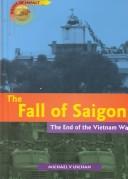
The Fall of Saigon by Michael V. Uschan

Michael V. Uschan‘s The Fall of Saigon provides an observant look at the history of how the Vietnam War begins, unfolds, and ends.  Unlike other books on this topic, Uschan begins with the fall of Saigon or the end of the war with one of the largest helicopter evacuations in history.  Although many would argue this is a civil war between its northern and southern counterparts, this war occurred at a time when democratic governments were wary of the spread of communism.

There is a great mix of photos and text in the book to provide a simplified explanation of the war and all of its moving parts.  It does touch upon the My Lai massacre and the deaths of innocent victims, but without the horrifying images that polarized many of those back home.  To teach students about the war, this is an excellent edition, but for children reading about the war on their own, it may be a bit dry.  However, photos often supplement the text and can provide a visual aid to kids.

Even adults can learn or relearn things about the Vietnam War and what may have happened as a result of the war.  For instance, the passage of the War Powers Act in 1973 required all future presidents to gain approval from Congress each time troops are sent into action overseas.

Overall, The Fall of Saigon is for older children, possibly between the ages of 9 and 12, and provides a great deal of information in just 30 pages, but in some ways the text needs to be supplemented with additional material on the Cold War and other events.

This is my 58th book for the 2010 New Authors Reading Challenge.

This is my 13th book for the 2010 Vietnam War Reading Challenge.

Mailbox Monday #107

Mailbox Mondays (click the icon at the right to check out the tour) has gone on tour since Marcia at The Printed Page passed the torch.  This month our host is Julie of Knitting and Sundries .  Kristi of The Story Siren continues to sponsor her In My Mailbox meme.  Both of these memes allow bloggers to share what books they receive in the mail or through other means over the past week.

Just be warned that these posts can increase your TBR piles and wish lists.  After the long Thanksgiving break, I’ve finally gotten the mail from the post office!

Here’s what I received:

1.  127 Hours by Aron Ralston on audio from the Green Books Campaign.

What did you receive in your mailbox?

73rd Virtual Poetry Circle

Welcome to the 73rd Virtual Poetry Circle!

Remember, this is just for fun and is not meant to be stressful.

Keep in mind what Molly Peacock’s books suggested. Look at a line, a stanza, sentences, and images; describe what you like or don’t like; and offer an opinion. If you missed my review of her book, check it out here.

The Thanksgivings by Harriet Maxwell Converse

Translated from a traditional Iroquois prayer

We who are here present thank the Great Spirit that we are here
to praise Him.

We thank Him that He has created men and women, and ordered
that these beings shall always be living to multiply the earth.

We thank Him for making the earth and giving these beings its products to live on.

We thank Him for the water that comes out of the earth and runs
for our lands.

We thank Him for all the animals on the earth.

We thank Him for certain timbers that grow and have fluids coming
from them for us all.

We thank Him for the branches of the trees that grow shadows
for our shelter.

We thank Him for the beings that come from the west, the thunder
and lightning that water the earth.

We thank Him for the light which we call our oldest brother, the sun
that works for our good.

We thank Him for all the fruits that grow on the trees and vines.

We thank Him for his goodness in making the forests, and thank
all its trees.

We thank Him for the darkness that gives us rest, and for the kind Being of the darkness that gives us light, the moon.

We thank Him for the bright spots in the skies that give us signs,
the stars.

We give Him thanks for our supporters, who had charge of our harvests.

We give thanks that the voice of the Great Spirit can still be heard
through the words of Ga-ne-o-di-o.

We thank the Great Spirit that we have the privilege of this pleasant
occasion.

We give thanks for the persons who can sing the Great Spirit’s music,
and hope they will be privileged to continue in his faith.

We thank the Great Spirit for all the persons who perform the ceremonies on this occasion.

Let me know your thoughts, ideas, feelings, impressions.  Let’s have a great discussion…pick a line, pick an image, pick a sentence.

I’ve you missed the other Virtual Poetry Circles.  It’s never too late to join the discussion.

Happy Thanksgiving!

Happy Thanksgiving, Everyone!  I’ll be offline visiting with family for the next few days, so I hope you all have a great holiday.

Don’t eat or shop too much!