Quantcast

George Rabasa: Punching in at the Fiction Factory

I’d like to welcome George Rabasa, author of The Wonder Singer, to Savvy Verse & Wit. I hope you enjoy the journey through Rabasa’s workspace and writing routine as part of his tour for The Wonder Singer, published by Unbridled Books.

Punching in at the Fiction Factory

I’m late, I’m late! It’s 9:13 and the brain is humming but the author is not writing. Not a good situation for the novel in progress (two years, four months, three weeks, four days, so far). Still, I just can’t dive in. Like a good athlete I need a little warm-up – might strain a brain cell or two otherwise. So, I check e-mail (nothing much), news headlines (nothing much), calendar (nothing much there either).

I take a look around the Fiction Factory, and I’m energized by the red walls (“cayenne,” actually), the Mexican rug with the huichol designs depicting the symbols for the eagle, corn, flowers, peyote. Packed bookshelves holding a lifetime of reading, and learning. This is where my masters live – Garcia Marquez, Updike, Lowry, Borges, DeLillo, Cervantes, and that’s enough name dropping for now. There are pictures on the walls, some by friends. On the i-pod player, Perla Batalla sings Leonard Cohen.

Before I know it, I’m staring at the screen, cursor blinking, words waiting to be arranged and rearranged. Commas achieving the importance of subatomic particles; take one out or put one in and the order of the universe has been altered. The new novel is about 90,000 words so far, but all I think about for the next hour or so is a sentence, a paragraph, a scene. It’s one step at a time, without thinking too much about the finish line. Then I move on, at a snail’s pace, to the next sentence. And so on…

Finally, it’s lunch time! My union contract with management specifies a decent time for lunch and reading and nap. Then a couple of hours of the afternoon shift. And it’s time to meditate, run, wine, dinner, chocolate. Ah, a happy routine! While I’m often told I should get a life, I can’t think of a better one.

Thanks to George Rabasa for taking us through a typical day. Stay Tuned for my review of The Wonder Singer tomorrow.

Don’t Forget About These Great Giveaways!

2 copies of The Last Queen by C.W. Gortner, here; Deadline is May 22 at 11:59 PM EST

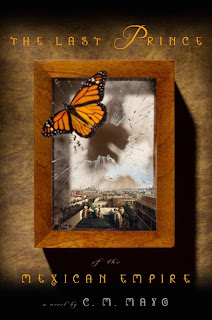
1 Signed Copy of The Last Prince of the Mexican Empire by C.M. Mayo, here. Deadline is May 30, 2009, 11:59PM EST.

Reading With C.M. Mayo, Luis Alberto Ambroggio, & Yvette Neisser Moreno

Yesterday, I headed into Bethesda, Md., to hear C.M. Mayo read from her latest work, The Last Prince of the Mexican Empire. It was a great surprise to hear some poetry by Luis Alberto Ambroggio and some of his translators, including Yvette Neisser Moreno.

Sunil Freeman of The Writer’s Center handed over the introduction of C.M. Mayo to her workshop friend and board of director member, Ann McLaughlin. She did a wonderful introduction, and I am terribly amiss in remembering her name. I forgot the trusty notebook this time–shameful I know, especially for a writer. However, I did remember to take a camera and shoot some photos and video. Check out these sideways videos…Sorry I have no idea how to make them vertical.

I hope you enjoy the videos even if they are sideways! It was a great reading.

Giveaway details:

I have one signed copy of CM Mayo’s The Last Prince of the Mexican Empire available for 1 lucky reader

1. Leave a comment on this post.
2. Let me know if you follow this blog and where for a second entry.

Deadline is May 30 at 11:59PM EST

Mailbox Monday #30

Mailbox Monday is sponsored by Marcia at The Printed Page. It’s not only a list of books that I received in the mail, but also books I bought or received from the library and friends over the last week.

1. Beach Trip by Cathy Holton for review for August from Ballantine Books.

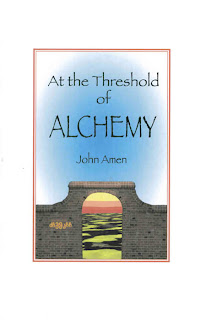
2. At the Threshold of Alchemy by poet John Amen, editor of Pedestal Magazine, for review.

3. 2 copies of The Last Prince of the Mexican Empire by C.M. Mayo, signed by the author at her recent appearance at The Writer’s Center. Check out my review here.

Winner of Rubber Side Down

Out of a mere 13 entrants, Randomizer.org selected #1

Anna from Diary of an Eccentric

It appears that Randomizer.org is in Anna’s pocket. I’m kidding of course. My husband even witnessed the phenomenon and was in shock.

Thanks to all who entered and wrote a poem for the giveaway. As an added bonus, I decided to choose one winner myself based solely on their poem.

The second winner is Lisa of Cheerios Underfoot

Her poem entry:

My biker older sister,
And her new husband, biker mister,
Would like to take a look,
At this book.

I’ve emailed the winners.

Today, I am headed into Bethesda, Md., to The Writer’s Center for C.M. Mayo’s reading of The Last Prince of the Mexican Empire, which I reviewed here. I’ll keep you posted on how it goes. In the meantime, have a great Sunday.

Don’t forget my other giveaway:

2 copies of The Last Queen by C.W. Gortner, here; Deadline is May 22 at 11:59 PM EST

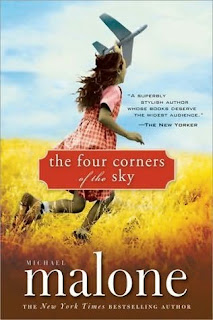
The Four Corners of the Sky by Michael Malone

“It was Dan who put the last pieces into the center of the puzzle, so that the sky was one huge blue square. Clark, Sam, and Annie stared at it, a little disappointed. Somehow, all those years, finding the right shapes, fitting them together, they had imagined that this square would be more than it turned out to be. Bluer? Bigger? Filled with meaningful symbols? Somehow more?” (Page 528 of the ARC)

Michael Malone’s The Four Corners of the Sky is a story of the Peregrine family and particularly Annie Goode, con artist Jack Peregrine’s daughter. From its Wizard of Oz feel to its convoluted mystery, Michael Malone shifts from past to present and person to person, but it is far from confusing and a highly enjoyable ride.

“After the muddy hues of Emerald, North Carolina, Miami had almost blinded her. Miami was in Technicolor. Annie felt as if she’d awakened in a tropical cartoon of hot pink birds and purple flowers, set to salsa music. What’s more, she felt rested, although the rest had been imposed on her.” (Page 241 of the ARC)

Lt. Annie Peregrine Goode is a fighter pilot in the Navy who is dropped off by her father, Jack, in Emerald, N.C., at her aunt Sam’s house when she is only 7 years old. Sam, Jack’s sister, is a lesbian eager to play matchmaker who lives with her childhood friend Clark Goode, who has given up on love after several marriages. Annie is divorcing her husband and fellow Navy pilot Brad Hopper and heading back to Emerald for her 26th birthday party with family and friends, including Georgette. Hoping that her trip back home will help clear her head and get her life back on track, Annie is completely unaware of the mystery she has to unravel concerning her father, a mother she has never known, and La Reina Coronada del Mar (Queen of the Sea).

Malone’s training as a soap opera writer is apparent in this novel with its over-the-top characters–Raffy Rook, Jack Peregrine, Vietnam Vet D.K. Destin, Helen Clark aka Ruthie Nickerson, Dan Hart, Sam Peregrine, and Georgette Nickerson–but his writing style is vivid and compelling as each of these characters’ lives peels back slowly revealing the deep love and connection they all share.

“‘Sometimes these ladies I [Raffy] flop on? These ladies and myself, at Golden Days, we got to be friends. We go to the salad bars, botanical gardens, zoo, IMAX. They get a senior’s discount, I play them a song on my guitar. It’s a connection. And in this sad fast life, how many do we make time for?’ He spoke wistfully into the water bottle, as if he were depositing his confession inside and then quickly screwing the cap back on to keep it there.” (Page 340 of the ARC)

Readers will enjoy the plot twists and revelations in The Four Corners of the Sky as Annie heals old wounds left by her father when he abandoned her and refused to reveal her mother’s identity. She finds strength in adversity and strives under pressure. The subordinate characters–Raffy, Sam, Clark, and Georgette–add comedy to the plot. While some portions of this novel are a bit too long and veer off randomly into the past, these tangents are vivid and entertaining. Some readers may be put off by the continuous movie references made by Sam, Clark, and other characters or the constant puns, but these character flaws set these characters apart, providing them greater depth. Overall, Malone creates an intricate family web that readers must unravel to understand the depth to which a daughter can love her father in spite of his faults, learn to forgive those faults, and dig deep within herself to emerge a stronger woman whose foundation she couldn’t initially see.

Michael Malone will be in Washington, D.C., on May 28, 2009 at Politics & Prose. For a list of his other book readings and signings, go here.

Also Reviewed By:
Diary of an Eccentric
At Home With Books
My Thoughts…Your Thoughts?

About the Author:

Michael Malone is a novelist as well as the author of short stories, works of nonfiction, several plays, and daytime television drama. He was born in the Piedmont region of North Carolina and his distinctive Southern voice permeates his books, which he describes as “centered in the comedy of the shared communion among very diverse groups of people who are bound together by place and the past.”

Michael’s writing has been compared to Miguel De Cervantes, Charles Dickens and Henry Fielding. He is the recipient of The O. Henry Award for “Fast Love,” the Edgar for “Red Clay” and an Emmy as head writer of ABC-TV’s One Life to Live.

Michael lives in Hillsborough, North Carolina with his wife, Maureen, whom he met while they were working toward their doctoral degrees at Harvard University.

WWII Reading Challenge Blog Topic for Discussion, here.

Don’t forget my giveaways:

1 copy of Rubber Side Down Edited by Jose Gouveia, here; Deadline is May 15 at 11:59 PM EST

2 copies of The Last Queen by C.W. Gortner, here; Deadline is May 22 at 11:59 PM EST

WWII Reading Challenge & More

I wanted to alert everyone to my progress on the WWII Reading Challenge. I’ve read 1 book out of 5–Reading by Lightning, check out my review.

Thank goodness this is a year long challenge.

Other than that, Anna and I have posted a new item for you all to discuss about the recently deported John Demjanjuk. Check it out here. I hope we can get some great discussion going.

Over the next couple of days the War Through the Generations blog will have several new discussion topics. I hope you will check them out.

Don’t forget my giveaways:

1 copy of Rubber Side Down Edited by Jose Gouveia, here; Deadline is May 15 at 11:59 PM EST

2 copies of The Last Queen by C.W. Gortner, here; Deadline is May 22 at 11:59 PM EST

Interview With Poet Sidney Wade

Welcome to the latest edition of my interviews with poets with 32 Poems magazine. The full interview with Sidney Wade was posted at 32 Poems Blog on May 11. Check out one of Sidney’s poems and then check out the interview below.

Sexual Blossoms and Their Fierce Addictions

Yesterday’s tulips in the crystal bowl

have begun to open and already they’ve

partially exposed their pistils and stamens.

In the coming days

these petals will open in a brazen

yawn, their private parts thrust

into the shocked and fascinated

room. Very soon the whole

apartment will start to misbehave–

the fainting couch and ottoman will shed their raiment,

weirdness will graze the ceiling and raise

eyebrows in the carpet lice. With sex emblazoned

on the air, the afflicted chamber will swell with lust.

A hystericalectomy is clearly indicated.

1. Not only are you a contributor to 32 Poems, you have authored five collections of poetry, edit Subtropics, and teach a variety of poetry courses. Which of these “hats” do you find most challenging or rewarding and why?

It’s nerve wracking work, writing poems, but when the work gets good and gets going, there’s nothing better in the world. So that’s probably the most challenging and rewarding at once. Editing Subtropics is easily the most simply rewarding, as I get to see, every week, every month, what very fine poems are being written around this country these days. And being able to tell people you’d like to publish their work elicits marvelously joyful responses. Who couldn’t love a regular influx of extremely happy emails? And teaching has its own pleasures and difficulties, the former fantastically outweighing the latter, thank goodness.

2. Do you have any obsessions that you would like to share?

Hunting for mushrooms. Cooking mushrooms. Pasta. Cheese. Practicing and improving, slowly, on the viola.

3. In terms of friendships, have your friendships changed since you began focusing on writing? Are there more writers among your friends or have your relationships remained the same?

Not really. Since I’ve been writing and teaching, my daily life tends to revolve around other writers, students, colleagues, etc., so by default those are the folks I get to know. My non-writer friends, however, are still with me, and always will be. Segregation is never a good idea.

4. How do you stay fit and healthy as a writer?

By reading, reading, reading.

5. What current projects are you working on and would you like to share some details with the readers?

I’m trying to find time to finish translating a book-length selection of the poems of Melih Cevdet Anday, an important Turkish poet. I also have completed about half or two-thirds of a book, tentatively entitled “run-on” which, if I can do it, will end up an entrancing and very long, skinny poem that just goes and goes and goes.

Grand Disastery

moored by fine

tethers to certain death

a hornet fizzes

on the windowsill

a spider flies

to its side

to securely bind

this abundant harvest

the hornet in shrill

thrall to agony drills

a hole in God’s

provident breast

pocket

in the sublime

cold light

of this tiny

constellation

the bald pulp

of the hornet’s diminishing

hum feeds growing eyes

and hungry sockets

the figure is clean

a small

black aster

hung among

the stars

Want to find out what Sidney’s writing space looks like? Find out what she thinks about contemporary poetry and popularity and much more. Check out the rest of my interview with Sidney here. Please feel free to comment on the 32 Poems blog and Savvy Verse & Wit.

About the Poet:

Sidney Wade is the author, most recently, of Stroke (2008) and Celestial Bodies (2002). Wade edits poetry for Subtropics, a magazine published by the University of Florida. From 2006-2007, she served as President of the Association of Writers and Writing Programs (AWP).

Don’t forget my giveaways:

1 copy of Rubber Side Down Edited by Jose Gouveia, here; Deadline is May 15 at 11:59 PM EST

2 copies of The Last Queen by C.W. Gortner, here; Deadline is May 22 at 11:59 PM EST

Makeover Revealed

Dear Blog Readers,

Check out the new look for Savvy Verse & Wit. I had a great collaborative experience with Doodlebug Designs.

Judi at Doodlebug Designs is fantastic, very hands on, and creative. I just hope my inexperience with HTML and other design elements didn’t drive her too batty.

I’m excited about my new navigation bar and the links to my Interviews, Awards, and the coming soon “Poetry: Verse Reviewers” page.

Check out this fantastic blog button she made as well:

Just a quick note that if you don’t have Lucida Calligraphy font on your system, you may have to download it to see the headers and navigation bar as they were designed to look; otherwise, the font will be plain. I’m not sure the reasoning for this, but I discovered this when I was viewing my new blog look at work and discovered that it looked wrong.

Feel free to drop me a note about what you think and if I’m missing any of those loved elements I had on here that may have disappeared in the transition.

Don’t forget my giveaways:

1 copy of Rubber Side Down Edited by Jose Gouveia, here; Deadline is May 15 at 11:59 PM EST

2 copies of The Last Queen by C.W. Gortner, here; Deadline is May 22 at 11:59 PM EST

Interview With Poet Clive Matson, Author of Mainline to the Heart & Other Poems

I recently reviewed Mainline to the Heart & Other Poems by Clive Matson for National Poetry Month, if you missed it, go check it out, here.

Clive was good enough to take the time, read my review, email me a little compliment, and submit to some unorthodox interview questions. Here’s what he said in case you’re interested:

"Thanks for your insightful review of 
Mainline to the Heart.
I've been quoting you
at readings: 'not for the faint of
heart...
unlike other Beat poems, this volume is edgier
and
raw...some may find the images unsettling,
but it is this
nature that will encourage readers
to critically rethink
their world view and examine
their environment with new
eyes.'"

I think that’s one of the best compliment’s I’ve received. Thanks again, Clive; You made my day.

Without further ado, let’s see what Clive Matson had to say:

1. Do you have any obsessions that you would like to share?

Do I have any obsessions! Yes, there’s a flow of passion and unknown and archetypical images running through my body, and I’m obsessed with it. I sense a tide that’s much, much larger than the conscious mind can ever conceive. For some people this awareness might start with the realization that the body is an antennae, for others with the psychological truth that emotions reside in the body. For me this huge stream came into awareness through use of marijuana, hard drugs, and psychedelics. Mainline to the Heart and Other Poems (Regent Press 2009, Poets Press1966) chronicles some of that process and some of the insights from that endeavor.

Today, the tide seems inconceivably larger than emotions, far larger than what antennae can pick up, and much more stretchable than however drugs are able to expand our consciousness. Whenever I touch it I am in awe. At least for a split second, until I’m struggling with whatever wave is kicking spindrift into my face. I am small and it’s immeasurably large, some surprise that I don’t drown. But I can naturally access only a droplet at a time.

Chalcedony, though, (Chalcedony’s First Ten Songs, Minotaur Press, 2007) lives fully in that tide. She doesn’t have much patience for those of us who don’t, especially her boyfriend. She takes him to task, often, for his cluelessness. Sometimes I think I’m the real target of her rants. “Don’t you know you have to cry?” she yells, “Can’t you remember for even five minutes? For one minute?” “You don’t know how much you’re loved.”

2. Most writers will read inspirational/how-to manuals, take workshops, or belong to writing groups. Did you subscribe to any of these aids and if so which did you find most helpful? Please feel free to name any “writing” books you enjoyed most (i.e. Bird by Bird by Anne Lamott).

My how-to-write tutorial, Let the Crazy Child Write! (New World Library, 1998), has as its precedent Dorothea Brande’s Becoming A Writer (1934). Her overwhelming thesis, borne of a time when the unconscious was first coming into parlance, is that all knowledge is contained in the unconscious. Schools and universities would disappear from the planet as soon as this perception spread. This, obviously, did not happen. We’re still reading texts and going to lectures.

But, not to diminish Dorothea Brande’s thought, the book is full of practical exercises. “Morning Pages,” for one, the signature exercise in The Artist’s Way, originated in the 1930s with Brande. And we do still need the conscious mind: it’s our doorway to understanding these principles. Or indeed, anything about the world. Or, indeed, anything.

The power of this conception can push back the editorial and critical voices in our minds. This can be extremely important when those voices become overbearing, which they are wont to do. Writing straight from that unconscious tide, from the creative unconscious, especially when we don’t have the slightest idea what is coming next, gives us a wealth of raw material. We can shape and extrapolate this material.

If the critical voices had their way, though, they’d stop the process. It’s too messy! It’s too unformed! It’s too revealing! It’s embarrassing! It’s disgustingly rough! Hard for the conscious mind to understand that the tide is where our creativity starts. And the tide is huge. It’s responsible for 99 percent (or, according to some figures, a lot more, eight factors of ten more) of the human brain’s activity, and contains all our writing impulses, all our stories, all our native poetic images. Learning to write is akin to learning to swim. And the water, at first, may not feel very comfortable.

3. Poetry is often considered elitist or inaccessible by mainstream readers. Do poets have an obligation to dispel that myth and how do you think it could be accomplished?

I couldn’t agree more that our poetry should be accessible. I do believe the only poetry that works over time is direct and totally understandable. Poetry’s ancient and continuing role is to carry our culture from generation to generation, and we don’t join that tradition if our primary impulse is to show off our brilliance. Or to be witty. Or to make money. We would do well, I believe, to join the tradition with full humility.

Today, of course, this role is debased, but less than one might think. It seems so debased partly because of limited definitions of “poetry.” Advertising fits several definitions of poetry very well, and it certainly carries much of the culture. Spoken Word is totally accessible, and it’s poetry, and it’s carrying the culture for many of our young people. Same for rap.

The reading public is correct, though: what is termed “mainstream” poetry is often inaccessible. The term “mainstream” is a misnomer. It’s a marketing tool, and there’s nothing mainstream about it, other than that some successful publishers and their audiences use the term. Most mainstream poetry is oblique lyrical poetry, and it’s generally designed to be meditated on, rather than understood. But, to give it its due, we should note that mainstream poetry can be far more accessible than Language poetry, for instance, or procedural poetry.

If you read my poetry, you’ll see one way of working through this problem. And there are many ways. We should remember how accessible most of our favorite poems are, and “accessible” does accurately describe much poetry. What’s inaccessible about “rosy-fingered dawn” or “money doesn’t talk, it swears” or “the poem does not lie to us, we lie under its law” or “we were very tired, we were very merry” or “watch what they do, not what they say” or “be kind to yourself” or “the pure gold baby that melts to a shriek” or “I heard a fly buzz the day I died” or “mango warmth fills my belly”?

4. When writing poetry, prose, essays, and other works do you listen to music, do you have a particular playlist for each genre you work in or does the playlist stay the same? What are the top 5 songs on that playlist? If you don’t listen to music while writing, do you have any other routines or habits?

This world I swim in has its own inclinations, and it’s always changing. The best I can do is be open to whatever fits. I’m playing Brahms’ songs right now, and my favorites include Terry Riley, RJD2, Leonard Cohen, Hindemith, Bach, Mozart, Beethoven, Muslim Gauze, Nine Inch Nails, Eve, John Coltrane, Steve Reich, and so many others. Sometimes I’ll get in a groove and play the same album over and over. Then, on a whim, I’ll change my selection. At that moment the universe itself seems to change.

Sometimes the music comes as counteraction to what I’m doing, sometimes it augments the writing, sometimes … I have no idea what the relationship might be. And sometimes it has nothing to do with what I’m writing. Often any music can serve to create a bubble around me, and inside it I can hear what the muse is saying.

5. In terms of friendships, have your friendships changed since you began focusing on writing? Are there more writers among your friends or have your relationships remained the same?

Voltaire says, “Writing is music of the soul.” This seems a cue to give one’s writing total respect. It has taken me years and years and years to understand that the honor it earns in my inner world should also be given in the outer world. And by my friends. I have gradually sifted out of my life those who do not hold that deep respect. And I treasure those who do. Some are writers themselves, and some are not.

6. How do you stay fit and healthy as a writer?

I hike, I play basketball and table tennis, I believe in vigorous physical exercise, I meditate an extreme amount — some variation of Vipassana – and lately I’ve become a convert to Jin shin jyutsu. I eat organically as much as I can afford to and I’m as honest in my relations as I am able.

7. Do you have any favorite foods or foods that you find keep you inspired? What are the ways in which you pump yourself up to keep writing and overcome writer’s block?

I don’t “pump up” to write. It’s more like I sink into myself to write, and what’s needed is quiet space. The bubble that music creates around me in a crowded room will do just fine.

Of course, our own passions can pump us up. And then, well, all bets are off. And whatever edible object comes into view might just possibly increase the flow.

8. Please describe your writing space and how it would differ from your ideal writing space.

I like to be mobile! My preferred writing space is bed, before or after making love. I have a friend I have long conversations with, and often some funny or gripping lines come up. I’ve learned to keep a notebook by the phone, and to bring a notebook when we talk elsewhere, and I write down the lines. At workshops I like to take my notebook to the car, tilt the seat back, roll down the windows and moon roof until just the right amount of sun comes in and just the right amount of wind blows through. Long ago Diane di Prima said she likes traveling, because when you travel “wind blows through your head.” That’s exciting.

9. What current projects are you working on and would you like to share some details with the readers?

Chalcedony has written more than 90 songs. She writes them rough and quick, and I spend a lot of time re-writing them. This requires diving into the poems, swimming with them a while and feeling out their essence. She lives in that ocean of the unconscious. She’s doesn’t know anything else, she’s totally at home in the world of primordial images and raw passion, and her view of the world is utterly her own. Archetypical and strong.

The poem I’m working on now, Song 26, was written in 2005. It took me a while to realize that Chalcedony was telling her boyfriend she wants to merge with him, and she wants him to do the same. She’s sure that’s the primary impulse of love. She doesn’t care what other people think about that, and, while I’m her servant, neither to I. She doesn’t even care what I, her scribe, might think privately. I’ll write her strongest case, and, as I’m currently nearing the finish, I might be persuaded she is correct.

She often has fights with her boyfriend. She’ll rant at him, taking him to task for not understanding love and its permutations. She’s pretty sure we’re all in love, all the time, boundariless and passionate love. She gets on our case when we don’t acknowledge this. Being her scribe is quite a journey. I get to play with a different consciousness and at the same time I’m titillated that others might find Chalcedony’s songs entertaining and valuable. But more important, the world becomes a very rich place, and my preconceptions about it are challenged by the hour. Or by the minute.

About the Poet:

Clive Matson arrived on the Lower East Side of New York City in 1960, a fresh-faced adolescent with a blank notebook under his arm. He quickly fell in with the Beat Generation – his first event was a reading at the Tenth Street Coffeehouse, where he met Allen Ginsberg, Gregory Corso, and Diane di Prima.

The proto-Beat Herbert Huncke became his second father, and Matson was captivated by John Wieners’ poetry and subsequently by Alden Van Buskirk’s. Diane di Prima published Matson’s first poems, and in the introduction John Wieners wrote, “One wonders about the nature of love in these poems. Are they vicious, or not?”

Matson ultimately emerged drug-free and healthy gave him full appreciation for 1960s passion and honesty. These qualities are crucially important, he thinks, for the current era. “Coming to terms with my youthful, energetic voice has been a challenge,” he admits. “It helps that I hear, in these poems, both an urgent need to connect and full cognizance of the difficulties.”

Don’t forget my giveaways:

1 copy of Rubber Side Down Edited by Jose Gouveia, here; Deadline is May 15 at 11:59 PM EST

2 copies of The Last Queen by C.W. Gortner, here; Deadline is May 22 at 11:59 PM EST

Mailbox Monday #29


I originally started this post by saying it had been a slow week for my mailman and UPS driver, but that is no longer the case. You’ll soon see why. I really started off the week with just a couple of books, then the weekend came, and the newbies grew . . . multiplied . . .

Mailbox Monday is sponsored by The Printed Page.

1. A Girl’s Guide to Modern European Philosophy by Charlotte Greig for review in September.

2. Secrets to Happiness by Sarah Dunn for a Hatchette Group Early Birds Tour in June.

3. Mating Rituals of the North American WASP by Lauren Lipton for a Hatchette Group Early Birds Tour at the end of May.

4. MAX by James Patterson on Audio from Hatchette Group, which I won at Lost in Books.

5. Bloody Good by Georgia Evans from Joan Schulhafer Publishing and Media Consulting for review in June.

6. Admission by Jean Hanff Korelitz, which I won from Booking Mama.

The Last Queen by C.W. Gortner

Welcome to the Savvy Verse & Wit tour stop for C.W. Gortner’s The Last Queen, which is new in paperback this month.

About the Book:

Daughter of Isabel of Castile and sister of Catherine of Aragon. Married at sixteen and a queen at twenty-five. Declared mad by history. Juana of Castile, the last true queen of Spain. Ruled by her passions, Juana’s arranged marriage to Philip the Fair of Flanders begins as a fairytale romance when despite never having met before their betrothal, they fall violently in love. Juana is never meant to be more than his consort and mother to his heirs until she finds herself heiress to the throne of Spain after tragedy decimates her family. Suddenly she is plunged into a ruthless battle of ambition and treachery, with the future of Spain and her own freedom at stake. Told in Juana’s voice, The Last Queen is a powerful and moving portrait of a woman ahead of her time, a queen fought fiercely for her birthright in the face of an unimaginable betrayal. Juana’s story is one of history’s darkest secrets, brought vividly to life in this exhilarating novel.

C.W. Gortner’s The Last Queen is a roller coaster ride of emotion dramatizing Juana of Castile’s adolescent years, her marriage to a man she doesn’t know, and her return to her homeland. Juana is an impetuous child, independent, passionate, and compassionate. Her passions often lead her astray, cause her to act outside the norms of royal protocol, and jump to conclusions. While history views Juana as loca or mad, Gortner’s dramatization examines possible explanations for her behavior. Juana witnesses the surrender of the Moors and Boabdil at the hands of her mother, Queen Isabel, as Spain reclaimed Granada.

“The lords closed in around him, leading him away. I averted my eyes. I knew that if he’d been victorious he would not have hesitated to order the deaths of my father and my brother, of every noble and soldier on this field. He’d have enslaved my sisters and me, defamed and executed my mother. He and his kind had defiled Spain for too long. At last, our country was united under one throne, one church, one God. I should rejoice in his subjugation.

Yet what I most wanted to do was console him.” (Page 11, in the hardcover)

Shortly after Spain regains its footing, Juana is informed that she must marry the Archduke of Flanders, Philip, a man she was betrothed to and does not know. Juana is adamant that she will not marry this man, until her father treats her as an adult at sixteen and explains the political situation Spain is in and how her marriage to Philip could improve it. While she is young and passionate, she is frightened of the man she will marry and what married life entails. She’s timid and accepting of her new life, which she discovers has more passion than she expected. However, even in this new, passionate existence, she is uneasy with her new role, the new customs she must learn, and the influence her husband’s advisor, Besancon, has over Philip.

“She lay against mounded pillows, her eyes closed. I gazed on her translucent pallor, under which bluish veins and the very structure of her bones could be traced. A linen cap covered her scalp; her features seemed oddly childlike. It took a moment to realize she had no eyebrows. I had never noticed before. She must have had them plucked in her youth; those thin lines I was accustomed to seeing arched in disapproval were, in fact, painted. Her hands rested on her chest. These too I stared at, the fingers long and thin now, without any rings save the ruby signet of Castile, which hung loosely on her right finger. I hadn’t realized how beautiful her hands were, how elegant and marble-smooth, as if made to hold a scepter.

The hands of a queen. My hands.” (Page 201, in the hardcover)

Gortner’s writing easily captures the fears of a young royal as she is shipped off to Flanders to be married. Readers will feel her apprehension and wish her well even as she boldly stares her fate in the eye. As the plot thickens against her and her homeland, Juana is fortified in her resolve and her passion girds her against the obstacles to come. Gortner’s characters are well developed, leaping off the page to battle interlopers, defend their family’s honor, and looking for justice when wrongs are committed by trusted advisors and family members. Readers will curl their toes in anxiety as Juana faces turncoats and ghosts and wish her triumph in the end. Overall, The Last Queen is an exceptionally well-crafted historical novel that will have readers dealing with a range of emotions from sorrow to anger. Gortner excels in building tension and leaving readers exhausted from the ride.

Also Reviewed By:
The Burton Review
Reading Adventures

ABOUT THE AUTHOR:

C.W. Gortner’s fascination with history is a lifetime pursuit. He holds a Masters in Fine Arts in Writing with an emphasis on Renaissance Studies from the New College of California and often travels to research his books. He has experienced life in a medieval Spanish castle and danced a galliard in a Tudor great hall; dug through library archives all over Europe; and tried to see and touch — or, at least, gaze at through impenetrable museum glass — as many artifacts of the era as he can find.

Ballantine Books, an imprint of Random House, publishes The Last Queens in trade paperback on May 5, 2009. A Random House Readers Circle Selection, it features a reading group guide and Q&A with the author. C.W. Gortner is also available for reader group chats by speaker phone or Skype.

Visit the author’s Reading Group information.

He lives in Northern California. You can visit his Website.

***Giveaway Information***

1. 1 entry, comment on my review.

2. 1 entry, comment on this guest post, here.

3. Tell me if you are a follower or follow this blog and tell me for a 3rd entry.

4. Spread the word on your blog, etc., and get a 4th entry.

Deadline May 22, 2009, 11:59 PM EST

***THIS GIVEAWAY IS NOW CLOSED***


***Giveaway Reminders***

1 copy of Rubber Side Down Edited by Jose Gouveia, here; Deadline is May 15 at 11:59 PM EST

Winner of Tea & Other Ayama Na Tales

Thank you to all 37 of you who entered my giveaway for Eleanor Bluestein’s Tea & Other Ayama Na Tales.

Randomizer.org selected #6; The winner is:

Anna from Diary of an Eccentric

Congrats to Anna, who happens to be sitting in our office and is tickled pink (at least I think so) that she won this great short story collection. I’m laughing, since I won’t be paying to ship this one for a change of pace.

Don’t forget my other giveaways:

1 copy of Rubber Side Down Edited by Jose Gouveia, here; Deadline is May 15 at 11:59 PM EST

2 copies of The Last Queen by C.W. Gortner, here; Deadline is May 22 at 11:59 PM EST