Quantcast

Book Blogger Appreciation Week 2009

Book Blogger Appreciation Week, known as BBAW, is around the corner, beginning Sept. 14 and running through Sept. 18. My Friend Amy did a beautiful job last year, and this year she has some helpers.

Last year, more than 400 blogs participated in one way or another and awards were given to the blogs winning categories ranging from Best YA blog to Most Chatty.

I even participated, check out my conversation with Anna of Diary of an Eccentric, my Marketing the Poet article, April at Cafe of Dreams’ writing space guest post, and My Interview with Jill of The Magic Lasso.

Have you registered yet? Well, don’t delay! Get to it, register at BBAW’s own blog.

Once you’ve registered, start thinking about what blogs you want to nominate for the awards. Take a look at the award categories and nominate blogs through August 15.

Want the latest updates, follow BBAW on Twitter.

Want more information about this Internet phenomenon? Check out the BBAW About and FAQ page.

Look for some poetry specific posts here on Savvy Verse & Wit, some prizes, and more joint adventures with Anna at Diary of an Eccentric.
Literary Road Trip

Hello everyone! I’ve joined the fun and will be hosting local authors and poets here on the blog from the Maryland and Washington, D.C., area as part of GalleySmith‘s project, The Literary Road Trip.

Participants do not have to reside only in the United States; this is a global project. All you have to do is leave a comment on The Literary Road Trip page with your state, Canadian province, or country. Come join the fun.

I’m shooting for one post per month as a regular feature here, but I could bump up the frequency as it becomes more routine here on the blog.

Publishers and Publicists: Please feel free to suggest (savvyverseandwit AT gmail DOT com) Maryland and D.C. authors and poets for me to showcase, as well as books they have written–either new publications or those from the backlist.

Authors & Poets: Email me (savvyverseandwit AT gmail DOT com) with your information and we’ll start up a conversation about you, your work, and whatever else you want to discuss as a feature in The Literary Road Trip project.

Award Time, Let’s Pass It Along

The Maiden’s Court bestowed upon Savvy Verse & Wit the Lemonade Award back in May. I’ve been remiss in writing an acceptance speech. I want to say thank you for the award and for introducing me to yet another new-to-me blog! If you haven’t been to The Maiden’s Court I suggest you check out the reviews of historical fiction, romance, paranormal, and other books.

I also received this award from Zia at My Life in Not so Many Words. I can’t comment much on her blog with the dreaded embedded comment box, since the work computer where I do most of my blog reading hates that function, BUT she has an awesome black cat and cute dog and wonderful reviews, of course. If you haven’t checked out My Life in Not so Many Words, you should.

The Lemonade Award is given to those who show great attitude and gratitude in their blogging. So, without further ado, allow me to pass these on to the following blogs:

VioletCrush
Veens
Gautami
Naida
Sandy
Suey
Wrighty
Anna
Melissa
Michelle
Kaye
Liviania
Blodeuedd
Nymeth
Jo-Jo
Mary
Toni
Bermudaonion
Avisannschild
Yvonne

I think that’s 20! Since I was supposed to nominate 10 per award. Whew!

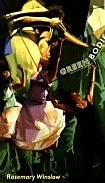
Green Bodies by Rosemary Winslow

Rosemary Winslow’s Green Bodies is divided into three parts, with the first section of poems steeped in deep grief and struggle for understanding following the death of a brother. From “To a Fish” (Page 14-15), “I see a knife/once put to me,/bone opened white to daylight,/red floor on concrete.” Many of these poems have an inner rhythm and musical quality, though the music is dark and somber.

The second section’s narrator begins with poems of cutting oneself off from the outer world and possibly the grief felt in the first section. From “The Gothic Truth” (Page 40), “not making a sound, she watches the grindstone/wobbling hung turning him spitting not stopping/” Throughout the second section, the poems examine the paralysis felt by the narrator by that oppressive grief. From “Carnal” (Page 37), “crumpled and blooded she curled/under a stairwell in hay”

In the final section of this volume, the narrator is rising from the darkness and turmoil of grief to find a way to move on, evolve, and become a stronger self. Readers will enjoy the complexity of these poems, their deep secrets, and highly emotional language.

5 a.m. (Page 54-55)

I rise from a wreckage of sleep
again the long blind scarf of grief

and yesterday and yesterday’s
gunmetal page

the porch lights hiss
at the shroud-hung sky

I go down the stairs to the garden
to be where the roses are leaning

heavy and sweet on the long fence
I lift my face from burial

into burial in the softness of flowers
that is like the skin under the necks of animals

tears shine
in the small white crosses

in their fire centers
the start clematis has made

and entered on
the dead espaliered pear

suddenly I am
jarred

wheep and again
wheep wheep I hear

hidden birds
coming alive

one by one
in the trees

thick pollen of light
undraping the roof lines

composing the sky

This is my 3rd book for the poetry review challenge.

Interview With Poet Rosemary Winslow

Going Home
by: Rosemary Winslow

There is no going home
as usual

the vehicle stalls

in reverse gear

in mud tracks

as essential as
the flat fields, the blades

of shadowed pines over the drive,

the sun bleeding

from the west.

On the rise the house,
painted clapboard, the color of cream,

is rented now like bodies

of water and minerals made

living by some miracle

which is to say some process
we don’t understand.

Some day we’ll have a

different owner,

a different lover,

pine trees and whirling wind
that primitive communion

a new testament

of each generation.

All going home is never going back—

there may be ruin and mud tracks
deep to make wheels spin. The only way

is slogging on,

or else walking

on water.

Or yet it may be dry
the sand flying in your nostrils

but you must breathe, must go, must go

on, which is to say, go on making

required visits, like stations

of a cross. It is a way
of finding what we lost

or never had, of learning we are only

renters, and making new covenants,

going where we belong.

Rosemary Winslow recently agreed to an interview with myself and 32 Poems. And here is what she had to say.

1. Not only are you a contributor to 32 Poems, you are also a professor of literature and writing at The Catholic University of America and have won the Larry Neal Award for Poetry twice. Which of these do you find most rewarding and why? Could you explain how you felt about winning the Larry Neal Award and how that came about?

Serena, I want to thank you for the opportunity to think more about what I do as a poet and why. I’ve been fortunate to have many poems published in 32 Poems and other really fine places. And, yes, I’ve won the Larry Neal Award for Poetry three times–third place in 2001, second place in 2002, and first place in 2006. Awards can be a wonderful affirmation of one’s work, and I’ve been pleased that there are folks out there who like poems I’ve written. I wish there were more awards and more recognition for others who write at least as well if not better than I get less recognition.

I also love teaching, especially teaching poetry. To work with students in small classes–which I’ve been given the good fortune and opportunity to do–is enormously rewarding. I’ve stayed in touch with many of my former students through the years—I get to experience the amazing transformation of students into friends, each time as interesting and unique as a poem Opening up ways of reading, both understanding meaning and also the other forces at work in fine poems, is a real joy. I feel it enriches students’ lives, and teaching them certainly enriches mine. I can’t say which is most rewarding. They go together. I couldn’t teach what, nor the way, I do if I weren’t writing poems.

The first excellent teachers and critics of literature in the U.S. were writers, they started this business and I’m pleased to be able to do in some measure what they did and envisioned for the future. Writing literature gives a teacher the capacity to teach poems from the inside, from the perspective of how they are made, how they are put together. It’s possible to teach poems as poems, as made, and verbal art, in a way not possible without knowing how to make them.

2. Do you have any obsessions that you would like to share?

Obsessions? I haven’t tried to discover what obsessions I might have. I try to confine my obsessiveness to poetry, to getting every word, line, mark of punctuation perfect, which is a way of saying a poem’s done, finished, it looks and feels right to me. Poetry’s a good place for that, much better than in other areas of life! Eamon Grennan once said a particular long poem of mine was obsessive when he read it in draft. “Obsessiveness is good,” he said. He meant, in poetry, and that’s fine with me to have it if it makes for good art. As long as it enriches instead of dampening my life!

3. What current projects are you working on and would you like to share some details with the readers?

Right now I’m working on poems about a week last month when my mother died. I’ve never written about experiences so close in time to their happening before, and I was surprised that I both felt pressured to and could actually write so soon. The experience was so intense, because I stayed with her during her last two days and nights. The sheer physicality stripped away from everything that normally occupies us, and the huge emotional range were so indescribable that I found I was too restless to sit still, or even think straight, afterward. Then one afternoon I decided to sit down and try to write poems about that week, and from that moment the restlessness ceased and hasn’t returned.

Before my mother died, I had been working on a series of poems about genocide, and then some poems that I still don’t know what they are about. Something inner, but expressed in a kind of half-surrealistic half-realistic imagery taken from nature. I grew up immersed in nature on the farm, so my mind naturally goes there. I’ve lived in cities for 20 years, but I’ve given up hoping I might write much urban poetry.

If you’ve enjoyed Rosemary’s answers so far, I suggest you check out the rest of my interview with her over at 32 Poems Blog. Once there, you can find out about her workspace, her inspirations, and much more. Feel free to leave me comments and discuss Rosemary’s work (sampled above), her interview, or your thoughts on poetry in general.

About the Poet:

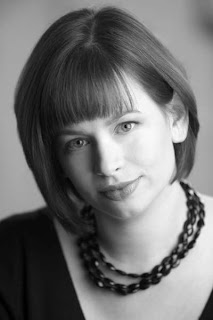
Rosemary Winslow is on the faculty of the Catholic University of America, where she teaches writing and literature, and where she has directed writing programs for 19 years. Based on her work, which has appeared in numerous literary magazines and anthologies, she has received a residency grant at the Vermont Studio Center as well as a writer’s grant and three Larry Neal Awards for Poetry from the DC Commission on the Arts & Humanities. Her latest book is Green Bodies.

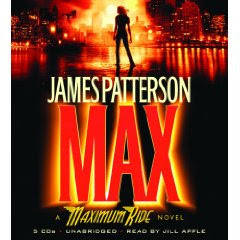
MAX by James Patterson (audio)

James Patterson‘s MAX on audio is chock full of sound effects, drama, and thrills. MAX is the fifth book in the young adult Maximum Ride series, which centers on winged kids that range from ages 6 to 16. Max leads the flock of winged children, and in this novel, they attempt to find Max’s kidnapped mother with the help of the U.S. military.

Not only does this novel immerse readers in the angst, confusion, and desire of these kids to fit in, it also is a coming of age story for Max as she begins to understand her feelings for Fang.

Listeners will be completely absorbed in the twists and turns of this thriller as the flock flies from South America to other locations and boards submarines to locate Max’s mother beneath the ocean’s surface. Check out this audio excerpt from James Patterson’s Website to hear the sound effects and the charged voice of Jill Apple.

If you are interested in this audiobook, just leave a comment to be entered. I’ll draw a winner on July 25, 2009.

Mailbox Monday #39

Welcome to another Mailbox Monday, sponsored by Marcia at The Printed Page.

Here’s what I got in my mailbox, while I was out of town for a memorial service, which was beautifully done. I’m back now, and hope to get into the swing of things again and resume commenting on a regular basis.

Some of these were surprises.

1. B as in Beauty by Alberto Ferreras

2. Hungry Woman in Paris by Josefina Lopez
3. Houston, We Have a Problema by Gwendolyn Zepeda
4. The Disappearance of Irene Dos Santos by Margaret Mascarenhas
5. Into the Beautiful North by Luis Alberto Urrea
6. The Widow’s Season by Laura Brodie from the author for review in October.
7. The Fixer Upper by Mary Kay Andrews

What arrived in your mailbox this week?

Don’t forget my giveaway for Rubies in the Orchard by Lynda Resnick. Deadline is July 24.

4th Virtual Poetry Circle

Don’t forget about the Verse Reviewers link I’m creating here on Savvy Verse & Wit.
Send me an email with your blog information to savvyverseandwit AT gmail DOT com

And now, for the fourth edition of the Virtual Poetry Circle:

OK, Here’s a poem up for reactions, interaction, and–dare I say it–analysis:

Remember, this is just for fun and is not meant to be stressful.

Keep in mind what Molly Peacock’s books suggested. Look at a line, a stanza, sentences, and images; describe what you like or don’t like; and offer an opinion. If you missed my review of her book, check it out here.

Here’s a poem from Yusef Komunyakaa’s Dien Cai Dau (Page 27):

A Break From the Bush

The South China Sea
drives in another herd.
The volleyball’s a punching bag:
Clem’s already lost a tooth
& Johnny’s left eye is swollen shut.
Frozen airlifted steaks burn
on a wire grill, & miles away
machine guns can be heard.
Pretending we’re somewhere else,
we play harder.
Lee Otis, the point man,
high on Buddha grass,
buries himself up to his neck
in sand. “Can you see me now?
In this spot they gonna build
a Hilton. Invest in Paradise.
Bang, Bozos! You’re dead.”
Frenchie’s cassette player
unravels Hendrix’s “Purple Haze.”
Snake, 17, from Daytona,
sits at the water’s edge,
the ash on his cigarette
pointing to the ground
like a crooked finger. CJ,
who in three days will trip
a fragmentation mine,
runs after the ball
into the whitecaps,
laughing.

Let me know your thoughts, ideas, feelings, impressions. Let’s have a great discussion…pick a line, pick an image, pick a sentence. Most of all have fun!

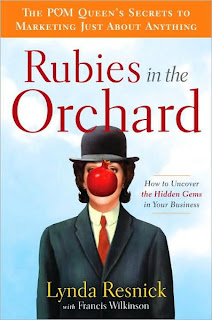
Rubies in the Orchard by Lynda Resnick

“Take a hike with me. Follow your dreams.” (Page XX)

Lynda Resnick’s Rubies in the Orchard is one part marketing strategy, one part personal story, and one part how-to formula. Resnick is a woman of direct experience in the rough-and-tumble world of advertising and marketing, and her chops shine through in this nonfiction book. She and her husband have successfully resurrected Fiji Water, Teleflora, and The Franklin Mint, but one of their best successes—POM–blossomed from a group of pomegranate orchards her husband bought years before.

Rubies in the orchard are the intrinsic value of products, and these are the values that must be communicated to customers, says Resnick. Following each marketing anecdote–from her days as a small business owner amidst scandal to her very profitable empire of companies–Resnick offers sage marketing advice that can be used not only in the boardroom and executive offices, but at home too. For example, she says, “You get a lot further in life by showing what you don’t know and asking for help than you do pretending you know it all” (Page 24).

Throughout this delightful book, Resnick boxes out the main points she is trying to hit home with readers, and these little reminders keep her examples fresh in mind. Readers will be particularly astonished about how a set of fake pearls worth $34 at the time of purchase ended up being auctioned off for more than $200,000, and how those pearls became integral to Resnick’s success at The Franklin Mint.

Marketing and advertising could be viewed as boring by some readers, but Resnick’s wit shines through in this success story.

“He had a habit of making the financials look rosier than they actually were. . . . but the poor chap was so accustomed to manufacturing crooked numbers each quarter. . . If he had exhibited a drinking or substance abuse problem, we could have sent him to rehab, but where do you send a recidivist hooked on funny financials?” (Page 76)

While some aspects of Rubies in the Orchard may come off as preachy, particularly for conservatives not sold on the reality of global warming, she does make a viable points about why businesses should go green. Readers who are interested in an autobiography or learning more about the marketing world would be pleased with this fast read.

If you are interested in this book, I’m giving away my copy to one lucky reader. Just leave a comment below.

Deadline is July 24, 2009

Becoming the Villainess by Jeannine Hall Gailey

Jeannine Hall Gailey‘s Becoming the Villainess is a unique volume of poetry housing poems steeped in Greek mythology, comic book characters, and more.

Gailey’s images are crisp and immediate with recurring uses of pomegranates, wolves, and other items. Alice in Wonderland, Wonder Woman, Persephone, and many more make appearances in Becoming the Villainess, which is separated into five parts. At the end of the book, Gailey includes brief descriptions of the myths inspiring the poems enclosed within its pages.

From “Female Comic Book Superheroes” (Page 5)

Impossible chests burst out of tight leather jackets,
from which they extract the hidden scroll, antidote, or dagger,
tousled hair covering one eye.

They return to their day jobs as forensic pathologists,
wearing their hair up and donning dainty glasses.
Of all the goddesses, these pneumatic heroines most

resemble Artemis, with her miniskirts and crossbow,
or Freya, with her giant gray cats.
Each has seen this apocalypse before.

Each section in Becoming the Villainess examines the evolution of female characters from innocent girls to darker, vengeful women, but these characters are deeper than stereotypical comic book characters, mothers, and goddesses. While some of these poems have a lighter, tongue-in-cheek quality to them, some of them drive home the deep dark horrors found in many legends, myths, and real-life events. One particularly jarring poem in the collection is “Remembering Philomel,” in which a professor is asking for grittier details of the narrator’s sexual assault.

Becoming the Villainess by Jeannine Hall Gailey is a wonderfully insightful collection that looks beneath the surface of myths and sexy comic book characters to find their motivation, their desires, and spunk. If this is your kind of poetry, you should pick it up. I count this among the best of contemporary poetry that I’ve read this year. If you missed my interview with Jeannine Hall Gailey, go check it out.

About the Poet:

Jeannine Hall Gailey was born at Yale New Haven Hospital in Connecticut, and grew up in Knoxville, Tennessee. She has a B.S. in Biology and an M.A. in English from the University of Cincinnati, as well as an M.F.A. in Creative Writing from Pacific University.

Her first book of poetry, Becoming the Villainess, was published by Steel Toe Books in 2006. Poems from the book were featured on NPR’s The Writer’s Almanac and on Verse Daily; two were included in 2007’s The Year’s Best Fantasy and Horror. She recently taught with the Young Artist Project at Centrum. In 2007 she received a Washington State Artist Trust GAP Grant and a Dorothy Sargent Rosenberg Poetry Prize. She volunteers as an editorial consultant for Crab Creek Review, writes book reviews, and teaches at National University’s MFA Program.

Her inspirations often come from mythological sources, such as Ovid’s Metamorphoses or The Tales of Genji, folk and fairy tale collections, and of course, comic books.

This is my second book for the poetry review challenge.

2-Year Blogiversary Giveaway Winners

Out of the nearly 100 entrants to my 2-year blogiversary giveaway, which spanned about 5 weeks, Randomizer.org selected these winners:

#2 Pam won the BEA swag (i.e. Book Club Girl Bag, Garth Stein swag, and surprises)

#27 Rebecca Cox won the scrapbooking kit

#63 Chris won The Last Night in Montreal by Emily St. John Mandel (click to check out my review)

#38 Keyomi of A Roller-Coaster Called Life won The Hunger Games by Suzanne Collins (click for my review)

#22 Anna of Diary of an Eccentric won The Secret Keeper by Paul Harris (click for my review)

#69 Katrina of Wakeboarding Mama won Galway Bay by Mary Pat Kelly (click for my review)

#83 Jennifer of Literate Housewife won Along Came a Spider by James Patterson

# 50 Erica won Cross by James Patterson

#43 Dag888888 won Double Cross by James Patterson

#30 Debb of Debb’s Dailies won Cross Country by James Patterson

Thanks to everyone who participated and entered. I appreciate your comments, dedication, and conversation. I hope everyone enjoys their prizes.

Interview With Poet Jeannine Hall Gailey

When Red Becomes the Wolf

In my dream you brought me fried bologna sandwiches.
“But wait,” you said, “You don’t even like bologna.”
I wolfed them down without answering.

I have never owned a red cape,
that’s asking for trouble, I knew.
In the forest by your house,

I met someone gathering wood. “Nice axe,”
I said before wandering further.
I was obtaining samples for my botany class.

How many daisies make a statistic?
I thought of Persephone, her dark gash
that allowed Hades passage. Which flower?

I was hungry, and tired. I entered someone’s
cottage, it was dark, and there was an old woman.
I volunteered to take her to get her hair done.

Alone, I mentioned I was born under the sign
of Lupus. “No,” she corrected, “Lupae.”
Later, eating sandwiches, we discussed you

and also whether I could wear her fur coat.
“It makes you look feral, with your green eyes,”
she said. Oh grandmother, what a big mouth you have.


I recently had an opportunity to interview Jeannine Hall Gailey, author of Becoming the Villainess, in conjunction with 32 Poems. The interview will be partially posted at Savvy Verse & Wit and in full at 32 Poems Blog. Without further ado, here’s what Jeannine had to say.

1. Not only are you a contributor to 32 Poems, you teach at National University’s MFA program, have published several poetry books, and volunteer on the editorial staff at Crab Creek Review. What “hat” do you find most difficult to wear and why?

I found out that despite years of resisting it, I actually adore teaching, especially teaching poetry, so I feel really lucky to be doing a little bit of graduate student teaching at National University. For me, writing and reading poetry can consume all my time, so it’s important to balance out the poetry work with paying freelance gigs and volunteering – I’ve been a volunteer in some capacity for local literary magazines for about ten years, first with Raven Chronicles, then The Seattle Review, then Silk Road (out of Pacific University) and now Crab Creek Review, which is run by some excellent editors that are also good friends. I really want to help them succeed. My hardest hat to wear is usually whatever I’m doing for money – it’s easy to get distracted by all that unpaid poetry work! I’ve been trying to do more freelance work that involves poetry – essays, interviews, articles, etc. – to kind of stave off that poetry-addict problem.


2. Could you explain your shift from an interest in biology as an undergrad to your current proclivity to literature and poetry today as an MFA graduate?

Well, I wanted to be a holistic doctor – a bit of a weird goal for someone back in 1991 — but I ended up getting sick so often while volunteering for various hospitals around campus that my doctor advised me that medicine might not be an ideal career for me. So my health problems led to me become a technical writer after getting my degree in biology, combining my love of writing and science/technology, then to life as a professional writer, editor, and manager for some big companies during the tech boom, and finally to getting back to one of my early dreams – writing poetry.

As a kid my mother encouraged me to read and memorize poetry, and my fifth-grade teacher had me bring in new poems every day, to get me in the habit of writing and revising poetry. So I think I reverted to my early training in my late twenties, and ended up going back to school – first, for an MA at University of Cincinnati, then, some years later, for my low-res MFA at Pacific University. I was fascinated by the critical work at UC, where I found out about things like “feminism” and “intertextuality” but I have to say my experience at Pacific was much more liberating and, well, it was a lot of fun to focus on my own writing for two years.

I’m still very interested in environmental science, and things like the science of virology or medical botany. I still read a lot of academic science journals just for kicks. Science creeps into my poetry every once in a while.

3. Poetry is often considered elitist or inaccessible by mainstream readers. Do poets have an obligation to dispel that myth and how do you think it could be accomplished?

I think that people who consider poetry elitist or difficult just haven’t been exposed to enough poetry. People often encounter poetry once, in high school – and form their opinion for life – probably from a sample of high modernism or poetry written hundreds of years ago; no wonder they consider it difficult!

In today’s poetry world, there are so many diverse forms and types of poetry, that there really is something for everyone. In my chapbook and first book, I worked consciously to write poetry that would be appealing and accessible to a contemporary high-school or college student – I thought poetry about superheroes and video game characters might be interesting to them. Of course, there are references to Greek and Roman mythology and 16th-century fairy tales in the book too, so I guess I couldn’t make it all too easy. I think I was using my little brother as my “ideal” reader – someone who is intelligent, who grew up playing on the computer, who was well-versed in popular culture, who was a reader, but might not pick up a book of poetry unless he liked the subject matter.

And, I should also say that when my little brother was 17 and a bit of a…hoodlum, I dragged him and some of his friends to a Louise Gluck reading – this was back when she was promoting Meadowlands. There we were in the back of the room, this bunch of teenage boys dressed in black and me. But they loved it. My brother still has her book. So you can never assume that you know what a reader might understand or enjoy. I believe we should trust readers more, not less.

I wouldn’t prescribe that all writers should try and be “accessible;” I actually like poetry that makes me work a little bit, hunting down references or making imaginative cognitive jumps. Every writer has to stay true to their own style.

4. What current projects are you working on and would you like to share some details with the readers?

I’m working on finding a good home for two manuscripts, one on Japanese folk tales and anime characters, another called “Unexplained Fevers” about fairy tales trapped in sleep states – Sleeping Beauty, Snow White, and Rapunzel. And I’m working on yet another manuscript that focuses on the history of Oak Ridge, Tennessee and my own personal history growing up there: my father, a robotics scientist and professor, consulted for Oak Ridge National Labs while we lived there. It’s probably the most personal work I’ve written.

I’d also like to get more involved in the local poetry community here in San Diego. It’s not quite as diverse or lively as the poetry community in Seattle, but I want to be an active part of it in some way. Someday, when I have enough money and time, I’d like to start my own press.

If you’ve enjoyed Jeannine’s answers so far, I suggest you check out the rest of my interview with her over at 32 Poems Blog. Once there, you can find out about her workspace, her obsessions, and much more. Feel free to leave me comments and discuss Jeannine’s work (sampled above), her interview, or your thoughts on poetry in general.

Also, stay tuned for my review of Becoming the Villainess.

About the Poet:

Jeannine Hall Gailey was born at Yale New Haven Hospital in Connecticut, and grew up in Knoxville, Tennessee. She has a B.S. in Biology and an M.A. in English from the University of Cincinnati, as well as an M.F.A. in Creative Writing from Pacific University. Her first book of poetry, Becoming the Villainess, was published by Steel Toe Books in 2006. Poems from the book were featured on NPR’s The Writer’s Almanac and on Verse Daily; two were included in 2007’s The Year’s Best Fantasy and Horror.

She recently taught with the Young Artist Project at Centrum. In 2007 she received a Washington State Artist Trust GAP Grant and a Dorothy Sargent Rosenberg Poetry Prize. She volunteers as an editorial consultant for Crab Creek Review, writes book reviews, and teaches at National University’s MFA Program.