Quantcast

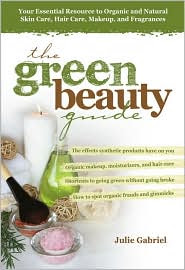
Green Beauty Guide by Julie Gabriel

Most women will look in Cosmo or other beauty magazines for the latest cosmetic and fashion tips, but what many of these magazines don’t tell you is that the products manufactured by these companies are using chemicals and other compounds that once your skin absorbs them could cause other ailments or problems. While I don’t readily wear makeup or use cosmetics, I gladly took on a TLC Book Tour stop for Julie Gabriel’s The Green Beauty Guide. I love holistic looks at our everyday lives and books that seek to provide an alternate perspective to how we live our lives whether its from turning holiday celebrations green or learning how to reduce our own carbon footprints.

The Green Beauty Guide goes beyond the typical fad advice given by glossy magazines, providing the reader with recipes to create their own natural shampoos, facials, and other products, while at the same time providing readers with the know-how to become savvy cosmetics shoppers. Check out the Ten Commandments of Green Beauty at the end of Chapter 2.

Through a combination of science, insider information about the cosmetic industry and government regulation, and common sense, Gabriel dispels some of the myths espoused by the cosmetics industry. For instance, did you know that the skin absorbs about 60 percent of the substances applied to its surface? I didn’t, but now that I do, I plan to be more careful about what solutions I use. Think about your morning routine. . .how many cleansers, lotions, and gels do you use before you leave the house each day? Examine the ingredients of those bottles, and you’ll see exactly how many chemicals you expose your skin to every day. Given the complexity of skin and other systems throughout the body, it is no wonder that diet, exercise, and other behaviors can influence how well those systems function. Beauty or the health of your skin is tied to all of those things and more.

One of the best sections in the book discusses green washing, which will help those newly interested in the “green” movement to discern which products actually are safer for them and made from natural products, and which are merely using the presence of natural products to claim they are “green” or organic. Gabriel even provides Green Products Guide with a one-, two-, three-leaf system that categorizes how natural a product is. Other helpful sections of the book provide ways to make your own green beauty products, with a list of necessary tools, ingredients, and tips on where to purchase the ingredients. I also was surprised to find green beauty tips for babies in terms of diaper area care, massage oils, baby wipes, and bathing for babies.

Overall, this guide has a great many tips for those looking to expand the care of themselves and their environment into cosmetics and beauty care. I recommend this for those who wear makeup, lotions, shampoos, conditioners, and other products, which is pretty much everyone. We all should take better care of our planet and ourselves, and what better way than to start with the beauty products we use.

Julie graciously offered to write up a guest post for today’s stop, so without further ado, I’d like to thank her for taking the time out of her busy schedule to share with us how The Green Beauty Guide was born.

Thanks a Lot for Your Rejection by Julie Gabriel

My book, THE GREEN BEAUTY GUIDE, is dedicated to my daughter. It would be nice to say that she made me not a green goddess, but this is not true. She made me a green junkie, a green paranoiac, and sometimes a green pest. Being an Aries, she possesses enormous powers of persuasion. Basically, she made me write THE GREEN BEAUTY GUIDE when she was two weeks old. Not a two-week old newborn, but a two-week young fetus.

Three years ago, I was obsessed with writing a book on green pregnancy. As I went through my “certified organic” pregnancy, which I meticulously planned for the whole twelve months – and that means three-month detox before the conception plus normal nine months of pregnancy – I could not be happier than share the joy of having the pregnancy the green way. I wanted to tell moms that it’s fun, healthy, and perfectly doable, to be pregnant and green.

But somehow, as all new authors know, there was a problem with my “platform.” I am not a doctor; neither am I a celebrity mom. I am not even a doula or a registered nurse. In England, it’s good enough to be a nanny if you want to write books about parenting, but all I had to produce to support my case was my background in journalism, my education as a holistic nutritionist, my career in fashion media, and my growing belly. All this is hardly relevant to pregnancy and parenting, agents told me. If you were manufacturing baby clothes, sure, you can write about pregnancy, but what’s your platform? I changed the proposal back and forth, I tossed one idea after another, but it just didn’t seem to work.

Then I had a lightbulb moment. It was an actual lightbulb I was changing in our bathroom in Toronto. The bathroom was jam-packed, floor to ceiling, with my green beauty finds: organic shampoos and mineral sunscreens, herbal baths and odd-smelling stretch mark oils, homemade candles and bath salts. As a diligent green mom, I opted out of any synthetic chemicals in my beauty routine. What’s my problem? I thought. I know so much about all these wonderful, fragrant, oily and shimmery things that make us pretty, happy, and hopefully healthy. I have switched from my chemical hair colors to henna, I am using organic lotions and scrubs, and I am even making my own soaps – so why not sum it all up in a handy book? Next week I spent writing a green beauty book proposal which was shaping up very quickly and so naturally. It was growing, flowing, and eventually overflowing with great information that I accumulated over years of writing about skincare, hair, and makeup. And as I see now, it was a wise move, to embrace your real background and speak about things you know quite well. Very soon, I met the agent who was excited about my green beauty project. Adina Kahn of Dystel&Goderich, and I spent the next few months polishing my materials, and very soon she found not one but two great publishing houses who were interested in my book!

The bottom line is: never assume that you are rejected because you are a bad writer. I spent the whole year pursuing a project that was completely wrong for me at that particular period in my life. I know so much more about babies and parenting today than I did then. Not “if” but when I write a book about what it takes to be a green parent, I will be able to provide my readers with a lot more valuable information than I could two years ago.

All I want to say is this: the timing for the book is always right. It may be a truism, but whatever happens, happens for a reason. There are so many people involved in the publishing process, all of them cannot be wrong at the same time. If the book doesn’t work, it’s not that the idea is bad; maybe the time is just not right. Maybe you are not ready for this book; maybe the reader is not ready for it. Sometimes all the life wants from us is a bit of flexibility.

And I will be doing a book on green pregnancy, I promised that to my daughter. But it will be a completely different kind of pregnancy book. The kind I wouldn’t even dare to think of three years ago.

Thank you Julie for sharing your green pregnancy experiences and publishing struggles with us.


Interested in winning a copy of The Green Beauty Guide?

Leave a comment expressing what you do to reduce your carbon footprint or stay green. Please include a way for me to contact you either valid blog or email address.

Deadline for the contest is Dec. 16, Midnight EST.

***Don’t forget my Pemberley by the Sea contest. It ends on Dec. 10 at Midnight EST. Sorry open only to U.S. and Canadian addressed residents.**

Also Reviewed by:

She is too Fond of Books

Update on the Throw/Donate 50 Things Pledge


Remember when I pledged to declutter my house over on Monniblog’s site? Well, would you believe I’ve already met this 50 items goal and then some. In one day, the hubby and I cleared out our bedroom closet and under the bed and under the dresser.

Here’s a list of some of the items we donated today:
1. 3 table lamps

2. 2 bags of clothes and towels

3. a laundry basket that is too small for us

4. a painting that hubby got from work

5. 2 vases

6. a Spanish on cassette course

7. a ton of desktop photo frames

8. Photocard software for PC

9. 3.5 inch floppy disks

10. a trash bin

11. a bunch of shoes I don’t wear (boots, high heels I can’t wear, etc.)

12. cat dishes

13. figurines (cats, wolves, etc.)

14. candle topper, looks like an old lady hat with posies in it.

15. candle holders

16. 8 books

17. blankets

18. dish rags (though they were in nice condition)

19. rabbit fur/skin decoration thingy

20. clock radio

21. rabbit ears for television (though I don’t think anyone will want those much longer)

22. reusable water bottle for walking etc.

Some Items we held onto for no reason and that were oftentimes broken made their way to the trash, including:

1. a blender

2. ripped blankets

3. broken frames

4. broken glass knicknacks

5. broken candle holders

6. software for printers that no longer exist here

7. beabag footstool

8. empty cell phone boxes for phones we no longer have (LOL)

Have I met the pledge? I think so…but I’m sure there is more to come.

If you haven’t signed up, you better get on over there. Check it out and sign Mr. Linky.

I’ve Made the Pledge, Have You?


My wonderful blogger friend Monniblog has started something, and in the spirit of cleaning my house of clutter, I’ve signed up!

I think we all collect things and pack them away, forget about them, and never realize we have them. I know I do this. Now, I’m not talking about books here…just that stuff that piles up in the house.

I even find that I sometimes buy things when I already have them, but they are packed away in the closet and I just don’t know it.

So are you ready to take the pledge, and throw out or donate 50 items you no longer need? Sign up on Mr. Linky and make sure you grab the button. Get started, you have only until Jan. 1.

Jane Odiwe & Lydia Bennet’s Take on Halloween Fun


Hello everyone,

I’d like to thank Serena of Savvy Verse & Wit very much for asking me as a guest on her blog. I’m going to tell you about how I developed Lydia’s character in Lydia Bennet’s Story and…

“La! How dull would that be?”

Excuse me, Lydia…as I was saying…

“No one wants to hear what you have to say, Jane, they’d much rather hear about the night of mischief and fun that Kitty and I had on Hallowe’en.”

I’ve been asked to talk about my book…

“Dearest Jane, I think I hear the doorbell … oh good, that got rid of her, she’s gone! Halloo! It’s Lydia Bennet from Longbourn here with a tale for all you young ladies out there.”

“I’ll bet you’ll see your true love by midnight,” said our maid Mary, and she looked so mysterious and meaningful that we took her at her word and arrived at the kitchen door as late as we dared. It was very quiet and I was all for bursting in at the door but Kitty was already nervous on account of being told to come without candle or lantern. At her timid knock, the door was suddenly thrown back and the vision that greeted us was so terrifying that Kitty let out the most bloodcurdling scream you have ever heard. When we realised it was Mary with a hollowed turnip candle held under her chin we laughed so hard, I thought I might be ill.

The kitchen was very dark but for the glow of turnip candles on every surface illuminating several strings of apples suspended from the ceiling. A large bowl of water with more apples floating atop was set before a looking glass, which strangely resembled the one from my bedchamber.

“We’ll have snap apple and bobbing for apples later but first there is a tradition that all young ladies must perform. You must stand before the glass, quite alone in the dark, and a vision of the man you are to marry will appear within, before the bewitching hour,” said Mary.

“I will not,” cried Kitty, “No fear, I’m not standing here in this horrid, dark place for anything, even if Prince George himself was to appear.”

“Lord!” said I, “There’s nothing to it, Kitty, but I warn you, if I see Prince George, I’ll slit my throat. Ugh, can you think of anything more disagreeable than marrying that oaf!”

I must admit I felt a slight apprehension when they’d extinguished every candle before leaving me, and the hairs on my arms and legs prickled up at the unfamiliar sounds in the cold kitchen. There was a scuffle in the corner and the thought of a mouse nearly had me running for the door.

I stood before the glass and soon became quite engrossed with my own reflection which it has to be said looked most becoming by the soft bars of moonlight creeping through the window.

It was then that I thought I heard breathing. I looked behind me but there was no one there. I turned back to the glass and caught sight of a glimmering light in the background, so I spun round again only to find it had disappeared. I wheeled back to the glass once more determined to catch sight of whatever apparition was about to materialize when I got the fright of my life. A phantom in white, and not at all my impression of a handsome beau was leering at me in the dark, with hideous, grinning teeth. I screamed and fainted into the arms of the horrible ghoul!

The door burst open and there, holding onto their sides, falling upon themselves with laughter, were Kitty and Mary. My assailant had me blindfolded before I could protest further and in a soft voice not in the least unbecoming, begged for a kiss from his future wife. What else could a girl do in the dark, I ask you, other than oblige? In any case, I had guessed from his delicious smell that it was Mr Edwards, who it is well known has something of a passion for me and, indeed, is quite the best-looking young man of my acquaintance!

Of course, I protested loudly through the whole sordid exhibition and it was only when we went to bed that I admitted to Kitty, that although I do not think I found my husband on All Hallows Eve, I certainly enjoyed my adventure!

As an after thought, I must just add that, whatever you may have read about Jane Odiwe’s influence over me and the development of my character in her ‘novel’, Lydia Bennet’s Story, she had nothing whatsoever to do with it – I am entirely my own wonderful person – perfection can never be imitated, improved or further developed!

Lydia Bennet

***Want to win a copy of Lydia Bennet’s Story by Jane Odiwe? I have one copy for one U.S./Canada winner (sorry no P.O. boxes) and one copy for an international winner.

Here’s what you do: (Remember to leave me an email address or blog link so I can contact you!)

1. Leave a comment on this post, telling me what your favorite Jane Austen novel is or what novel you would like to read (if heaven forbid, you haven’t read Jane Austen yet!) for one entry.

2. Leave a comment on my Lydia Bennet’s Story review post, here, for a second entry.

3. For a third entry, spread the word about this contest on your blog and leave me the link here or if you don’t have a blog, email 5 friends and cc savvyverseandwit AT gmail DOT com

Deadline is November 7 at Midnight EST.

Other Contests from Savvy Verse & Wit: (Deadlines are Nov. 5)

1. Win a copy of Black Flies by Shannon Burke

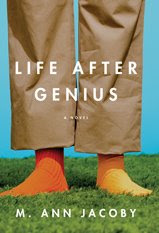
2. Win a copy of Life After Genius by M. Ann Jacoby

Life After Genius by M. Ann Jacoby & Giveaway

Welcome to Hachette Group’s Early Birds Blog Tour for Life After Genius by M. Ann Jacoby, a book that examines one young genius’ struggle to find himself and his place in his own family and society; Thanks to Miriam Parker at Hachette for sending the book along for the tour.

Theodore Mead Fegley’s father runs a furniture store and funeral home with his brother Martin, while his mother’s main goal in life is to push her son to achieve as much as possible and not squander his intelligence. The pressure mounts for Mead as he speeds through his elementary and high school years, reaching the University of Chicago at age 15.

Mead is an awkward “geek” who tries to keep his head down and make it through what he believes is the roughest period of his life, high school. Despite attempts by his cousin, Percy, to pry Mead out of his shell, Mead stuffs his nose in his studies to graduate high school and head off to college away from his overbearing mother and the small town that despises and ridicules him.

The narrative easily shifts from the present to the past, and the chapter breaks make it easier to keep the timeline in perspective with details about what period in Mead’s life is witnessed and what location he is in.

Mead is a young teen thrust into academic life with peers who are much older and experienced. Even though he looks forward to college life and mingling with his peers, he finds the experience to be as difficult and confusing as his high school years. Mead’s life takes a stark turn when he meets Herman Weinstein, a fellow mathematics student at the university.

Mead meets Dr. Krustrup, who agrees to mentor him and Weinstein at least until Weinstein’s family fortune and connections convince him otherwise. Mead is easily pushed aside when Dr. Krustrup becomes chair of the mathematics department. While he is initially angry, he learns that his new mentor, Dr. Alexander, is much more inspiring. Under the tutelage of Dr. Alexander, Mead throws himself into the Riemann Hypothesis, and he hopes to either prove or disprove the hypothesis, which has been debated for more than 100 years.

Jacoby carefully intermingles events from Mead’s past into his present as a way to show how Mead’s character has developed and explain the reasons behind some of Mead’s reactions and behaviors at the university. As Mead grows closer to a solution, Herman insinuates himself further into Mead’s life. Tensions between the two friends–and I use this term loosely–continue to intensify, until a family tragedy and university pressure mount, forcing Mead to run home to rural Illinois several days before graduation, his major mathematical presentation, and his valedictorian speech.

While math problems make me cringe, this story brought me back to high school with the discussions of matrices–math I actually understood at one point–but Jacoby does a great job of including this information without burdening or boring the reader. As Mead’s life unfolds and the mystery grows more intense, the pages flow quickly, making the reader more anxious to learn the reason why Mead flees his sanctuary at the university when he is on the verge of success. Although this novel is dubbed an academic thriller that portion of the story fell flat. The descriptions, perceptions, and events in Mead’s life point the narrative more in the direction of a coming of age story. Jacoby’s academic thriller plotline did not have the foundation or twists and turns necessary to a successful thriller narrative. However, at the conclusion of the narrative, the reader will be pleased to see Mead find himself, what’s important to him, and how to cope with his reality.

About the Author:

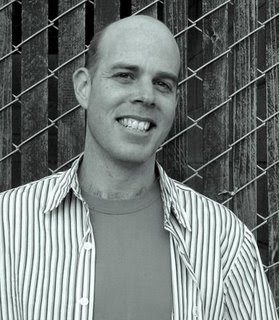
M. Ann Jacoby has been an art director at Penguin USA for more than two decades. Life After Genius is her debut novel.

Without further ado, here is M. Ann Jacoby about her writing process.

Do you have a set writing routine? Do you get up early and start writing or do you write when the mood hits?

I do have a routine. After getting my errands out of the way Saturday morning, I sit down around noon and write for about six hours. The first hour or two involves a lot of staring out the window and getting back into the world of my novel. By Sunday I’m into it. I get started around 8 or 9am and can go all day. I have to remind myself to stop and eat. Then, reluctantly, I have to put it all away and go back to my Mon-Fri job. I commute to work on the train and usually wait till midweek to read and edit what I wrote over the weekend. I don’t write during the week. I need large blocks of time without interruption to get lost in the world of my characters. I usually get 12-15 pages written over a weekend. It’s a long, slow process but I find the breaks in between give me a chance to step back from my work and rethink before plunging in again.

Was the research and writing process for Life After Genius different from your normal writing process?

Research takes time away from writing. And I find that I write too much of my research into the story at first. I want to put all that new information to good use! But eventually I edit most of it back out so that the research feels more like a natural backdrop.

Do you have any advice for writers just starting out?

It’s very hard to sort out criticism in the beginning. What to listen to, what not to. For me, there was a lot of trial and error. A lot of crying. Try not to let the negative remarks destroy you. Look at them as an opportunity to learn and grow.

What are your favorite rewards for reaching your writing goals and why?

To create something that speaks to another person is a reward in itself. Immeasureable. Plus, it means I can go back and create more characters and more imaginary worlds. To get to do what I most love and get paid for it is like winning the lottery.

Are you working on any other projects, and if so would you care to tantalize my readers with a few hints?

The novel I’m working on now is loosely based on my mother’s parents who were bookies in West Palm Beach, Florida. The main character is Libby Freybaker who shared the pants in the family with her husband, my grandfather. She’s funny and smart and unconventional. It opens with them being handcuffed and arrested, then flashes back to tell the story of what led up to that point.

***Want to win a copy of Life After Genius by M. Ann Jacoby from Savvy Verse & Wit and Hachette Group?

I will pass along my copy to one International winner, please let me know in the comments if you are international! Hatchette Group will pass along a copy to a winner with a U.S. or Canada address.

***Make sure you leave me a way to contact you either an email address or through your blog. Those not leaving emails or blog links, will not be entered. Deadline is November 5, 2008.

1. Leave a comment on this post for one entry telling me what you find most interesting about the book or Jacoby’s writing process.

2. Post this contest on your blog or sidebar and return here to leave me a link to where you posted it for a second entry.

3. For those of you that do not have blogs, email five friends and cc savvyverseandwit AT gmail DOT com for your second entry.

Check out the other stops on the Life After Genius tour!

Marjolein Reviews
The Book Nest
Seaside Book Worm Blogger
Books by TJBaff

Linus’s Blanket

The Optimistic Bookfool
The Printed Page
My Friend Amy
Shooting Stars Mag
Books, Pungs, and More
A Novel Menagerie
The Tome Traveller’s Weblog
medieval bookworm
Book Critiques
B&b ex libris
Sharon Loves Books and Cats
At Home With Books
A Circle of Books
Book Line and Sinker

***More contests from Savvy Verse & Wit:

A copy of Black Flies by Shannon Burke

A copy of The Safety of Secrets by Delaune Michel! Deadline is Tonight at Midnight EST. Go here, follow the rules, and enter.

Interview with Author Shannon Burke & Contest

I want to welcome Shannon Burke, author of Black Flies and Safelight, to Savvy Verse & Wit today. In case you missed my glowing review of Black Flies, check it out! Anna at Diary of an Eccentric also reviewed Black Flies, here, and interviewed Shannon Burke, here.

Stay tuned for your chance to win a copy of Black Flies.

Welcome, Shannon and thank you for taking time out of your busy schedule to speak with me and my readers.

1. How long did it take you to write Black Flies?

Black Flies took me an absurd amount of time for such a short book. I think it was over ten years from the first sentence to the final copy edit, though for a lot of that time it was lying dormant. When I first started working as a paramedic I came home every night and wrote about the things I heard and about the things that happened to me. Slowly, these impressions formed themselves into scenes and characters and events. That is, they turned into a novel. I had a draft by the end of my first year on the ambulance. But it was hardly the finished copy. It was unfocused, jagged, and angry. It had passion and energy, but overall, I didn’t know what it meant. I ended up trying to rewrite it three times, and finally, I put it away and started working on an ambulance love story that wound up being Safelight, which became my first published novel.

So, after Safelight came out, I was working on another novel called Stragglers, but my mother and my older brother kept saying, “What about that book Black Flies.” “It doesn’t work,” I said. “No, we like it,” they said. They kept bugging me about it. So finally I went out to the shed where the book had been sitting for four or five years. I didn’t even have a computer copy of it. The hard copy in the shed had mushrooms growing out of it. I brushed the mushrooms off and started reading. The first thing that struck me was how bad a writer I’d been. Also, I thought two things right away: one, that I’d made the book worse every time I’d edited it, adding wordy, florid revisions that edited the rawness out of it, and secondly, I felt like I’d been flailing around, trying to say something, but had never really gotten around to saying it. After five years as a medic, and five more years of writing, I had a lot more perspective and experience and I thought I knew exactly how to do it. So, I went back to the book. I stripped the style down to give it that initial blunt, raw feeling that I’d always liked about it, but kept some of the philosophical parts as the chief sections. Basically, it was a total rewrite, but with some good material to work with, and with the basic story staying the same, though with many small changes. I finished that draft in about eight months, and with the normal editing and copy editing afterwards, that ended up being the final version of Black Flies.

So, from the first attempt at a draft to the final version might have been ten or eleven years, though for probably six of those years I didn’t look at it at all.

2. What character in Black Flies do you most identify with and why?

Well, I guess I must identify with Ollie most, but there were moments where I identified with all the characters, including LaFontaine. I mean, I think one of the points of the book is that anyone is capable of really bad behavior given the proper circumstance, and my guess is that anyone who’s been in the circumstances I’ve been in can look at all the characters and see parts of themselves in those characters, while also recognizing the characters as “types” that you find in an EMS station. But, like I said, Ollie’s character is definitely the closest to my own.

***If you have not read Black Flies yet, please SKIP this question and go to Question 4 because the answer to Question 3 contains spoilers.***

3. What was the hardest section in Black Flies to write or what was the hardest part about writing Black Flies?

The part before and after Rutkovsky’s death was the hardest part, and also the very beginning. I had trouble with the beginning because it was hard to know what to tell and what not to and what events would represent the whole. The pre- and post-Rutkovsky death sections were really hard to write because I kept making them too long. I wanted to dramatize the emotion and make it serious and the way I saw to make it serious was to make it long. The problem was that that section was not particularly dramatic, and it took me a while to realize it, and I only did with the help of friends and family.

Basically, at a certain point in a book’s progression I hand the book to anyone who’ll read it and let everyone have a say. One of the questions I always ask is, “What is the worst part and what is the best?” My sister and my friends and my parents all pointed to that section after Rutkovsky’s death as the dullest and the hardest to read. So I rewrote and reworked it about fifty times. Even in the very last edit I was still reordering it. I think it’s a little rough there still, but it’s much better than it would have been.

Also, it occurs to me that when you ask what was the hardest part to write you might really be asking if it was hard emotionally to write parts of the book. I have to say it wasn’t hard at all in that way. If anything, it was cathartic. In general, emotion makes it easier for me to write because I have some really strong feelings inside to compare to the writing and to judge what is truthful and what is not and to drive me forward. So, at least for me, I’ve always found the most traumatic things are the easiest to write about.

4. Are you still a paramedic, and if not, why did you decide to leave that career to become a writer?

I still have my license, but I haven’t worked since the very beginning of 2001.

In January of 2001 I got hired to work on a movie script and since then I’ve more or less had regular movie work that has kept me from having to work a real job. At the time I was really glad to quite being a medic. For about twelve years I’d been spending forty hours a week writing, and then forty or fifty hours a week at a job. I was always busy, always in a rush, never had time to do anything. So, when I had a chance to cut my frenzied schedule in half I was really relieved. Afterwards, though, I missed being a medic, and I still think of going back into medicine at some point. I’m going to follow the writing as far and as long as I can, but you never know what is going to happen in the future, and I could see going back and working as a medic. I definitely miss the contact with patients, and the feeling that what you’re doing serves an absolute, immediate good.

5. Often writing experts and authors suggest to amateur writers that they write what they know, and it seems in your case this was true. Do you plan to branch out into other genres/topics?

For five or six years before I wrote about the EMS stuff I was writing ordinary literary fiction. The stuff I wrote was terrible: timid, dull, and didactic. But over that time, if nothing else, I was definitely becoming a better stylist and getting comfortable with my own abilities. I think T.S. Eliot said that he sat down to write everyday and threw out eighty percent of what he wrote, but he still always sat down to do it because when inspiration hit, he was ready. I’d like to think that those years of struggle were some sort of preparation rather than a complete waste. Anyway, the EMS subject really interested me, and I’m really glad I had that experience and I wrote those EMS books, but my heart is in straight literary fiction, and there is a slight feeling of compromise when I think of Safelight and Black Flies, like I leaned on this naturally dramatic subject more than I want to admit to myself, and that to really prove myself as a writer I need to be able to write outside that arena and see what I can do. And I’ve done it. Or at least I’ve tried to. I have three other novels in various states of disrepair. They will be coming to market eventually and I hope they don’t disappoint.

6. Do you reward yourself when you reach a particular writing goal? If so, what are some of your favorite rewards?

Not really. I’m very boring this way. I may have gone out to dinner a few times and maybe gotten some drinks or something like that, but I’m always so cautious of reversals, and also, I’m always so aware of the next step, that there never seems to be a definitive endpoint. I mean, you finish a draft of a novel, but it’s just a draft, and then you give it to friends and they read it and there’s always suggestions, so you write again and send it to your agent. And then you write again and it goes to editors and you sell it but there’s still the rewrites. And then the copy editing. And then you have a final version and it’s a book but you’re waiting for reviews, and there can always be an unpleasant review, and so it all slides by and there never seems to be a definitive point to celebrate. That is not to say that at times I haven’t felt accomplishment inside. I guess the best moments have been a feeling that someone else, a reviewer or reader, has been affected and swept up in the exact way I wanted them to be. But the question was about special rewards I’ve given myself. No. Not really. I probably should.

7. Could you share your publishing experience with my readers, such as did you get an agent before seeking a publisher, etc.? And how did that process unfold for you?

Yeah, I did get an agent, and it seems to me that having an agent is essential, as, for better or for worse, the literary people in New York all know each other, and the agents get to know the tastes of the various editors in a way you could never do unless you lived in that world. The agent funnels the book to the editor who would most likely want to read it, which is hugely important. Having said that, getting an agent isn’t even close to the first step, and at least for me, it came after years of solitary struggle.

I started writing seriously in the fall of 1989. I was really diligent. I didn’t know anything. I hadn’t taken writing classes in college or anything like that. I read all the time, but I had no idea how to do it. So, I just started writing. And for about three or four years I wandered around the country, worked menial jobs, lived in the worst places you can imagine, and wrote stories. Maybe I wrote fifty of them. They were terrible. No one wanted to read them. The last few, maybe, were a little better, but then I switched over and started to write novels before I really got the hang of the stories. It was an odd decision, but probably fortuitous, as I think most people are, at heart, either short story writers or novelists, and the chances of a novelist having an audience are perhaps slightly greater than that of a short story writer. Anyway, for some reason I thought I was a novelist, so I started writing novels. I wrote three of them in the early nineties. The first wasn’t terrible for a first novel. The second was not as good. The third was so awful I didn’t even type it up. At this point it was around 1995. I’d been writing everyday for six years with absolutely nothing to show for it except hundreds of worthless pages.

This was around the time I started to work as a medic and I started writing about my experiences on the ambulance. My fourth novel was that early version of Black Flies that I mentioned before and the fifth was Safelight, which I finished a draft of in 1998. I decided to concentrate on Safelight which I had to rewrite four times. The story stayed the same. But the way I told it, and the style, became more and more spare with each draft, which was probably appropriate for that story. Anyway, I think I finished that last draft in the spring of 2002, and I finally thought I’d been at least somewhat successful in entertaining, and that the novel said what I wanted it to say. I got an agent that summer and the book was sent out in the fall. I think it went out to about twenty publishing houses. Three editors showed real interest. Two were young editors and were both shot down by the marketing departments, who said (correctly) that the book wouldn’t sell.

The third editor was Dan Menaker, the head of Harper Collins. He made an offer. Then he also got into it with the head of marketing and after a battle was very reluctantly forced to withdraw his offer. I thought the hopes for the book were dead. But then a few months later Dan became editor in chief of Random House and one of the first things he did was renew the offer and buy my book. So, if Dan hadn’t gotten the job at Random House shortly after that brawl with his marketing department, who knows, Safelight might never have been published. It was lucky. It was a break for me. I feel really fortunate.

Basically, it’s a tough business, and everyone who’s succeeded does so with a combination of luck, resilience, and talent. But of those three, it seems the thing that’s most in one’s own control is resilience. Regardless of what happens, the only thing to do is to keep writing.


8. Do you have any advice for aspiring writers about their writing process or the publishing world?

I think my advice for aspiring writers is, like I said above, to keep writing. Do it everyday. Get comfortable with descriptions and dialogue and summary and the various pieces that make up a novel. Get comfortable with your style. And just start trying to do it. As for the publishing world, I think my number one rule would be you get one first shot, so use it wisely. But if it doesn’t work out, keep trying. It’s a tough racket. There’s no easy way into it. Everyone I know faces rejection more than acceptance, but you write and do what you can and sometimes there are little victories.

9. Are you currently working on other projects? Would you care to tantalize my readers with a few hints?

I have drafts of three other novels. In general, I don’t like to talk that much about what I’m working on. It takes me a long time. The books evolve along the way. But I can say that one is a “high school book,” one is historical and takes place in the west, and one is a small drama about my time in New Orleans. I would say a general theme in most of my books is good versus evil, though manifested in different ways.

10. Finally, What are you currently reading? And do you prefer fiction, non-fiction, or poetry and why?

I just finished reading Henderson the Rain King. It’s a book I’ve read before and went back to. Bellow’s voice is so engaging that the reader would follow Henderson anywhere. A great book. I don’t know what I’ll read next. Maybe American Wife. Or maybe The White Tiger. Or maybe a long Russian novel called Life and Fate. In general, I definitely prefer fiction, though I like everything, particularly biographies and travel writing. I tend to read a lot on the subject I’m writing about, so I end up reading histories, scientific texts, whatever. Also, my wife writes poetry, so I read some of that, though I hardly have a wide knowledge of contemporary poetry. Basically, I like to read, and so I read a little bit of everything. I usually have seven or eight books along my bed.

About the Author:

Shannon Burke was born in Wilmette, Illinois and went to college at the University of North Carolina-Chapel Hill. He has published two novels, Safelight and Black Flies, and has been involved in various films, including work on the screenplay for the film Syriana. From the mid to late nineties he worked as a paramedic in Harlem for the New York City Fire Department. He now lives in Knoxville, Tennessee with his wife Amy Billone and their two sons.

Check out his website, here.

Thank you, Shannon for taking the time to share with us these helpful insights. Good luck to you in your writing career. We look forward to your engaging novels yet to come.

***Want to win a copy of Black Flies by Shannon Burke? I’ll send one lucky winner a copy of Black Flies. Here’s how to enter: (Remember, you must leave an email address in your comment or make sure there is another way for me to contact you to make your entries count!)

1. Leave a comment on this post about what you liked most about the interview for one entry.

2. Leave a comment on my review post for a second entry. (Those who have already commented do not need to comment again!)

3. Either blog about this contest on your own site and return here to leave me the link or email the contest details to five friends and cc savvyverseandwit AT gmail DOT com for a third entry.

Deadline is November 5, 2008 at Midnight EST and is open internationally.

***Another giveaway from Savvy Verse & Wit. Win a copy of The Safety of Secrets by Delaune Michel! Go here, follow the rules, and enter.

2008 National Book Festival Recap

This year’s 2008 National Book Festival weathered the rain! The day was overcast, but participation was high and the rain didn’t come until near the end of the festival. I wanted to share one comment we heard from tourists as we were leaving. The white tents were set up as pavilions for various genres as usual, closer to the end of the National Mall with the Capitol Building. Bunches of us were headed out of the National Mall and tourists were coming onto the Mall passing by us. A man said to the woman with him, “Hey, what’s that down there? A carnival.” My immediate response without thinking was, “Yes, it’s a carnival for book lovers.”

I want to share with everyone some photos I took and that my husband took of the poets in the Poetry pavilion. We also got a chance to take photos of Neil Gaiman and Tiki Barber as they signed books for other patrons of the festival. I thought I would share them since I’m sure they have fans out there. First, here’s a look at the abundant crowd in the poetry tent; it wasn’t as full as some of the other tents, but this signifies that interest in poetry is not dead.

The first poet we caught up with–since I missed the Poetry Out Loud segment–was the new U.S. Poet Laureate Kay Ryan, though her term in that office actually doesn’t start until Oct. 1. I’ll share with you two pictures, one of her being interviewed and one of her signing my book, The Niagara River. It was good to meet a fellow poet who is not into all the hoopla of becoming a top creative writing professor and who is more interested in just writing poetry and possibly improving the literacy of our country.

Traditionally, poet laureates have hailed from Ivy League schools and have careers teaching creative writing graduate degrees, but Ryan teaches at a community college and is engaged in improving literacy. She even commented about how her being an outsider may have helped her become Poet Laureate because there is a “romanticized” notion of the outsider in the United States. Moreover, she talked about how she came to poetry later on as a student and never believed herself to be a writer until a cross-country biking trip. In Colorado, she saw the Rockies and answered the question: Do you enjoy writing? And her answer was yes. She writes poems that are available to the reader in spite of their double meanings, allowing readers to see not only a surface meaning, but a deeper, emotional meaning as well. She is also a fan of Emily Dickinson, though she came to her through reverse psychology thanks to one of her teachers. Dickinson is one of my favorite poets as well.

A great many of her poems are short because she likes them that way. But she says that while they are small on the outside, there is much more beneath the surface. I found her to be witty and engaging, and I look forward to her tenure as U.S. Poet Laureate, though she does not have any specific plans in mind other than touting the need for 100 percent in funding for public libraries and their branches so that they can be open 7 days per week and longer hours.

One of the next poets we listened to was Eavan Boland who is from Ireland, though she lives in California and teaches at Stanford University. She focuses a great deal of her poetry on the differences between history and the past, where history is the recorded events and the past is something deeper and more nuanced. One of the poems she read, “Quarantine,” examined Ireland in 1847 at the time of the famine, but it also discussed the deep love between a man and his wife who died during the famine. Even with his last breath he held his wife’s feet to warm them with the remaining body heat he had. Many of the poems she read discussed Ireland at the time of the famine and the nuanced past of that time period. She was equally engaging. I just may have to pick up one of her volumes for review.

Molly Peacock reminded me of school teachers I had in high school because she was approachable and ready to answer your questions. She read quite a few poems and engaged the audience with her wit. Another poet I should probably add to my TBR pile. I have quite a few photos of her speaking and answering questions, but I think this photo is the most dignified. She’s an expressive poet and very animated. Her eyes grow wide and her lips will form a nice round O in many cases, but I don’t think those would make for very flattering pictures.

The final poet we heard before we headed back home was Michael Lind, whom the moderator called a man of letters, which I presume means he is well educated, one quite a few awards, and has accomplished a great deal in his given profession. In this case, he has been a columnist, a novelist, and a poet. I purchased his book, Parallel Lives, at the festival because the lines in his poems caught my attention, though he is a very sedate reader compared to the other poets we heard. I would almost say that I prefer to read his verse on paper than to hear him speak. I do enjoy his verse because it often does touch upon recent events that may be forgotten as the next horrific or phenomenal effort takes its place in the media headlines.

Finally, here is Neil Gaiman—I had to keep you fans reading somehow–the book sale tent only had a limited number of his latest book, which is not even out in stores yet. Those books went fast, and his line was extensive. I’m not sure that everyone got to meet him or get their book signed. But the lines were moving fast, so you never know. He is not at all what I pictured.

As for Tiki Barber, who is a former New York Giants football player and wrote a children’s book, his line was longer. However, I am quite sure that some of the people in his line were having NFL memorabilia signed and not necessarily his book. I know that a ton of kids and parents were lined up alongside him as I was taking his photo. We just wanted a close up shot of him since we had nothing for him to sign.

Overall, you can see I really did not spend much time outside of the Poetry Pavilion. I did that for two reasons, one I was pressed for time and the Poetry Pavilion was the furthest one and two I love poetry! I was surprised by the number of people in the audience at the Poetry Pavilion, but I also was pleased by the turnout. The Poetry Pavilion was co-sponsored by the National Endowment for the Arts and many of their personnel introduced the poets scheduled to read and they had a table full of reading guides for not only famous poets and writers, but also information about Poetry Out Loud. I was equally pleased that the hearing impaired could enjoy the poems as well with the help of sign language experts.

I would love to hear from anyone else who attended the festival and what events and authors they saw and what they thought. I think it would be great to hear about the other Pavilions’ events as well. Feel like sharing, leave a comment.

For other experiences at the 2008 National Book Festival:
The Literate Housewife
DC Reflections
Jason’s View From D.C.
Sarah Moffett
Biblio’s Bloggins
Knitting4Shirley
S. Krishna’s Books

2008 National Book Festival and Anne Patchett


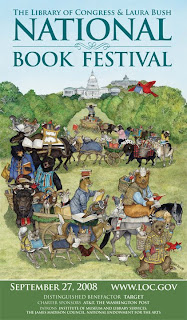
The 2008 National Book Festival will be held in Washington, D.C., this weekend–Sept. 27 between 10 AM and 5:30 PM. More than 70 authors are expected to attend the Book Fest, ranging from Salman Rushdie to former New York Giants running back Tiki Barber.

Each year the Library of Congress gathers some of the best authors out there to bring their books and their stories to D.C. to celebrate the joys of reading. I’ve met Tim O’Brien, Anita Shreve, and many others when I have attended this event. Not only can you get autographs of their latest books, but most authors are willing to sign older copies as well.

Authors will be broken down by Pavilion Genre and will have a scheduled time to speak in that pavilion, so check out the schedule here. I’m excited because our new Poet Laureate Kay Ryan will be there along with First Lady Laura Bush.

If you cannot attend the festival, why not spend the day on the 2008 National Book Festival website listening to podcasts from some of the authors attending the Book Fest?

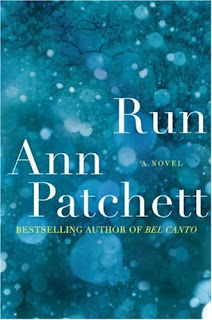
Additionally, for those of you who have read Run by Anne Patchett, Book Club Girl is hosting a call in show about the book with the author.

Here’s the link to the audio show online, sign up and join in the discussion.

Ms. Patchett will be available to answer questions through the call in number: 347-945-6149. The show starts at 7 PM EST.

Final BBAW Winners Are. . .


Sandy of Mom Forever and Ever is the winner of the one-year subscription to Writer’s Digest! Congratulations!

Jeannie of I Like to Be Here When I Can is the winner of Writing the Wave by Elizabeth Ayres! Congratulations!

Anna from Diary of an Eccentric and I hope this won’t be our last joint giveaway!

We actually have a joint challenge project in the works. . . We promise to let you know all about it once the details are all worked out.

However, while we’re on the subject, Is there is anyone out there who can help us make a banner and some blog buttons, please contact Anna at diaryofaneccentric [AT] hotmail [DOT] com or myself at savvyverseandwit [AT] gmail [DOT] com

Winners of Writing in Metaphor and Imagery for Book Blogger Appreciation Week


Here are the winners, thanks to Randomizer.org

1. Contest Winner for Allan Ginsberg’s Howl and Other Poems is. . .
TEABIRD

2. Contest Winner for Lawrence Ferlinghetti’s A Coney Island of the Mind is . . .
TERRI

3. Contest Winner for a Subscription to Poetry magazine is. . .
ICEDREAM

4. Contest Winner for Sylvia Plath’s Ariel is. . .
GAUTAMI

I will contact you via email for snail mail addresses, but if you see this before you get my email, feel free to send along your address to savvyverseandwit AT gmail DOT com

Congrats to the winners. Thanks to everyone who entered. It has been a fun week. Check out the latest joint contest I have running with Diary of an Eccentric; to enter go here. You can win a subscription to Writer’s Digest.

Thank You BBAW and AMY

I wanted to chime in with my thanks to My Friend Amy for organizing and getting all of the book bloggers involved in Book Blogger Appreciation Week. I had a fun time participating, writing articles, meeting new book bloggers, entering contests, participating in discussions, and getting some great book recommendations from other bloggers.

I wholeheartedly thank AMY for her hard work, and I want to also award her with the following:
Thanks again Amy!

Here’s the list of winners from Book Blogger Appreciation Week!

Best Meme/Carnival/Event – My Friend Amy (Book Blogger Appreciation Week)
Best Commenter/Commentator – Musings of a Bookish Kitty and Rip My Bodice
Best Design – Bookgasm
Best Book Club Blog – Reading Group Guides
Most Humorous Blog – Rip My Bodice
Best Publishing/Industry Blog – Galley Cat
Best Name for a Blog – Bookgasm
Best Challenge Host – The Hidden Side of a Leaf
Best Community Builder – My Friend Amy
Best Author Blog – Neil Gaiman
Best Book Published in 2008 – The Host by Stephenie Meyer
Best Book Community Site – Good Reads
Most Chatty – Hey Lady! Whatcha Readin’?
Most Concise – Bookgasm
Most Extravagant Giveaways – Maw Books
Best General Book Blog – Bookgasm
Best Romance Blog – Smart Bitches, Trashy Books
Best Kidlit Blog – Well Read Child and Jen Robinson’s Book Page
Best Fantasy/Sci-fi/Horror/Spec-fic Blog – Fantasy Book Critic
Best History/Historical Blog – Medieval Bookworm
Best Literary Fiction Blog – Caribousmom
Best Cookbook Blog – Books and Cooks
Best YA Lit Blog – Bookshelves of Doom
Best Thrillers/Mystery/Suspense Blog – Bookgasm
Best Non-fiction Blog – A Striped Armchair
Most Eclectic Taste – Bookgasm
Best Christian/Inspirational Blog – Free Spirit Blogs
Most Altruistic Blog – Maw Books

As for the Sept. 19 contests that ran this week for BBAW, I will announce the winners later today and seek out mailing addresses from you. Otherwise, please still enter the final Savvy Verse & Wit-Diary of an Eccentric contest here and here. You can win a subscription to Writer’s Digest or a book, Writing the Wave. Deadline is Sept. 21 at Midnight EST

Writing and Writing Spaces, Part 2

Day 5 of Writing in Metaphor and Imagery for Book Blogger Appreciation Week

Book Blogger Appreciation Week has introduced me to a number of poets and other writers who also blog. I wanted to get their take on their writing processes as well. Anna at Diary of an Eccentric and I opted to introduce you to two other book bloggers and writers and their writing processes, you can find Anna’s post with Rebekah of Simply Romance Reviews and Ready Set Read Reviews here.

I asked April of Cafe of Dreams to share her writing process with me and the rest of the blogging community.

April finds that writing poems is an expressive outlet, and when ideas come into her mind she jots them down no matter where she is. She branches out from those initial compositions. Sometimes she is writing abstractly because words can form different ideas in the readers’ minds. On the other hand, when she is emotional, she writes words to express what she is feeling whether it is related to a person or incident in her life. She says, “After writing the initial prose, I will often go back and repeatedly change wording until I am completely satisfied with the end result.” I can completely relate to this way of writing. I often write down a few stanzas right off the bat and then expound upon those images and ideas until the poem takes on a life of its own. Once I have a complete poem, I tend to reword it and play with line lengths and word order until I am satisfied that the end result is what I want it to be.

April is as fascinated with people and people watching as I am. She says, “I will often try and create a story that I feel may be going on within their lives. It is just the most amazing thing knowing that there are millions upon millions of people in the world, and they all have a truly unique things or thoughts going on. It is always fun for me to build on those ideas or concepts.”

What I found most interesting about her writing process is that she takes these storylines that she creates and boils them down to one or two pages in poetry form. She also uses dialogue and visuals to tell a complete story to her reader. Her goal is to take these short stories and create a novel length story.

While April does not often rhyme in her poetry, she does attempt to rhyme and try out different combinations of meter and rhyme. She is fascinated by the endless forms of poetry available to writers. However, she does wish that poetry was more of an outlet in today’s society. She notes, “It seems as though poetry is set back in the way of literary importance. Though it just may be that I haven’t found or been exposed to the right area. In any case, personal or professional, poetry of all forms is a wonderful creative outlet.”

More about Cafe of Dreams:

Cafe of Dreams, is my little corner of the world where I can be creative and just have fun. Most of what I cover on Cafe is books and reviews of them. I have started doing book tours and love them! I love to interview authors and have met so many great blogger friends. To sum up, Cafe of Dreams is a place where all your dreams are available on the menu. I cover many genres of books through reviews, write a bit about life and my thoughts and just want a very open and friendly place to express myself.

A poem from April at Cafe of Dreams:

A True Treasure
A kind and gentle spirit
So giving of love, laughter and gentleness
A powerful man – big in stature
larger in compassion
You gave to the world so much of yourself
You gave to your family everything

I will forever remember your wonderful smile, your joking manner
Advice and ponderings, always plentiful, will be so very missed
Visions of holding your grandchildren, treasuring each one dearly,
will forever remain in my heart
Knowing that future grandchildren will miss meeting and knowing
one of the most wonderful men in the world
tugs at my heart
Life will not be the same without you

Hearts break, as tears stream
You were and will forever be, so much to so many
As you look down upon us from your place in heaven,
I know that you will forever be in our hearts
You are a wonderful man, someone so very loved and so very treasured
You are husband, dad, grandpa, brother and son
You are one of life’s true miracles – a beautiful soul both inside and out

As you leave this earth,
you leave us all with one last lesson –
hold each precious moment dear, knowing that life is much too fragile
too delicate to waste a single second
Hold one another close
Never forgetting to say the most important words one can –
“I love you”

~~ In loving memory of my Father-In-Law
Copyright April at Cafe of Dreams

Another friendly reminder about these contests:

1. Diary of an Eccentric is holding a contest for The Almost Moon by Alice Sebold and The Choice by Nicholas Sparks Deadline is Sept. 30

2. Savvy Verse & Wit is holding a contest for Howl and Other Poems by Allen Ginsberg as the first contest for Book Blogger Appreciation Week Deadline is Sept. 19

3. Savvy Verse & Wit is holding another contest for “A Coney Island of the Mind” by Lawrence Ferlinghetti as part of BBAW; Deadline is Sept. 19

4. Bookish Ruth’s contest for The Sally Lockhart Mysteries by Phillip Pullman

5. Savvy Verse & Wit’s contest for a 1-year subscription to Poetry magazine. Deadline is Sept. 19

6. Savvy Verse & Wit’s contest for a copy of Sylvia Plath’s Ariel; Deadline is Sept. 19

7. Savvy Verse & Wit and Diary of an Eccentric’s contest for a copy of Writer’s Digest and Writing the Wave; Deadline Sept. 21 at Midnight EST.

Please also double-check the growing list of giveaways at My Friend Amy’s blog.