Quantcast

Acrostic

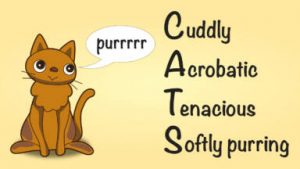
As you can see Acrostic poems are poems in which the first letter of each line spells out a word, message, or the alphabet. When I was a kid, these were one of the first poetry forms I learned, and I still write them from time to time as a way to clear out the cobwebs.

I hope you will check out the Acrostic poem generator.

Here’s what the generator came up with for me:

Sea

Seas saw.
Expanses seep.
American sailors slink.

I can’t wait to see yours. Hope you have a great weekend.

Earth Day Poem: If the ocean had a mouth by Marie-Elizabeth Mali

.

Today is Earth Day where we advocate on behalf of environmental protection. We only have one planet on which to live, and we should be good stewards of that planet and its resources to ensure humanity has a future.

I found this poem on Poets.org and couldn’t wait to share.

Marie-Elizabeth Mali’s poem personifies the ocean into an entity with human-like qualities. An ocean with a mouth, who may bite her cheek and yell at the moon to stop pulling her hem. What does she want to tell us when she spits out that whale? I imagine the ocean is telling us that we need to take better care and learn to spread less waste in her waters.

According to International Union for Conservation of Nature, “about 8 million tons of plastic end up in our oceans every year, and make up 80% of all marine debris from surface waters to deep-sea sediments.”

I’d love for everyone to share their favorite Earth Day poems.

The Poetry Channel with Indran Amirthanayagam

As I took the time before the pandemic to get to know the local poetry community and listen to my fellow poets, I’ve by turns felt inadequate and welcomed. Indran Amirthanayagam has been one of the most open and welcoming poets I’ve met, and he started his own YouTube journey with The Poetry Channel.

Recently, Cornelius Eady has been a feature on the channel, and I wanted to share with you those readings because they are stunning. One of my favorites is “The Racist Bone”:

Yes, even I have been a guest poet on his channel, and I encourage others to send in their own to Indran. He would love more poets who write in languages other than English to submit as well.

Please share in the comments which of these poems were your favorite.

Cinquain

The Cinquain is unrhymed and five lines that are broken down into syllables. The first line is two syllables, the second has four, the third has six, the fourth has eight, and the fifth has two.

These were the first poems I learned how to create as a teen.

Try out today’s Cinquain poem generator.

Here’s mine:

Peace

Peace
Calm, durable
Reposing, lulling, resting
I could never believe it
Tranquility

I can’t wait to see yours. Hope you have a great weekend.

Haiku

Haiku are short form poetry originally from Japan. The poems contain three phrases that contain a kireji, or “cutting word”, 17 syllables in a 5, 7, 5 pattern, and a kigo, or seasonal reference. Basho is one of the most famous of the haiku writers.

Here’s today’s poem generator for haiku.

Check out what the generator came up with for me:

Jovian, largest
discovery of the moons
the electric lights

I hope these Friday activities are enjoyable.

Imposter Syndrome

I debated on whether I would write this post, but I feel compelled to do so. I’m taking it as my moment to stop feeling like an imposter or to at least remember that I’ve worked really hard on publishing poems in the last few years.

Imposter syndrome is something I’ve had as a writer probably since leaving undergrad. It’s the feeling that I’m not qualified enough and that I’ll be outed as a phony any moment. But I read a recent Harvard Business Review article that has me questioning the problem — perhaps it isn’t just feeling but a problem with the systems that oppress others?

What’s less explored is why imposter syndrome exists in the first place and what role workplace systems play in fostering and exacerbating it in women. We think there’s room to question imposter syndrome as the reason women may be inclined to distrust their success.

The impact of systemic racism, classism, xenophobia, and other biases was categorically absent when the concept of imposter syndrome was developed.

Is that the case with me? I don’t know that it is. I’m not a social scientist.

My new question is: how can I be a fake poet? What would that even look like?

I do have insecurities about the lack of an MFA — a conversation I had recently with a couple poets I know. I’ve sought advice, and I hope that I can internalize it and change my mindset. A lot of my imposter syndrome is internal – I read widely and write poems (not as consistently as I’d like).

I’m also not willing to go into debt to achieve an MFA. I just can’t put my family in that hole when so many depend on me, and for real, it would really just be a formalized way of getting more time to write. But as a major income in my house, carving out that time is hard enough without having to please professors, etc. I’d rather just use the little time I have for creative writing to write!

Is the lack of MFA the only reason I feel like an imposter? Probably not. It also could be because I don’t talk the poet-talk. I don’t speak in metaphor, and I don’t present myself as an academic at all. I may know things, I just don’t talk about them like many writers do.

Am I really an imposter?

No. I write poems. I work hard to refine them. I submit them periodically if not monthly to journals. I am working on a manuscript. I will complete all of these things while working full time and raising a child and caring for other family members. All of these things take time, commitment, and work. I am not an imposter.

Limericks

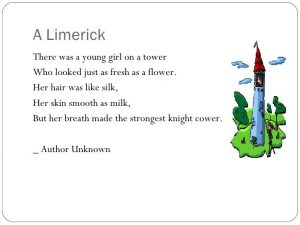
Limericks are often humorous poems, with three long and two short lines with the rhyme scheme aabba. Some times these can be bawdy.

I share with you the Poetry Generator for Limericks.

Here’s mine:

There was a man named Trygg
Who used to dance a jig
But during a break
He made a mistake
What a terrible day for Trygg

There are days when you just need a little bit of fun.

National Poetry Month 2021

Welcome to National Poetry Month!

Please share your poetry related posts below, so I can stop by!

I have no hard and fast plans this month, but there will be reviews and activities, and perhaps some videos. I hope you stop by and check out some of the fun poetry.

I’d love to inspire some of you to write your own poetry, too. It can be cathartic, but you don’t have to share those poem drafts if you don’t want.

Reading: The Inner Loop and This Is What America Looks Like

For those who missed my March 16, 2021, reading with The Inner Loop, watch the recording. I’m at about 14:15, but don’t miss some of these phenomenal writers.

Reading: The Inner Loop Presents This Is What America Looks Like

The Inner Loop is hosting a reading from This Is What America Looks Like, featuring Elizabeth Kadetsky.

Poets include:
Serena Agusto-Cox
Hayes Davis
Kristin Ferragut
Matthew Hohner
Courtney Sexton

Fiction writers include:
Amy Freeman
Melanie Hatter
Len Kruger
Kirsten Porter

I hope you’ll join us at 7:30 p.m. on March 16.

Book Spotlight: Black Girl, Call Home by Jasmine Mans

Normally, I don’t post book spotlights, but I have been looking forward to reading Mans’ collection: Black Girl, Call Home. Stay tuned for my review later this month.

About the collection:

A literary coming-of-age poetry collection, an ode to the places we call home, and a piercingly intimate deconstruction of daughterhood, Black Girl, Call Home is a love letter to the wandering black girl and a vital companion to any woman on a journey to find truth, belonging, and healing.

From spoken word poet Jasmine Mans comes an unforgettable poetry collection about race, feminism, and queer identity.

With echoes of Gwendolyn Brooks and Sonia Sanchez, Mans writes to call herself–and us–home. Each poem explores what it means to be a daughter of Newark, and America–and the painful, joyous path to adulthood as a young, queer Black woman.

Black Girl, Call Home is a love letter to the wandering Black girl and a vital companion to any woman on a journey to find truth, belonging, and healing.

Aren’t you just riveted? Check out her collection, Black Girl, Call Home, new on the market this month.

Photo Credit: Redens Desrosiers

About the Poet:

Jasmine Mans is a Black American poet, artist from Newark, New Jersey. She graduated from the University of Wisconsin Madison, with a B.A. in African American Studies. Her debut collection of poetry was published in 2012, (Chalk Outlines of Snow Angels). Mans is the resident poet at the Newark Public Library. She was a member of The Strivers Row Collective.

Publication News 2021

Hello everyone!

I have some wonderful publication news to share. It’s been a while since I’ve shared some news on the poetry writing front. I have been updating my Publication Credits page (it’s in the menu), so feel free to check that out, too.

First, three of my poems now are available in The Magnolia Review, Volume 6, Issue 2. The theme for the issue was “A Defining Moment.” You’ll need to download the PDF, but the magazine is worth the download.

My poems appear on pgs. 68, 80, and 115. I hope you check them out, but they are on dark topics regarding gun violence, so be aware.

Secondly, I’m happy to announce that the anthology from the Washington Writers’ Publishing House, This Is What America Looks Like, is available for purchase.

I have 1 poem included in this collection, but I hope you’ll buy a copy because I know many of these writers (fiction and poetry) and their work is AMAZING.

You can purchase the anthology through Amazon or directly from the publisher.

I’ll also have an interview with the poetry editor Jona Colson very soon on the blog. You may recall my review of his collection, Said Through Glass.

Perseverance pays off. I just want to remind you that art is hard work and pleasure in the making, but getting it published is even harder work. If you want it, pursue it.