Quantcast

St. Patrick’s Day Celebrations

After a hard days work and posting about the phenomenal Galway Bay by Mary Pat Kelly about Irish immigrants in honor of St. Patrick’s Day. I decided to do a little searching on the Internet for some local fun. Lo and behold, I discovered our Green Turtle was hosting St. Patrick’s Day celebrations with green beer and $2 pints, including exports like Guinness.

Here’s my husband enjoying his Green Miller Lite; I had a sip, but thoroughly enjoyed having my $2 pints of Guinness. Well, this place was full of St. Patty’s Day fun and green. The waiters and waitresses were wearing St. Patty’s Day shirts, green necklaces, fez hats, and elf ears?! My hubby just had to have some. Check him out.

I was wearing my green Celtics hat with its shamrock glory and my green shirt and shamrock socks! I think I was decked out enough for the occasion, but the manager offered me a hat and ears to take home as well.

How was your St. Patrick’s Day? What did you end up doing?

***Giveaway Reminder***

1 gently used ARC of Reading by Lightning by Joan Thomas; Deadline is March 20 at Midnight EST.

3 Copies of Galway Bay by Mary Pat Kelly for U.S./Canada residents
1 copy of Galway Bay by Mary Pat Kelly for an international resident
Deadline is March 24, 5pm EST

Galway Bay by Mary Pat Kelly

Welcome to the March Early Birds Tour from Hachette Group and Grand Central Publishing for Galway Bay by Mary Pat Kelly on this fine St. Patrick’s Day. As an added treat with my review, please check out the discussion with Mary Pat Kelly on BlogTalkRadio at 11 AM-12PM EST.

“I was used to the give-and-take of a large family, where one broke in on the other, splintering sentences, bouncing thought away from meaning. But Michael and I listened to each other, each waiting as the other found words for what we’d never said before, never even thought before, giving shape to dreams and to fears. I’d no idea I was such a worrier–the ifs and buts that flowed out of me. Michael teased them away.” (Page 105-106)

Sweeping novels that span several generations must be well-crafted to hold readers’ attention, especially if the historical novel is going to be more than 500 pages. Mary Pat Kelly’s Galway Bay will suck readers in, churn them in rip currents, and spit them out in untamed America along with the Kellys, Leahys, Keeleys, and other Irish immigrants fleeing their homeland during the repeated potato blights and following The Great Starvation.

Honora Keeley is set upon entering the convent until she meets the dashing novice adventurer Michael Kelly. She’s a fisherman’s daughter with a rich heritage steeped in lore and myth and he’s the son of a blacksmith forced out of his home when his parents die and the blacksmith shop is no longer his family’s anchor. They find each other in the good times and suffer through the potato blight, famine, the cruelty of the Sassenach (English) and landlords, and the rise of Protestantism. After a great deal of sacrifice and heartache, the Kellys have no choice but to flee their homeland to begin again in Amerikay.

Kelly’s poetic prose places the reader beside Honora as she makes her way through thick fog, a fog that has brought blight on potato farms in the past. It also will have the reader cringing as they stick their hands in the dirt, finding muck rather than hard potatoes to feed their bellies.

“The fog wrapped itself around me, heavy and moist. I’ll go along the strand–faster, and the tide’s out. I could hear the waves hitting against the fingers of rocks that stretched out into the water, but the fog hid the Bay from me.” (Page 120)

“I crawled to another patch and plunged my hand into the foul-smelling mess. I felt a hard lump–a good potato. But when I grabbed it, the potato fell apart in my hand, oozing through my fingers.” (Page 128)

Kelly creates well rounded characters from strong-willed Honora to her quirky grandmother and from gifted storyteller Michael Kelly to quick witted Maire. Frank McCourt’s quote on the cover of Galway Bay is spot on, this book will have readers laughing, crying, and cheering Honora and Maire onward. Kelly’s narrative will bring readers to tears more than once, but as they struggle alongside Honora and her family, they too will grow stronger and more aware of the blessings family can bring. Galway Bay is a mixture of narrative poetry and prose that generates its own folklore that will be told from generation to generation for years to come. It will be on my top 10 list for 2009, how about yours?

***Giveaway Details***

From Hachette Group, three copies of Galway Bay for three lucky U.S. or Canada readers; No P.O. Boxes please.

I will spring for one copy of Galway Bay for one lucky international reader outside the U.S. and Canada, so make sure you let me know who you are.

To Enter:

1. Leave a comment other than “pick me” or “enter me.”

2. Spread the word about the contest and leave a link here for a second entry.

3. Share your favorite St. Patrick’s Day tradition for a third entry.

Deadline is March 24, 5PM EST

About the Author:
As an author and filmmaker, Mary Pat Kelly has told various stories connected to Ireland. Her award-winning PBS documentaries and accompanying books include To Live for Ireland, a portrait of Nobel Peace Prize winner John Hume and the political party he led; Home Away from Home: The Yanks in Ireland, a history of U.S. forces in Northern Ireland during World War II; and Proudly We Served: The Men of the USS Mason, a portrayal of the only African-American sailors to take a World War II warship into combat, whose first foreign port was Belfast. She wrote and directed the dramatic feature film Proud, starring Ossie Davis and Stephen Rea, based on the USS Mason story.
She’s written Martin Scorsese: The First Decade and Martin Scorsese: A Journey; Good to Go: The Rescue of Scott O’Grady from Bosnia; and a novel, Special Intentions. She is a frequent contributor to Irish America Magazine.
Mary Pat Kelly worked in Hollywood as a screenwriter for Paramount and Columbia Pictures and in New York City as an associate producer with Good Morning America and Saturday Night Live, and wrote the book and lyrics for the musical Abby’s Song. She received her PhD from the City University of New York.
Born and raised in Chicago, she lives on Manhattan’s Upper West Side with her husband, Web designer Martin Sheerin from County Tyrone.
Check out her blog for Galway Bay, here.
Check out the Book Club Discussion Guide, here.
“An Honor” by Mary Pat Kelly about her journey through Galway Bay and her heritage.
Check out this Guest Post at A Bookworm’s World from Mary Pat Kelly herself; It’s very inspiring.

Check out the other Blogs on the tour, here.

***GIVEAWAY REMINDER***

I also have two copies of Diana Raab‘s My Muse Undresses Me and one copy of Dear Anaïs: My Life in Poems for You. Deadline is March 18 at 5PM EST.

One gently used ARC of Reading by Lightning by Joan Thomas; Deadline is March 20 at Midnight EST.

Also Reviewed By:
Historical Tapestry

Interview With Poet Jehanne Dubrow

From the Fever-World
By Jehanne Dubrow

In the fever-world, my dearest,

our hands aren’t clean

for very long, the brambles

biting in our palms,

deep thorns across our life lines–

here, even the shrub

surrendering fruit to the picker

resents the sacrifice and wants

its juices given back in blood.

if you are hungry, starve yourself.

Make a desert of your thirst.

Don’t fall asleep

Here, my dearest,

there’s only wilderness where fields

should be, only the blackberries

concealing knives,

cherries pitted with buckshot

to choke the unsuspecting throat,

and peaches whose centers hold

dark stones of cyanide.

– first appeared in The Barn Owl Review

I’ve been working on a interview project with Deborah at 32 Poems magazine, and she kindly allowed me to interview past contributors to the magazine. We will be posting the interviews throughout the coming months, and our seventh interview posted on Deborah’s Poetry Blog of 32 Poems on March 13. I’m going to provide you with a snippet from the interview, but if you want to read the entire interview, I’ll provide you a link for that as well. For now, let me introduce to you 32 Poems contributor, Jehanne Dubrow :

1. How would you introduce yourself to a crowded room eager to hang on your every word? Are you just a poet, what else should people know about you?

I suppose one of the most interesting things about me is my nomadic childhood. I was born in a little town in Northern Italy and grew up in Yugoslavia, Zaire, Poland, Belgium, Austria, and the United States. Oh, and when I twenty-years-old, I played a gangrenous valley girl in the movie An American Werewolf in Paris (sadly, I ended up on the cutting room floor). I still remember my line: “Claude’s parties are wack!!!”

2. Do you see spoken word, performance, or written poetry as more powerful or powerful in different ways and why? Also, do you believe that writing can be an equalizer to help humanity become more tolerant or collaborative? Why or why not?

For me, written poetry has the emotional force expected of spoken word and performance poetry, while also having a life on the page. I haven’t seen evidence that writing makes us more tolerant or collaborative. Writers tend to be a critical bunch—our craft depends on having a sharp eye and a small sliver of ice in the heart.

3. Do you have any obsessions that you would like to share?

I have an odd mix of obsessions, half scholarly and half not-so-much: Holocaust studies, American Jewish literature, my dog Argos, midcentury modern design, and Hermes scarves.

4. Poetry is often considered elitist or inaccessible by mainstream readers. Do poets have an obligation to dispel that myth and how do you think it could be accomplished?

Nowhere else in the world do people worry or complain about the elitism of poetry. When Americans complain that poetry is elitist, what they’re really addressing is the strong strain of anti-intellectualism in this country. Americans don’t like to feel stupid, and poetry often makes them feel stupid. I don’t think poetry needs to become less elitist; I think we need to do a better job teaching students how to read poems or, for that matter, how to look at paintings, how to listen to operas, how to watch ballets.

From the Spring Issue of 32 Poems by Jehanne Dubrow:

FRAGMENT FROM A NONEXISTENT YIDDISH POET
Ida Lewin (1906-1938)
AlwaysWinter, Poland

2.

Each year, the chill creeps in
By June, our eaves sharp
with iron icicles, our windows
rattling like teeth against the cold
AlwaysWinter we call this town
because the ground won’t thaw,
no matter how we press skin
to skin, make a fire from
this friction we call love.
Thistles remain needles, each blade
of grass a blade that slices
to our soles AlwaysWinter
we say to justify the frozen places
everywhere—the constant
the wind, the tundra buried
deep inside our bones

Want to find out what Jehanne’s writing space looks like? What music she listens to while she writes? Find out what she’s working on now, her obsessions, and much more. Check out the rest of my interview with Jehanne here. Please feel free to comment on the 32 Poems blog and Savvy Verse & Wit.

Jehanne Dubrow’s Bio:

Jehanne Dubrow’s work has appeared in Shenandoah, Poetry Northwest, Gulf Coast, and Prairie Schooner. She is the author of the poetry collection, The Hardship Post, winner of the Three Candles Press First Book Prize (2009), and a chapbook, The Promised Bride (Finishing Line 2007). A second collection, From the Fever-World, won the Washington Writers’ Publishing House Award and will be published in 2009. Her third poetry collection, Stateside, will be released by Northwestern University Press in 2010.

***GIVEAWAY REMINDER***

I also have two copies of Diana Raab‘s My Muse Undresses Me and one copy of Dear Anaïs: My Life in Poems for You. Deadline is March 18 at 5PM EST.

One gently used ARC of Reading by Lightning by Joan Thomas; Deadline is March 20 at Midnight EST.

Mailbox Monday #21


Marcia’s The Printed Page sponsored Mailbox Monday each week. Ready to see what came in my mailbox this week?

Here are the goodies:

1. A Lucky Child by Thomas Buergenthal from Hatchette Group

2. Miranda’s Big Mistake by Jill Mansell for a tour with Sourcebooks

3. The Mechanics of Falling by Catherine Brady for an April TLC Book Tour

4. Tea and Other Ayama Na Tales by Eleanor Bluestein for an April TLC Book Tour

5. Deep Dish by Mary Kay Andrews for Book Club Girl‘s March 25 show

6. The True Keeps Calm Biding Its Story by Rusty Morrison from the American Academy of Poets, which won the James Laughlin Award.

7. Keeper of Light and Dust by Natasha Mostert from A Novel Menagerie for a small virtual tour.

8. The Italian Lover by Robert Hellenga from my great friend Janel at Janel’s Jumble, and somehow I have two copies of this book. But this one is special because Janel included a cute little beaded book thong, which I assume she made herself! Janel, you’re a gem!

***GIVEAWAY REMINDER***

I also have two copies of Diana Raab‘s My Muse Undresses Me and one copy of Dear Anaïs: My Life in Poems for You. Deadline is March 18 at 5PM EST.

One gently used ARC of Reading by Lightning by Joan Thomas; Deadline is March 20 at Midnight EST.

Writing Goal Week #11

The last writing goal was to continue creating poems for the Marked issue of Blossombones. I still have until April 30, 2009 to finish a bunch of poems for this issue, so this will probably be my goal for a couple of weeks.

This week I finished the third and fourth poems I began a couple weeks ago.

Writing Goal Week #11

I plan on writing some newer poems for the Marked issue. Thanks for your support.

***GIVEAWAY REMINDER***

I have two copies of Diana Raab‘s My Muse Undresses Me and one copy of Dear Anaïs: My Life in Poems for You. Deadline is March 18 at 5PM EST.

One gently used ARC of Reading by Lightning by Joan Thomas; Deadline is March 20 at Midnight EST.

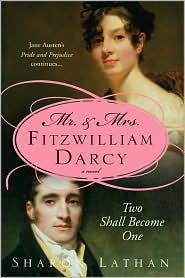
Winners of Mr. & Mrs. Darcy: Two Shall Become One


Of the 43 entrants into this giveaway, Randomizer.org selected #20 and #40.

The winners of Mr. & Mrs. Darcy: Two Shall Become One by Sharon Lathan are:

Teddy Rose of So Many Precious Books, So Little Time

Willow of Free Books and Other Contests and Willow’s Inner Thoughts

I will be contact the winners via blog or email, and they will have until March 17 at 5PM EST to reply

***GIVEAWAY REMINDER***

I also have two copies of Diana Raab‘s My Muse Undresses Me and one copy of Dear Anaïs: My Life in Poems for You. Deadline is March 18 at 5PM EST.

One gently used ARC of Reading by Lightning by Joan Thomas; Deadline is March 20 at Midnight EST.

Interview With Poet Andrea Defoe

I’ve been working on a interview project with Deborah at 32 Poems magazine, and she kindly allowed me to interview past contributors to the magazine. We will be posting the interviews throughout the coming months, and our seventh interview posted on Deborah’s Poetry Blog of 32 Poems on March 10.

I’m going to provide you with a snippet from the interview, but if you want to read the entire interview, I’ll provide you a link for that as well.

Previously published in Rattle:

“FOR A PIANO ABANDONED IN THE BREADBASKET

Perhaps it was too heavy
for the horses to haul it all the way west
or something else just mattered more.
Maybe someone was jealous
of how the girl played it
as if sweet little veeries were flying out her fingertips:
Snow White of the new frontier.
Maybe she hated it, but probably
it was her favorite thing and alone
nights nothing to smother the hollering
silence she rocked herself and thought
of her piano gathering snow, envisioned
the prairie rodents caching their food
between its wires, elk nosing the keys
in a song so random they could only
think of it like thunder. Maybe some Indian
had found it and grasped its beauty, hauled
it home to pay his dowry. But in the best
of these dreams she was sleeping and the piano’s
legs came to life–this didn’t frighten her,
she’d always known her piano was alive–
and worked its sunken heels out of the soil,
began to march then trot in the path
of the last wheels to pass this way
till one wind-rattled night she’d hear
a peculiar tap and find it there in the dark,
waiting for her to make it sing.

For now, let me introduce to you 32 Poems contributor, Andrea Defoe:

1. You are a contributor to 32 Poems, but what else can you tell us about yourself and your writing life? What do you find difficult about your writing practices?

I’m a stay-at-home parent and presently work from a high traffic area of the house, sharing computer time with my husband and three kids. The most difficult aspect for me is finding time to write when there are few distractions (I choose the word “few,” as there is always some). Functioning as a writer with ADHD is challenging for me, as well — particularly when it comes to reading. I have a lot of books that I’ve begun to read, but relatively few that I’ve been able to finish. A great appeal of poetry is that I can pick up a volume of it, open to any page and read a while without that Ugh! Yet another thing I couldn’t finish… feeling.

2. Do you see spoken word, performance, or written poetry as more powerful or powerful in different ways and why? Also, do you believe that writing can be an equalizer to help humanity become more tolerant or collaborative? Why or why not?

My greatest preference is to go somewhere quiet and be alone with a collection. I fixate heavily on individual lines and phrasings — often walking away, returning, and rereading several times before I finally feel ready to appreciate a poem as a whole package. When the poem is simply read to me in a straight stretch, I feel deprived of that — and at times it feels like an imposition, being told how to hear a poem. I’m of the mindset that a poem belongs to its reader. Having said that, some people give fabulous readings that truly do lend a strong voice to their work, so I can’t say this is how it is all of the time.

“Writing” is such an encompassing word. Even if it’s narrowed to mean simply “poetry” I do think the potential for impact is still huge. Elizabeth Alexander’s recent reading at President Obama’s inauguration springs most readily to my mind. The reading itself sapped the luster out of a good poem, but the discussion it inspired, the attention turned to poetry, were positive things.

3. Do you have any obsessions that you would like to share?

I do have an incredibly studly gray cat I call Sir Otter Von Klaus, but I prefer to keep him to myself.

Want to find out what Andrea’s writing space looks like? What music she listens to while she writes? Find out what she’s working on now, her obsessions, and much more. Check out the rest of my interview with Andrea here. Please feel free to comment on the 32 Poems blog and Savvy Verse & Wit.

Poet Bio:

Andrea Defoe lives with her husband, three children and several pets on the Red Cliff Indian Reservation in Wisconsin. Her poems have appeared in various literary journals, most recently Margie, New American Writing, Now Culture and 32 Poems. In addition to writing she enjoys drawing and painting, but is quite bad at both.

***GIVEAWAY REMINDER***

I have two copies up for grabs of Sharon Lathan’s Mr. & Mrs. Darcy: Two Shall Become One; the giveaway is international and the deadline is March 14 at Midnight EST.

I also have two copies of Diana Raab‘s My Muse Undresses Me and one copy of Dear Anaïs: My Life in Poems for You. Deadline is March 18 at 5PM EST.

One gently used ARC of Reading by Lightning by Joan Thomas; Deadline is March 20 at Midnight EST.

Reading by Lightning by Joan Thomas

Reading by Lightning by Joan Thomas, published by Goose Lane Editions, made its way into my mailbox from Mini Book Expo. It’s a coming of age novel at a time that the world is on the brink of World War II, particularly in England.

It took me a long while to get into this book, more than 100 pages, which was disheartening. In Book One readers will wander through Lily Piper’s musings and her interactions or lack thereof with her parents. The wavering narrative and tangents of Lily drag on for long stretches, and readers may have a hard time following along. Her relationship with her mother is cantankerous at times and Lily is often portrayed as a wayward child led by the sin in her heart. There are a number of instances where Lily wanders off with boys alone, which in many ways should ruin her reputation.

“Wonderful for your maidenly inhibitions (going to hand me the flask and then reaching around me to unscrew it himself and in the process circling me with both arms). The way we tussled around and he pressed the mouth of the flask to my mouth and I resisted or pretended to resist, whiskey meanwhile sliding hotly in through my lips and dribbling down my chin and onto my bathing suit.” (Page 88)

Her relationship with her father is more of silent understanding, but again this relationship is not something a girl can cling to when she needs reassurance or strength. Lily’s interactions with her brother are few and not enlightening at all, revealing little of her character or his. Through side stories and discussions about her father’s immigration to Canada and the Barr Colony, Lily learns about her father’s journey, how it came to pass, and the secret illness that prohibits him from leading a normal life.

In Book Two, Lily is sent to England to take care of her grandmother, her father’s mother, and this is where the novel picks up in pace and Lily grows into an adolescent and falls in love with her cousin George. Thomas’ writing is detailed and poignant from this point on in the novel and had me riveted.

“But tears would begin to course down her [Lily’s grandmother’s] cheeks, which already looked like the leaves of a book damaged by rain. So I would sit with her, because I’d nothing else to do. I’d want to ask about my father, and at first I did. Oh, he was a lovely lad, she’d say vaguely and start to tell me about him crawling through a hole in the wall into the next house, and then she’d get confused as to whether that was Willie or Hugh or Roland, or even her own little brother when she was a girl.” (Page 140)

There are passages in these sections that offer suspense and insight into Lily and what she is seeking to learn from her relatives and about herself. However, death seems to follow Lily on her journey and lead her back home to Canada in Book Three.

The truest moments in the novel are when the air raid sirens sound and the women and children board themselves up in shelters or in their homes in preparation for war with Germany and when the bombs are falling outside and they huddle in the dark living room comforting one another with stories of the mundane. These scenes are well crafted and tangible for readers, transporting them to another era. Once back in Canada, Lily succumbs to her previous manner in the home of her mother, but the letters from her cousins abroad continue to bring the reality of war home.

I read this novel as part of the War Through the Generations: WWII Reading Challenge. This is my first completed book for the challenge. I’ve been a bit slow.

About the Author:

Joan Thomas has been a regular book reviewer for the Globe and Mail for more than a decade. Her essays, stories, and articles have been published in numerous journals and magazines including Prairie Fire, Books in Canada, and the Winnipeg Free Press. She has won a National Magazine Award, co-edited Turn of the Story: Canadian Short Fiction on the Eve of the Millennium, and has served on the editorial boards of Turnstone Press and Prairie Fire Magazine. She lives in Winnipeg.

Also Reviewed By:
Diary of an Eccentric

***Giveaway Details***

This giveaway will be international. I have one gently used ARC copy of this book available.

Leave a comment on this post and randomizer.org will select the winner.

Deadline is March 20 at Midnight EST.

***GIVEAWAY REMINDER***

I have two copies up for grabs of Sharon Lathan’s Mr. & Mrs. Darcy: Two Shall Become One; the giveaway is international and the deadline is March 14 at Midnight EST.

I also have two copies of Diana Raab‘s My Muse Undresses Me and one copy of Dear Anaïs: My Life in Poems for You. Deadline is March 18 at 5PM EST.

Interview with Poet Diana Raab

I’d like to welcome poet Diana Raab to Savvy Verse & Wit. Yesterday, I reviewed her poetry collection, Dear Anaïs: My Life in Poems for You. You can read my review of her collection, here.

Please welcome Diana:

1. Do you see spoken word, performance, or written poetry as more powerful or powerful in different ways and why? Also, do you believe that writing can be an equalizer to help humanity become more tolerant or collaborative? Why or why not?

I find all forms of poetry powerful—spoken word, performance and written poetry. Poetry nurtures the soul and expresses core emotions and for this reason it can serve as an equalizer to help us all become more tolerant. This is particularly true for what I call “accessible poetry,” or poetry that reaches out with words that the reader can understand, feel or touch.

2. Do you have any obsessions that you would like to share?

My obsession is writing and getting my words out into the universe. I spend at least ten hours a day in my office, either creating or marketing my work. My other passion is reading. I suppose there is a fine line between having an obsession and a passion. For me, writing and reading wear both of these hats.

3. Most writers will read inspirational/how-to manuals, take workshops, or belong to writing groups. Did you subscribe to any of these aids and if so which did you find most helpful? Please feel free to name any “writing” books you enjoyed most (i.e. Bird by Bird by Anne Lamott).

I have been writing since the age of ten, so it would be impossible to list all the books and resources which have inspired me as a writer.

In the 1980s and 1990s, I attended many writing conferences and workshops. There was something contagious about being around other writers producing work. Both The University of Iowa’s Summer Writing Program and AWP have sparked a great deal of interest for me. These days I teach at the conferences and even as a teacher it is inspiring.

As a journaling advocate, I have found that reading the journals of Anaïs Nin helped me find my own voice. This is the main reason I have decided to dedicate this latest book of poems to her.

4. Poetry is often considered elitist or inaccessible by mainstream readers. Do poets have an obligation to dispel that myth and how do you think it could be accomplished?

I think the idea of poetry being elitist and inaccessible is an old concept. Much of contemporary poetry is accessible. I believe that the former poet laureate of the United States, Billy Collins, is greatly responsible for this change. He brought poetry 180 into the schools. His accessible poetry has inspired many people, including myself, to write poetry.

5. When writing poetry, prose, essays, and other works do you listen to music? Do you have a particular playlist for each genre you work in or does the playlist stay the same? What are the top 5 songs on that playlist? If you don’t listen to music while writing, do you have any other routines or habits?

The decision to listen to music while writing depends upon my mood. Sometimes I need music, other times, any bit of noise irks me. If I do listen to music, I might listen to the words of Leonard Cohen and also some instrumental music such as new age music geared towards productivity and concentration.

My writing habit entails working on a few projects at the same time, often times in different genres. I enjoy the variety and find that each genre feeds off the other. However, if I have an impending deadline, I am able to focus and wrap up a project if I either put a ‘Do Not Disturb,’ sign on my door or just go away to an undisclosed place for a writing retreat.

6. In terms of friendships, have your friendships changed since you began focusing on writing? Are there more writers among your friends or have your relationships remained the same?

This is difficult to answer, since I have always written. I have a mix of literary and non-literary friends.

7. How do you stay fit and healthy as a writer?

I work out at the gym with a trainer three times a week. I try to walk every day with my dog anywhere from 30-60 minutes. I also do restorative yoga once a week and meditate every day. All these activities help me focus on my work.

8. Do you have any favorite foods or foods that you find keep you inspired? What are the ways in which you pump yourself up to keep writing and overcome writer’s block?

I do not believe in writer’s block. It’s just an excuse not to write. I think that those who keep journals rarely experience writer’s block. If I am not feeling creative, I will just free-write in my journal and usually something interesting will come of it. Sometimes I read the words of my favorite writers to inspire me. I also often read the journals of Anaïs Nin because both her sensibilities and voice seem to resonate with me.

9. Please describe your writing space and how it would differ from your ideal writing space.

I have a writing studio which is my favorite room in the house. In taking Virginia Woolf’s advice quite seriously, I have found a room with a view overlooking the mountains of southern California. I use a laptop on my desk and there are many bookshelves behind my desk with my favorite books, most of them autographed. I have a painting by Edward Hopper hanging on the wall opposite my desk.

Other framed items include the book jacket of my memoir, Regina’s Closet: Finding My Grandmother’s Secret Journal, and a quote by Mark Twain which says, “The difference between the almost right word and the right word, is really large matter—it’s the difference between the lightening bug and the lightening.” I am a lover of quotations and over the years, I have collected many favorite ones.

10. What current projects are you working on and would you like to share some details with the readers?

I have just finishing editing an anthology I compiled called Writers and Their Notebooks. It is forthcoming by the University of South Carolina Press in February 2010. I am very excited about this collection. It includes essays written by well-published writers who used journals in their practice, such as Dorianne Laux, Sue Grafton, John DuFresne, Kim Stafford, Ilan Stavans, Michelle Wildgen. The preface was written by Phillip Lopate.

I am also working on another poetry collection and a memoir.

11. I’ve noticed reading some of your initial poems that there is an ironic sense near the end of these verses. Was this sense of irony intentional? Like in “Jones Beach” where the mother is an environmentalist and yet serves her children cookies that are appetite suppressants.

Yes. My poems just come out of me in one fell-swoop. They are not premeditated or calculated.

12. Anaïs Nin was a diarist and your poems seem to be like diary entries as well. Did all of these poems come immediately following your in-depth reading of her work or did they evolve over time? Would you consider Dear Anaïs representative of all of your work or do you craft a variety of poem forms and types?

All of my poems were born on the pages of my journal. I create best with pen in hand. I devoted this latest collection to Nin because reading her journals helped me find my voice. I am a narrative poet and yes, my latest book of poetry is a fair representation of my work. I will be experimenting with other forms, but this is representative of my work at this point in time.

Thank you Diane for taking the time out of your busy schedule to answer my questions. I wish you luck with your latest projects and look forward to seeing your latest projects in print.

And now, for the giveaway information: (3 Winners)

Diana has graciously offered one copy of Dear Anaïs: My Life in Poems for You and 2 copies of her chapbook My Muse Undresses Me.

1. Leave a comment about what inspired you to give this collection a try on my review post, here.

2. Comment on this interview with something other than “pick me” or “enter me.”

Deadline is March 18, 5PM EST.

Randomizer.org will select the three winners; the first number selected will win Dear Anaïs: My Life in Poems for You.

Dear Anais by Diana Raab

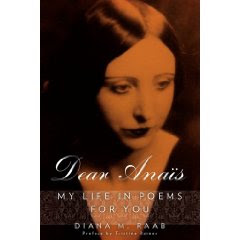
I received Dear Anaïs: My Life in Poems for You by Diana M. Raab from the author for review, I’m thrilled to say that Raab’s use of language in a format that resembles diary entries is fantastic. The volume begins with a letter to Anaïs about how she inspired Raab through her journals, particularly Anaïs’ entries about the house Eric Lloyd Wright built for her.

Each poem provides the reader with an insider’s look at Raab’s life and her interactions with family and others. Mirroring Anaïs Nin’s style, Raab seeks to demonstrate how important love is to humanity and how important it is to maintain our connections to one another.

Here’s her poem, “Weekly Lottery“:

Giving into his obsessions
was one thing my father did
almost every day of his life
for the fifty years which
he lived after The Holocaust
which robbed him of his parents
and baby brother Josh, putting
he and his brother in Dachau’s
kitchen, slicing potatoes and
saving friends from starvation
as the Nazis dined off Rosenthal
plates confiscated from Jews
tossed into frigid barracks and
stripped of everything ever
important to them.

Dad’s first treat, after arriving
in the United States with his brother Bob,
was using his factory paycheck for
a weekly lottery ticket, awaiting
the easy windfall, a sham of
good fortune, as if winning
the lottery was a ticket for
a new freedom boat. His
bliss stretched to winning five
tickets, five more scratches of
horizontal square boxes with
the same 1945 nickel which
he always carried in his pocket
for good luck, maybe not
enough cents to keep the
inveterate smoker alive past 70.

Raab’s poetry is detailed, vivid, and critical of its own subject matter and the narrator’s voice is often ironic in the final stanza or lines, reminding readers of how haiku can shed light on the most mundane of natural circumstances. In this poem, “Weekly Lottery,” Raab uses short lines and long sentences to build momentum, which invariably builds suspense for the reader.

Poems about the holocaust and WWII and war in general often attract my attention, which is probably why this poem has stuck with me since I first read Dear Anaïs. And I’ve already read through this book several times. There are a number of poems in here about Raab’s relatives and their dealings with war and the concentration camps.

This is an enjoyable collection of contemporary poems for every reader. Readers can connect with Raab through her poetry, including the hardship of loss and the nuances of daily living. Writers will enjoy her poems that deal with the writing process such as “Sketch of a Writer’s Studio” and “Sheets.” My personal favorite in this section was “On Demand,” which is about much more than just writing poems upon request.

About the Poet:

Diana M. Raab, MFA is a memoirist, essayist and poet. She teaches memoir, journaling and poetry in the UCLA Writers Program and the Santa Barbara Writers Conference. She also narrates and teaches workshops around the country.

Diana has been writing from an early age. As an only child of two working parents, she spent a lot of time crafting letters and keeping a daily journal. In university she studied journalism, health administration and nursing, all serving as platforms for her years as a medical and self-help writer.

Raab’s memoir, Regina’s Closet: Finding My Grandmother’s Secret Journal (2007) won the National Indie Excellence Award for Memoir and was the recipient of many other honors.

Raab’s work has been published in numerous literary magazines and has been widely anthologized. She has one poetry chapbook, My Muse Undresses Me and one poetry collection, Dear Anaïs: My Life in Poems for You (2008).

She’s editor of a forthcoming anthology, Writers and Their Notebooks (USC Press, 2009) which is a collection of essays written by well-known writers who journal, including Sue Grafton, Kim Stafford, Dorianne Laux, John DuFresne, James Brown and Michael Steinberg, to name a few. The foreword is written by the world-renowned personal essayist, Phillip Lopate.

Stay Tuned for my Interview with Diana, tomorrow March 12.

And now, for the giveaway information: (3 Winners)

Diana has graciously offered one copy of Dear Anaïs: My Life in Poems for You and 2 copies of her chapbook My Muse Undresses Me.

1. Leave a comment about what inspired you to give this collection a try.
2. Tune in tomorrow and comment on my interview with Diana

Deadline is March 18, 5PM EST.

Randomizer.org will select the three winners; the first number selected will win Dear Anaïs: My Life in Poems for You.


THIS GIVEAWAY IS NOW CLOSED!

***Another Giveaway***

Check out this link to win a copy of Mr & Mrs Darcy: Two Shall Become One by Sharon Lathan.

***In Other News***

Savvy Verse & Wit has a spotlight guest post up at She Is Too Fond of Books; Check out my bookstore spotlight about Politics & Prose.