Quantcast

The Last Dickens by Matthew Pearl

Matthew Pearl‘s The Last Dickens is one of a number of books about Charles Dickens‘ last, albeit unfinished novel, The Mystery of Edwin Drood.  But what sets this novel apart from its compatriots is Pearl’s ability to build suspense and extrapolate from historical events to create a palpable underbelly of the publishing world.  

“A man stretched out on a crusty, ragged couch granted them admission into a corridor, after which they ascended a narrow stairs where every board groaned at their steps; perhaps out of despair, perhaps to warn the inhabitants.”  (Page 199 of hardcover)

Charles Dickens’ final, incomplete novel–he only completed six installments–caused a great deal of controversy as to whether the author indeed had not finished the manuscript, which in those days were released in installments.  Pearl mimics this method by breaking up the narration in separate installments from the Boston publishing house, Dickens’ American tour, Dickens’ son Frank in India at the height of the opium trade, and in England as Dickens’ American publisher Mr. Osgood with his bookkeeper Rebecca Sand search for the lost installments and the true end of Dickens’ final novel.

“At the top of the stick was an exotic and ugly golden idol, the head of a beast, a horn rising from the top, terrible mouth agape, sparks of fire shooting from its outstretched tongue.  It was mesmerizing to behold.  Not just because of its shining ugliness, but also because it was such a contrast to the stranger’s own mouth, mostly hidden under an ear-to-ear mustache.  The man’s lips barely managed to pry open his mouth when he spoke.”  (Page 8 of hardcover)

Pearl includes an examination of the historical accuracies in the novel and which characters were pure fiction or modified historical figures.  One part mystery, one part historical fiction, and one part crime novel, The Last Dickens weaves a complex and detailed story that holds readers rapt attention from beginning to end.

While the chapters involving Frank Dickens’ time in India uncovering an opium trade are not as prominent as some of the other narratives, it is intricately connected to the main story.  However, some readers could find these chapters frustrating because of the gap between those chapters, which could either leave readers frustrated that the tale of Frank Dickens is dropped or anxious for its conclusion.  Most readers are likely to err on the side of anxiety, wanting to know more.

“There are many reasons murder is not always found out, and they are not always for cunning.  The reason might be the fatigue among those who have been deadened on the inside.”  (Page 264 of hardcover)

Osgood is not easily swayed when he is hot on the trail of the missing installments and the end of Dickens’ novel, and as each layer of the mystery is peeled back for the reader, the dark, cutthroat publishing industry is revealed.  Bookaneers are the bottom feeders of the publishing industry, waiting on the docks for the latest installments from the Old World, while publishing giants from New York, like Harper, are eager to acquire these installments by any means necessary and at the expense of their competitors.

The Last Dickens is not just about an unfinished novel or the dark side of publishing.  It also takes a look at human conviction in the face of adversity and how perseverance and a moral compass can yield surprising results.  Pearl is a mystery master, and The Last Dickens will not disappoint its readers.

If you missed Matthew Pearl’s guest post, check it out.  I want to thank Matthew Pearl, Random House and TLC Book Tours for providing me a free copy of The Last Dickens for review.

Click on the title links for my Amazon Affiliate purchasing pages.  

For an additional treat, check out this YouTube video:

For the giveaway for U.S. and Canada residents:  ***Just got word I have 2 copies available***

1.  Leave a comment on this post.
2.  Blog, Tweet, or Spread the Word for an additional entry.
3.  If you follow, get a third entry.

Deadline is Oct. 29, 2009 at 11:59 PM EST

The Widow’s Season by Laura Brodie

Laura Brodie’s debut novel, The Widow’s Season, is a dirge of grief, wraiths, and resurrection of a professional woman whose been lost in of the song’s cadence for far too long.  Set in Jackson, Va., in a small college town, the season’s change and sweep the protagonist, Sarah McConnell along.

“Sarah McConnell’s husband had been dead three months when she saw him in the grocery store.  He was standing at the end of the seasonal aisle, contemplating a display of plastic pumpkins, when, for one brief moment, he lifted his head and looked into her eyes.”  (First line, Page 3)

Not only does Sarah mourn her husband and the life they had, but she also mourns the life they dreamt about, the life that was snatched from them time and again, and the illusion of their future happiness.  The Widow’s Season is a character driven novel that teeters on the brink of despair as Sarah attempts to navigate her after-life alone.  Nate, her brother-in-law, has lost his mother and his brother in such a short time, and he, like Sarah, does not grieve in an outward display of sobs and outbursts, but turns inward.  Sarah’s friend Margaret anchors her to reality and persuades her to meet for tea every Friday and join her widow’s group once a month.  Unlike, Sarah, Nate’s support system is gone, but he has his investment work to bury himself in.

“An hour later, when she pulled up at the cabin, she had the old sensation of arriving at an empty house.  No lights shone in the windows; the grass was still unmowed.  When she unlocked the door, an immense stillness confronted her.”  (Page 151)

Told in third person, Brodie’s language has a eerie, otherworldly quality that will suck readers easily into an alternate reality.  Grief drips from the pages of Sarah’s life and will consume readers in its wake as she lifts the fog that has surrounded her existence and uncovers her strength, poise, and determination.  Fresh and frank is Brodie’s writing as if she has first hand knowledge of deep desolation and how it can twist reality into alternative that is more palatable.

A great selection for the Fall and Halloween holiday, though it is not a ghost story in a traditional sense, The Widow’s Season is about transformation and living with ones ghosts.

Thanks to Laura Brodie for sending me a free copy of her novel for review.

If you missed my interview with Laura Brodie on D.C. Literature Examiner, you should check it out and find out what she recommends for Halloween reading.  Stay tuned for Laura Brodie’s guest post later today.


Also Reviewed By:

As Usual, I Need More Bookshelves
Missy’s Book Nook

When You Went Away by Michael Baron

Michael Baron‘s When You Went Away is more than a novel about grief and fatherhood; it’s a novel about being lost and the journey to find the right path.

Gerry Rubato has lost his whole world–first his daughter Tanya runs away with an older man at age 17 and then he loses his wife tragically.  All he has left to center him is his infant son, Reese.  The story is told from Gerry’s point of view, and much of the beginning pages focuses on his grief and confusion about how to move on.  Readers will be swept up in his grief, his struggle to find his way, and the dilemmas that face him when he begins to fall in love again.  However, despite the focus on Gerry’s grief, readers may not find When You Went Away to be a tearjerker. 

“And just for a second — that instant between dreaming and being awake when almost anything still seems possible — I believed that everything else about my dream was true as well.  My wife was next to me.  My daughter, five or nine or seventeen, was two doors down the hall, about to protest that it was too early to go to school.”  (Page 3 of ARC)

Reese becomes Gerry’s world for a long two months of seclusion before he heads back to work at a catalog firm.  Codie, his wife’s sister, becomes a sounding board for Gerry and he for her, allowing their relationship to go beyond sister-in-law and brother-in-law to confidants.  The first few weeks back to work for Gerry are rough with sympathetic looks and a number of “How are you feeling?” questions from coworkers.  Eventually, he finds a friend in Ally Rittan, a fellow creative mind.

“Ally slipped into the side door of my life and made herself at home without moving any of the furniture.” (Page 213 of ARC)

Readers will embark upon a meditative journey with Gerry and Reese as Gerry works through the loss of his wife, the realization that love can find you at the most inopportune moments, and the harsh realities of repairing a relationship with his lost daughter.  Some of the most insightful sections of the novel involve Gerry’s journal conversations with his daughter Tanya; they are frank and raw.

When You Went Away is an apt title given that the narration focuses on what Gerry feels, does, and how he reacts to the absence of his daughter and his wife, but readers may also find that this novel examines what can happen to the self when tragedy strikes and the journey it takes to locate or transform that lost self. 

Also Reviewed By:
Cheryl’s Book Nook

Thanks to Michael Baron, The Story Plant, and Joy Strazza at Joan Schulhafer Publishing and Media Consulting for sending me a free copy of this book for review.  

Michael Baron agreed to share with my readers his writing space in a guest post.  Check back tomorrow.

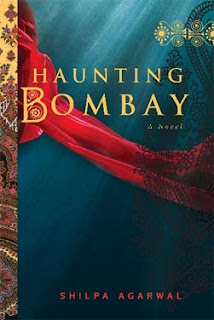
Haunting Bombay by Shilpa Agarwal

Shilpa Agarwal‘s Haunting Bombay immerses readers in a deeply saturated drama and literary ghost story reminiscent of the Bollywood films the Mittal family’s driver Gulu adapts into his own adventures.  Set in Bombay, India, the story spans two decades from the end of World War II into the 1960s.

Each member of the Mittal family is vivid from the main protagonist Pinky, a thirteen-year-old girl uncomfortable with her place in the family and grandmother Maji, who keeps the family unit running smoothly and keeps all of its secrets secure to self-centered Savita, Maji’s daughter-in-law bent on driving Pinky out and her seventeen-year-old son Nimish, who always has his head in a book and is too timid to talk to the girl he has a crush on.

“Pinky dreamt she was drowning.  She felt herself being pushed down into water, down, down, down until her lungs began to burst.  The only way out was to push her head farther in, to stop thrashing, to trust that she would not die.  But each time she grew afraid, each time she thrashed.  Each time she startled awake just as she was about to pass out.”  (Page 111)

Pinky’s mother dies during the partition of India, forcing her to become a refugee, but Maji takes her granddaughter into her bungalow, along with her son, his wife, and their three boys.  The mystery of the bolted bathroom door at night is resolved when Pinky in a fit of frustration unbolts the door.  Haunting Bombay is about the secrets buried within a family and the ghosts tied to those secrets until they burst through the bathroom door.

“Here it was, proof that she had once inhabited this place at the world’s rim, before she had begun to bleed, before the women had gathered, their salty voices crooning the ancient tale of the menstruating girl who caused the waves to turn blood-red and sea snakes to infest the waters.”  (Page 4)

Agarwal’s poetic language is like a siren song, pulling the reader into the Mittal family’s struggles with one another.  With the start of the monsoon season accompanied by the heavy rains, the ghost grows more powerful and the drama more turbulent.  Readers looking for a ghost story will get more than they bargained for with Haunting Bombay.  It’s a ghost story, mystery, and historical novel carefully crafted to hypnotize the reader.

Shilpa Agarwal kindly took the time out of her busy schedule–at the last minute, I might add, because I am incredibly out of sorts with my own schedule–to answer a few questions.  I graciously thank her.

1.  Please describe yourself as a writer and your book in 10 words or less. 

Myself as writer: A researcher, thinker, poet, dreamer.

Haunting Bombay: A literary ghost story set in Bombay, India.

2.  Haunting Bombay features a ghost story; what inspired you to use a haunting to illustrate family secrets and how they are uncovered? 

Haunting Bombay takes place in a wealthy Bombay bungalow and opens the day a newborn granddaughter drowns in a brass bucket while being bathed. The child’s ayah (nanny) is blamed for the death and is immediately banished from the household.  The child and her ayah are silenced in the realm of human language – they have no voice or power in the bungalow – so I had them come back in the supernatural realm in order to speak the truth of what happened that drowning day.  I remember a quote from Buddhist nun Pema Chodron that is something like, “Fear is what happens when you get closer to the truth.”  I wanted my characters’ journey to discovering the truth to be both frightening and enlightening, involving self-reflection, compassion, and sacrifice. 

3.  Do you have any particular writing habits, like listening to music while writing or having a precise page count to reach by the end of each day or week? 

When I was writing Haunting Bombay and my children were very young, I used to get up at 4:30 each morning to write because that was the only time in the day I had to myself.  Now I write while they are at school.  I always light a candle before writing, put my editorial hat away, and allow the story to unfold as it comes to me.  Later I go back and rewrite but I always like the first draft to come from a place of emotion and instinct.  My writing process is very organic.  I never write an outline because, inevitably, the story will take an entirely different direction than the one I’ve plotted out.   So I let the story flow, and however far I get that day is fine with me.

4.  Name some of the best books you’ve read lately and why you enjoyed them.

During my book travels these past months, I’ve met wonderful authors whose books I subsequently read, including Cara Black’s Murder in the Marais (Aimee Leduc Investigation), David Fuller’s Sweetsmoke, and Diane Gabaldon’s Outlander.  This weekend I spoke at an event with Judith Freeman, Ann Packer, and Jacqueline Winspear so Red Water: A Novel, The Dive From Clausen’s Pier: A Novel, and Maisie Dobbs are on my current reading list.  There is something almost magical in reading a book after hearing an author speak about it, and in this process my own interests have expanded into new genres of literature.  I also recently read Kathleen Kent’s The Heretic’s Daughter: A Novel which I thought was an engaging work of historical fiction.

For the rest of my interview with Shilpa Agarwal, check out my D.C. Literature Examiner page.

Thanks again to Shilpa Agarwal, Soho Press, and TLC Book Tours.  I have 1 copy of Haunting Bombayfor my readers anywhere in the worldTo Enter:

1.  Leave a comment about why you like ghost stories or describe a scary story you heard or told.
2.  Leave a comment on my D.C. Literature Examiner interview and get a second entry.
3.  Tweet, Facebook, or blog about this giveaway and leave a comment.

Deadline is Oct. 16, 2009 at 11:59 PM EST.

The Woodstock Story Book by Linanne G. Sackett and Barry Z. Levine

The Woodstock Story Book by Linanne G. Sackett and Barry Z. Levine is much more than photographs of the infamous peace concert called Woodstock.  It’s a chronicle of the festival from its inception to its completion.  Levine’s images are immediate, palpable, and candid, while Sackett’s storytelling is clipped, providing only the essential details readers will need to grasp the photos before them.  The foreward, written by Wavy Gravy, discusses the nostalgia he felt after seeing the book in its completion, and he notes that even though the outdoor festival ended, the principals and dreams of Woodstock live on.

“People, who were called freaks because of their hair and their way of dressing, came to Woodstock and they said, ‘Holy smokes.  We’re all freaks’ and they began to embrace that term.  There were a lot of people who opposed the Viet Nam War that thought they were alone.  They looked around and realized that they weren’t alone–that there were a half a million people who felt the same way,” Wavy Gravy says in the book.  (Page 3)

Through poetic lines, The Woodstock Story Book tells a lyrical account of the days leading up to the festival, the struggles with locating a large enough venue, and the community created in just a few days.  The festival’s stages were not even completed before the crowds started arriving.  Check out this crowd shot from Barry Levine’s Web site.

“They Stood for their truth
and pointed out lies

They were accused of
Communist ties”  (Page 40)

The Woodstock Story Book is an essential photographic history of a tumultuous time in our nation’s history.

From my D.C. Literature Examiner preview of the book (check out the full article):

This 40th anniversary, collector’s edition provides readers with a backstage pass to the best outdoor event in our nation’s history.  Even after 40 years, the Woodstock experience in Bethel, New York, between Aug. 15 and Aug. 18, 1969, continues to capture the imagination.

With never-before-seen photos of Jimi Hendrix, Janis Joplin, Jerry Garcia, and more, The Woodstock Story Book tells a chronological story of the music festival that became one of Rolling Stone’s 50 Moments That Changed the History of Rock and Roll.  There are over 300 full-color photographs in this book and are accompanied by humorous descriptions of the festival.  Great for those who remember Woodstock, wished they had been there, or are interested in rock and roll history.

For more information, check out The Woodstock Story Book blog.

Thanks to Lisa Roe at Online Publicist for sending me the book to review.

FU, Penguin by Matthew Gasteier

FU, Penguin by Matthew Gasteier is not a book for those without a quirky sense of humor. FU, Penguin is a spinoff of the blog, which has about 900,000 unique visitors per day, and the brainchild of Watertown, Mass., resident Matthew Gasteier who views the attempts of animals to look cute as antithetical to their nature.

Chock full of photos of cute fuzzy animals in adorable poses accompanied by sarcasm, ridicule, and disdain, Gasteier has created what some would call a pop culture phenomenon. Some readers will chuckle at the accompanying essays, while others may shake their heads.

In some cases, readers could find that the photos stand on their own as ridiculous without the essays. Gasteier’s harsh language choices for the captions could put some readers off, but the captions are some of the funniest bits in this book. If calling moose the “biggest dorks ever” or stating “Is it me, or are baby animals really being dicks lately” are your thing, FU Penguin is for you. Gasteier has started the conversation, but the question is how will you finish it?

In honor of Book Blogger Appreciation Week, I’m offering one lucky reader anywhere in the world my gently used copy of this book, which I received from Random House. This giveaway is international.

1. Leave a comment on this post about why you want to read this or tell me if you’ve ever been to Gasteier’s Website prior to this review.
2. If you purchase any of the books, using my Amazon affiliate links this week (Sept. 15-19), that’s 5 extra entries (just send me an order #/invoice).
3. Tweet, blog, Facebook, etc. this post and get an extra entry, just come back and leave a comment.

Deadline for entries is Sept. 19, 2009, at 11:59 PM.

As an aside, all BBAW 2009 posts are easily accessible on my navigation bar. So never fear, all the BBAW 2009 contests will be at your fingertips!


The Day the Falls Stood Still by Cathy Marie Buchanan

Cathy Marie Buchanan’s The Day the Falls Stood Still, like the Niagara River and the falls, flows powerfully with majestic danger. Elizabeth “Bess” Heath is a seventeen year-old woman on the brink of the falls contemplating the beauty of the river and feeling its power pushing her forward. Her family is well-positioned, but a turn of the current pushes them down river and leads to tragedy and redemption for Bess.

When she leaves her school life behind at Loretto Academy, she is thrust into adulthood and embarks upon a journey where she comes into her own, earning the pluck Tom Cole, grandson of the famous riverman Fergus Cole, sees in her during their brief encounters at the gates of Glenview.

“As he walks he holds his head in a way that makes it seem he is listening to the river. His intensity is such that to speak would be to interrupt. ‘It’s worked up tonight,’ he says.” (Page 15 of ARC)

Buchanan prose is calm, providing readers with an anchor amidst the rapids and whirlpools that threaten to toss Bess out on the streets and into the ditches emotionally and financially. Tom becomes her rock to which she anchors herself, and he provides her with focus, love, desire, and strength, just as the river does for him. However, with the outbreak of WWI and troops sent abroad to fight from Canada at the behest of Great Britain and the rise of hydroelectric power, Bess must find the strength on her own to survive without Tom’s guidance and to care for their budding family.

“My Dear Bess,

I am sorry I’ve taken so long to write, but I have been putting it off, waiting for my mood to change. I am not sick in any way, but I am feeling beaten down–by the smell, the smashed men twitching like squashed charred insects the upright corpses mistaken for living men, the landscape of barren, earth without so much as a blade of grass. I am feeling alone, lost, and I can’t figure out how to feel like myself again.” (Page 183 of ARC)

As much as The Day the Falls Stood Still is about the impact of industrialization on the Niagara River, the falls, and the community, it also touches upon the environmental impacts of development, the loss of family, the dangers of progress, and the commitment of a man and wife to their family and their principles. Buchanan has created an emotionally charged novel based upon a real legendary riverman, William “Red” Hill. Complete with mock newspaper articles and historical photos and drawings depicting a variety of major events along the river from Bellini tightrope walking across the falls to the collapse of Table Rock.

Buchanan’s debut novel is undeniably memorable for its historical references and emotional ties to Bess’ family and the Niagara River. The Day the Falls Stood Still will haunt readers after the final page is turned.

Also Reviewed By:
Presenting Lenore


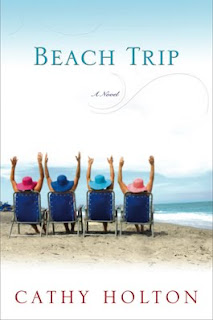
Beach Trip by Cathy Holton

“Writing wasn’t about telling the truth at all; it was about rearranging truth, stretching it, and warping it to fit some safe and less-chaotic world of the writer’s own making. And Mel has been doing that, in one way or another, all her life.” (Page 215)

Cathy Holton’s Beach Trip is Southern women’s fiction with a twist. Mel, Annie, Sara, and Lola were college roommates and reunite in this novel two decades later. Like the heavy surf churned up by an offshore hurricane, their relationships are wrought with tension, love, jealousy, and forgiveness. Each chapter shifts between the past and the present–the mid-1980s to the early 2000s.

“‘Twenty years from now,’ Annie said, looking thin and melancholy. ‘I don’t want to be sitting around regretting the past. I don’t want to be sitting around thinking about what I should have done.’

Mel gave her a heavy look. ‘Twenty years from now, none of us will remember any of this.'” (Page 5)

Each woman embarks upon their own path and makes her way in the world. Sara, Annie, and Lola each marry and have children, while Mel marries and divorces a few men and concentrates on her career as a novelist. Mel is the independent, strong-willed feminist, while Sara is a follower and tough attorney fighting for the rights of children caught in the middle of parental divorce. Lola is laid back and pushed around by her husband, friends, and mother, and Annie is obsessive compulsive and striving for perfection. Each of these characters juxtaposes the other, and these characteristics weigh heavily on their relationships in college and beyond.

“‘I’m so glad you’re here,’ Sara said, smiling at Annie. ‘We need someone to keep us in line.’

Mel swung her arm around her head like she was twirling a lasso. ‘Crack that whip,’ she said.

‘Crack it yourself,’ Annie said. ‘I’m on vacation.'” (Page 25)

Holton creates deep characters with simple flaws, placing them in situations of their own making. Readers just have to sit back and watch how they make their way out. The secrets revealed by these women as they reflect on the past are sometimes cliche, but the end of this novel will leave many readers agape. Overall, Beach Trip examines the complicated relationships of women with a flare of wit, humor, and sarcasm.

If you missed Cathy Holton’s guest post, you should check it out.

DON’T FORGET:

You have until Aug. 28 to vote for Charlee in the Dog Days of Summer Photo Contest. Help a Hot Dog out!

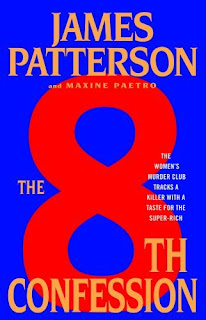
8th Confession by James Patterson and Maxine Paetro

James Patterson and Maxine Paetro’s 8th Confession is the latest installment of the Women’s Murder Club series.

Today’s review is from my mom, Pat. Let’s give her a warm welcome.

The Women’s Murder Club mystery continues in 8th Confession and is a suspenseful, fast moving story. In the beginning, a homeless man is found brutally murdered. Meanwhile, wealthy residents of San Francisco continue to have lavish parties, including Isa and Ethan Baily. Someone close to them watches their every move until they are murdered. However, it is unclear how they were killed and there is no apparent evidence of a crime.

Murders continue to happen throughout many locations in California and the Women’s Murder Club must solve these murders. The 8th Confession is not revealed until near the end of the book. Patterson has created another action-filled, five-star read.

Thanks, Mom, for another great review.

***Remember my Rooftops of Tehran giveaway***


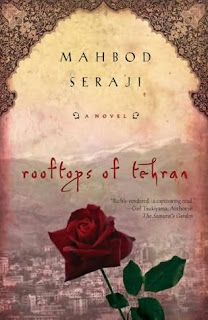
Rooftops of Tehran by Mahbod Seraji

Mahbod Seraji’s debut novel Rooftops of Tehran is a beautifully crafted journey set in Tehran, Iran, during the tumultuous 1970s. Pasha Shahed is a teenage boy who in the summer before his last year of high school faces the reality of his homeland, the despair of irrevocable change, and his first love.

With the secret police, the SAVAK, on their heels, Pasha and his friends must be careful how they act in public. Interspersing the narrative with chapters in the present and chapters in the past creates a palpable tension, and readers will speed through the pages to uncover the mystery of how Pasha ends up in a mental institution.

‘And your star guides you when you’re in trouble, right?’

‘Your star and the stars of the people you love.’

Ahmed closes one eye and lifts his thumb to block out one of the brighter stars. ‘I’m tired of looking at your big fat face.'” (Page 4)

Pasha and his friend Ahmed spend many nights on the rooftops discussing school, love, and life, but their simple lives soon become complicated. Ahmed declares his love for Faheemeh even though she is betrothed to another, and Pasha holds his secret love for his neighbor and friend’s fiancee, Zari, close to his heart. “Doctor” and Pasha have a genuine intellectual relationship, but the underlying tension stemming from Pasha’s secret love for Doctor’s fiancee Zari, lingers behind the surface.

“In order to cure my introversion, she insists I drink a dusky concoction that looks and smells like used motor oil. I complain that her remedy tastes horrible, and she tells me to be quiet and stop whining.” (Page 9)

“We’ll have chelo Kebob–a skewer of ground beef mixed with onions and domestic Persian herbs, and a skewer of filet, served over basmati rice that has been prepared with butter, the savory Persian herb somagh, and baked tomatoes.” (Page 244)

Seraji paints a clear picture of Iran’s people and the culture that dictates its people survive even the worst situations possible. Pasha is a strong character in spite of his doubt, but like any young person feels personally responsible for the major events in his life even if he was powerless to stop them. From the Iranian dishes to the crowded neighborhoods, readers will fall into Tehran and walk the streets with Pasha and his friends. The tyrannical government’s actions and dispensation of justice are infuriating and crushing, but in the midst of these heartaches, readers will laugh as Pasha and Ahmed poke fun at one another and Pasha regains hope.

“‘Deep in each knot of a Persian rug is a statement of the hands that patiently drove the needle and the thread,’ I once heard my father say.” (Page 165)

Seraji deftly creates memorable characters whose lives become fraught with tension and possible death. Readers are likely to become heavily invested emotionally in Pasha’s life, cheering him on, crying alongside him in his grief, and hoping that he will regain his center. Rooftops of Tehran is witty and emotionally charged; a novel that will leave readers wanting more of Pasha and his family and friends. This debut novel reads like a well-polished epic.

Rooftops of Tehran has made it to my growing list of top books for 2009; I was so emotionally involved that I found myself weeping on more than one occasion.

Also Reviewed By:
S. Krishna’s Books

Now, I have one copy to giveaway to my readers; the giveaway is open internationally.

All you need to leave a comment for one entry, and additional entries for tweeting the giveaway, blogging about it, or spreading the word in other ways.

Deadline is August 24, 2009 at 11:59 PM


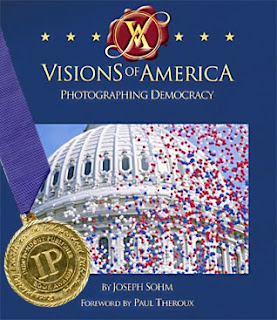
Visions of America by Joseph Sohm

Visions of America by Joseph Sohm is more than a collection of photos about democracy, it is one man’s journey across America to find democracy and reconnect with his nation. Amidst the photographs Sohm intersperses our nation’s history and the emergence of our very own icons–the bald eagle, Mount Rushmore, the American flag, and more.

And one point in this “travel” journal, Sohm says, “Maybe the point in photographing icons of democracy is more about seeking perfection than finding it.” (Page 7). Not only are the photos gorgeous, the essays are poignant and informative about his journey and our nation’s history.

Visions of America is a coffee table book for guests to peruse while dinner is cooking, for friends, family, and neighbors to ogle and discuss. This book compiles some of the most breathtaking images of our nation’s countryside, our icons, and our people from all walks of life.

Each page is laid out in a variety of ways from large images with superimposed images of birds and famous quotes from former presidents and others. One of my favorite tidbits from the book is when Sohm talks about how he got out his trusty Mr. Clean and paper towels to wash down the New Hampshire welcome sign for its photo shoot.

There are a series of panoramic photos throughout the books from the WWII Memorial in Washington, D.C., to landscapes in Utah, Alaska, and California. Countrysides, cityscapes, everyday men and women, and communities pepper this volume and celebrate democracy in a variety of ways.

Readers eager for a break from traditional reading pursuits should consider picking up this beautiful volume of our American heritage. There are only two possible drawbacks to this book–the cost of $75 and the heft of the book itself. You won’t be carrying this one around on the subway. Photographers–amateur and professional–will want to add Visions of America to their collections. However, Sohm has a great eye for what makes this country great and his photography and essays are a testament to our nation’s grandeur.

Please check out the video interview with Joseph Sohm and a Photo Symphony. Don’t forget the Visions of America Web site.

Stay tuned for my interview with Joseph Sohm next week. Thanks to Joseph for sending me this beautiful book and for providing me with the photos for this post. All photos are copyrighted by Joseph Sohm and cannot be reproduced without permission.


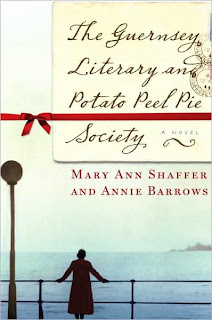
The Guernsey Literary and Potato Peel Pie Society by Mary Ann Shaffer and Annie Barrows

Mary Ann Shaffer and Annie Barrows’ The Guernsey Literary and Potato Peel Pie Society is a novel in letters between writer Juliet Ashton, her friends Sidney and Sophia, and her new friends from the Guernsey Channel Islands.

Ashton is in the midst of a book tour for a collection of her WWII articles under the pseudonym Izzy Bickerstaff. However, she is floundering on the topic for her next book, which is opportune for Ashton who begins to write articles for the Times about the practical, moral, and philosophical value of reading when she receives an unexpected letter of request from Dawsey Adams of Guernsey.

She begins getting letters from the remaining residents of Guernsey and their exploits as part of a literary society during the German occupation. These initial letters help with her series of articles and spur her muse into action.

“Perhaps there is some secret sort of homing instinct in books that brings them to their perfect readers.” (Page 10)

Like the above quote, this novel is one of those books that will hone in on the perfect reader. The Guernsey Literary and Potato Peel Pie Society is chock full of bookish quotes and must have been written with the love of books in mind. Beyond the WWII details, the rationing, the tip-toeing around German officers, and the loss of good friends shipped off to concentration camps, this is a novel about a writer who blooms in the countryside among new friends and new scenery.

“And then, being bright enough not to trust the publisher’s blurb, they will ask the book clerk the three questions: (1) What is it about? (2) Have you read it? (3) Was it any good?” (Page 16)

“The Library roof was some distance away from Juliet’s post, but she was so aghast by the destruction of her precious books that she sprinted toward the flames–as if single-handedly deliver the Library from its fate!” (Page 43)

“Reading good books ruins you for enjoying bad books.” (Page 53)

Readers will easily keep track of the numerous characters in this novel because each letter has an introduction line of who the letter is from and to whom it is addressed. Barrows and Shaffer have crafted quirky individuals with lively personalities from Dawsey and his quiet persuasive qualities to Isola and her outgoing nature. The Guernsey Literary and Potato Peel Pie Society is about how books can change lives and how people can impact one another’s lives.

This is one of the best books I’ve read in 2009.

Also Reviewed By:

Age 30+. . . A Lifetime of Books
Diary of an Eccentric
Jackets & Covers
It’s All About Books
Book Addiction
It’s All About Me (Time)
Katrina Reads
Peachy Books
The Book Nest

About the Authors:

Annie Barrows is the author of the children’s series Ivy and Bean, as well as The Magic Half. She lives in northern California.

Visit Annie’s website HERE.

Her aunt, Mary Ann Shaffer, who passed away in February 2008, worked as an editor, librarian, and in bookshops. The Guernsey Literary and Potato Peel Pie Society was her first novel.

For an excerpt from the book, go HERE.

For the rest of the TLC Book Tour schedule, go HERE.

To enter the Giveaway for 5 copies of the book for U.S. and Canadian residents:

1. Leave a comment on this post about your own book club or why you want to read this book.

2. Blog, Tweet, or spread the word and leave me a link or comment about it.

Silly me, I forgot the deadline, so here it is: August 12, 2009, at 11:59 PM

This is my 5th book for the War Through the Generations: WWII Reading Challenge.