Quantcast

Dewey’s 24-Hour Read-a-Thon

It’s that time again.  Dewey’s 24-Hour Read-a-Thon is this Saturday, Oct. 24, 2009, starting on the East Coast at 8AM.

I’m sure you are wondering what I’ve chosen to read this time around.

Here’s the tentative list:

1.  Living Dead in Dallas by Charlaine Harris
2.  Club Dead by Charlaine Harris
3.  Dead to the World by Charlaine Harris
4.  Bloody Awful by Georgia Evans
5.  Bloody Right by Georgia Evans
6.  Hush, Hush by Becca Fitzpatrick
7.  True Compass by Edward M. Kennedy

What’s on your TBR list?

Matthew Pearl’s Writing Space

With my TLC Book Tour stop for Matthew Pearl‘s The Last Dickens scheduled for Oct. 22, I wanted to provide Matthew with his own guest post date, since he was kind enough to include some photos of his writing space along with the description.

Readers, you are in for a real treat.

This is a timely topic since I’m renovating a house as we speak, so I’ve been forced to think about my writing space from scratch.
We purchased a home built in the 1840s. It needed updating, and for structural reasons we had to do a full gut renovation. On the top floor, away from the (future) hustle and bustle, there were two mirror image rooms, and we knew one would be a guest bedroom and the other my office. My first decision was to choose which I wanted as the office. I actually chose the one facing the street, rather than facing the back of the house. It’s a quiet street and I know if I’m expecting a delivery of some kind I’d be much more productive being able to see it coming rather than constantly getting up to go to the front of the house and check.
 

Sometimes not seeing a distraction coming distracts me.

It’s nice to have some natural light, so we’ve put in a new skylight in my future study. And there’s a nice tree-scape, too, outside the window.

Writing The Last Dickens, I learned about Charles Dickens’s working space. He had two different rooms on his estate that were dedicated offices, and he switched between them seasonally. In one, he wrote the final words on the first half of his final novel, The Mystery of Edwin Drood. A few hours later, he collapsed and never regained consciousness. The circumstances of this gave me my starting point for my novel. Here is one of Dickens’s working spaces from his era (the estate is now a high school):
I confess: I don’t like working at a desk. I work on a couch or, Edith Wharton-like, in bed. I know that’s not good for your sleep (because you then associate bed with work) or probably your carpal tunnels. I’m going to put a small sofa in the office, so I can either nap or work on it. I use the desk more to store and organize papers and folders.
The Last Dickens was written on the top floor we rented in the house below, the upper left window shown here was my office. This house was built in 1871, and my novel took place around 1870. Coincidence, but pretty neat! 
You always have certain knickknacks in your writing space that either inspire or comfort. Wherever my study is, one item always ends up on the wall. There’s a story behind it. When I was writing my first draft of my first novel, The Dante Club, I hadn’t told anyone about the project. Visiting my grandmother in Queens, New York, for lunch, before I left she stopped me. “I was just cleaning out the basement,” she said, “and found this I was going to throw away. It’s a picture of the American presidents. Do you want it?”
Except it wasn’t the American presidents. It was an elongated framed print of “Our American Poets.” With Longfellow, Lowell, Holmes, Emerson. The characters in The Dante Club, which nobody, including my grandmother, knew about! I took that as a sign I was meant to be writing my book. 
That’s always hanging somewhere near my desk. 

Thanks, Matthew, for sharing with us your writing space.  Looks like he has his work cut out for him with that renovation.

The Value of Mess by Laura Brodie

I want to welcome Laura Brodie to the blog.  You’re in for a real treat.  She’s written about her writing space and provided a photographic invitation for all of you.  I want to thank her for taking time out of her busy schedule to provide a guest post.

Without further ado, I’ll turn it over to her post, The Value of Mess.

I wish I could say that my writing space is beautiful—that I have a cozy, book-filled corner, decorated with tasteful artworks, happy family photos, and well-tended plants. In fact, as I write this sentence I am sitting at a dining room table strewn with children’s textbooks, pens and markers, hair bands and sweaters and cough drop wrappers, and piles of papers that need to be recycled.  I haven’t included a photo, because it’s too embarrassing. At my feet lie mangled socks that our puppy likes to gather from my daughters’ bedroom floor. He chews them into shredded clumps, and distributes them around the house.

What inspiration can a writer take from such a messy space, except the most important of all—the motivation to get lost in imagination, far away from the world of laundry and dishes and stacks of college students’ papers.

When I was in college, writing longhand in notebooks, I used to think that I could only be creative in a gorgeous setting. Back then I would sit outside at night on the steps of a church or the banks of a river and write gloomy poetry. I still find that for poetry, elegant journals and long walks provide the best atmospherics. But when it comes to losing myself in the world of a novel or memoir, I’m not so particular. Whether I settle my laptop in the kitchen, dining room or bedroom, the glowing screen draws me in.

My main requirement for writing is not visual, but aural—I need silence. That’s why, when my house is overfull with the sounds of family, I sometimes retreat to my office at Washington and Lee University. There, I have orchids, children’s photos and artwork, and a big sunny window.  But the walls are drab white cinderblocks, shown in this photo taken by a local reporter, who wanted to include author, novel, and website in one picture.

As for that website—it features the chief visual solace in my writing world.  Outside my dining room window I can now see a broad meadow that extends beyond our front yard, divided by a creek that flows toward a barn and trees at the base of the Blue Ridge Mountains. Whenever I need beauty, I can sit on our screened porch, stare at the mountains—now a rusty orange and crimson—and  just breathe. The picture shared here appears on the home page of my website, along with lots of other images from the town and countryside that provide a backdrop for all of my books.

Beauty, however, can be distracting. When writing on my screened porch, I sometimes  spend more time watching the ducks in the creek, or the cows moving over the southern ridge, than concentrating on my words. When that happens, I carry my laptop back inside and settle amid the clutter of my dining room table, where my eyes are only too happy to concentrate on the screen.

And now that my writing for the morning is done, excuse me while I go and clean my house.

Isn’t that just a gorgeous view?  Thanks again to Laura for sharing with us her writing space.  If you missed my review of her debut novel, The Widow’s Season, click on the link and get reading.

Have you seen my interview with Laura Brodie at D.C. Literature Examiner? You should check it out and her Halloween reading selections.

I wish I could have made it to the reading with Laura in Silver Spring, Md., last week (Oct. 15).  If anyone made it to her reading, please leave a comment about how it went.

The Widow’s Season by Laura Brodie

Laura Brodie’s debut novel, The Widow’s Season, is a dirge of grief, wraiths, and resurrection of a professional woman whose been lost in of the song’s cadence for far too long.  Set in Jackson, Va., in a small college town, the season’s change and sweep the protagonist, Sarah McConnell along.

“Sarah McConnell’s husband had been dead three months when she saw him in the grocery store.  He was standing at the end of the seasonal aisle, contemplating a display of plastic pumpkins, when, for one brief moment, he lifted his head and looked into her eyes.”  (First line, Page 3)

Not only does Sarah mourn her husband and the life they had, but she also mourns the life they dreamt about, the life that was snatched from them time and again, and the illusion of their future happiness.  The Widow’s Season is a character driven novel that teeters on the brink of despair as Sarah attempts to navigate her after-life alone.  Nate, her brother-in-law, has lost his mother and his brother in such a short time, and he, like Sarah, does not grieve in an outward display of sobs and outbursts, but turns inward.  Sarah’s friend Margaret anchors her to reality and persuades her to meet for tea every Friday and join her widow’s group once a month.  Unlike, Sarah, Nate’s support system is gone, but he has his investment work to bury himself in.

“An hour later, when she pulled up at the cabin, she had the old sensation of arriving at an empty house.  No lights shone in the windows; the grass was still unmowed.  When she unlocked the door, an immense stillness confronted her.”  (Page 151)

Told in third person, Brodie’s language has a eerie, otherworldly quality that will suck readers easily into an alternate reality.  Grief drips from the pages of Sarah’s life and will consume readers in its wake as she lifts the fog that has surrounded her existence and uncovers her strength, poise, and determination.  Fresh and frank is Brodie’s writing as if she has first hand knowledge of deep desolation and how it can twist reality into alternative that is more palatable.

A great selection for the Fall and Halloween holiday, though it is not a ghost story in a traditional sense, The Widow’s Season is about transformation and living with ones ghosts.

Thanks to Laura Brodie for sending me a free copy of her novel for review.

If you missed my interview with Laura Brodie on D.C. Literature Examiner, you should check it out and find out what she recommends for Halloween reading.  Stay tuned for Laura Brodie’s guest post later today.


Also Reviewed By:

As Usual, I Need More Bookshelves
Missy’s Book Nook

Werner Cohen and Gail Rosen Speak Hilda Stern Cohen’s Words

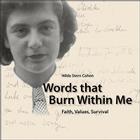
On October 18, 2009, at the Bethesda, Md., The Writer’s Center held a reading of Holocaust survivor Hilda Stern Cohen‘s work, published for the first time in English–translated from her native German–in Words That Burn Within Me.

Her husband Dr. Werner Cohen laid the groundwork for the reading by describing how he came upon her journals after her passing and how he strove to bring those writings to publication.  She wrote about 150 poems in addition to her prose.

Initially his wife’s writings were published in German: Genagelt ist meine Zunge. The Words That Burn Within Me, which is the English publication, took its title from one of Cohen’s poems, which “bitterly laments how her own sense of self is tied to a language and culture that sought to destroy her.”

He also did a delightful and impassioned introduction of the unique qualities of her writing, particularly since she observed not only her own suffering but that of those around her in the Lodz Ghetto and the concentration camp of Auschwitz.

Gail Rosen read from Words That Burn Within Me, which include not only Rosen’s interview material with Hilda before her death, but also Hilda’s essays and poetry.  I’m going to let the videos I shot during the reading speak for themselves.

For more about the reading, please visit my D.C. Literature Examiner page.

I wanted to point out that Hilda Stern Cohen lived in Baltimore, Md., with her husband and children, though most of her writing did occur in a “displaced persons camp” following WWII and the Holocaust, I think Marylanders can claim her as their own.
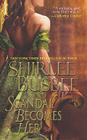

Mailbox Monday #52

Welcome to Mailbox Monday, sponsored by Marcia of The Printed Page, where bloggers reveal their bookish finds from the bookstore, giveaways, the library, and other venues.

These are the books I’ve collected via co-workers in the last few weeks that I kept forgetting to put in previous Mailbox Monday posts:


Shop Indie Bookstores

1.  Scandal Becomes Her by Shirlee Busbee


Shop Indie Bookstores

2.  The Virgin of Small Plains by Nancy Pickard


Shop Indie Bookstores

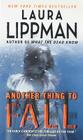
3.  Another Thing to Fall by Laura Lippman


Shop Indie Bookstores

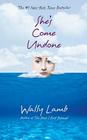
4.  She’s Come Undone by Wally Lamb

5.  Storming the Heavens by Daniel Peris

Addendum:  I got one book in the mail that I ordered from Maya Ganesan’s Website, and you’ve seen it in the mailbox before since I borrowed it from Susan at Color Online.

 6.  Apologies to an Apple by Maya Ganesan


Shop Indie Bookstores

7.  Words That Burn Within Me by Hilda Stern Cohen, which I purchased at the local reading at The Writer’s Center in Bethesda, Md., on Sunday, Oct. 18, 2009.

What did you get in your mailbox?

Winners. . .

I’ve been remiss in announcing the winners of several giveaways lately.  It’s been hectic with book tours and other events, but I wanted to recognize the latest winners over the past several months.


Winner of The Day the Falls Stood Still by Cathy Marie Buchanan was Marjorie.

Winner of FU, Penguin by Matthew Gasteier is Sandy of You’ve Gotta Read This!


Winner of Never Let Me Go by Kazuo Ishiguro is Rebekah of Bookish Mom Reviews

Winner of A Disobedient Girl by Ru Freeman is Dorte of Tordenfluen and Skrive-bloggen and DJs krimiblog, which I found through BBAW this year.

Winner of the Autographed posters of Bran Hambric were Anna of Diary of an Eccentric, Windi Cindi, and Lindsay of The Book Addict’s Club and Lindsay’s photos

Winners of Rooftops of Tehran by Mahbod Seraji were Alyce of At Home With Books, Violet Crush, and Julia of Fertile Plots.

Winner of the prize pack of books was Grace of Books Like Breathing


Winner of Susan Helene Gottfried’s The Demo Tapes Year 2 was Julie of Booking Mama 


Winner of The Trials of the Honorable F. Darcy by Sara Angelini was Stacy of Stacy’s Books


Winner of Apologies to an Apple by Maya Ganesan was Mystica of Mystica and miscellaneous from sri lanka

Winner of Hex in High Heels by Linda Wisdom was Donnas of Donna’s Blog Home

Winner of A Match for Mary Bennet by Eucharista Ward was Jo-Jo of Jo-Jo Loves to Read!!!


Winner of Haunting Bombay by Shilpa Agarwal was Janel of Janel’s Jumble.

If you are waiting for your books, they should be in the mail this week.  Sorry for the delay!

17th Virtual Poetry Circle

Don’t forget about the Verse Reviewers link I’m creating here on Savvy Verse & Wit.

Send me an email with your blog information to savvyverseandwit AT gmail DOT com

And now, for the seventeenth edition of the Virtual Poetry Circle:

OK, Here’s a poem up for reactions, interaction, and–dare I say it–analysis:

Remember, this is just for fun and is not meant to be stressful.

Keep in mind what Molly Peacock’s books suggested. Look at a line, a stanza, sentences, and images; describe what you like or don’t like; and offer an opinion. If you missed my review of her book, check it out here.

Sorry this one is a bit late.  I was having Internet issues all morning.  But now that it’s cleared up, here’s today’s classic poem for your enjoyment.  It’s by Edgar Allen Poe, since it is the time for Halloween; This is one of my favorites:

Annabel Lee
It was many and many a year ago,
In a kingdom by the sea,
That a maiden there lived whom you may know
By the name of Annabel Lee;
And this maiden she lived with no other thought
Than to love and be loved by me.

I was a child and she was a child,
In this kingdom by the sea;
But we loved with a love that was more than love-
I and my Annabel Lee;
With a love that the winged seraphs of heaven
Coveted her and me.

And this was the reason that, long ago,
In this kingdom by the sea,
A wind blew out of a cloud, chilling
My beautiful Annabel Lee;
So that her highborn kinsman came
And bore her away from me,
To shut her up in a sepulchre
In this kingdom by the sea.

The angels, not half so happy in heaven,
Went envying her and me-
Yes!- that was the reason (as all men know,
In this kingdom by the sea)
That the wind came out of the cloud by night,
Chilling and killing my Annabel Lee.

But our love it was stronger by far than the love
Of those who were older than we-
Of many far wiser than we-
And neither the angels in Heaven above,
Nor the demons down under the sea,
Can ever dissever my soul from the soul
Of the beautiful Annabel Lee.

For the moon never beams without bringing me dreams
Of the beautiful Annabel Lee;
And the stars never rise but I feel the bright eyes
Of the beautiful Annabel Lee;
And so, all the night-tide, I lie down by the side
Of my darling- my darling- my life and my bride,
In the sepulchre there by the sea,
In her tomb by the side of the sea.

Let me know your thoughts, ideas, feelings, impressions. Let’s have a great discussion…pick a line, pick an image, pick a sentence.

I’ve you missed the other Virtual Poetry Circles, check them out here. It’s never too late to join the discussion.

451 Fridays With Yours Truly. . .

Have you ever visited As Usual, I Need More Bookshelves on a Friday?

Well, if you haven’t, you’ve been missing out on a great feature inspired by Fahrenheit 451 by Ray Bradbury.

Elizabeth asks bloggers around the blogosphere for their opinions on which books they would like to memorize to preserve them and why.  We would memorize these books and pass them down to the next generation in a beautiful oral tradition, which reminds me of Homer and his stories.

Anyway, my picks are featured today, so go check them out.

Interview With Poet Thomas Stemmer

Thomas Stemmer recently agreed to an interview with myself and 32 Poems. And here is what he had to say. 

How would you introduce yourself to a crowded room eager to hang on your every word? Are you just a poet, what else should people know about you?

I cannot imagine a crowd eagerly listening to poetry. However, in 2008, when I was invited to a conference in Pakistan, I took part in a Mushaira (a traditional poetry reading), and indeed, everybody was very eager to listen. Even a peasant there knows verses of – let’s say – Rumi or local poets for example. This is incredible. But, I am just a poet, yes, a romantic in a way.

Do you have any obsessions that you would like to share?

Yes: My mechanic typewriter. I JUST LOVE IT!

From Shortest Poems these Days:

The Law of Grace
There is
Some good fat
Bavarian sausage
In the refrigerator.


Poetry is often considered elitist or inaccessible by mainstream readers. Do poets have an obligation to dispel that myth and how do you think it could be accomplished?

Poetry is not elitist. If you WANT to read poetry, you can. Everybody is responsible for himself. The accusation of elitism is just an excuse to cover up a certain – maybe unconscious – unwillingness, I suppose.

Do you have any favorite foods or foods that you find keep you inspired? What are the ways in which you pump yourself up to keep writing and overcome writer’s block?

Foods? No. But in order to overcome a writer’s block, I use to draw, to make collages on paper or to do more of my scientific work as a orientalist. On of these doors is always open. In case of poetic emergency: hours of daydreaming! That helps ALWAYS.

If you’ve enjoyed Thomas’ answers so far, I suggest you check out the rest of my interview with him over at 32 Poems Blog. Once there, you can find out about his workspace, his inspirations, and much more. Feel free to leave me comments and discuss Thomas’ work (sampled above), his interview, or your thoughts on poetry in general.