Today is the beginning of Dewey’s 24-hour Read-a-Thon. Although I have other plans today, I will be reading off and on with everyone and cheering people on when I can.
Introduction
1) What fine part of the world are you reading from today?
USA, Washington, D.C.
2) Which book in your stack are you most looking forward to?
Finishing up Camelot’s Court by Robert Dallek, and if I finish it I will consider it a successful read-a-thon.
3) Which snack are you most looking forward to?
Grapes…and coffee…I love Dunkin Donuts French Vanilla!
4) Tell us a little something about yourself!
I loved my Keeshond like he was a child, but with a little toddler running around, I realize caring for a dog was much easier.
5) If you participated in the last read-a-thon, what’s one thing you’ll do different today?
I like to keep my participation laid back; that’s what I’ve learned over the years. To just have fun!
Blackout Poem Challenge:THEChileanpoet Pablo Neruda, known for his love poemsand leftist ideals, died 40 years agothis September. One would hope he’d be at restby now. But on Monday, as classicalmusicians played a Neruda work set to music by Vicente Bianchi, his remainswere exhumed to determinewhether he died from poison — instead of prostate cancer, the conventional account.In recent years, other icons of the Hispanic world have sufferedthe same fate. In 2011, SalvadorAllende, Chile’s democratically elected president-elect who wasdeposed by a military junta in 1973, wasdisinterredto verify that he’dfatally shothimself. (The finding — yes — is still disputed.) The late Venezuelan president Hugo Chávez ordered in 2010 thatthe tombof his idol, Simón Bolívar, beopened to testhis theory thatthe liberatordied of poisoning, not tuberculosis. (The theory remains unproved.)And in 2008, a Spanish judge authorized theunearthingofa mass gravein the southern town of Alfácarto seewhetherFederico García Lorca, the poet and dramatist who was assassinated by Fascistsin 1936, at the outset of the Civil War, was buried there. (The results were inconclusive.)There is somethinggothic, but also cathartic, about summoning artists like Neruda, and his close friend García Lorca, back into the realm of the living, making us wonder if death is really the end. A Chilean judge’s decision, in February, to allow aninvestigation intoNeruda’sdeath, which led to this week’s exhumation, looks likean act of expiation.Neruda used his pen to denote, to denounce, to decry.He was 69when the junta took power. By then he had been an embassy attaché, a senator and an ambassador.In 1969, he initially ran for president as a Communist, but later backed Allende’s candidacy. However,passionfor political changewasonlyone sideof his persona. The other was that of a bon vivant. Many people enjoylifeplentifully, butfewhave been so eloquent about it. TheDionysiansensuality of Neruda’sodesis contagious, joyful and erotic. And also destructive: Neruda’s marriage to Matilde Urrutia, his third wife and theinspirationfor “The Captain’s Verses” and “One Hundred Love Sonnets,”unraveled after she learned he was having anaffairwith her niece.Nerudadiedin a clinic in Santiago on Sept. 23, 1973 — 12 daysafter theAmerican-backedcoupthatoverthrewAllende and brought Gen. Augusto Pinochet to power. ManyChileanshave long been skeptical of the official cause of death. In 2011, Neruda’s former driver saidthe poettold him, on the eve of his death, that he’d been givena harmful injectionby a doctor.Conspiracy theorists note that Neruda died in the same hospital where Eduardo Frei Montalva, a politician who had supported the juntabefore switching sides, died in 1982. A judge ruledin 2009that Frei had been poisoned.Could Neruda have suffered a similar fate? Allende had died on Sept. 11, 1973, and another opponent of the junta, the folk singer Víctor Jara, was assassinated on Sept. 16.Finishingoff Neruda could have been the junta’s coup de grâce.Exhumingiconsis one wayto deal with guilt.Elsewhere in Latin America,the past’s phantomsareresurfacing: in Guatemala, where the former dictator Efraín Ríos Montt is on trial forgenocide; in Argentina, whosecitiesare dotted with memorials to those who were“disappeared”during the “dirty war”; and in Mexico, where a once-pliant media have challenged the former president Felipe Calderón’s handling of the war againstdrug cartels.But Neruda holds a special place inthis grim lookbackward. Gabriel García Márquez, the Colombian writer and a fellow Nobel laureate, has called him “the most important poet of the 20th century —in any language.”Neruda left thousands of poems, a handful of which are of such inspired beauty as to justify the very existence of the Spanish language. Adolescents routinely give his “Twenty Love Poems and a Song of Despair” to their sweethearts. Hisideological verseshave beenread aloud, often from memory, in one revolution after another, from the fall of the Berlin Wall to the embers of the Arab Spring. Some of Neruda’s poems —“I Ask for Silence,”“Walking Around,” “Ode to the Artichoke” — have been rendered into Englishrepeatedly, each version another effort to make him current andvital to a new generation.What we’ve read so far:32 pages32 pages26 pagesWhich hour was most daunting for you?
The 15th hour was brutal for me, that’s when I decided to take a nap. A big mistake because I slept through the rest of readathon.
Could you list a few high-interest books that you think could keep a Reader engaged for next year?
I think kids books with games in them are so fun and peek-a-boo flaps. They are quick reads for when there are distracting little children around or you just need a quick read.
How many books did you read?
We only read 3 whole books, but I did read about 50 more pages of Camelot’s Court.
What were the names of the books you read?
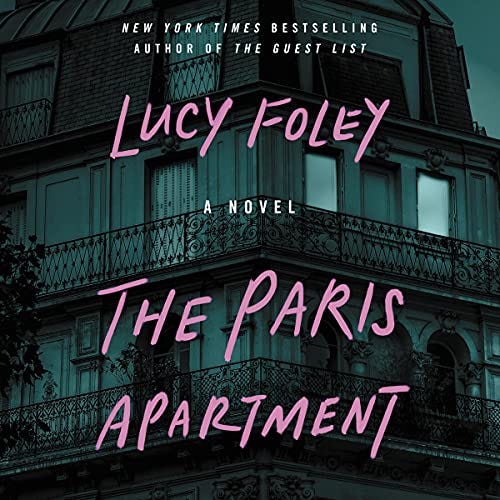
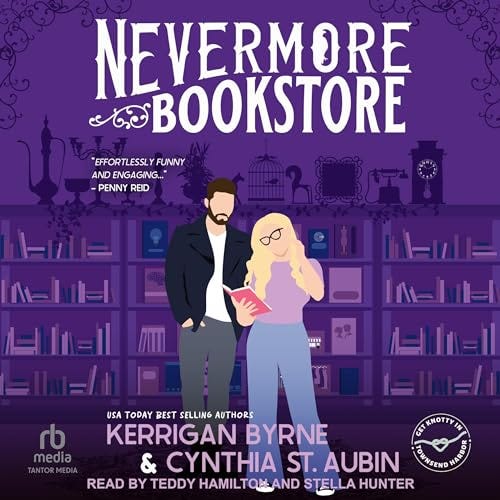
See above the images.
Which book did you enjoy most?
The little one and I really like the Halloween Forest.
Which did you enjoy least?
None really.
How likely are you to participate in the Read-a-thon again? What role would you be likely to take next time?
I think if I have as little time as I did this time, I’ll be a cheerleader instead.
I hope everyone had a great read-a-thon!


 Today is the beginning of Dewey’s 24-hour Read-a-Thon. Although I have other plans today, I will be reading off and on with everyone and cheering people on when I can.